Corridor Cleaning in New Residential Construction 2026
Modern residential developments require different cleaning approaches for common areas than older buildings. Learn about material differences, operational challenges in the first months of occupancy, and budgeting for condominium associations.
Modern residential developments require different cleaning approaches for common areas than older buildings. Learn about material differences, operational challenges in the first months of occupancy, and budgeting for condominium associations.
Corridor cleaning in modern residential developments
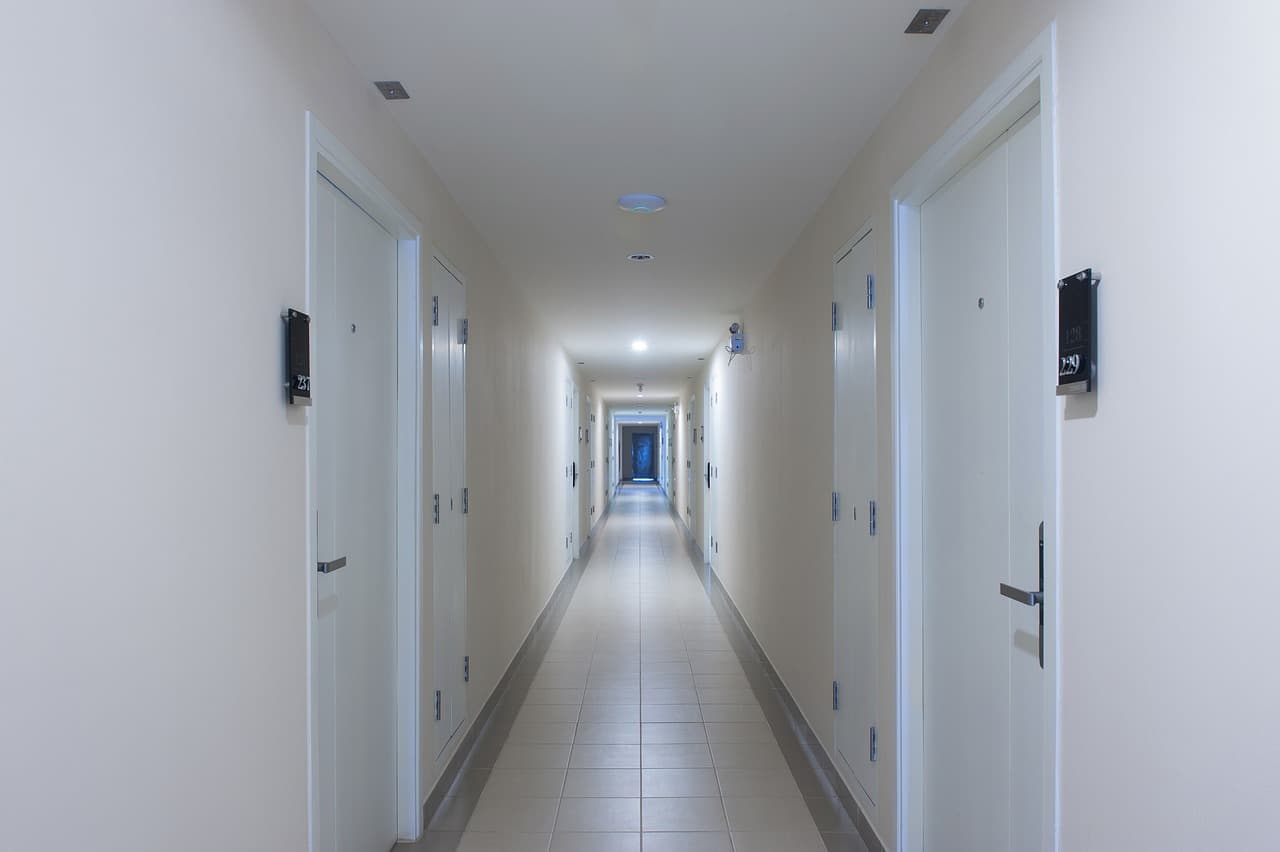
Corridor cleaning in modern residential developments differs significantly from maintaining cleanliness in older buildings. New apartment blocks feature smooth porcelain stoneware surfaces, LED lighting, mechanical ventilation systems, and a higher number of elevators—all requiring specialized cleaning methods, more frequent washing during the first months after handover, and adjusted schedules. Property managers of residential associations should understand these differences to effectively plan budgets and select professional cleaning providers.
Modern residential developments have become the standard in the Cracow and Katowice housing market. Over the past five years, most newly completed residential blocks feature enclosed, monitored corridors, elevators with modern construction, automatic doors to entrance vestibules, and IP intercom systems with access control. These technological solutions enhance resident comfort but also present property managers with new challenges in maintaining the cleanliness of common areas.
The Reefa team services residential associations in both older buildings and new developments—since 2020 in Cracow, since 2024 in Katowice. This experience allows us to identify the key operational, material, and cost differences between these two market segments.
In brief
- New buildings use porcelain stoneware, tempered glass, and aluminum—materials requiring neutral pH detergents and microfiber cloths.
- The first 6–12 months after handover generate increased dust from unit finishing by property owners.
- Older buildings require more frequent intervention on porous surfaces (terracotta, plaster); new buildings need intensive streaking removal from glass and mirrors.
- Corridor and stairwell cleaning in a 50-unit building starts from 1,000 PLN net monthly for condominium associations.
- Managers should specify in the SLA frequency, scope, and reporting procedures—including photo reports after each cleaning.
- Selecting a professional provider with legally employed staff and liability insurance up to 1,000,000 PLN minimizes legal and operational risks for the association.
How do finishing materials differ between new and older buildings?
Older residential blocks—built in the 1970s, 1980s, and 1990s—often have corridors and stairwells finished with rough-textured terracotta, mineral plaster, or emulsion paint on walls, wooden or metal handrails, and PVC or wooden windows. These materials are porous, absorbing dust, grease, and moisture, requiring detergents with moderate alkalinity and specialized grout brushes.
New residential developments feature smooth, almost glass-like porcelain stoneware, HPL (High Pressure Laminate) wall panels, tempered glass in doors and balustrades, aluminum handrails, and LED lighting embedded in suspended ceilings. Porcelain stoneware is impermeable to water but clearly shows streaks and footprints. Tempered glass requires specialized neutral pH products to avoid water marks. Aluminum oxidizes when exposed to alkaline detergents, so products with pH 6–8 must be used.
Vertical surfaces in new buildings often feature laminated panels that cannot tolerate excess water and may warp under intense scrubbing. Mechanical ventilation—increasingly common in new buildings—requires regular cleaning of ventilation grilles and filters, which was not standard in older buildings with gravitational ventilation systems.
In practice, material differences directly translate to the selection of cleaning chemicals and equipment. In older buildings, we use cotton mops, brushes with natural bristles, and alkaline detergents (pH 9–11) to remove grease and organic soils. In new developments, we rely on microfiber cloths, gray-brown pads for stoneware, neutral or slightly acidic detergents (pH 6–7), and microfiber cloths for glass. Condominium managers should require the cleaning provider to supply safety data sheets for all products used, ensuring they don't damage finished surfaces covered by the developer's warranty.
What challenges do new developments present during the first months of occupancy?
Key handover to unit owners marks just the beginning of the intensive phase of interior finishing and furnishing. During the first 6–12 months after the building is handed over to the association, common areas experience increased dust, marks from transporting building materials (drywall, cement, paints, flooring), and frequent damage to elevators and doors from renovation crews.
Developers typically hand over buildings in "turnkey" condition, but units are received in varying stages of completion—from developer condition to move-in ready. In practice, during the first months, construction crews, furniture, windows, doors, and appliances move through the corridors. Construction dust—containing cement particles, gypsum, and mineral particles—settles on all horizontal and vertical surfaces, including LED light covers, ventilation grilles, glass balustrades, and elevator doors.
At Reefa, during the first six months after a new development's handover, we recommend increasing cleaning frequency from 2 times per week to 3–4 times per week. This prevents dust from accumulating on installations and protects developer warranties, which often require regular cleanliness maintenance as a condition for recognizing repair claims.
An additional challenge is the lack of operational procedures in the newly formed association. Boards often need several months to establish cleaning schedules, define responsibility scopes, reporting procedures for defects, and quality control mechanisms. It's advisable to implement a photo report system after each cleaning from the start—such a standard is offered to our clients for residential association cleaning in both Cracow and Katowice. Photo reports document the condition of common areas, protect against unfounded resident complaints, and enable quick detection of damage or soiling requiring intervention.
How often should corridors in a new residential building be cleaned?
Cleaning frequency for corridors depends on the number of units, traffic intensity, presence of elevators and underground garages, and resident profiles. In new residential developments with enclosed, climate-controlled corridors, the basic schedule is 2–3 times per week for buildings up to 50 residential units. For buildings with more than 100 units or direct access to underground garages, we recommend daily or 5 times-weekly cleaning.
Compared to older buildings: stairwells in 1970s–1990s blocks with external access (no intercom, no entrance vestibule) require 3–5 times-weekly cleaning due to greater ingress of sand, road salt in winter, and falling leaves in autumn. New buildings have enclosed vestibules, systemic doormats, monitoring, and access control—reducing exterior contamination ingress.
However, smooth stoneware and glass surfaces in new developments more prominently display usage marks: footprints, streaks from touching glass doors, stains from strollers. In practice, this means more frequent washing of vertical surfaces (glass, mirrors, elevator panels) than in older buildings, where walls are typically matte and less prone to streaking.
During the first 6–12 months after building handover, it's worth temporarily introducing higher frequency—4–5 times per week—with particular attention to corridor vacuuming, elevator washing, and dust removal from ventilation grilles. Once interior finishing stabilizes, you can return to the standard 2–3 times-weekly schedule.
Our block cleaning services in Cracow and Katowice include flexible schedules tailored to actual community needs—from emergency daily visits in the first months to a stable 2–3 times-weekly rhythm after the adaptation period.
What chemicals and equipment should be used in new residential developments?
Protecting the developer's warranty and maintaining the high-quality finish of new buildings requires precise selection of chemicals and equipment. At Reefa, we use EU Ecolabel or Nordic Swan-certified products with neutral pH 6–8, which don't damage porcelain stoneware, tempered glass, aluminum, or HPL panels.
For washing porcelain stoneware, we use neutral detergents and high-weight microfiber mops (minimum 350 g/m²), which collect dust and fine soiling without risking surface scratching. We do not use alkaline detergents or waxes, which can leave streaks and soap residue on smooth tiles.
Tempered glass—in doors, balustrades, elevators—is washed with isopropyl alcohol or acetic acid-based products, without ammonia, which can damage seals and anti-reflective coatings. For polishing, we use triangle-profile glass microfiber cloths that leave no streaks.
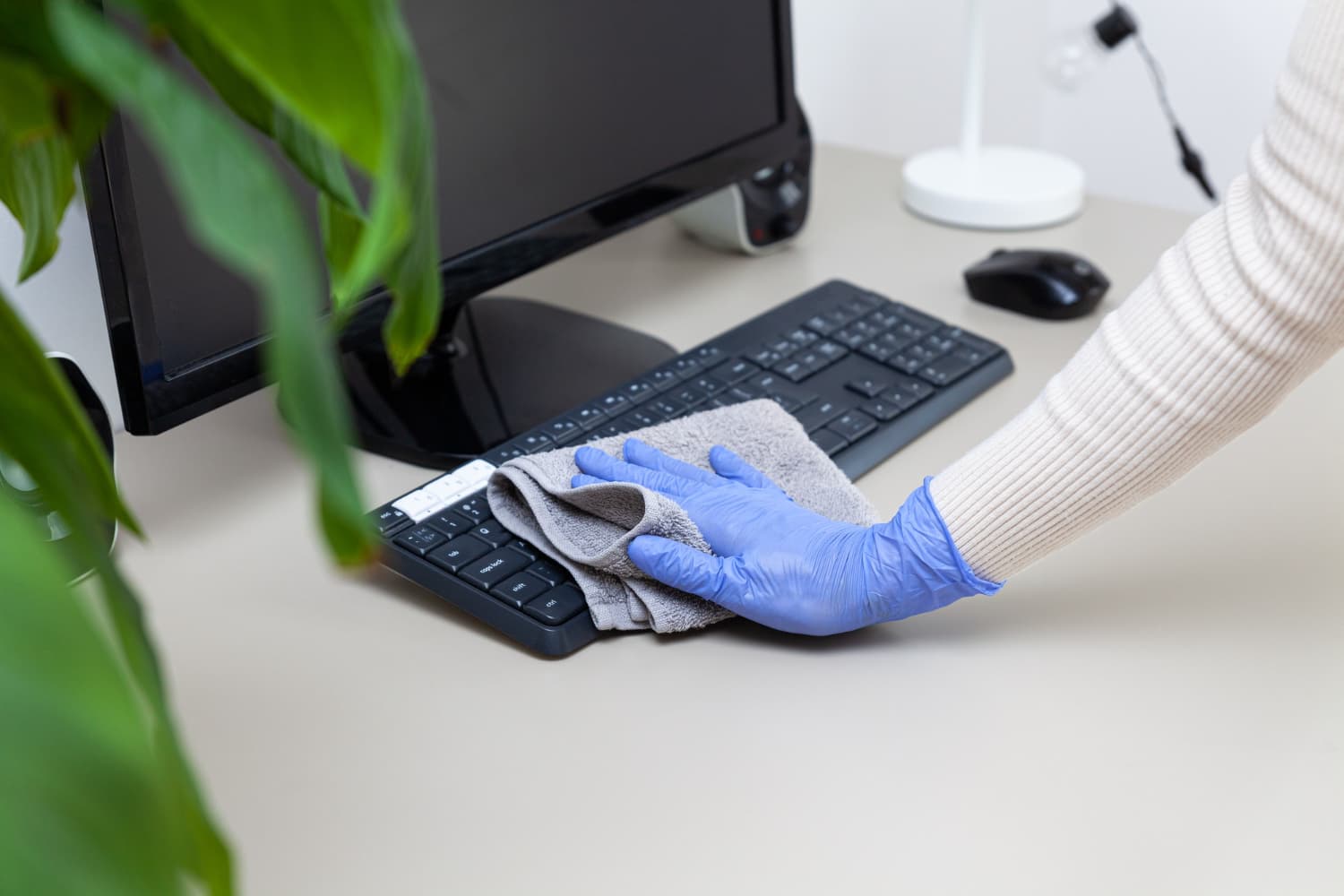
Aluminum handrails, access cards, and IP intercom panels require particular care: alkaline detergents (pH above 9) cause darkening and aluminum oxidation. We use neutral or slightly acidic products, then dry surfaces with microfiber to prevent water spots.
Mechanical ventilation grilles are vacuumed at least monthly with HEPA-filtered equipment—standard vacuums blow fine dust back into the air. Suspended ceilings with LED lighting require gentle cleaning—without pressing—to avoid damaging the structure.
In older buildings, universal products with high alkalinity, natural bristle brushes, and cotton mops were standard. These tools are effective on porous, rough surfaces but can leave streaks, scratches, and soap residue in new developments.
Condominium managers selecting a professional provider should specify chemical requirements in their SLA—environmental certificates, safety data sheets, compliance with developer warranties. Reefa works exclusively with products backed by technical documentation, protecting the association from loss of manufacturer warranties on finished materials.
What does corridor cleaning cost in a new 50-unit building?
The cost of regular cleaning of common areas in a modern residential development depends on corridor area, number of stories, number of elevators, presence of underground garages, and established frequency. For a standard 50-unit building with 5 above-ground stories, 2 elevators, and no underground garage, typical common area size is 400–600 m².
At Reefa, pricing for residential associations starts from 1,000 PLN net monthly for 2 times-weekly cleaning. For a 500 m² building cleaned 3 times weekly, the cost is approximately 1,400–1,600 PLN net monthly. During the first 6 months of operation, when we recommend increasing frequency to 4 times weekly, costs rise to 1,800–2,100 PLN net monthly.
Older buildings of similar unit count but with larger common areas (wider stairwells, more extensive shared spaces, no elevators) and higher frequency (3–5 times weekly due to exterior contamination) generate monthly costs of 1,200–1,800 PLN net at standard rates.
It's worth noting that new developments—despite smoother, easier-to-clean surfaces—require higher costs for specialized chemicals and equipment. Ecologically-certified neutral detergents cost more than universal alkaline products. High-weight microfiber, stoneware pads, glass cloths—these tools command higher unit prices but ensure surface safety and long-term aesthetics.
The table below compares estimated monthly cleaning costs for a 50-unit association in new and older buildings:
| Parameter | New Building (2020+) | Older Building (pre-2000) |
|---|---|---|
| Common Area Size | 400–600 m² | 500–700 m² |
| Standard Frequency | 2–3 times/week | 3–5 times/week |
| Monthly Cost (net) | 1,400–1,600 PLN | 1,200–1,800 PLN |
| Adaptation Period Cost | 1,800–2,100 PLN | — |
| Dominant Materials | Stoneware, glass, aluminum | Terracotta, plaster, wood |
| Required Chemistry | Neutral pH 6–8, eco-certified | Alkaline pH 9–11, universal |
Prices listed for Cracow and Katowice for 2026, at standard scope: floor washing, vacuuming, elevator washing, dust removal from horizontal and vertical surfaces, mirror and glass washing, trash bin emptying. Does not include window washing, carpet cleaning, exterior washing, or graffiti removal.
Condominium managers budgeting for 2026 can use the online calculator for buildings, which enables quick pricing adjusted to actual area and frequency. Estimates include all costs—legally employed staff, cleaning chemicals, equipment, liability insurance up to 1,000,000 PLN, and a dedicated facility coordinator.
What are the key differences in schedules and scope of work?
In new construction, we place greater emphasis on washing vertical surfaces and glass elements, which are heavily exposed and easily soiled. The standard scope includes:
- Washing porcelain stoneware floors with microfiber mop, neutral pH 6–8 detergent.
- Elevator washing—interior walls, button panels, mirrors, floor—after each visit.
- Washing glass doors, balustrades, mirrors in corridors and stairwells.
- Vacuuming mechanical ventilation grilles, vacuuming LED light covers.
- Washing aluminum handrails.
- Dust removal from horizontal surfaces (windowsills, electrical boxes, notice boards).
- Emptying and disinfecting trash bins.
In older buildings, the priority is intense floor washing and removing soil from porous surfaces:
- Washing terracotta or marble chips with alkaline detergents, scrubbing grout.
- Cleaning wooden or metal handrails, often requiring maintenance (impregnation, polishing).
- Vacuuming gravity ventilation grilles—less frequently than mechanical systems.
- Washing stairwell windows—more frequently exposed to dust and weather.
- Removing graffiti, stickers, flyers from doors and walls.
The schedule in new developments is more stable and predictable—enclosed corridors, access control, monitoring reduce casual contamination ingress. In older buildings, schedules must account for seasonality—more salt and sand in winter, fallen leaves in autumn, mud in spring.
Our team in Cracow and Katowice adjusts work scope to the actual property profile. Each property has a dedicated coordinator who, following an initial audit, proposes a schedule and priority task list, then monitors execution and gathers feedback from the board.
Recommendations for managers and supervisory boards of residential associations
Selecting a professional cleaning provider is a decision with long-term impact on property value, resident comfort, and legal safety. Managers should be guided by the following criteria:
1. Legal Employment and Insurance
Cleaning staff should be employed under employment contracts, registered with social insurance (ZUS), and covered by social insurance. The provider must carry liability insurance with a minimum guarantee of 500,000 PLN—at Reefa, we offer coverage up to 1,000,000 PLN, protecting the association from financial risk in case of property damage or accidents.
2. Dedicated Coordinator and Reporting System
Each property should have a dedicated coordinator who knows the facility, oversees work quality, responds to resident requests, and delivers regular reports. At Reefa, we provide photo reports after each cleaning, emailed to management. We also offer QR code reporting for residents—anyone can scan a corridor code and report defects or soiling directly to the coordinator.
3. Flexibility and SLA Contract
The agreement should include a Service Level Agreement (SLA) defining scope, frequency, response time for requests, quality control procedures, and penalties for non-compliance. For new developments, it's wise to include provisions for temporarily increased frequency during the first months of operation.
4. Environmental Certificates and Developer Warranty Compliance
Cleaning products should hold EU Ecolabel, Nordic Swan, or other recognized environmental certifications. The provider should supply safety data sheets to management for presentation to the developer in case of finish-related claims.
5. Experience in New Development Segment
Not every cleaning firm has experience with modern residential buildings. It's worth asking for references from similar properties, reviewing case studies, or requesting a visit to a reference site. At Reefa, we've serviced residential associations since 2020—our customer retention rate is 91%, confirming service stability and quality.
6. Flexible Budgeting and Transparent Pricing
Managers budgeting for the year should account for seasonal frequency adjustments and emergency visits (post-malfunction, pre-developer inspection during warranty). Our pricing for associations is transparent—all line items in PLN net, with no hidden charges for chemicals or travel within Cracow and Katowice.
Residential association managers in new developments should view cleaning services as an investment in property value, not merely an operational cost. Clean, well-maintained common areas affect market value of units, resident satisfaction, and the association's positive image to potential buyers.
Frequently Asked Questions
Is stairwell cleaning mandatory in new residential buildings?
Yes. Under Polish condominium law, the residential association must maintain common areas in proper condition, including corridors, stairwells, elevators, and circulation routes. The board or property manager organizes cleaning from the maintenance fund or regular operating charges. Neglected cleaning risks losing the developer's warranty, deteriorating building standards, and resident claims for fee reductions. Developers often require documented cleaning schedules as a condition for recognizing finish-related claims. Reefa provides photo reports and documentation of schedule compliance, protecting the association in developer relations.
How much does corridor cleaning cost in a 50-unit block in Cracow and Katowice?
Monthly corridor, stairwell, and elevator cleaning in a 50-unit residential building starts from 1,000 PLN net for 2 times-weekly frequency. For 3 times-weekly schedules, costs are approximately 1,400–1,600 PLN net monthly. During the first 6–12 months after new development handover, we recommend increasing frequency to 4 times weekly—costs then rise to 1,800–2,100 PLN net monthly. Pricing includes legally employed staff, ecologically-certified cleaning chemicals, professional equipment, liability insurance up to 1,000,000 PLN, dedicated facility coordinator, and photo reports after each cleaning. Precise pricing is available through the online building calculator in Cracow or Katowice, or by contacting us via Cracow or Katowice contact pages.
What does corridor cleaning include in a new residential building?
Standard common-area cleaning scope in new residential developments includes: washing porcelain stoneware floors with neutral pH 6–8 detergents, elevator washing (walls, button panels, mirrors, floors), washing glass doors and balustrades, washing mirrors in corridors, vacuuming mechanical ventilation grilles, vacuuming LED light covers, washing aluminum handrails, dust removal from horizontal surfaces (windowsills, electrical boxes, notice boards), and emptying/disinfecting trash bins. Standard scope does not typically include exterior window washing, carpet cleaning, exterior washing, or graffiti removal—these are priced separately. At Reefa, each property has a dedicated coordinator who, following an initial audit, clarifies the scope and schedule, then monitors execution and provides photo reports after each visit.
How can I ensure corridors in my building are thoroughly clean?
Effective corridor cleaning in new buildings requires consistency, proper chemicals, and equipment. First: regular frequency—2–3 times weekly prevents dust and soiling accumulation. Second: neutral pH 6–8 detergents certified ecologically, protecting stoneware, glass, and aluminum. Third: high-weight microfiber mops (minimum 350 g/m²) and gray-brown pads for stoneware—no streaks or scratching. Fourth: regular vertical surface cleaning—elevators, mirrors, glass doors, balustrades—which show soiling more than floors. Fifth: monthly HEPA-filtered vacuuming of mechanical ventilation grilles to avoid dust recirculation. Sixth: disinfection of high-touch surfaces—handrails, elevator buttons, door handles—especially autumn-winter. Reefa applies proven operational procedures and delivers photo reports for ongoing quality monitoring.
Can cleaning frequency be changed during the contract term?
Yes. Schedule flexibility is a key SLA parameter for residential associations. At Reefa, we offer adjusting frequency to actual needs—e.g., increasing from 2 to 4 times weekly during the first months after development handover, then returning to 2–3 times weekly once interior finishing stabilizes. Temporary intensification before major events (board meeting, developer inspection, building inspector visit) or summer reduction when residents are on holiday is also possible. Frequency changes are made via contract amendment or—with prior agreement—flexibly under the current contract. Transparent pricing enables precise billing for actual monthly visits, with no hidden charges. Contact us via your local contact page to discuss flexible scheduling for your association's needs.
What documents should a professional cleaning provider supply to the association?
The residential board should require: current liability insurance policy with minimum guarantee of 500,000 PLN (Reefa offers up to 1,000,000 PLN), proof of no outstanding ZUS and tax debt, list of employees assigned to the property with ID numbers (verifying legal employment), safety data sheets for all cleaning products used, environmental certificates (EU Ecolabel, Nordic Swan), SLA contract specifying scope, frequency, quality control, and penalties for non-compliance, and references from at least three residential associations serviced for minimum 12 months. These documents protect the association from legal risk (black-market employment, lack of insurance) and enable service quality enforcement. Reefa provides complete documentation at the quotation stage—since 2020 we've serviced residential associations in Cracow and since 2024 in Katowice, with 91% customer retention.