Cinema and Multiplex Cleaning — Theaters, Restrooms, Lobby Maintenance During Operating Hours
A comprehensive guide for facility managers: express theater cleaning between screenings, deep overnight sanitation, lobby and restroom maintenance. Proven schedules, equipment, and chemical solutions for multiplexes.
A comprehensive guide for facility managers: express theater cleaning between screenings, deep overnight sanitation, lobby and restroom maintenance. Proven schedules, equipment, and chemical solutions for multiplexes.
24-Hour Cleaning Cycle in Multiplexes — Who, When, and Where?
Cinema and multiplex cleaning represents a coordinated set of actions executed in a 24-hour cycle — from express cleaning of theaters between screenings (averaging 12–15 minutes), through daytime maintenance of lobbies and restrooms, to deep overnight or early-morning sanitation when the facility is closed to patrons. Success depends on precise timing, specialized equipment, and a team trained to respond quickly to stains, spilled beverages, and popcorn residue.
Cinemas and multiplexes present unique demands for cleaning teams. During peak weekend hours, even a small four-theater cinema can serve 1,500–2,000 guests daily, while a Cinema City or Helios multiplex can exceed 5,000 visitors on a Saturday. Each screening introduces new layers of contamination — rubber residue on carpeting, soda stains on upholstered seats, snack crumbs on stairs and between rows. This is why facility managers operating cinemas focus on three cleanliness pillars: speed (to avoid delaying the next screening), effectiveness (to remove sticky organic residue before it hardens), and discretion (guests should not see cleaning staff in the auditorium).
Key Takeaways
- Express theater cleaning between screenings takes 12–15 minutes for theaters up to 150 seats; requires industrial-grade vacuum, waste collection, spot-cleaning spray, and headlamp or work lighting.
- Overnight deep cleaning includes floor burnishing, restroom disinfection, window washing, gum removal with thermal scraper, and upholstered seat brushing; performed 1:00 a.m.–7:00 a.m. when cinema is closed.
- Lobby, restrooms, and food service areas require inspection every 45–60 minutes during operating hours — restocking supplies, replacing liners, cleaning sinks, collecting trays and packaging.
- Cleaning agents must be safe for ecological leathers and fabrics; enzymatic spot cleaners, alcohol-based products for PVC, citrus-based solvents for gum, HACCP-certified products in food court.
- Weekend schedule: 2–3 person daytime team (theater rotation + lobby), +2 staff overnight (deep cleaning); weekdays often require one person for daily rotation and one overnight deep clean.
- Coordination with screening schedule occurs via cinema CMS system integration or shared Excel calendar; a 5-minute delay in one cleaning session can accumulate to a 30-minute shift across the entire evening lineup.
24-Hour Cycle in a Multiplex — Staffing, Timing, and Coverage
In a typical multiplex (6–12 theaters), the cleaning crew's workday begins before the first screening — usually around 9:00 a.m. — and concludes after the last one, which on Fridays and Saturdays often means 2:00 a.m. Between these endpoints, the schedule divides into three main sections: daily express cleaning, common area maintenance, and overnight deep sanitation.
Before facility opening (7:00 a.m.–10:00 a.m.)
The night or morning crew verifies the results of overnight deep cleaning: theaters used the previous evening, lobby, coat check, public restrooms, and café areas. They vacuum hallways, wash front windows, restock soap and paper. In chains like Cinema City, digital checklists on tablets are often used, with the coordinator marking completion of each zone.
Daily express rotation (10:00 a.m.–midnight)
This is the core of operations. Each screening ends with an announcement to patrons ("Please maintain orderly conduct"), and staff have 12 to 20 minutes before the next guests arrive. For a 120-seat theater, the standard is 2 people: one collects trash and vacuums between rows, the other inspects seats, removes stains, and checks recline buttons (in premium seating). Larger theaters (200+ seats) require 3 staff. The rotation schedule is based on real-time screening board data, and it is critical that the cinema coordinator communicates updates — sometimes a film runs 5 minutes longer due to previews, sometimes a session is canceled.
Common area maintenance (continuous during operating hours)
Lobby restrooms in a weekend multiplex require inspection every 30–45 minutes: restocking paper, emptying bins, quick wipe-down of sinks, disinfection of handles. The lobby — especially the food service area where popcorn, hot dogs, and oversized beverages are sold — collects trays of waste and requires table wiping after each busy period (e.g., 20 minutes after major evening screenings begin). If the cinema operates a bar with table seating, the team must function like food service staff: collecting trays, wet-wiping tables, deodorizing bins.
Overnight deep cleaning (1:00 a.m.–7:00 a.m.)
When the final guest leaves the building, the deep-clean crew enters with heavy equipment: floor burnishing with flat microfiber mops or dual-pad machines, deep vacuuming of seat upholstery (weekly rotation), washing windows on theater doors and projection booths, cleaning railings and handrails, disinfecting all restrooms, dusting lamps and HVAC fixtures. This is also when specialized treatments occur: gum removal with thermal scraper, extraction-based upholstery cleaning (monthly in high-use theaters), and deep-pile carpet refreshing with powder cleaner.
Theater Cleaning Between Screenings — 15-Minute Reset
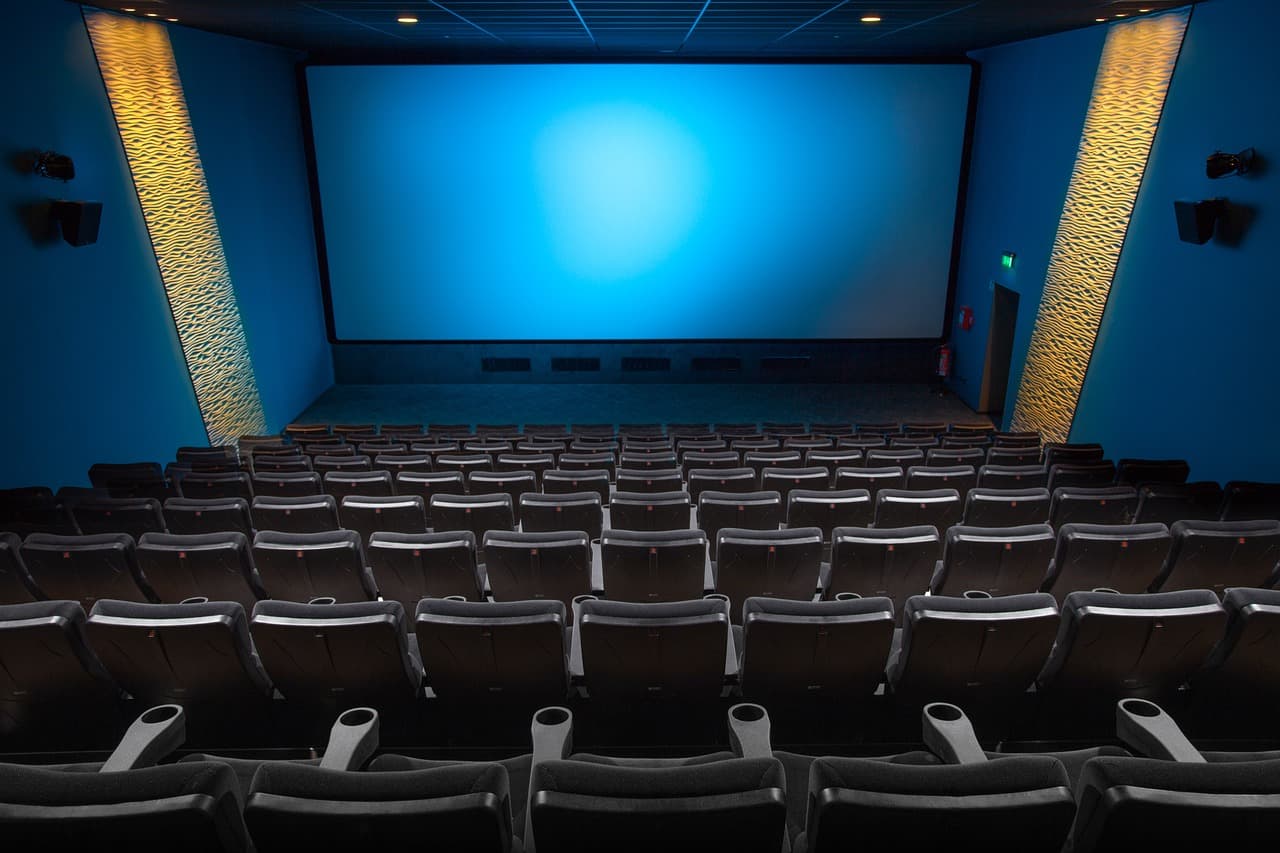
Twelve to fifteen minutes is all the team has to restore a theater to "like-new" condition. In practice, this means working under time pressure comparable to a Formula 1 pit stop. Below is a detailed checklist for a standard multiplex theater (100–150 seats, row layout, fabric-upholstered seating).
1. Work lighting and initial inspection
The staff member entering the theater turns on overhead work lighting or uses a LED headlamp. A quick visual scan determines whether there are major "incidents" — a beverage spill the size of a puddle, abandoned clothing, seat damage. Such situations require immediate reporting to the coordinator and may extend the cleaning window.
2. Trash collection and row tidying
Each staff member takes a bag or trolley and moves from the rear of the theater forward, row by row. They collect drink cups, popcorn boxes, candy wrappers. Where cup holders aren't mounted on every seat (older cinemas), they check the floor under seating — 60–70 percent of small debris ends up there. Modern multiplexes mount cup holders in armrests, simplifying the work, but many guests still leave packaging on the floor.
3. Vacuuming aisles and floor between rows
A backpack or quiet upright vacuum (below 65 dB) is standard. The machine must have a narrow brush for crevices between seats and a crevice tool for railings. Movement is swift but thorough — popcorn tends to pack into seams, especially in low-pile carpet. If the theater has deep-pile carpet, every 2–3 days it's worth using a rotary brush or drum machine during overnight cleaning.
4. Seat inspection and cleaning
Check seat surfaces and backrests for stains, spilled beverages, gum residue. Enzymatic sprays (e.g., protease-based) work on proteins in dairy and soda; apply, wait 30 seconds, remove with microfiber cloth. If the stain is fresh, effectiveness reaches ~90 percent. Once dry (>2 hours), it requires overnight extraction cleaning. On premium recline seats, check the button and lever — sometimes adhesive from beverages can jam the mechanism.
5. Visual inspection of walls, ceiling, audio system
Though marginal in a 15-minute window, it's worth a glance: no cobwebs on speakers, dust on emergency lights, projection screen damage. Most theaters in Cinema City and Helios chains have acoustic walls with microperforation that collect dust — this is a deep-cleaning task, but if visible beverage splatter appears on the wall (from a thrown cup), mark the row and report it.
6. Final inspection and sign-off
The coordinator or responsible staff member does a brief walk-through from the rear, checks walkie-talkie updates or WhatsApp group ("Theater 3 ready, 14 min"), and clears the space. In premium venues (e.g., boutique cinemas with leather seats and snack bar), it's standard to take a photo report or even a 360° video after each cleaning — a practice we at Reefa apply to Class A office maintenance and which translates well to multiplex settings.
Overnight Deep Cleaning — Theater Regeneration
When the final screening ends — often between 11:00 p.m. and 1:00 a.m. — the deep-clean crew enters with heavy equipment. This is when all tasks that cannot fit into the 15-minute window occur. Typical scope of work:
Floor sanitation
PVC, vinyl, or laminate flooring is washed with flat microfiber mops, changed between theaters, using a neutral-pH cleaner (pH 6–8). For carpeted theaters, deep vacuuming with a rotary brush occurs or — once weekly — dry powder cleaning: the powder is applied, worked in with a drum machine, left for 20 minutes, then vacuumed. This method binds dust and organic particles, refreshes color, and neutralizes odors.
Upholstery cleaning
A hot-water extraction machine (60–70°C) with upholstery shampoo removes even weeks-old beverage stains, hot-dog grease, and cosmetic residue. This is performed on a rotation: in a 10-theater multiplex, one or two theaters weekly, so all seats are treated within 5–6 weeks. Drying time for upholstery is 4–6 hours with ventilation; this must occur overnight.
Gum removal
Gum stuck to carpet, under seating, or on armrests is a multiplex nightmare. A thermal scraper (heating gum to 80–100°C) softens it, then removal is completed with a scraper and citrus or vinegar-based solvent for residue. In facilities we've serviced for years, the number of gum spots drops significantly with systematic removal — when guests see no old traces, they're less likely to leave new ones.
Window and mirror washing
Theater entrance doors, glass partitions in lobbies, restroom mirrors — all are washed with alcohol or vinegar-based cleaner, buffed with a rubber squeegee. Premium cinemas often have glass railings between floors; this work uses telescoping scaffolding and slip-resistant surfaces per safety standards.
Restroom and common area disinfection
All toilets, sinks, faucets, handles, and light switches are disinfected with quaternary ammonium (QAC) or sodium hypochlorite solution (0.1–0.5 percent active chlorine). In the food court area, HACCP-certified products are used. After disinfection, surfaces are dried with microfiber cloths dedicated to sanitary areas — zero cross-contamination.
Odor control and ventilation
Cinemas, especially smaller ones (50–80 seats), can smell stale after a weekend. Mechanical ventilation is maxed out, enzymatic odor neutralizers (not perfume masking) are applied, and — if possible — doors are left ajar for 30 minutes before closing. In air-conditioned theaters, filters are changed per manufacturer's schedule (every 3–6 months in high-dust environments).
Lobby, Restrooms, and Food Service Area — Daytime Cleanliness
Multiplex common areas experience the highest foot traffic. On a Saturday afternoon, 300–500 people may pass through the lobby per hour. Each interaction leaves fingerprints on cashier glass, floor smudges, trash near bins, beverage spills on food court tables.
Restrooms — inspection every 30–60 minutes
During peak hours, one team member is dedicated solely to restroom patrol. Checklist for one round (3–5 minutes):
- Empty waste and hygiene bins
- Restock toilet paper and towels (or refill dispensers in touch-free systems)
- Wipe sinks, faucets, mirrors
- Clean toilet bowls with brush and disinfectant
- Wipe floor in areas of spilled liquid
- Check soap dispensers
In Helios or Cinema City cinemas, restrooms often span multiple floors; dividing the team or installing a QR reporting system works well — similar to what we use in residential community management, where residents scan a code to report missing supplies.
Lobby and hallways
Lobby flooring — typically tile, terrazzo, or polished concrete — requires wet mopping every 2–3 hours on weekends. Use a flat mop with microfiber pads, a dual-bucket cart (dirty/clean water), and a low-suds cleaner to prevent slipping. Special attention goes to the main entrance: sand, salt (winter), and leaves (autumn) accumulate there. An entrance mat (e.g., rubber with fabric insert) should be vacuumed or shaken every 4 hours during peak times.
Food service area (foyer food)
If the multiplex operates a food bar (hot dogs, nachos, sandwiches), HACCP standards apply. Tables are wiped after each guest using food-contact safe cleaner; waste bins in the food area are emptied every 60–90 minutes (food residue odor), and floor around the counter is mopped every 2 hours. Sales counter areas (customer-facing) are wet-wiped hourly, removing soda and grease stains. In premium cinemas with an alcohol bar (wine, beer), extra care for glassware cleanliness is essential — one broken glass in the dishwasher creates hazard for guests.
Equipment and Cleaning Agents for Multiplexes — What Works and What Doesn't
Cinema cleaning requires equipment suited to large areas, quiet operation (to avoid disturbing adjacent screenings), and mobility.
Vacuums
- Backpack models: 5–8 liter capacity, quiet motor (60–65 dB), HEPA filters for allergy-prone staff. Excellent for rapid theater rotation — one person can cover a 100-meter auditorium in 6 minutes.
- Upright models: lighter than traditional drum units, wide nozzle (30–40 cm) makes aisle cleaning easier. Select models with adjustable brush height to avoid damaging deep-pile carpet.
- Industrial wheeled units: for overnight deep cleaning, 20–30 liter capacity, ability to mount a rotary brush. Essential in larger cinemas.
Mops and carts
- Flat mop with replaceable microfiber pads (color-coded: separate for restrooms, theaters, lobby — color-coding).
- Dual-bucket cart, 2×15 liters, with compartment for cleaning solution.
- Steam mop (optional): for point disinfection of PVC floors and seat touch-points; 100°C steam kills bacteria without chemicals.
Extraction and cleaning machines
- Pressure extraction unit for upholstery: hot water spray with detergent, simultaneous extraction — reduces drying time to 4 hours.
- Dual-pad machine (17" pads) for hard-floor buffing in lobby; used weekly with polish or maintenance spray.
Chemicals
- Enzymatic spot spray for organic stains (juices, dairy beverages, ketchup) — works in 30 seconds, biodegradable.
- Neutral floor cleaner, pH 6–8, low-suds, quick-drying.
- Restroom disinfectant, QAC or sodium hypochlorite 0.1–0.5 percent; minimum 1-minute contact time.
- Glass cleaner, alcohol or vinegar-based, streak-free.
- Gum solvent, citrus or vinegar-based; safe for flooring.
- Upholstery cleaner, neutral pH, low-foam, quick-rinsing.
All products should have Safety Data Sheets (SDS) on file — required by occupational safety inspectors and ISO 9001 audits. Reefa primarily works with EU Ecolabel or Nordic Swan certified products, which reduces allergy risk for staff and guests.
Schedule and Frequency — Zone Checklist Table
The table below represents the minimum standard for a 6–10 theater multiplex, with average weekend traffic of 2,000–4,000 guests and 800–1,500 weekday guests.
| Zone / Task | Weekdays | Weekend (Fri–Sun) | Deep Clean |
|---|---|---|---|
| Theater — express | After each screening (12–15 min) | After each screening (12–15 min) | – |
| Theater — upholstery extraction | – | – | Rotational, 1 theater/week |
| Theater — floor deep clean | – | – | Wash/brush 1×/week, rotating zones |
| Lobby, corridors (flooring) | 2×/day wet mopping | Wet mop every 2–3 h | 1×/week floor buff |
| Restrooms — spot checks and restocking | Every 90–120 min | Every 30–60 min | – |
| Restrooms — full disinfection | 1×/day (overnight) | 2×/day (afternoon + overnight) | Grout/tile deep clean 1×/week |
| Food service area (tables, counters) | Continuous wiping | Continuous wiping | Deep clean 1×/day (overnight) |
| Entry glass, display windows | 1×/day | 2×/day | High reach wash 1×/month |
| Trash bin liners (replacement) | 3–4×/day | Every 60–90 min (lobby, restrooms) | – |
| Gum removal | – | – | Check all theaters 1×/week |
In practice, a typical team consists of 2–3 people during daytime (theater rotation + lobby + restrooms) and 1–2 people on the overnight deep-clean shift. On holiday weekends (major film release, extended weekend), adding +1 daytime staff is advisable.
Case Study: Multiplex Cleaning in Cracow — 8 Theaters, 1,400 Seats
Though Reefa cannot disclose all client names, it's worth presenting a real-world operational model for a Cracow cinema. The facility has 8 theaters (80–220 seats each), ~1,400 total seats, a lobby with bar, 4 public restrooms, and a food court with 12 tables. Traffic: 2,500–3,500 guests on weekends, ~1,000 Monday–Thursday.
Team structure
- Monday–Thursday: 1 staff member daytime (10:00 a.m.–10:00 p.m.), rotating theaters + restroom checks every 2 hours; 1 overnight (11:00 p.m.–6:00 a.m.) for deep cleaning.
- Friday–Sunday: 3 daytime staff (shifts 10:00 a.m.–6:00 p.m. and 4:00 p.m.–midnight with 2-hour overlap), 2 overnight (1:00 a.m.–7:00 a.m.).
Key metrics
- Average cleaning time for 120-seat theater: 13 minutes (2 staff).
- Average overnight deep clean for 1 theater: 35 minutes (floor + seating + walls).
- Monthly chemical consumption: ~18 liters floor cleaner, 4 liters enzymatic spot spray, 6 liters restroom disinfectant.
Solutions Reefa introduced
- QR codes in every restroom — guests scan and report missing supplies or defects; alerts go to coordinator and cleaning team phones in real time.
- Photo reports after overnight deep cleaning — images of theaters sent to facility manager by 6:30 a.m., confirming readiness before opening.
- Color-coded microfiber system — yellow (restrooms), blue (theaters), green (lobby), red (food area) — zero cross-contamination.
- Dedicated facility coordinator — one person accountable for the site, familiar with screening schedule, in WhatsApp contact with cinema management.
With these solutions, the cinema improved cleanliness ratings in guest exit surveys from 7.2/10 to 9.1/10 within six months. Reefa's overall client retention is 91 percent, meaning 9 out of 10 facilities renew contracts after year one.
Cinema Cleaning Costs — What to Budget For
Multiplex facility managers typically bill cleaning in a mixed model: fixed monthly fee for deep cleaning + hourly rate for daily theater rotation. In Cracow and Katowice markets (2026), typical ranges are:
Fixed monthly all-inclusive model
- Small cinema 3–4 theaters, up to 500 seats: 4,500–6,500 PLN net/month.
- Medium multiplex 6–8 theaters, 1,200–1,600 seats: 8,000–12,000 PLN net/month.
- Large multiplex 10+ theaters, 2,000+ seats: 14,000–20,000 PLN net/month.
Included: overnight deep cleaning 7 days/week, express theater rotation after each screening, restroom checks every 60 minutes on weekends, cleaning chemicals, equipment (vacuums, mops, carts), coordinator oversight, team liability insurance.
Hourly model + materials
- Labor rate: 38–52 PLN net per hour (varies by shift — nights +20 percent, Sundays/holidays +50 percent).
- Chemicals invoiced as used or flat fee ~800–1,200 PLN/month for medium facilities.
What affects pricing?
- Seating type: upholstered fabric absorbs more time than eco-leather or plastic.
- Floor type: carpeted spaces require rotary brushing; PVC flooring requires only mopping — ~15 percent time difference.
- Restroom count and layout (multiple floors = travel time).
- Food service area: full hot-food kitchen +30 percent to time and chemicals (HACCP compliance).
- Screening schedule: cinemas with matinee showings require earlier staff availability (+10–15 percent hourly surcharge for inconvenient hours).
Reefa's experience shows that the most cost-effective model is an annual contract with monthly flat fee and flexible "event" clause: when cinema hosts a special screening or overnight marathon, extra hours are billed at a pre-agreed rate (e.g., 42 PLN net/hour), avoiding ad-hoc negotiation.
If you operate a facility and want a custom quote aligned with your screening schedule, contact our Cracow team or Katowice team. We offer free facility audits and schedule proposals within 48 hours.
Top Challenges and Solutions
1. Screening schedule delays
Film running longer than scheduled, projector malfunction, late staff — any of these shrinks the cleaning window. Solution: build a 5-minute buffer into crew schedule, maintain walkie-talkie or WhatsApp contact between cleaning coordinator and cinema shift manager.
2. Difficult stains (beverages, gum, cosmetics)
The longer a stain sits, the deeper it penetrates upholstery fibers. Solution: enzymatic spray in every team member's pocket, immediate response, mark problem spots with tape for overnight extraction.
3. Odors after intense weekend
Food residue, perspiration, perfumes — the mixture can deter guests. Solution: max out mechanical ventilation post-last-screening, enzymatic odor neutralizers (not perfume masking), regular HVAC filter replacement, powder-based carpet refreshers.
4. Staff turnover
Overnight and weekend shifts, time pressure — factors driving high turnover. Solution: permanent contracts (not temp), fully legal employment with statutory social/health insurance, quarterly performance bonuses, BHP and equipment training. Reefa offers 200–300 PLN net quarterly bonuses for employees at the same client over one year.
5. Real-time quality control
Facility managers can't inspect every theater overnight. Solution: photo reports post-deep-clean (5–10 images per theater), digital checklists (Google Forms or dedicated app), weekly surprise audits, anonymous guest cleanliness surveys.
Certifications, Safety, and Insurance for Cinema Cleaning Staff
Work in a multiplex carries hazards: dark theaters (tripping), stairs in seating areas, chemical exposure, high-reaching tasks (front-window washing). The team must meet:
- Occupational health exams — pre-employment, periodic, and periodic reviews (Polish Labor Code, art. 229).
- BHP safety training — general pre-employment + site-specific instruction (industrial vacuum, extraction machine, chemicals).
- Equipment operation training — pressure extractors, dual-pad burnishers, thermal scrapers.
- HACCP (if cleaning food service areas) — food hygiene basics, FIFO procedures, food-contact surface cleaning.
- Liability insurance for team — Reefa carries €1,000,000 PLN OC coverage, protecting the client against material damage (e.g., premium seat damage) or personal injury (e.g., guest slip-fall on wet floor).
- EU Ecolabel or Nordic Swan product certification — increasingly required by chains (Cinema City, Helios) in tenders.
Facility managers should receive copies of all documentation before contract signing and verify them annually. Reefa delivers a full compliance package within one week of contract execution.
Sustainable Cinema Cleaning — Eco-Conscious Multiplex Operations
Multiplexes generate significant waste: plastic cups, popcorn boxes, candy wrappers. Responsible cleaning can support a cinema's zero-waste policy:
- Source separation: three-bin receptacles in lobby (paper, plastic, organics), separate collections in theaters where available.
- Biodegradable products: enzymatic formulations, neutral pH, EU Ecolabel or Nordic Swan certified, phosphate and chlorine-free.
- Microfiber over disposables: one microfiber mop pad withstands 200–300 washes, replacing hundreds of paper towels.
- Precise dosing: pump dispensers on chemical bottles prevent waste; 1 liter floor cleaner concentrate yields 100 liters working solution.
- Equipment recycling: vacuums and extractors serviced and refurbished, not discarded; spare parts available from manufacturers.
At facilities we service, we promote a clean & green model — high cleanliness paired with minimal carbon footprint. Learn more about our sustainability approach on our About page.
Cinema Operator Collaboration — Communication and SLA
Effective multiplex cleaning requires close coordination between cleaning staff and cinema operations. Key SLA (Service Level Agreement) elements:
1. Real-time screening schedule
Ideally a shared Google Calendar or cinema CMS integration (e.g., Vista, Veezi). Cleaning staff sees schedule updates 24 hours in advance.
2. Response time for urgent calls
"Beverage spill in Theater 5, Row 8" — maximum response: 5 minutes during hours, immediate spot-clean without interrupting adjacent screening (rear-door entry, quiet work).
3. Quality reporting
Weekly PDF report: theaters serviced, hours worked, chemical usage, facility manager feedback, quality rating (1–5 scale). Reefa sends Monday morning.
4. Escalation and accountability
Who to contact if equipment fails mid-shift? Who approves add-on hours for special events? All documented in contract addendum.
5. Quality audits
Quarterly joint inspection with facility manager, 50–60 point checklist, photo documentation, corrective action plan if standards not met within 7 days.
A well-designed SLA protects both parties — cleaning firm knows expectations, cinema has service-level guarantees and complaint mechanisms.
Frequently Asked Questions
How much does monthly multiplex cleaning (6–8 theaters) cost?
In Cracow and Katowice in 2026, a typical all-inclusive contract (overnight deep cleaning 7 days/week + express theater rotation after screenings + restroom checks) for a 6–8 theater multiplex (1,200–1,600 seats) ranges from 8,000–12,000 PLN net per month. Price depends on seating material (fabric vs. eco-leather), floor type (carpeted spaces take more time than PVC), restroom count, and food service presence. Hourly model: 38–52 PLN net/hour plus ~800–1,200 PLN/month chemical fee. Reefa offers free facility audits and custom schedule proposals within 48 hours — contact our Cracow team or Katowice team for a quote aligned to your screening schedule.
How long does express theater cleaning between screenings take?
A standard team of two cleans a 100–150 seat theater in 12–15 minutes. This includes trash collection (cups, popcorn boxes), floor vacuuming and aisle care, seat inspection, spot-stain removal with enzymatic spray. Larger theaters (200+ seats) need three staff or 18–20 minutes. Synchronization with screening schedule is critical — a 5-minute delay cascades, potentially shifting the entire evening lineup by 30 minutes. Reefa uses walkie-talkie and WhatsApp groups so coordinators track real-time schedule changes.
How often should theater seats be extraction-cleaned?
Seating in high-traffic areas (premium theaters, beverage-service zones) should be extraction-cleaned every 4–6 weeks. Lower-traffic theaters need cleaning every 8–10 weeks. A typical 8-theater multiplex rotates: one theater per week, covering all in 2 months. Extraction with hot water (60–70°C) and enzymatic cleaner removes beverage stains, grease, and cosmetics. Drying takes 4–6 hours with ventilation, so work is done overnight (1:00–6:00 a.m.). Regular extraction extends seat life and reduces organic odors.
Which cleaning agents are safest for cinema upholstery?
Most effective and safest are enzymatic products with neutral pH (6–8), biodegradable, EU Ecolabel or Nordic Swan certified. Enzymes (proteases, lipases) break down proteins and fats in organic stains (dairy beverages, sauces, ketchup) without damaging fabric. For eco-leather seats, alcohol or vinegar-based products avoid leaving greasy film. Avoid chlorine-based or high-alkaline (pH > 10) products — they fade color and harden fibers. Reefa uses precise dispensers to respect recommended dilution (typically 1:20 or 1:50 concentrate:water), protecting both material and environment.
Does cinema cleaning staff need special BHP safety training?
Yes. Staff must complete general occupational safety training plus site-specific instruction covering industrial vacuum operation, pressure extractors, thermal scrapers, and chemicals (SDS cards). Additional training includes work in dimmed spaces (theaters), safe stair navigation, and — if accessing food areas — HACCP basics (food hygiene contact). Staff require pre-employment, periodic, and follow-up medical exams per Polish Labor Code (art. 229). Reefa employs staff legally with full statutory insurance and mandatory training before site start. We also carry 1,000,000 PLN OC liability coverage protecting clients against material or personal injury claims.
How do you scale cleaning for a busy cinema weekend when guest numbers triple?
On weekends (Fri–Sun), add minimum one daytime staff and one overnight deep-clean staff. Typical: weekday 1 daytime + 1 overnight → weekend 3 daytime (shifts 10:00 a.m.–6:00 p.m. and 4:00 p.m.–midnight with 2-hour overlap) + 2 overnight (1:00–7:00 a.m.). Task rotation: one person dedicated to theaters, one to restrooms/lobby, third backup during peak hours (6:00 p.m.–9:00 p.m.). Restrooms shift to 30–60 min checks instead of standard 90–120 min. Lobby wet-mopped every 2–3 hours. Synchronize schedule with cinema CMS or shared calendar to catch surprise screenings or extended showtimes. Contact us for a weekend-specific schedule — we'll prepare one in 48 hours.