Automotive Workshop Cleaning — Oils, Lubricants, Health & Safety Standards
Professional automotive workshop cleaning goes beyond oil stain removal—it involves hazardous waste management, occupational health and safety compliance, and maintaining diagnostic workstation cleanliness.
Professional automotive workshop cleaning goes beyond oil stain removal—it involves hazardous waste management, occupational health and safety compliance, and maintaining diagnostic workstation cleanliness.
Professional Automotive Workshop Cleaning
Cleaning an automotive workshop is a specialized process requiring expertise in oil stain removal, hazardous waste management, and occupational health and safety (H&S) compliance. Unlike standard commercial facilities, automotive workshops generate petroleum-based contamination, lubricants, brake dust, and metal waste that require dedicated absorbents, degreasers, and documented segregation in accordance with regulations on hazardous substances.
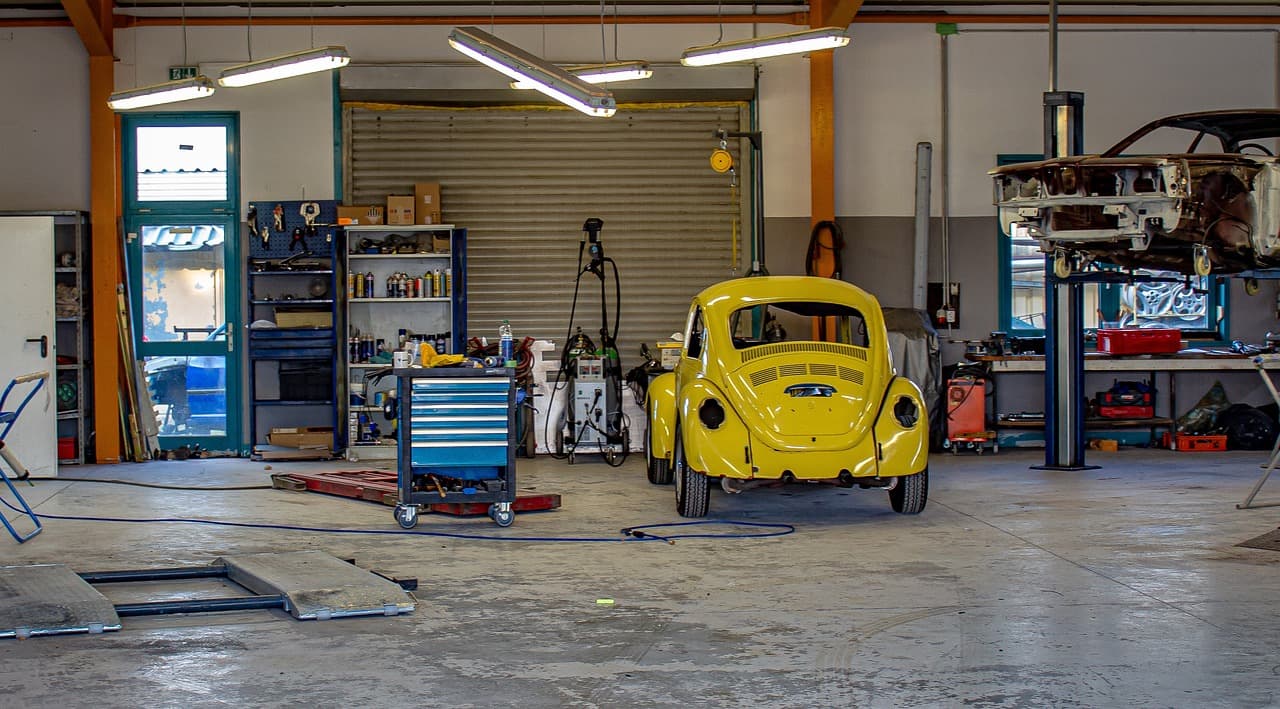
Workshop owners in Cracow and Katowice face the challenge of balancing operational efficiency with sanitary and legal requirements. A typical 200–300 m² workshop contains 4–6 work stations, diagnostic pits, a parts storage area, and a customer service office. Each zone requires different cleaning frequencies and different cleaning agents—from daily collection of metal shavings to weekly washing of floor surfaces with specialized degreasing preparations.
Since 2020, we have worked with production and logistics facilities in the Cracow metropolitan area, and since 2024 also in Katowice—including fleet service workshops where operational continuity and minimizing downtime are critical. Our team understands how to clean diagnostic pits without interrupting mechanic work and how to manage hazardous waste according to regional environmental authority (WIOŚ) requirements.
Summary
- Contamination specifics: engine oils, brake fluids, lubricants, brake dust (asbestos in older vehicles), metal shavings, chemical detergents
- Key zones: diagnostic pits, work stations, parts storage, customer service office
- H&S standards: mandatory segregation of hazardous waste (group 13 02 in waste catalog), waste transfer forms, absorbents for petroleum-derived substances
- Cleaning frequency: daily—basic station and pit cleaning; weekly—thorough floor washing and degreasing; monthly—high-pressure washing
- Cost: 1,500–3,000 PLN net monthly for a 200–300 m² workshop (depending on frequency and waste management scope)
- Documentation: hazardous waste transfer protocols, H&S reports, safety data sheets for all degreasers used
Why Does a Workshop Need Professional Cleaning?
An automotive workshop is a facility where cleanliness directly impacts worker safety, team productivity, and customer perception when they collect serviced vehicles. Oil stains on the floor create slip hazards—according to data from the Polish Labour Inspectorate, falls on slippery surfaces are among the most common causes of accidents in the automotive industry.
Regular removal of lubricants and operational fluids extends the lifespan of floor surfaces—concrete and epoxy resin lose their slip-resistant properties without proper maintenance. Organic and chemical contamination penetrates the substrate structure, leading over time to corrosion and the need for costly renovation.
For clients visiting the service office, cleanliness signals professionalism. A workshop where work stations are organized and the waiting area is neat builds trust and increases the likelihood of referrals. This is especially important for diagnostic stations serving corporate fleets, where facility managers and administrative directors make supplier selection decisions—groups particularly attentive to operational standards.
What Types of Contamination Occur in Automotive Workshops?
Workshops generate specific types of soiling that require different techniques than those used in office cleaning or retail environments.
Oils and lubricants are the primary challenge. Engine oils, transmission oils, hydraulic oils, and plastic lubricants create persistent stains that cannot be removed by standard mopping without proper absorbents and degreasers. It is essential to use mineral or organic absorbents (perlite, polypropylene nonwoven) immediately after a spill, followed by specialized degreasers with pH suitable for the floor type.
Operational fluids—brake fluid, coolant, power steering fluid—often contain glycols or glycol ethers that are hygroscopic and attract moisture. As they dry, they form a sticky coating difficult to remove. They require detergents with nonionic surfactants and hot water.
Brake dust and metal dust accumulate in diagnostic pits and at grinding stations. Older brake pads may contain asbestos—although banned in the EU since the early 21st century, vehicles imported from outside Europe may still contain it. Collecting brake dust requires vacuums with HEPA filters and wet cleaning to prevent secondary dust emissions.
Metal shavings, filings, and abrasive grit result from machining and welding. Sharp fragments can damage cleaning equipment—an industrial magnet or workshop vacuum with a metal container is standard in such facilities.
Chemical detergents—solvents, rust removers, fuel injector cleaners—if spilled, require neutralization and removal according to the product safety data sheet.
How to Clean Diagnostic Pits and Work Stations?
Diagnostic pits are enclosed spaces with increased risk of vapor and liquid contamination accumulation. Cleaning should be done with proper ventilation and access to pressurized water.
Daily pit protocol: removing spilled fluids with absorbents (perlite, granulate), sweeping metal shavings, collecting used operational materials (rags, gloves). Immediate response to leaks is crucial—the longer oil remains on concrete, the deeper it penetrates.
Weekly deep washing: high-pressure washing (100–150 bar) with degreasing detergent, rinsing with clean water, drying with a squeegee. In Katowice, we service a fleet workshop where pit washing is done on weekends—outside working hours to avoid disrupting vehicle service.
Work stations require a methodical approach: first collect solid waste (packaging, filters, paper), then vacuum tools and shelves, finally wash the floor. Work surfaces (benches, tool cart handles) should be degreased with isopropyl alcohol-based cleaner or alkaline detergent.
Important: never use household vacuums to collect liquids—a wet-dry industrial vacuum with appropriate sealing class is required.
What H&S Standards Apply to Workshop Cleaning?
An automotive workshop is subject to regulations on hazardous substances, industrial waste, and worker health protection. The cleaning staff must have current H&S training and instruction on handling hazardous waste.
Hazardous waste—according to the Regulation of the Minister of Climate and Environment on the waste catalog, spent oils and lubricants fall under category 13 (oily and other liquid fuel waste). This requires:
- Segregation at source—separate containers for spent oils, filters, absorbents contaminated with petroleum-derived substances
- Documenting waste transfer—a waste transfer form (KPO) issued by a licensed waste collection company
- Storage in sealed containers in a designated storage area protected against leaks
Reefa's team, which has served facilities in Cracow since 2020, has completed training on handling hazardous waste and works with local licensed waste transport companies for category 13 waste.
Data protection (RODO) and customer information access: the service office often contains documents with personal data (repair orders, vehicle registration details). Cleaning staff must have a signed data processing agreement (RODO, art. 28) or be instructed not to review or move documents—surface dusting and wiping without touching papers is sufficient.
Personal protective equipment (PPE): chemical-resistant gloves (nitrile or neoprene), slip-resistant footwear with oil-resistant soles, safety goggles when working with alkaline detergents, FFP2 mask when vacuuming brake dust.
How Often Should a Workshop Be Cleaned?
Frequency depends on traffic intensity, number of work stations, and type of work performed (mechanics, bodywork, painting). The schedule below is standard for a 200–300 m² workshop with 4–6 work stations.
Daily (15–30 minutes):
- Sweeping/vacuuming main traffic areas
- Collecting spilled fluids with absorbents
- Emptying waste bins (general and segregated)
- Cleaning service office: vacuuming, surface wiping, restocking soap and towels
Weekly (2–3 hours):
- Floor washing in all zones with degreasing detergent
- Pit cleaning with high-pressure washer
- Degreasing work stations, benches, walls at work areas
- Cleaning interior windows in service office
- Disinfecting restrooms and social areas
Monthly (4–6 hours):
- High-pressure washing of entire workshop including storage areas
- Cleaning ductwork ventilation (grilles, filters)
- Washing glass surfaces (windows, entrance doors)
- Reviewing absorbent stocks and replenishing supplies
For intensive operations (e.g., fleet workshops servicing dozens of vehicles daily), daily floor washing in key zones is recommended.
What Does Professional Workshop Cleaning Cost?
The cost of automotive workshop cleaning in Cracow and Katowice in 2026 depends on area, frequency, scope of work, and whether we also provide hazardous waste collection and documentation services.
Typical 200–300 m² workshop (4–6 stations, pits, service office):
- Basic package (daily basic cleaning + weekly deep washing): from 1,500 PLN net monthly
- Extended package (more frequent deep washing, monthly high-pressure cleaning, hazardous waste documentation): 2,200–3,000 PLN net monthly
Factors affecting price:
- Contamination level—a bodywork-painting shop generates more dust and paint mist than a tire replacement center
- Floor type—raw concrete requires stronger degreasers and longer washing time than epoxy flooring
- Water and power availability—lack of pit-based installations extends work time
- Documentation requirement—if the workshop is subject to ISO 14001 audits (environmental management systems), comprehensive documentation of cleaning and waste processes increases administrative scope
For comparison: garage hall cleaning in residential facilities (without industrial contamination) costs from 8 PLN net/m²/month, while a workshop with hazardous waste may reach 10–12 PLN net/m²/month.
What Equipment and Detergents Should Be Used?
Professional workshop cleaning requires specialized equipment not always available in standard cleaning kits.
Absorbents: perlite (mineral granulate), polypropylene nonwoven, oleophobic sorption mats. Sawdust is prohibited—it is difficult to collect and easily transfers contamination.
Degreasing detergents: alkaline preparations (pH 10–13) based on sodium or potassium hydroxide with nonionic surfactants. Important: always verify compatibility with floor material—some epoxy resins are sensitive to strong alkali.
High-pressure washers: 100–150 bar pressure, water temperature up to 60°C (warm water improves lubricant dissolution). Higher pressure can damage pit seals.
Industrial vacuums: minimum class L sealing (dust with NDS >1 mg/m³), wet-dry function, tank capacity min. 30 l, HEPA filter for brake dust vacuuming.
Floor squeegees: stainless steel with oil-resistant rubber—standard squeegees lose elasticity when in contact with solvents.
Disinfectants: for restrooms and social areas—quaternary ammonium compound (QAC) based preparations, effective against bacteria and fungi, quick-drying.
Reefa has a full range of industrial equipment and maintains a register of safety data sheets for all products used—a requirement in facilities subject to H&S audits.
Case Study: Katowice Workshop
Since November 2024, we have serviced an automotive workshop in Katowice specializing in fleet vehicle maintenance (vans and cars). The 280 m² facility includes 5 work stations, two diagnostic pits, a parts store, and a service office.
Operational challenges:
- Heavy traffic (15–20 vehicles daily)—limited opportunity for work breaks
- Contamination: primarily engine oils, brake fluids, brake dust, polish residues
- Documentation requirement—the client is subject to external audits from fleet owner
Reefa's solution:
- Basic cleaning daily at 18:00–19:00 (after last customer leaves): sweeping, fluid collection, office cleaning
- Deep washing Saturday mornings (6:00–9:00) before weekend opening: pit washing with high-pressure equipment, work station degreasing
- Dedicated site coordinator with mobile app—photo reports after each cleaning sent to workshop owner
- Partnership with licensed category 13 waste collection company—KPO documentation provided electronically to client
Results: implementation of QR system for quick reporting (e.g., oil spill during day), response time reduced below 2 hours (during workshop hours). Owner noted positive feedback from fleet clients regarding waiting area and work station cleanliness.
How to Manage Workshop Hazardous Waste?
An automotive workshop is a producer of hazardous waste under waste legislation and must maintain records in accordance with regulations issued by the Minister of Climate and Environment.
Key waste categories:
- 13 02 — Spent engine, transmission, and lubricating oils
- 16 01 09 — PCB-containing components (capacitors in older vehicles—rare)
- 15 02 02* — Absorbents, filter materials, wiping cloths contaminated with hazardous substances
Legal obligations:
- Segregation at source—separate sealed containers labeled with waste code
- Storage in designated area (protected against precipitation and soil leakage)
- Waste transfer only to licensed operator
- Record keeping—waste transfer form (KPO) and entry into waste database (BDO)
The cleaning team is not authorized to independently dispose of hazardous waste—they may only collect contaminated absorbents and rags in designated containers. Transport and documentation are the responsibility of a specialized company with waste activity registration.
Reefa arranges partnerships with such companies in Cracow and Katowice and trains our team on proper on-site waste segregation.
Differences Between Workshop and Other Industrial Facilities
Automotive workshop cleaning differs from post-construction cleaning or post-renovation cleaning in terms of continuous contamination and need to maintain operations.
Workshop vs. construction site:
- Construction: one-time project, large quantities of solid waste (rubble, foam, plastic), no operational requirements
- Workshop: continuous operation, liquid and chemical contamination, need to clean without interrupting work
Workshop vs. manufacturing facility:
- Manufacturing: typically uniform contamination (e.g., dust in mill, shavings in sawmill), opportunity to plan shutdowns
- Workshop: diverse contamination (oils, lubricants, metals, chemicals), clients present on-site, high aesthetic standard required in office zone
Workshop vs. garage halls:
- Garage halls in residential buildings: mainly dust, tires, occasional oil leaks from private vehicles, lower H&S requirements
- Workshop: intensive mechanical work, hazardous waste, H&S and environmental audits
The key difference is full documentation requirement—workshops serving corporate fleets (e.g., courier companies, transport enterprises) are subject to client inspections, meaning photo documentation and reports are necessary.
Frequently Asked Questions
How much does 1 hour of workshop cleaning cost?
The hourly rate for cleaning staff in B2B mode is 45–70 PLN net per person-hour (2026, Cracow and Katowice). For an average 200–300 m² workshop, daily basic cleaning takes 20–30 minutes (1 person), weekly deep cleaning takes 2–3 hours (2 people). In a subscription model, monthly cost is 1,500–3,000 PLN net, corresponding to an effective rate of approximately 50–55 PLN net/person-hour when including travel and coordination. It is worth noting that questions about mechanic labor rates (appearing in search results) relate to vehicle service and do not directly apply to cleaning—there hourly rates are 120–200 PLN gross, but this is a completely different billing model.
What cleaning materials should be used in a workshop?
For automotive workshops, we recommend industrial cleaning materials—preferably mats and cloths made from polypropylene nonwoven (nonwoven, oil and solvent resistant). Avoid cotton materials, which quickly saturate and lose structure. Ideal solutions include multi-use microfiber cloths with high weight (minimum 300 g/m²) for work surfaces and single-use sorption mats for large liquid volumes. Important: soiled rags and materials contaminated with oils are hazardous waste (code 15 02 02*)—they must go in a separate container and be transferred to a licensed operator with a waste transfer form.
How often should diagnostic pits be cleaned?
Diagnostic pits require basic cleaning daily—removing spilled fluids, sweeping metal shavings, collecting operational materials. Deep washing with high-pressure equipment and degreaser is recommended weekly, preferably on weekends or after hours to avoid blocking work stations. In workshops with very heavy traffic (fleet workshops, diagnostic stations serving dozens of vehicles daily), pit washing can be increased to twice weekly. Immediate response to leaks is critical—the longer oil remains on concrete, the deeper it penetrates and the harder it is to remove.
Does a workshop have to keep hazardous waste records?
Yes—an automotive workshop is a producer of hazardous waste under waste legislation and must maintain records in accordance with regulations issued by the Minister of Climate and Environment. Obligations include segregating waste at source (separate containers for oils, filters, absorbents), storing in a designated protected area, and transferring only to licensed operators with waste transfer forms (KPO). Since 2020, entry into the waste database (BDO) is mandatory. The cleaning team can support waste segregation on-site but is not authorized to transport hazardous waste—this is the responsibility of a specialized licensed company.
How to remove old, absorbed oil stains from concrete?
Old oil stains already absorbed into concrete require alkaline degreasers with high pH (10–13) based on sodium or potassium hydroxide, plus mechanical action with a wire brush or cleaning machine with a pad. Procedure: saturate the stain with degreaser, leave for 15–30 minutes (allowing active ingredients to penetrate concrete structure), scrub with machine, rinse with hot pressurized water at 100–150 bar. For very deep contamination, use an absorption paste (granulate with detergent), leave overnight, then collect and rinse. If concrete is unsealed, apply an oleophobic impregnating coat afterward to ease future maintenance.
Can a workshop be cleaned during operating hours?
Yes—with proper scheduling and operational setup, cleaning can occur during workshop hours, minimizing disruptions. The key is dividing the facility into zones and cleaning each when free of vehicles and mechanics. In practice: basic cleaning (fluid collection, sweeping) is done between services, while deep work (high-pressure washing, degreasing) is scheduled for evenings or weekends. In Katowice, we service a fleet workshop operating 6 days per week—pit and station washing occurs Saturday mornings before opening. A dedicated coordinator agrees on schedules with the owner, and a QR system enables quick reporting of spills during operating hours.
Summary—Where to Start?
If your automotive workshop needs professional cleaning compliant with H&S standards, we begin with a facility audit: area, number of stations, type of work, floor type, desired frequency, waste documentation requirement. Based on this, we prepare a detailed proposal including schedule, scope, degreasers and absorbents, and partnership with licensed waste collection.
Reefa services automotive workshops in Cracow and Katowice, providing legally employed and insured staff, a dedicated facility coordinator, and photo reports after each cleaning. Our liability insurance up to 500,000 PLN covers damage during cleaning work—important in facilities full of expensive diagnostic equipment and customer vehicles.
Contact our team through the Cracow contact form to arrange a free quote and site visit—during which we will assess your workshop's specifics and propose the optimal service model.