Reception Area Cleaning — Creating First Impressions in Office Buildings
Discover the 8 essential elements of a pristine reception area — from smudge-free desks to polished marble floors and controlled scents. Learn how to deliver an impeccable first impression in premium office buildings.
Discover the 8 essential elements of a pristine reception area — from smudge-free desks to polished marble floors and controlled scents. Learn how to deliver an impeccable first impression in premium office buildings.
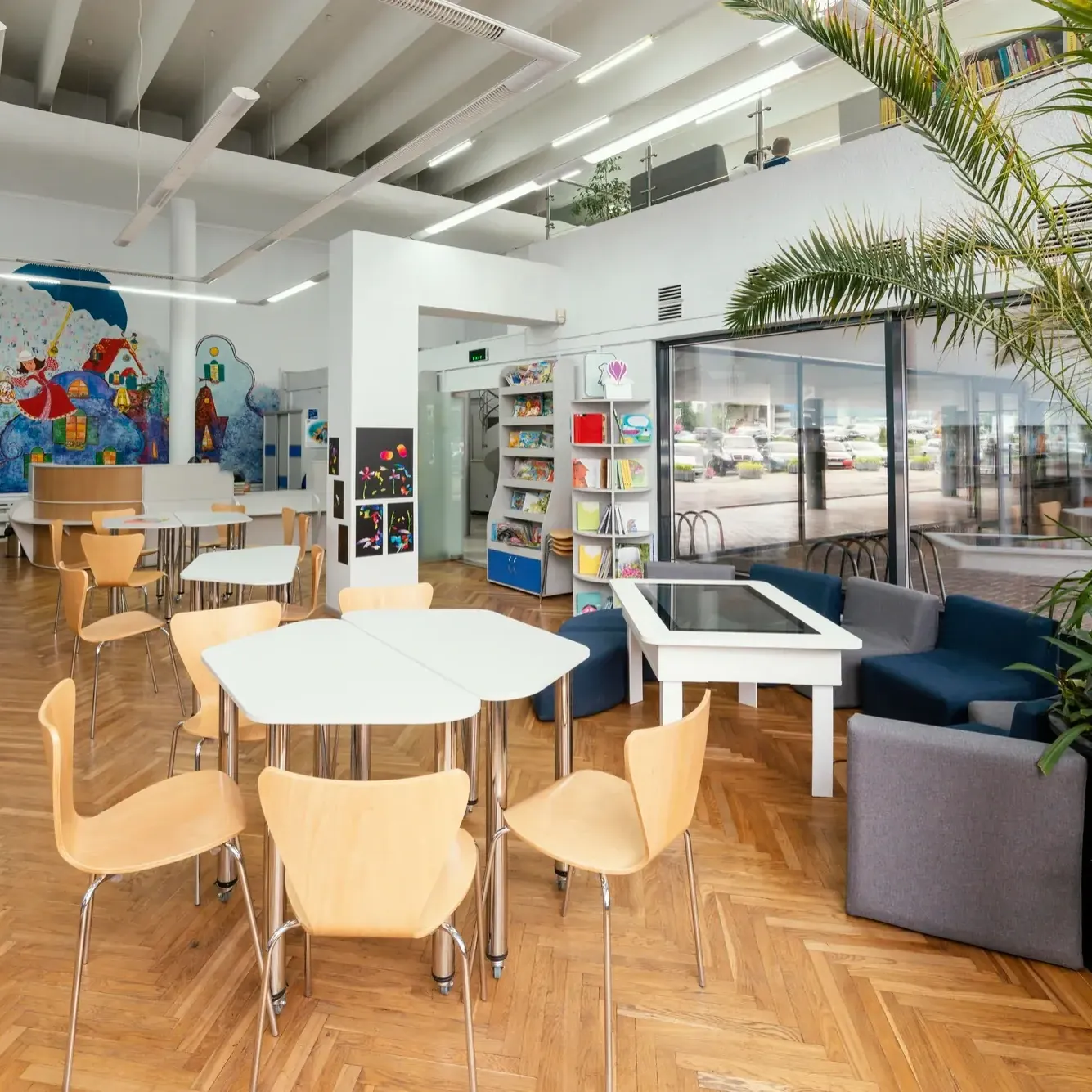
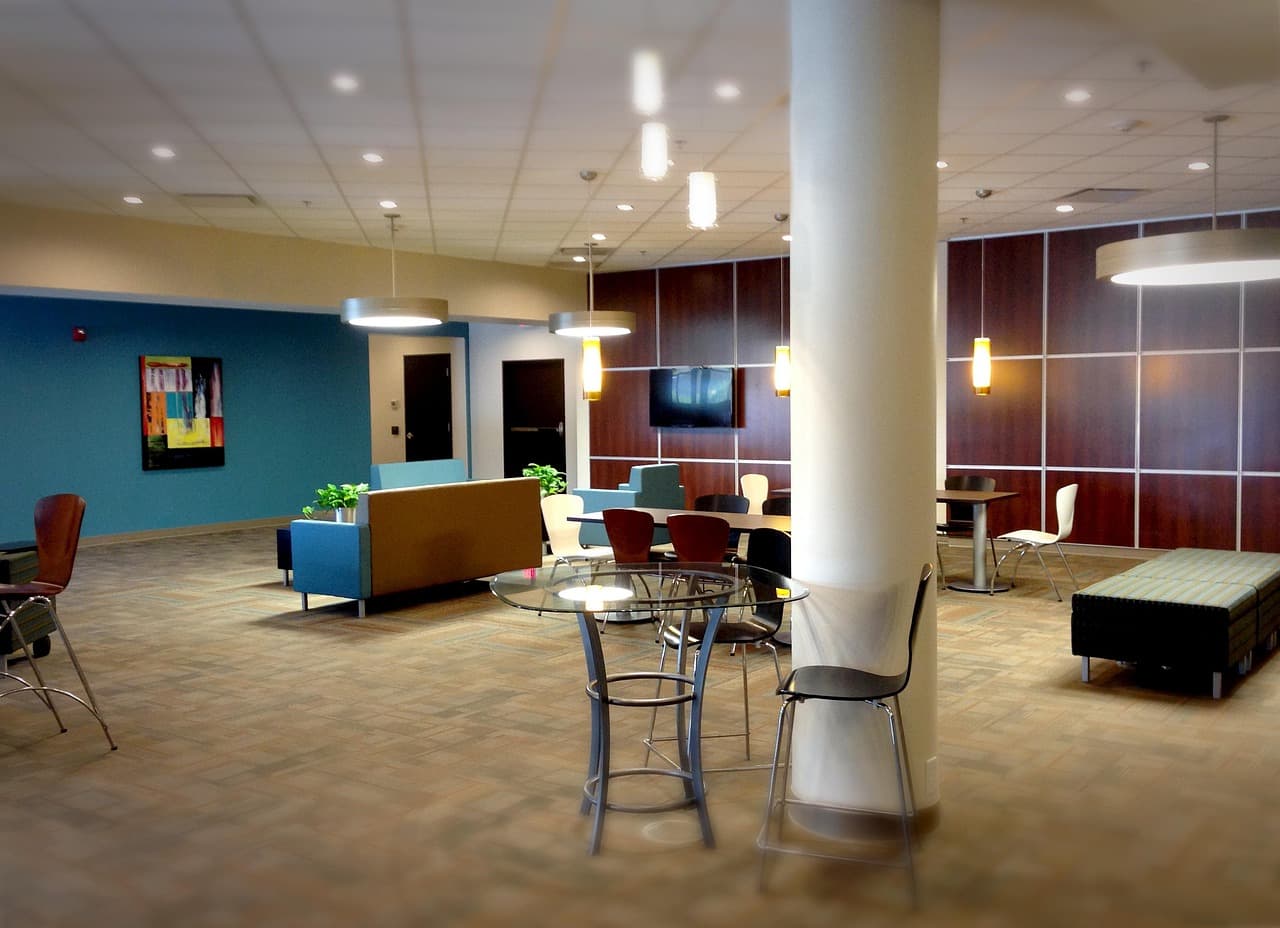
Reception area cleaning in an office building is a daily process of maintaining the entrance zone in impeccable condition — it encompasses cyclical cleaning of the reception desk, floors (carpeting, marble, porcelain tile), glass doors and partitions, potted plants, coffee and water stations, adjacent restrooms, elevators, and odor control, typically performed 2-3 times daily in high-traffic facilities.
A premium office building reception area receives 300–500 visitors daily — tenants, clients, couriers, job candidates. Each visitor forms an opinion about the building within the first 7 seconds of entry, which is why first impression is crucial for property managers and commercial real estate administrators. In this article, we present 8 elements of a perfect reception area and the frequency and product standards we apply in office building cleaning in Cracow and Katowice since 2020.
The Reefa team manages office buildings with complete photo reports after each cleaning cycle, a dedicated building coordinator, and liability insurance up to 500,000 PLN — your reception is your business card, and our responsibility extends to every detail.
Quick Summary
- The reception desk should be wiped 2-3 times daily with odorless, fast-drying products that leave no smudges or fingerprints.
- Entrance zone floors (marble, carpeting, tile) require vacuuming or mopping at each cycle plus continuous removal of high-traffic soiling.
- Glass doors and partitions are the office building's calling card — cleaned with antistatic products to eliminate fingerprints and rain streaks.
- Potted plants, coffee/water station, adjacent restrooms, and elevators must be monitored on the same schedule as the desk to ensure cohesive guest experience.
- 2-3 cycles daily (morning, midday, evening) is standard in Class A facilities with traffic >200 people/day.
- Odor control (neutral aerosols, absorbers, ventilation) completes the sensory cleanliness loop — reception cannot smell of cleaning products or air conditioning.
Why Reception Determines Perception of the Entire Building
Reception is the first and last point of contact for tenants, business partners, and potential clients with the property. Property managers understand that regardless of the quality of office space on upper floors, the entrance zone shapes the overall impression of professionalism and building class.
A neglected desk with fingerprints, dusty plants, smudged elevator glass, or cleaning product odor signals a lack of attention to detail — and in the eyes of investors and tenants, details are a proxy for managing the entire property. This is why standards for office building cleaning in the premium segment differ from typical offices in both frequency and product selection and quality control protocols.
In practice, this means implementing 2-3 daily cycles, a photographic checklist after each cleaning, and firm SLAs (Service Level Agreements) — for example, response time to incident reports <24h, available through a QR system in the reception area. The Reefa team has been implementing such protocols since 2020, working with office buildings in Cracow's and Katowice's business districts.
1. Reception Desk — Zero Dust, Zero Fingerprints, Zero Smudges
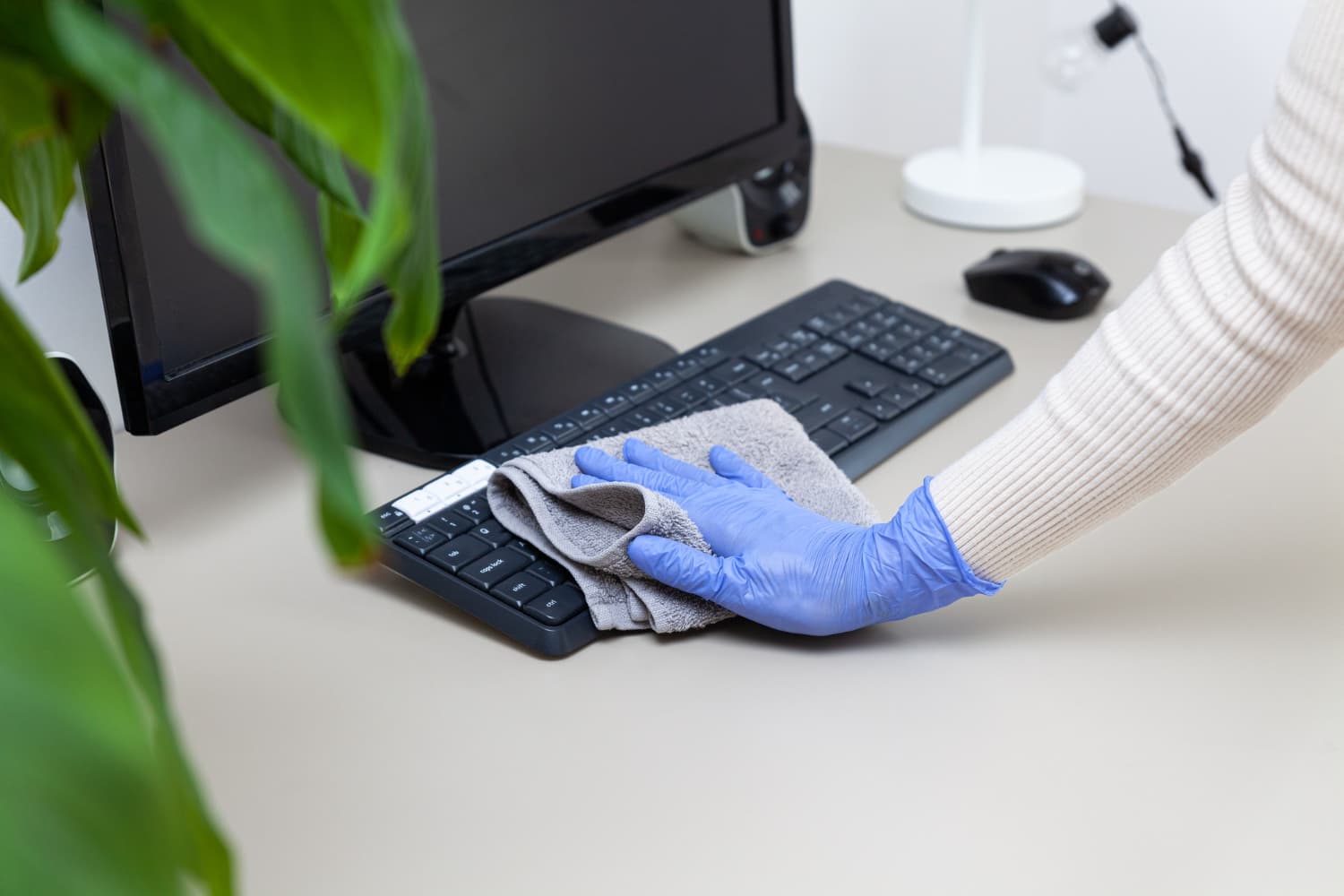
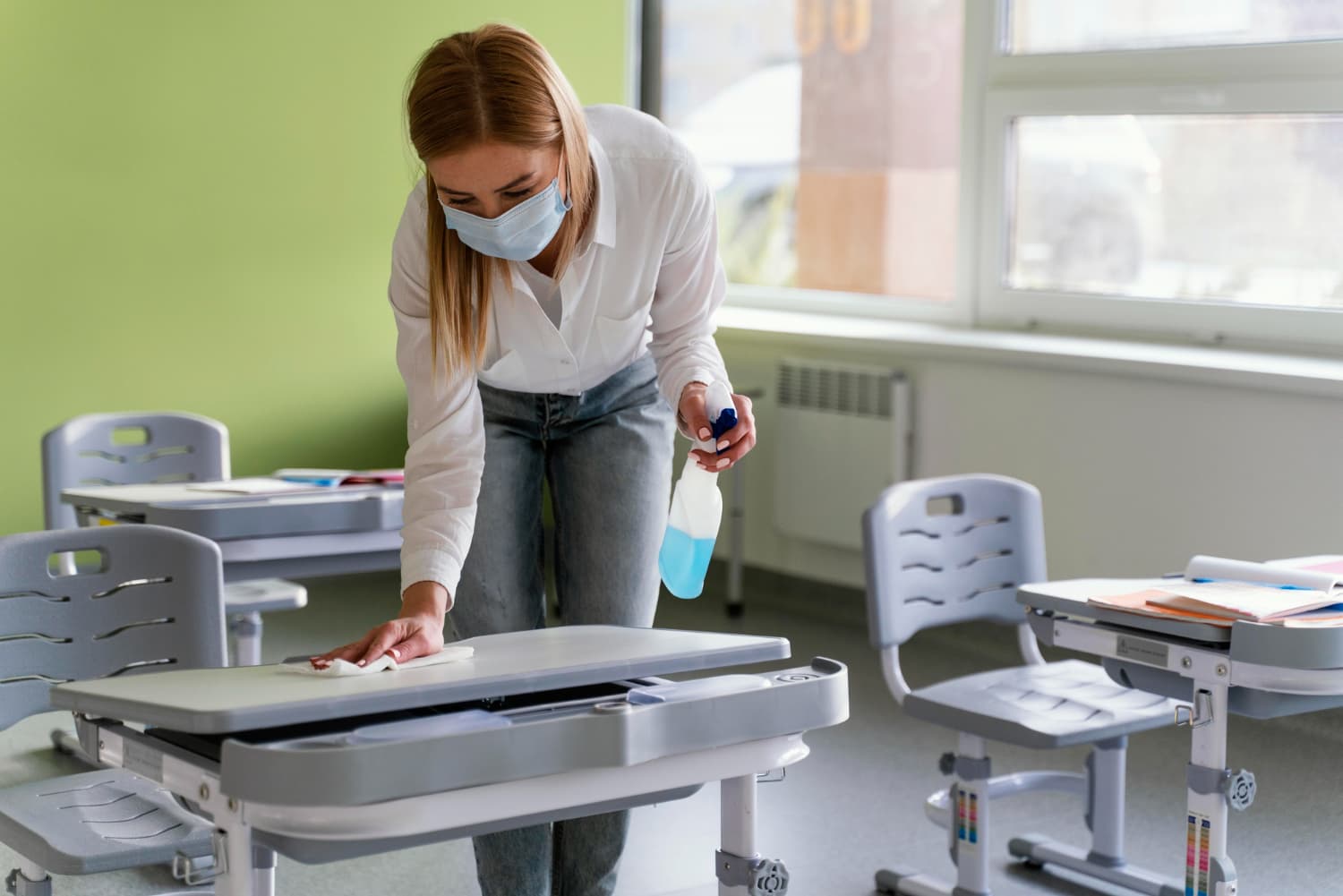
The desk is the most frequently touched surface in reception: receptionists, visitors signing documents, couriers leave fingerprints on the countertop, phone, tablet displays, drawer handles. Daily dust accumulates from the air conditioning system and enters from outside.
Frequency: 2-3 times daily — in the morning before opening, at midday (lunch break), and in the evening after guests depart.
Products: odorless, antistatic preparations with fast drying (e.g., isopropyl alcohol-based or quaternary ammonium compositions). Avoid foams and citrus sprays, which leave odor and may irritate allergy-prone clients.
Protocol:
- Microfiber cloth for countertops (replaced after each pass).
- Separate cloth for displays and glass (to prevent spreading oils).
- Check handles, leaflet holders, business card stands.
- Control photograph of the desk in angled light (reveals smudges) — sent in the photo report to the property manager.
For natural stone desks (marble, granite), we use pH-neutral products, avoiding acids that dull the surface.
2. Floors — Carpeting, Marble, Tile: High-Traffic Zones
The entrance area handles all pedestrian traffic from outside: sand, winter salt, mud on rainy days, autumn leaves. In a single day, 300–500 pairs of shoes can pass through reception.
Types of floors in Class A office buildings:
- Carpeting (textile, e.g., Interface, Milliken) — traps fine sand but requires daily vacuuming with an industrial HEPA-filter vacuum to avoid dust clouds.
- Marble and granite — representative but sensitive to acids and sand; require daily mopping with pH-neutral products and weekly polishing.
- Technical tile (e.g., 60×60 cm) — durable, easy to maintain; mopping with low-foam detergents and no slipperiness effect.
Frequency:
- Morning: vacuum or mop the entire zone before opening.
- During the day: ongoing removal of soiling (entrance mat, mat at door, footprints after rain).
- Evening: thorough mopping or carpet extraction (weekly in entrance zone, monthly in remaining reception area).
Entrance mats: in fall and winter, we recommend double mats (external rubber + internal absorbent), changed daily by a mat service supplier (e.g., Mewa, Initial) or laundered by us as part of an office cleaning contract.
3. Glass Doors and Partitions — Fingerprints and Rain Streaks
Modern premium office receptions operate frameless glass: revolving doors, partitions separating the hall from corridors, partition walls. Every hand touch leaves a grease and sweat fingerprint, visible in angled light.
Frequency: 2-3 times daily synchronized with the desk cycle; additional intervention after rain (guests touch with wet hands).
Products: alcohol-based antistatic sprays or ammonia compositions (for tempered and coated glass). We do not use mirror products in offices with anti-reflective coatings (risk of coating damage).
Protocol:
- Spray on microfiber (not directly on glass — to prevent dripping on seams and aluminum profiles).
- Top-to-bottom motion, crosswise (S-shape) to remove smudges.
- Check for fingerprints under side light (mandatory verification by coordinator).
- Clean door thresholds and guide rails (dust and hair accumulate there).
In facilities with revolving doors, we also check motion sensors and pictograms — dust settles on their edges.
4. Potted Plants — Dust on Leaves and Green Care
Green accents in reception are a premium office standard: areca palms, monsteras, fig trees, as well as artificial plant compositions. Guests unconsciously assess the state of greenery as an indicator of attention to detail.
What the cleaning team does:
- Wipe leaves with a slightly damp cloth (no detergents) — weekly for live plants, every 2 weeks for artificial ones.
- Remove dried leaves, dead flowers, fallen branches from pots and saucers.
- Check water in saucers (excess water = mold and stale odor).
- Dust the substrate (bark, decorative stones) in large pots.
What belongs to external vendor (gardener/flower service):
- Fertilizing, trimming, plant replacement.
- Disease and pest diagnostics.
Many property managers combine cleaning + flower service in a single facility contract — the Reefa team coordinates both services to avoid responsibility gaps.
5. Coffee and Water Station — Espresso Machine, Dispenser, Sink
Modern receptions often feature a mini-galley for guests: espresso machine (automatic, capsule-based), water dispenser, beverage fridge, sink, waste bins.
Frequency: daily in the morning and as needed in the afternoon if traffic is high.
Scope:
- Clean the drip tray of the espresso machine, remove grounds from the container.
- Wipe the espresso machine housing (fingerprints on buttons) and water dispenser.
- Wash the sink (including the trap — prevents unpleasant odors).
- Empty waste segregation bins (paper, plastic, bio), replace bags.
- Refill paper towels, dish soap (if included in SLA).
For automatic espresso machines, we recommend monthly technical service by the manufacturer (Jura, DeLonghi, WMF) — this is beyond cleaning, but our building coordinator reminds you of deadlines.
6. Restrooms at Reception — Hotel Standard, Not Office Maintenance
Restrooms in the reception area serve external guests, couriers, job interview candidates — people without access to restrooms on office floors. Therefore, the standard must be hotel-grade, not "office maintenance."
Frequency: 2-3 times daily (synchronized with reception cycles) + ad-hoc monitoring by receptionists (service bell for cleanliness issues).
Detailed Protocol:
- Toilets, sinks, fixtures: acidic products (for mineral deposits) or chlorine-based (disinfection) — depending on material.
- Mirrors: antistatic sprays (no smudges).
- Floors: mopping with neutral or subtly citrus-scented detergents (not lavender, not pine — too intense).
- Refill toilet paper, liquid soap, paper towels.
- Bins: empty + disinfect edges (touch points).
- Check stall locks, hooks, dispensers — report defects to the facility manager.
In premium facilities, we install automated cleanliness monitors (e.g., Tork EasyCube) — motion sensors + QR checklists allow tracking usage and response speed.
7. Elevator Cleanliness — Cabins, Buttons, Mirrors, Thresholds
Elevators in Class A office buildings are as important to first impression as the reception itself — guests spend 30–60 seconds in the cabin, during which their eyes fall on mirrors, the button panel, and walls.
Frequency: daily in the morning + ongoing during peak hours (7:30–9:00, 16:00–18:00) when traffic is highest.
Scope:
- Mirrors: antistatic cleaning (fingerprints, streaks).
- Button panel: alcohol-based disinfection (especially relevant post-COVID-19).
- Handrails and cabin walls: microfiber wipe with pH-neutral detergent.
- Thresholds (gap between cabin and hall): vacuum + removal of mechanical soiling (paper, crumbs).
- Odor control (cabin ventilation, possible gel odor absorbers at ceiling).
In winter, daily threshold cleaning is especially important — salt and sand accumulate in crevices and form visible deposits within a week.
8. Odor Control — Sensory Neutrality
Reception must smell of nothing — neither cleaning products, nor air conditioning, nor receptionist perfume. In the premium segment, the principle of sensory neutrality applies, especially for guests with allergies, asthma, or COPD.
Sources of unwanted odors:
- Ammonia detergents (windows, mirrors) — we avoid them, using alcohol-based products.
- Wet carpeting after extraction — ventilation + overnight drying.
- Restrooms (blocked trap, poor ventilation) — technical service, mechanical ventilation check.
- Coffee station (grounds, sour milk in trays) — daily cleaning, no leaving until evening.
Solutions:
- Neutralizing aerosols (not fragrant!) — enzymatic technology breaking down odor molecules, not masking them.
- Gel/charcoal odor absorbers in discrete locations (under desk, in technical cabinets).
- Mechanical ventilation with carbon filter (HVAC) — manager's responsibility, but cleaning coordinator can flag filter replacement needs.
In facilities partnering with us since 2020, we introduced an odor checklist — the building coordinator rates scent neutrality on a 1–5 scale after each cycle, with results included in the photo report.
Reception Cleaning Frequency and Schedule in Class A Office Buildings
Property managers ask: is 2-3 cycles daily overkill? In practice, it depends on traffic intensity and building layout.
Sample high-traffic schedule (>300 people/day):
- 6:00–7:00: Full morning cycle — desk, floors, glass, restrooms, elevators, coffee station. Reception ready before first tenants arrive.
- 12:00–13:00: Lunch cycle — refresh desk, restrooms, coffee station (after lunch rush). Floors: ongoing soiling removal, not full mopping.
- 17:00–18:00 (or after guests depart): Full evening cycle — thorough floor cleaning, restrooms, elevators, empty all bins, prepare for next day.
Lower-traffic buildings (<200 people/day): 1 morning cycle + ad-hoc during day + evening bin emptying and restroom refresh.
Our photo report system allows property managers remote cleanliness monitoring without physical inspections — each cycle is documented with 10–15 timestamped, GPS-tagged photos available in a web app.
Cleaning Products and Equipment — Professional Standards for Premium Reception
Product selection in the reception area is critical: no odor, streaks, or smudges must remain, while simultaneously disinfecting and removing grease at express speed (cycle duration: 30–45 minutes).
Product Categories:
- For desk and glass: isopropyl alcohol (IPA) 70% or quaternary ammonium (QUATS), odorless, antistatic.
- For floors: pH-neutral (marble, granite) or lightly alkaline (tile, carpeting), low foam, fast drying.
- For restrooms: acidic products (deposits, rust) + chlorine (disinfection), segregated in separate containers (NEVER mix!).
- For elevators: alcohol wipes (buttons), microfiber cloths + pH-neutral spray (mirrors, walls).
Product Certificates: in facilities with BREEAM, LEED, WELL certification, we prefer EU Ecolabel, Nordic Swan, Cradle-to-Cradle products — the Reefa team provides product safety data sheets during contract onboarding.
Equipment:
- Industrial vacuum with HEPA filter (carpeting) — does not raise dust.
- Flat mop with replaceable microfiber pads (hard floors).
- Service cart with color-coded microfiber cloths (red = restrooms, blue = desk, yellow = glass, green = floors).
- Rotary buffer for stone (weekly, overnight hours, to avoid disrupting traffic).
All equipment is stored in the building's technical room (storage), never in guest-visible areas.
References — Buildings We Service in Cracow and Katowice
The Reefa team implements the standards described in this article in Class A and B+ office buildings in Cracow's business district (Zabłocie, Czyżyny) and Katowice's Dębowe Tarasy and Katowice Business Point zones since 2020 in Cracow and since 2024 in Katowice.
We serve, among others, offices of Otto Bock (international medical technology corporation) and Say Hi! (software house), where receptions welcome daily foreign client delegations, job interview candidates, and vendors. SLA standards in these buildings include:
- Photo reports after each cleaning cycle (timestamped, GPS).
- Dedicated building coordinator (direct contact, <24h response time).
- QR incident reporting system in reception (guests can report cleanliness issues directly to coordinator).
- Liability insurance up to 500,000 PLN (coverage for marble, glass, installation damage).
Our teams are legally employed and insured, trained in health and safety, RODO, chemical handling, and guest communication (discretion, professionalism, dress code).
Reception Cleaning Cost — Indicative Rates 2026
The rate for maintaining a Class A office reception depends on area, frequency, material complexity, and traffic intensity. Below are indicative ranges for the Cracow and Katowice market in 2026 (net prices, PLN).
Monthly subscription (up to 100 m² reception, 2 daily cycles, Mon–Fri):
- Basic scope (desk, floors, glass, bins): from 1,800 PLN net/month.
- Extended scope (+ adjacent restrooms, elevators, coffee station): from 2,400 PLN net/month.
- Premium (+ plants, stone polishing 1x/week, photo reports): from 3,200 PLN net/month.
Area >100 m² or 3 daily cycles: project-based pricing, contact coordinator.
One-time additional services:
- Deep carpet cleaning via extraction: from 8 PLN net/m².
- Marble/granite polishing (crystallization): from 15 PLN net/m².
- Building glass façade washing (outdoor): from 12 PLN net/m².
Quoted rates apply to long-term contracts (12 months). Shorter contracts (3–6 months) may carry rates 15–25% higher.
A quote for your specific building can be requested via the form on /krakow/sprzatanie-biurowcow or /katowice/sprzatanie-biurowcow — a coordinator will schedule a site visit and present an offer within 48 hours.
Frequently Asked Questions
How should office cleaning be done properly?
Proper office cleaning requires segregating tasks into daily (vacuuming, emptying bins, restroom cleaning), weekly (wet floor cleaning, glass surface cleaning), and periodic (carpet laundering, office chair cleaning). In office cleaning, the key is matching frequency to traffic — reception as high-traffic requires 2-3 daily cycles, while conference rooms may be cleaned 2-3 times weekly. We use task checklists divided by zone (reception, open space, meeting rooms, restrooms, kitchenettes) and quality control by the building coordinator, who verifies completion before client handoff. In environmentally certified buildings (BREEAM, LEED), we use only EU Ecolabel or equivalent products, which we document in safety data sheets provided to the property manager.
What does reception cleaning entail?
Reception cleaning involves cyclically maintaining the entrance zone in visual and sensory impeccable condition — cleaning the reception desk (countertop, phone, displays) with odorless antistatic products, mopping or vacuuming floors (carpeting, marble, tile), cleaning glass doors and partitions to remove fingerprints, wiping potted plant leaves, cleaning the coffee/water station (machine, dispenser, sink), maintaining adjacent restrooms to hotel standards, cleaning elevators (cabins, buttons, mirrors), and monitoring scent neutrality. Class A office buildings standard is 2-3 cycles daily (morning, midday, evening), documented via photo report with timestamp. The Reefa team uses color-coded microfiber cloths (red = restrooms, blue = desk, yellow = glass, green = floors) to prevent cross-contamination.
How much does office cleaning cost?
Office cleaning in Cracow and Katowice in 2026 costs from 10 PLN net/m²/month for basic scope (vacuuming, bins, restrooms 2x weekly, floors 1x weekly) to 18–22 PLN net/m²/month for premium (daily cleaning, photo reports, dedicated coordinator, EU Ecolabel products). Reception as high-traffic typically costs 30–50% more than open space, equating to 2,400–3,200 PLN net/month for a ~100 m² reception in 2 daily cycles. One-time services (carpet deep cleaning, stone polishing, post-renovation cleaning) are priced per area: from 8 PLN net/m² (carpet extraction) to 15 PLN net/m² (marble crystallization). Quotes for buildings >1,000 m² or with special requirements (cleanrooms, HACCP) are prepared project-based after a site visit.
What are a office cleaner's responsibilities?
A cleaner's responsibilities in an office include: vacuuming or mopping floors (carpeting, hard surfaces), emptying waste bins and replacing bags with segregation (paper, plastic, bio), cleaning and disinfecting restrooms (toilets, sinks, mirrors, refilling paper, soap, towels), cleaning work surfaces in kitchenettes (counters, sink, coffee machine, fridge), dusting desks, sills, shelves (in scope agreed with client — some offices prefer no-touch workstations), washing glass surfaces (doors, partitions, windows), cleaning elevators (cabins, buttons, mirrors), and reporting technical defects to the coordinator (broken faucets, locks, lights). In reception areas additionally: desk cleaning, plant care, entrance threshold and mat cleaning. The Reefa team works via checklist for each building zone, verified by coordinator and documented via photo report — this ensures no task is skipped.
Does Reefa offer reception cleaning only in Cracow and Katowice?
Yes, our operations currently focus on the Cracow (since 2020) and Katowice (since 2024) areas. We service Class A and B+ office buildings in Cracow's business districts (Zabłocie, Czyżyny, Bronowice) and Katowice zones (Dębowe Tarasy, Railway Station area, Katowice Business Point). If your building is outside these areas, we invite contact — in justified cases (large facility contracts, multi-year SLAs), we consider individual coverage expansion. Our competitive advantage is local presence, a dedicated building coordinator, and <24h response time, easier to maintain within a single metropolitan area.
How does Reefa document completed reception cleaning?
Each reception cleaning cycle is documented via photo report with 10–15 images of key control points: reception desk (countertop, fingerprints), floors (entrance zone), glass doors (before/after in angled light), adjacent restrooms (sink, toilet, mirrors), elevators (button panel, cabin), coffee station (counter, machine, bins). Each photo is timestamped and GPS-tagged, with the report delivered to the property manager via web app or email within 1 hour of cycle completion. The building coordinator additionally completes an odor checklist (scent neutrality rated 1–5) and marks any technical defects for facility manager notification. In premium buildings, we install QR incident reporting in reception, allowing guests to directly report cleanliness issues, which reach the coordinator in real-time and are resolved same-day.
Summary — First Impression Is an Investment, Not an Expense
Reception in a Class A office building is not just a cleaned surface — it is a marketing tool for the property, influencing tenants' lease renewal decisions, shaping investor perception of management professionalism, and impacting clients' experience visiting tenants. Property managers who treat reception cleanliness as a strategic investment rather than a cost-cutting line item build competitive advantage in the premium segment.
Our experience with Cracow and Katowice office buildings shows that consistent 2-3 daily cycles, odorless fast-drying products, timestamped photo reports, and a dedicated building coordinator are the minimum necessary to maintain first impression to the standard expected by tenants in IT, pharma, consulting, and finance sectors.
If your office building needs a reception cleanliness audit or you wish to compare your current standard with our protocol — contact us via the form on /krakow/sprzatanie-biurowcow or /katowice/sprzatanie-biurowcow. We will schedule a site visit, conduct an inspection of the 8 elements described in this article, and present a quote within 48 hours.
Reception is your calling card — let it be impeccable.