Cleaning Mental Health Clinics — Discretion and Patient Comfort
Mental health clinics require specialized attention to quiet, privacy, and fragrance-free cleaning solutions. Therapeutic room protocols and schedules that don't disrupt sessions.
Mental health clinics require specialized attention to quiet, privacy, and fragrance-free cleaning solutions. Therapeutic room protocols and schedules that don't disrupt sessions.
Cleaning mental health clinics requires special attention to privacy, a calm atmosphere, and minimizing sensory triggers. Unlike standard medical facilities where hygiene is the primary priority, emotional comfort for patients is equally important here — people dealing with anxiety disorders, depression, or psychiatric crises need spaces free from loud sounds, intense odors, and organizational chaos.
Directors of psychiatric facilities, mental health clinics, and therapeutic centers face the challenge of finding a cleaning company that understands the specifics of a therapeutic environment. An inappropriate schedule — loud vacuuming during individual sessions, cleaning equipment entering during group therapy hours — can not only disrupt treatment but also cause anxiety in patients. Equally important is the visual discretion of cleaning staff: no company logos on work clothes, quiet movement through corridors, the ability to be "invisible" without compromising service quality.
In this article, we present a comprehensive guide for those managing mental health facilities — from sanitary and epidemiological requirements specific to psychiatry, through cleaning protocols for therapeutic rooms, to staff training in working with sensitive patients.
In Brief
- Mental health clinics require a cleaning schedule adapted to therapy hours — individual and group sessions must not be disrupted by noise or cleaning staff presence in therapeutic areas.
- Fragrance-free products and quiet technologies (vacuums below 60 dB, microfiber mops) are standard for therapy rooms, waiting areas, and relaxation zones.
- Cleaning staff undergo training in discretion, communication with sensitive patients, and HACCP protocols and surface disinfection procedures in medical facilities.
- Health department requirements for psychiatric clinics include bathroom disinfection, reception areas, and crisis intervention rooms in accordance with procedures for Type I° medical facilities (not exposed to contact with infectious material).
- A dedicated facility coordinator, photo reports after each cleaning, and a QR system for emergency reports ensure continuous quality monitoring without requiring escalation from medical staff.
- Service cost for a mental health clinic starts from 1,200 PLN net monthly for approximately 100 m² and 3× weekly frequency — detailed pricing is available through our online calculator or by contacting our office.
Why do mental health clinics require a different approach than standard medical facilities?
Most cleaning companies treat all healthcare facilities the same — the same procedures for a hospital, surgical clinic, and psychiatric clinic. Yet the specifics of a therapeutic environment differ dramatically from an operating room or medical reception.
Mental health clinic patients often struggle with sensory sensitivity, anxiety disorders, or post-traumatic stress disorder. A loud vacuum sound behind a therapist's office wall can trigger a panic attack. An intense odor from cleaning products in the waiting area can worsen nausea in someone with depression. Even the way cleaning staff moves through a corridor — quick, chaotic movements, loud conversations — can be a source of discomfort.
For this reason, choosing a medical facility cleaning company must take into account not only sanitary competence but also the emotional intelligence of the team and willingness to adjust procedures to the rhythm of the therapeutic facility. At Reefa, we have been working with mental health clinics and psychiatric practices since 2020 in Cracow and since 2024 in Katowice. Our client retention rate is 91%, which in the medical sector reflects our ability to maintain standards and staff continuity.
Equally important is visual discretion. Work uniforms without company logos, inconspicuousness, the ability to "blend into the background" — these are elements that build patients' sense of safety. People coming for therapy want to feel that the facility cares about their privacy at every stage — from reception through bathroom cleaning.
Planning a cleaning schedule that doesn't disrupt therapy — how to do it?
One of the most common mistakes in managing psychiatric clinics is trying to impose a standard morning (6:00–9:00) or evening (18:00–21:00) cleaning schedule. The problem is that many clinics run individual sessions starting as early as 7:00 a.m., and evening support groups often run until 8:00 p.m. or later.
How do you plan a schedule that doesn't conflict with therapy?
- Mapping the session schedule — before implementation, the Reefa team conducts an audit of the facility's schedule: when individual sessions, group therapies, psychiatric consultations, and crisis interventions take place. Based on this, we establish cleaning time windows.
- Dividing into quiet and louder zones — therapeutic rooms are cleaned only outside session hours, using quiet vacuums (below 60 dB) or dry microfiber mops. Corridors, bathrooms, and technical rooms can be serviced during facility operating hours, provided equipment is quiet.
- Rotational cleaning — in facilities operating 12-14 hours daily, we use a rotational model: some areas are cleaned between sessions (e.g., 12:00–14:00, when there's a break in group therapies), others after the facility closes (after 8:00 p.m.).
- Communication with facility coordinator — our dedicated coordinator (assigned to each facility) maintains constant contact with clinic management. If the session schedule changes dynamically (e.g., an additional crisis intervention at 3:00 p.m.) — the QR system allows immediate notification of changes to the cleaning schedule.
In practice, we most commonly encounter a model of 3× weekly full cleaning (rooms, corridors, bathrooms, kitchens) + daily bathroom and waiting area service. This solution protects the facility's budget while maintaining hygiene standards and patient comfort.
Products and equipment — minimizing sensory triggers
Traditional cleaning products with intense chlorine, citrus, or "alpine meadow" scents are not acceptable in a therapeutic environment. Patients with post-traumatic stress disorder, generalized anxiety disorder, or migraines can react poorly to strong odors — from headaches to panic attacks.
What products do we use in mental health clinics?
- Fragrance-free preparations certified with EU Ecolabel or Nordic Swan — neutral pH, no synthetic fragrances, no carcinogenic substances.
- Virus-killing and bacteria-killing disinfectants compliant with health department requirements for medical facilities, but with reduced odor (e.g., hydrogen peroxide-based products instead of chlorine compounds).
- Microfiber mops — reduce the need for large amounts of detergent, minimize floor moisture (patient safety), leave no streaks.
- HEPA-filter vacuums with noise levels below 60 dB — for comparison, a standard industrial vacuum generates 70-80 dB, equivalent to car washing noise.
In spaces where even the quietest vacuum would be too loud (sensory therapy rooms, relaxation rooms), we use only electrostatic dry mops — they collect dust and fine contaminants without noise and without chemicals.
It's worth noting that all products and tools are stored in a locked technical room — clinic patients should never encounter cleaning carts, buckets, or cleaning solution bottles in corridors or bathrooms.
Protocols for individual therapy rooms, group therapy spaces, waiting areas, and bathrooms
Each zone in a mental health clinic has its own hygiene and functional requirements. Below we present specific protocols that we apply when servicing psychiatric facilities.
Individual Therapy Rooms
- Vacuuming/mopping floors with fragrance-free products after each session or once daily (depending on traffic intensity).
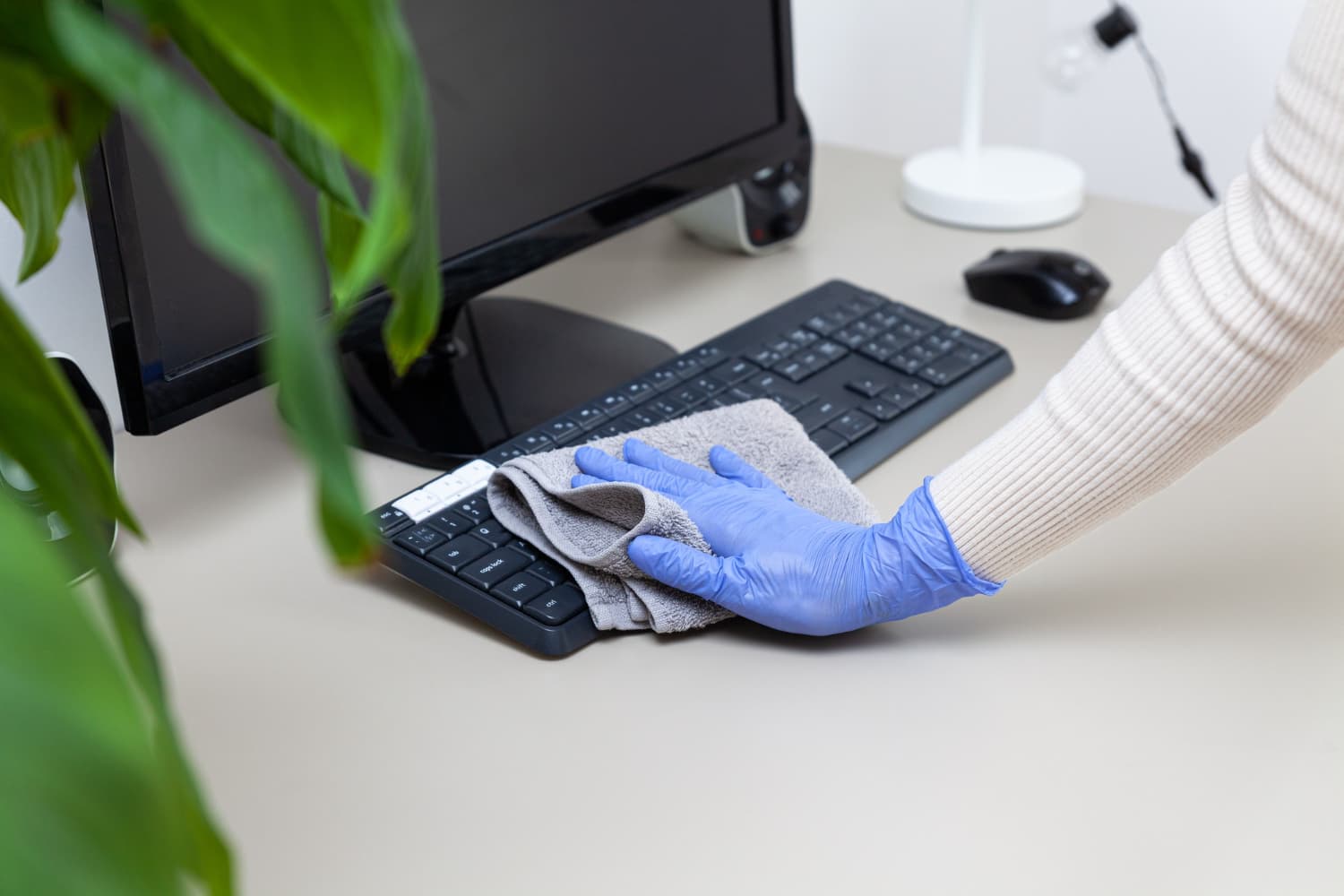
- Disinfecting door handles, light switches, and chair armrests with virus-killing products — high-contact areas can be infection vectors.
- Ventilating the room — while not strictly a cleaning task, our staff is instructed to open a window for 5 minutes after entering an empty room (air exchange improves comfort for the next patient).
- Prohibition on moving furniture without consulting the therapist — chair placement in a therapy room is often intentional and carefully considered.
Group Therapy Rooms
- Arranging furniture according to facility coordinator instructions — circle of chairs, placement of relaxation exercise mats, etc.
- Disinfecting floors and contact surfaces after each group session (once daily or more frequently).
- Cleaning exercise mats and pillows (if part of the room equipment) — only with hypoallergenic products, drying per manufacturer instructions.
- Selective waste removal — group sessions often accumulate paper tissues and used therapy materials (papers, drawings) — all disposed of in bags in compliance with RODO (non-infectious medical waste).
Waiting Area
This is the space with the highest traffic volume and highest infection transmission risk. Patients come in various emotional states, often with weakened immunity (psychotropic medications, chronic stress).
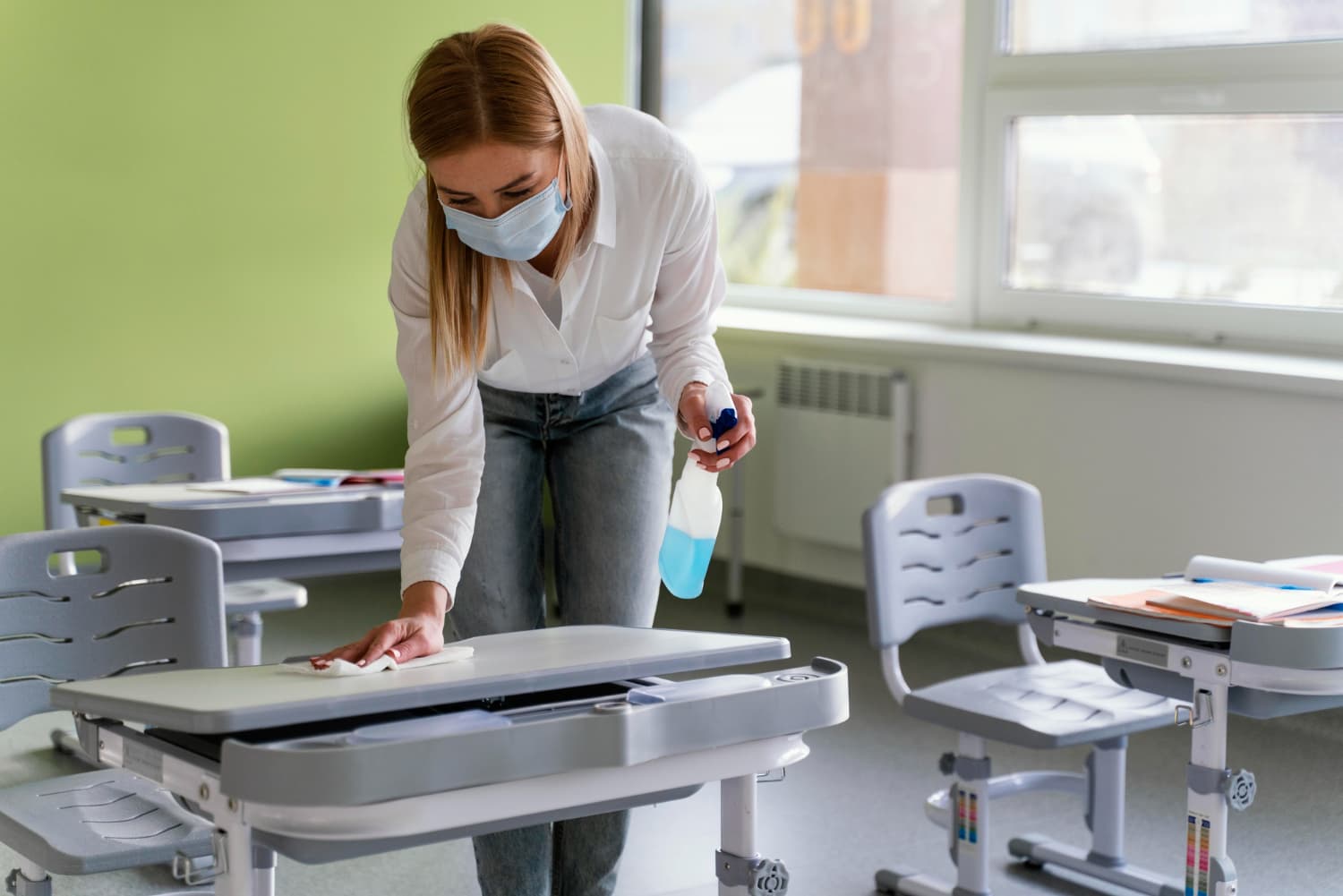
- Daily disinfection of all contact surfaces — door handles, railings, reception counters, water dispensers, chair seats.
- Vacuuming upholstery and mopping floors — daily or every other day (depending on daily patient volume).
- Refilling disinfectant dispensers for patients — while this is a secondary task, our team monitors fluid levels and reports when restocking is needed.
- Cleaning potted plants — wiping leaves of dust, watering (if included in contract) — plants improve the atmosphere but neglected ones can be allergen sources.
Bathrooms
Health requirements for bathrooms in medical facilities (even Type I°, not exposed to infectious material) are higher than in office buildings or schools.
- Disinfecting toilets, seats, faucets, sinks, mirrors, and door handles — daily with virus-killing products (compliance with standards EN 14476, EN 1276).
- Washing and disinfecting floors — daily, using disposable mops or microfiber mops designated only for bathrooms (color-coded segregation: blue for bathrooms, green for kitchens, yellow for rooms, red for critical surfaces).
- Refilling toilet paper, paper towels, and soap — checked daily so patients never find empty dispensers.
- Odor control — we don't use air fresheners with intense scents; instead we use ventilation and regular disinfection.
Health Department Requirements Specific to Psychiatric Facilities
The State Sanitary Inspectorate treats mental health clinics as Type I° medical facilities — they don't perform tissue-invasive procedures, have no operating room, but must follow sanitary and epidemiological procedures higher than public utility facilities.
Key Requirements:
- Disinfection plan — a written document specifying frequency, products, areas, and responsible parties. The cleaning company is required to maintain a disinfection log (date, time, room, product used, operator signature).
- HACCP and OHS training — cleaning staff working in medical facilities must complete training in hygiene, use of biocidal products, and procedures for handling medical waste.
- Health and safety examinations — at Reefa, all employees servicing medical facilities have current health booklets and are included in vaccination programs.
- Medical waste — psychiatric clinics generate infectious waste (needles, syringes if there's an injection office, used dressings after suicide attempts) and non-infectious waste (paper tissues, protective gloves). Infectious waste removal must be performed by an authorized company; non-infectious waste can be removed conventionally, but in sealed bags, in compliance with RODO (materials from therapy sessions).
- Microbiological surface testing — the health department may order surface testing of contact areas (swabs from handles, railings) as part of planned or emergency inspection. Results exceeding standards (>5 CFU/cm² for bacteria, detection of Staphylococcus aureus) result in fines or orders to close the area until procedures are corrected.
Our company carries liability insurance up to 1,000,000 PLN, which also includes responsibility for any sanitary failures resulting from our actions. In practice, with proper procedure adherence and regular coordinator audits, such risk is minimal.
Training Cleaning Staff in Working with Sensitive Patients
High staff turnover is a plague in the cleaning industry — the average employment length in external companies is about 8 months. This means constant presence of new, inexperienced people in sensitive facilities. At Reefa, we work exclusively with legally employed and insured staff, which translates to stability and service continuity.
Each person assigned to work at a mental health clinic undergoes three training modules:
Module 1: Discretion and Communication with Patients
- How to behave when a patient is crying in the corridor (don't make eye contact, continue work quietly, don't comment).
- How to respond to patient questions (e.g., "Where is the bathroom?") — politely point the way, don't engage in conversations about health conditions or other patients.
- What to do in cases of verbal or physical aggression (withdraw, report to facility coordinator and Reefa coordinator, DO NOT escalate).
- The principle of invisibility — quiet movement, no loud conversations, no phones in therapeutic areas.
Module 2: HACCP, Disinfection, and Waste Segregation
- Identifying areas with different microbiological risks (therapy room vs. bathroom vs. kitchen).
- Color-coded mop and cloth segregation (4-color system per PN-EN standard).
- Proper dilution and use of virus-killing products (contact time, dosing).
- Procedure for handling infectious and non-infectious waste per Waste Act (Journal of Laws 2013, item 21).
Module 3: OHS and Crisis Management
- Work ergonomics (avoiding strain, safe lifting).
- Handling chemical substances (safety data sheets, personal protective equipment).
- Incident procedures (accident, finding a needle, finding a potentially dangerous object) — isolate area, report to facility coordinator and Reefa coordinator.
Training is documented and refreshed annually. This ensures cleaning staff understand they work in a therapeutic environment, not a standard clinic.
Case Study: Diamed Medical Center
We service Diamed Medical Center, which offers psychiatric consultations and psychotherapy among its broader range of medical services. In discussion with facility management, the key was adapting the cleaning schedule for therapy offices to patient appointment hours — sessions start as early as 7:30 a.m. and end at 7:00 p.m.
We implemented a hybrid model:
- Cleaning therapy offices and waiting areas — between 6:00-7:15 a.m. (before sessions start) and 7:15-8:30 p.m. (after sessions end).
- Bathrooms and corridors — rotational service at 1:00 p.m. (staff lunch break, lower patient traffic).
- Fragrance-free products only, vacuums below 60 dB, daily disinfection photo reports sent to facility coordinator.
After 12 months of cooperation, the Diamed director confirmed that patient complaints related to odor or noise dropped to zero, and the facility passed a health department inspection without findings.
Checklist for Mental Health Clinic Manager — How to Choose a Cleaning Partner?
Choosing a cleaning company for a psychiatric facility is a strategic decision. Below is a practical checklist to use when evaluating proposals.
Before signing an agreement, verify:
- Does the company employ workers legally on employment contracts (avoiding gray-market practices)?
- Do staff have current HACCP, OHS training and health booklets?
- Does the company carry liability insurance of at least 500,000 PLN (at Reefa: 1,000,000 PLN)?
- Does it offer a dedicated facility coordinator available by phone during facility operating hours?
- Does it use fragrance-free products and quiet equipment (ask for product specifications and vacuum noise levels)?
- Will the cleaning schedule be adapted to therapy hours, not rigidly imposed?
- Does the company provide photo reports or a digital disinfection log (proof of service)?
- Does it have references from other medical facilities (preferably psychiatric or psychotherapy clinics)?
- Does the contract include a complaint procedure and KPIs (e.g., emergency response time max. 2 hours)?
- Is pricing transparent (rate per m²/hour × frequency), without hidden charges for materials or travel?
If the answer to even one question is "no" — consider another offer. In a therapeutic environment, continuity and predictability are as important as cleaning quality.
Cost of Mental Health Clinic Cleaning — What to Expect in 2026?
Rates for professional psychiatric clinic servicing in Cracow and Katowice range higher than standard office cleaning, but lower than hospital operating room cleaning.
Typical price ranges (2026, net):
- 3× weekly cleaning, approximately 100 m² (3-4 offices, waiting area, 2 bathrooms, corridor): from 1,200 PLN/month.
- Daily cleaning (5× weekly), approximately 200 m² (6-8 offices, larger waiting area, kitchen, 3 bathrooms): 2,800-3,500 PLN/month.
- General cleaning (window washing, upholstery cleaning, carpet cleaning, HVAC disinfection): from 15 PLN/m² net, typically quarterly.
Price depends on:
- Area and room layout — extensive corridors and many small offices extend cleaning time.
- Frequency — 3× weekly is budget-optimal; daily increases cost ~40% but improves patient comfort.
- Material standards — Ecolabel-certified fragrance-free products cost 15-20% more than standard options but are essential in psychiatric clinics.
- Additional services — UV-C disinfection, ozone treatment after incidents, curtain and mat washing.
We invite you to receive an individual quote through our online calculator for medical facilities — you'll receive a preliminary estimate within minutes. For detailed pricing that accounts for your psychiatric clinic's specific needs, please contact our Cracow office or Katowice office — a coordinator will audit your facility and propose a customized solution.
Frequently Asked Questions
Can cleaning staff work in the clinic during therapy sessions?
Essentially, no. Individual and group therapy rooms should be cleaned outside session hours to avoid disrupting patient comfort or privacy. In practice, cleaning corridors, bathrooms, and waiting areas during facility operating hours is acceptable, but only using quiet methods (microfiber mops, vacuums below 60 dB) and with discretion. Our team avoids entering offices during ongoing sessions; if urgent action is needed (e.g., spilled liquid), intervention occurs only after consulting with the facility coordinator.
What cleaning products are safe for patients with sensory sensitivity?
We use fragrance-free preparations certified with EU Ecolabel or Nordic Swan — neutral pH, free from synthetic fragrances, phthalates, phosphates, and carcinogenic substances. Disinfection is performed with hydrogen peroxide or lactic acid-based products, which are effective against viruses and bacteria but have much weaker odor than chlorine. Additionally, we use microfiber mops, which reduce detergent quantities — wet cleaning without chemicals, only water and mechanical dirt removal.
Must a cleaning company have special credentials to service psychiatric clinics?
Legally, there's no separate license for "psychiatric clinic cleaning," but staff must meet requirements for medical facilities: current health and safety examinations (health booklets), HACCP and OHS training, and disinfection procedures compliant with health department standards. At Reefa, all employees servicing medical facilities also undergo training in communication with sensitive patients and maintaining discretion, which is key in a therapeutic environment.
How does the procedure work for reporting issues or urgent tasks (e.g., spilled liquid in an office)?
Each facility we service has a QR system mounted in a visible location (e.g., reception, staff break room). Scanning the code opens a reporting form — the clinic manager describes the problem (e.g., "Office 3, spilled coffee on carpet"), optionally attaches a photo, and the system automatically notifies the dedicated facility coordinator. For urgent cases (patient safety risk), response time is max. 2 hours. For standard reports (e.g., empty toilet paper) — intervention within 24 hours or during the next scheduled cleaning.
How long does it take to start servicing a new mental health clinic?
Typically 7-10 business days from initial contact to first cleaning. The implementation process is: (1) facility audit by Reefa coordinator — discussing space specifics, therapy schedule, facility requirements; (2) developing cleaning protocol and detailed pricing estimate; (3) contract and schedule approval by clinic management; (4) training cleaning staff on protocols and psychiatric clinic specifics; (5) service start, initial photo reports and feedback after one week. If the clinic is already established and requires rapid handover (e.g., ending previous contract), we can accelerate onboarding to 3-5 days.
What documents should the cleaning service provider provide for a medical facility?
Before signing a contract, the cleaning company should present: (1) liability policy (in our case up to 1,000,000 PLN), (2) proof of business registration or KRS entry, (3) staff training certificates (HACCP, OHS), (4) employee health booklets (or statement of possession), (5) safety data sheets for used products (CLP Regulation compliance), (6) references from other medical facilities. After signing — monthly invoices, disinfection logs, photo reports from each cleaning, and quality control protocols. These documents are essential during health department inspections and facility audits.
Servicing mental health clinics is a service requiring empathy, professionalism, and willingness to adapt procedures to therapy rhythms. Discretion, quiet, and absence of intense odors are the foundations for building a space where patients feel safe — which in turn affects treatment effectiveness and how the facility is perceived. If you manage a psychiatric clinic, crisis intervention center, or psychotherapy practice and are looking for a partner who understands the specifics of a therapeutic environment — contact the Reefa team. We'll conduct a facility audit, propose a customized schedule, and ensure continuity of service based on legal employment and 91% staff retention.