Cleaning Mental Health Clinics — Safety and Compassion
Mental health clinics require specialized cleaning protocols that balance rigorous sanitation standards with emotional comfort for patients. Learn how to combine hygiene with therapeutic environment care in psychiatric facilities.
Mental health clinics require specialized cleaning protocols that balance rigorous sanitation standards with emotional comfort for patients. Learn how to combine hygiene with therapeutic environment care in psychiatric facilities.
Cleaning mental health clinics represents a process that combines stringent sanitation requirements with care for the therapeutic environment that supports patients' recovery. Unlike standard medical offices, psychiatric and psychological clinics require not only disinfection at the level of health facilities but also special attention to patients' emotional comfort — quiet conditions, absence of strong chemical odors, and discretion from cleaning staff during their work.
The Reefa team has been serving medical facilities in Cracow since 2020, and from 2024 also in the Upper Silesian region. Our dedicated coordinator for each location works with administrative managers to align work schedules with therapy session calendars and patient visit schedules. Every team member completes training in occupational health and safety, sensitive data protection, and basic communication protocols in mental health facilities.
In this article, we will explain how to effectively combine rigorous sanitation standards with the organizational and emotional needs of psychiatric clinics. We will discuss disinfection standards, staff training specifics, work coordination, and outsourcing costs for facilities in 2026.
In brief
- Mental health clinics are subject to the same sanitation requirements as other medical facilities, but additionally require an empathetic approach and minimal disruption during cleaning.
- Disinfectants must meet standards (e.g., EU Ecolabel, biocidal certifications) while remaining low-odor and safe for patients with sensory sensitivities.
- Cleaning staff receive training in RODO, interaction with individuals with mental health conditions, and crisis response protocols.
- Cleaning schedules are coordinated with individual therapy sessions, group therapy, and medical visits to avoid disrupting sessions.
- The cost of comprehensive mental health clinic service in 2026 ranges from PLN 12 to 18 net per square meter monthly, depending on the scope of disinfection and number of high-risk surfaces.
- Outsourcing eliminates staff turnover risk and guarantees continuity — at Reefa, each facility has a dedicated coordinator and liability insurance up to PLN 500,000.
Why do mental health clinics require a different approach?
Psychiatric and psychological care facilities serve patients with diverse disorders — from depression and anxiety disorders to obsessive-compulsive disorder, personality disorders, and psychoses. In such an environment, every element of physical space affects emotional state and therapeutic comfort. Intense chlorine odor, loud vacuum cleaner noise during breaks between sessions, or lack of discretion in waiting areas can worsen anxiety states, trigger flashbacks, or disrupt the trust-building process between patient and therapist.
At the same time, a psychiatric clinic remains a medical facility under applicable regulations, subject to sanitary oversight (State Sanitary Inspection). It must therefore comply with surface disinfection protocols, medical waste disposal, and maintain cleanliness levels comparable to medical offices. Balancing these requirements forms the foundation for effective cleaning in psychiatric care.
Our team in Cracow and Katowice works with clinics based on dedicated operational procedures (SOP) that account for both sanitation standards and protocols for interaction with individuals in psychological crisis. Every team member knows the rules applicable in medical facilities (occupational health and safety, HACCP in staff kitchens) and receives basic training in therapeutic communication and emergency situations.
Sanitation requirements in mental health clinics — what does the health authority require?
The Polish State Sanitary Inspection classifies mental health clinics as type 2 medical facilities (without hospitalization), which means the obligation to maintain specific zoning and levels of microbiological cleanliness. Main requirements include:
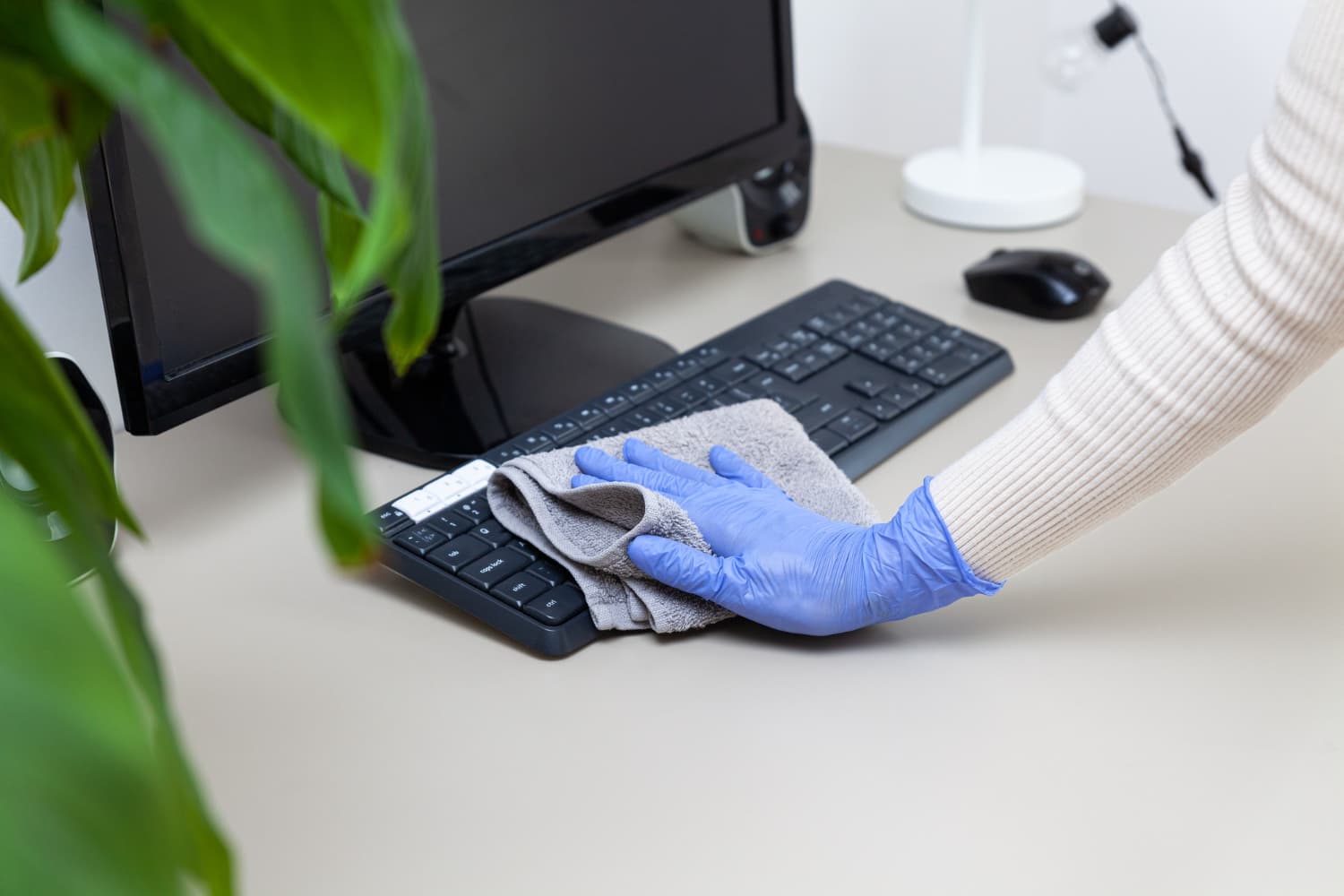
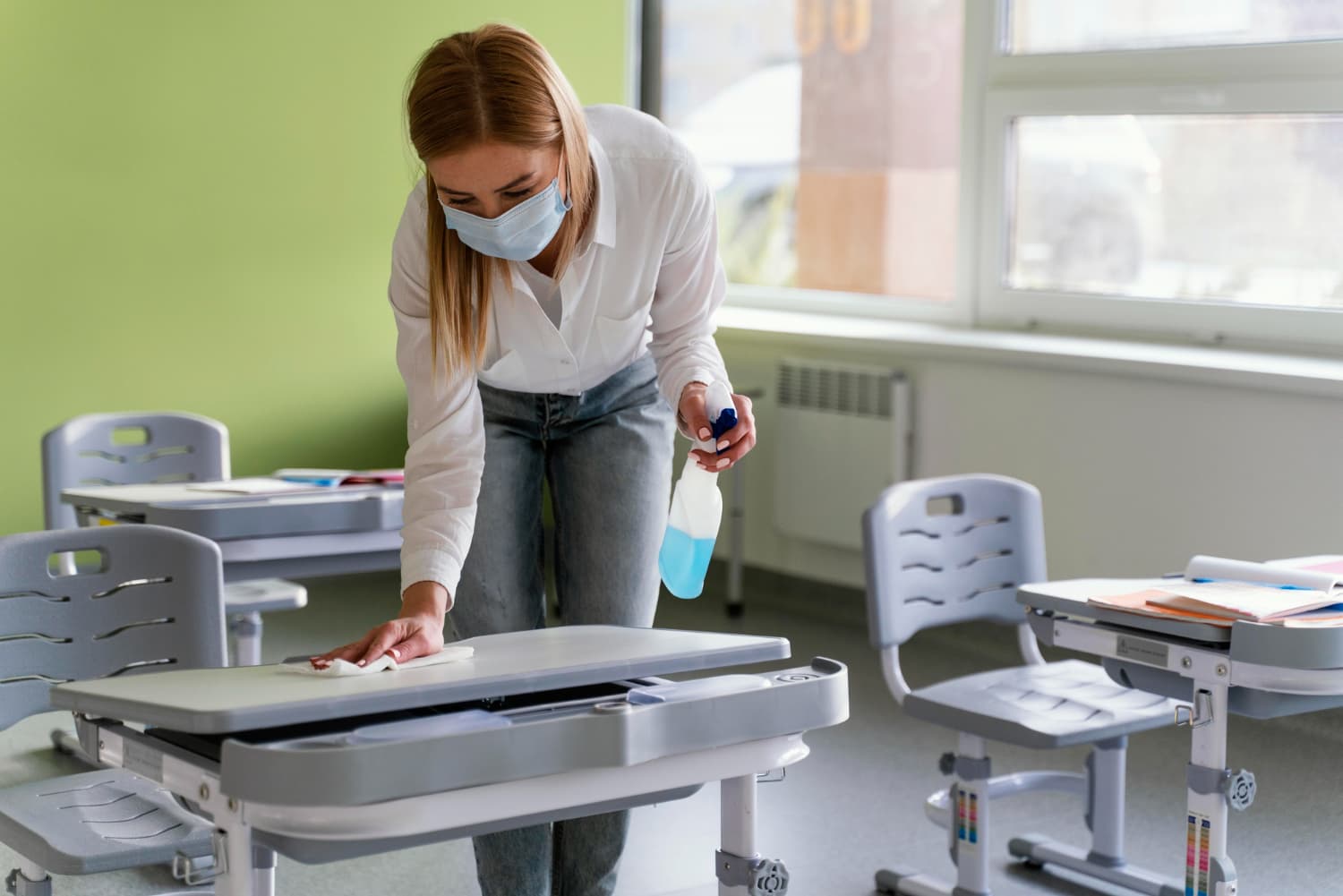
- Disinfection of contact surfaces: door handles, handrails, countertops in waiting areas, elevator buttons, seats in therapy rooms — minimum once daily with a product meeting the PN-EN 14476 standard (virucidal activity).
- Floor washing: waiting areas, corridors, therapy rooms — minimum once daily using the two-bucket method with disinfectant detergent or steam cleaning for textile floors.
- Public restrooms: sanitization minimum twice daily, replenishment of liquid soap, paper towels, and hygiene bags.
- High-risk zones (e.g., isolation room, medical examination room, treatment room in pediatric clinic): surface disinfection after each patient or according to the facility's internal protocol.
- Waste disposal: segregation of general and medical waste (needles, medication containers, infectious materials) in color-coded bags in accordance with the Health Minister's regulation.
In practice, the sanitary authority verifies cleaning schedules during inspections, safety data sheets for biocidal products, staff training certificates, and waste disposal documentation. Lack of complete documentation can result in a post-inspection recommendation or — in extreme cases — suspension of the facility's operation.
The Reefa team maintains digital documentation for each clinic: an electronic cleaning log accessible to management, photo reports after each cycle, and a QR reporting system through which facility staff can report irregularities or additional needs in real time (e.g., room disinfection following an incident).
Patient emotional comfort — how to avoid intrusiveness?
Empathetic approach in cleaning mental health clinics means minimizing stressogenic stimuli and respecting privacy. Below are the most important principles:
Low-odor products and disinfectants
Patients with anxiety disorders, obsessive-compulsive disorder, or sensory sensitivities (e.g., autism spectrum) often struggle with intense odors. We therefore prefer EU Ecolabel or Nordic Swan certified products, which offer effective disinfection without sharp chlorine or ammonia notes. In practice, we use products based on lactic acid, hydrogen peroxide, or enzymatic formulations that leave barely perceptible odor.
In clinics serving children and adolescents in Cracow, we completely eliminate air freshener aerosols — their scent may evoke negative memories for patients (hospitals, anxiety-triggering public places).
Noise and work hours
Intensive equipment operation (central vacuum, single-disk machine) is scheduled outside group therapy sessions or sessions requiring quiet. In day clinics, main cleaning occurs in the morning before opening (from 6:00 to 8:00) and in the evening after visit completion (from 18:00). Between-cycle maintenance — restroom replenishment, trash removal, spot disinfection — is performed during breaks between patients, after consulting with reception staff or therapy coordinator.
Discretion and respect for privacy
The Reefa team is trained not to initiate conversations with patients in waiting areas, not to spend longer than necessary in patient zones, and not to comment on visible situations (e.g., patient in visible anxiety state, crying). Every staff member receives training in RODO and medical confidentiality — it is forbidden to share any information with third parties about the presence of specific patients or their documentation.
In practice, this means for example a ban on phone calls in patient areas, no photography of spaces in the presence of third parties (photo reports are taken after patients leave the facility), and no disclosure of visit schedules.
Cleaning staff training — empathy and crisis protocols
Work in a mental health clinic requires not only technical skills but also readiness to respond in atypical situations. Our training program consists of three modules:
- Medical module: occupational health and safety requirements, HACCP, disinfection principles, waste segregation, identification of infectious materials, post-exposure procedures (needlestick injury, bodily fluid contact).
- Communication module: interaction protocols with patients with mental health disorders, recognition of crisis situations (panic attack, hallucinations, aggression), verbal de-escalation, when to call for help.
- RODO module: sensitive data protection, prohibition on copying and sharing information, rules for access to paper and digital documentation.
In practice, our team understands that when a patient begins interacting (e.g., requests help, discusses problems), the appropriate response is to politely but assertively redirect them to reception or the on-duty therapist. We also know that in case of a crisis incident (e.g., self-harm in a restroom, aggression), the first step is to call the facility's medical staff, not attempt independent intervention.
A team trained this way becomes part of the therapeutic environment, not an additional source of stress.
Cleaning schedule — coordination with therapy calendar
Every psychiatric clinic operates on its own schedule: some accept patients from 8:00 to 20:00, others conduct group therapy in the morning and individual sessions in the afternoon. Effective outsourcing requires flexibility and a dedicated coordinator who will have access to the facility's calendar and continuously adjust the work plan.
In our operational model:
- Schedule establishment: before signing a contract, at least two meetings take place with the administrative and medical management. We establish high-risk zones, quiet periods, peak patient days (often Mondays and Fridays).
- Day division: main cleaning (floor washing, carpet cleaning in waiting areas, high-level dusting) — morning before opening or evening after closing. Ongoing maintenance — between session blocks, during staff lunch breaks.
- Live communication: the facility coordinator has access to a dedicated phone number for our medical facilities coordinator. If schedule changes occur (cancelled group therapy, additional session block), we adjust the cleaning window within 2 hours.
- Photo reports: after each evening cleaning cycle, facility management receives a photo report in the app — before/after photos of selected zones, confirmation of additional tasks (e.g., cabinet window washing, hygiene bag replacement).
Such a system prevents situations where a vacuum operates in a cabinet next to a therapy session, or a patient in the waiting area witnesses trash bag replacement.
Disinfection standards vs emotional comfort — where is the line?
A key question that clinic directors pose to us: can we abandon chlorine products for patient comfort? The answer is: yes, provided they are replaced with equivalent products with proven effectiveness.
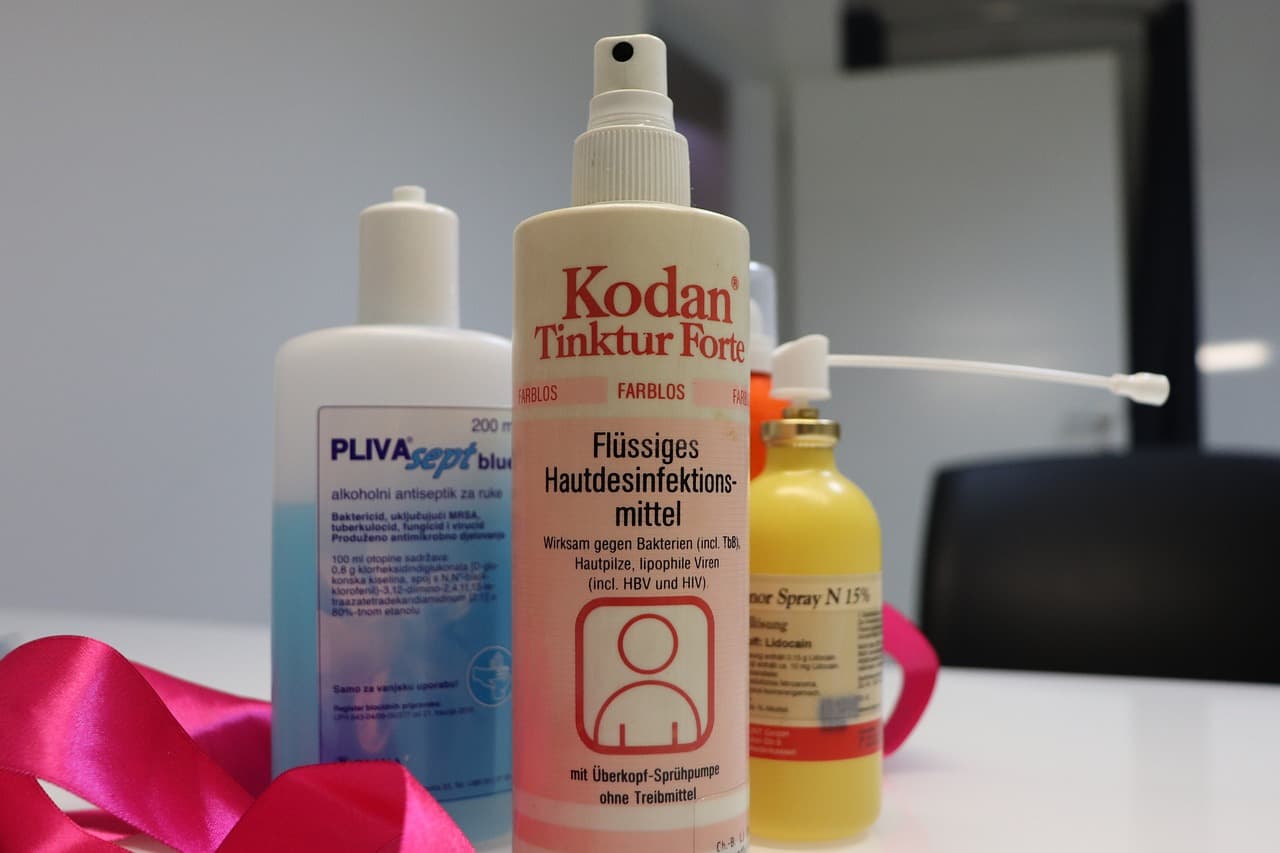
The health authority does not mandate a specific active substance but requires that the product has a biocidal certificate and meets antiviral standards (PN-EN 14476) and antibacterial standards (PN-EN 13727). In practice, this means that instead of sodium hypochlorite, we can use:
- Peroxide-based products (e.g., stabilized hydrogen peroxide) — broad spectrum, no sharp odors, breaks down into water and oxygen.
- New-generation quaternary products (odorless benzalkonium ammonium compounds) — effective, gentle on surfaces, easy to rinse.
- Lactic acid-based solutions — natural pH, safe for allergy sufferers, suitable for contact surfaces.
In medical examination rooms or isolation units, we use higher-concentration products, whereas in waiting areas, therapy rooms, and corridors — low-odor versions. This zoning approach maintains compliance with health standards while protecting patients' sensory comfort.
We apply similar practices to surface drying: in technical areas (utility rooms, kitchen facilities) we permit natural drying, in therapy rooms we immediately dry floors with microfiber cloths to minimize slipperiness and moisture.
Confidentiality and privacy protection — access protocols and RODO
Psychiatric clinics collect particularly sensitive data under RODO: information about mental health status, diagnoses, family histories. Cleaning staff, while not having direct access to medical documentation, work in spaces where such data is stored or discussed.
Our team observes the following rules:
- No work in cabinet during sessions: even with open doors, we do not enter a room where therapy is in session.
- Paper documents: if a therapist's desk contains documentation (patient records, notes), we do not move them or collect them — we inform management.
- Monitoring and access: we work in accordance with the facility's access control policy. Every team member has an assigned ID card, registered in the system (if the facility maintains one). We do not enter locked rooms without coordinator approval.
- Digital communication: information exchange about schedule, orders, and incidents occurs through dedicated encrypted channels (not public messaging apps).
In practice, Reefa's liability insurance up to PLN 500,000 also covers responsibility for data confidentiality breaches if an incident were to occur due to our fault. Throughout our operation since 2020, we have not recorded a single such case.
What does mental health clinic cleaning cost in 2026?
Cost depends on several variables: total floor area, number of therapy rooms, presence of high-risk zones (treatment room, isolation unit), disinfection frequency, and scope of additional services (furniture cleaning, window washing).
Indicative net rates for clinics in Cracow and Katowice (2026):
- Basic clinic (3–5 offices, waiting room, restrooms, corridor, ~150–250 m²): PLN 12–14 net/m²/month — daily cleaning, surface disinfection, restroom replenishment, waste removal.
- Extended clinic (>6 offices, group therapy rooms, staff kitchen area, >250 m²): PLN 14–16 net/m²/month — daily cleaning with disinfection of horizontal transport equipment (carts, stretchers), carpet cleaning every 2 months, window washing 2× annually.
- Clinic with reception area / isolation zone: PLN 16–18 net/m²/month — enhanced protocols, bedding and mattress disinfection, infectious waste disposal, sanitation authority coordination.
The flat fee also includes a dedicated facility coordinator (no separate supervision charge), access to photo reports and reporting app, and liability insurance up to PLN 500,000.
For comparison: employing your own cleaner at 0.5 FTE in 2026 costs approximately PLN 4,500–5,000 gross/month (salary + social insurance contributions + PPK + vacation allowance), without coverage for sick leave, training, disinfectants, or insurance. Outsourcing from floor area of 200 m² becomes a more cost-predictable and operationally flexible solution.
A detailed quote for your facility can be obtained on the cleaning rate page for Cracow or by contacting the Reefa team directly.
Reefa's references and experience in mental health care
While most of our medical facility contracts are subject to confidentiality, we can mention our long-term cooperation with Diamed Medical Center (a private network of specialist clinics in Cracow), where we also serve psychiatric and psychological offices for children. As part of this contract, we developed operational standards accounting for the specifics of young patients — from using hypoallergenic products to schedule flexibility tied to workshops and group therapy.
The Reefa team has operated in the Cracow market since 2020, and from 2024 we expanded operations to the Upper Silesian region. Every medical facility contract is preceded by an initial audit: site inspection, sanitation risk analysis, consultation with medical and administrative management. Only after approval of dedicated SOPs do we launch the service.
We employ a certified team (occupational health and safety, HACCP, disinfection training), a quality monitoring system (internal audit quarterly), and liability insurance covering both property damage and professional liability (e.g., incident related to improper product use).
Frequently asked questions
What are the duties of a cleaner in a psychiatric clinic?
The scope of cleaning staff responsibilities in a mental health clinic includes: daily washing and disinfection of floors in offices, corridors, waiting areas, and restrooms; disinfection of contact surfaces (door handles, handrails, countertops, seats) with products meeting PN-EN 14476 standard; replenishment of hygiene supplies (soap, paper towels, waste bags); waste removal and segregation per medical waste regulations; periodic window washing, furniture cleaning, and light fixture cleaning; maintenance of a cleaning log and reporting irregularities to the facility coordinator. In psychiatric clinics, discretion, quiet work, and avoiding contact with patients during therapy sessions are crucial.
How much is charged per hour for cleaning a medical facility?
In 2026, the hourly rate for cleaning medical facilities in Cracow and Katowice ranges from PLN 35 to 45 net, depending on complexity level (basic standard vs high-risk zones with enhanced disinfection). For psychiatric clinics, cost is typically quoted as a monthly flat rate (PLN net/m²/month), which ensures budget stability and cost predictability. For one-time contracts (e.g., post-renovation cleaning) the rate is PLN 50–60 net/working hour for the team. Cost includes labor, products, equipment, and liability insurance.
What are the cleaning rules in a medical clinic?
Cleaning rules in a medical clinic — including psychiatric facilities — are determined by the Health Minister's regulation and State Sanitary Inspection requirements. Basic rules include: division of space into zones (low, medium, and high risk), use of biocidal products with certification, two-bucket method for floor washing (one bucket with detergent, one with clean water), cleaning cycle adjusted to patient volume (minimum daily disinfection in general areas, more frequent in treatment zones), medical and general waste segregation in color-coded bags, maintenance of cleaning documentation, and staff training in occupational health and safety, HACCP, and data protection. In psychiatric clinics, requirements for quiet conditions, absence of strong odors, and respect for patient privacy are added.
Must cleaning staff receive training in interaction with individuals with mental health disorders?
While sanitation regulations do not impose an absolute requirement for such training, professional cleaning companies — including Reefa — offer it as standard in onboarding for psychiatric facilities. Training includes: recognition of crisis situations (panic attack, hallucinations, verbal aggression), de-escalation principles, when to call for medical help, assertive and empathetic communication, prohibition on independent intervention, and personal safety. Such training increases team comfort and patient safety, reducing the risk of misunderstandings and incidents. In practice, staff know how to avoid provoking patients (avoiding sudden movements, loud sounds, prolonged eye contact) and how to act in an emergency.
How often should surfaces be disinfected in a psychiatric clinic?
In general areas (waiting room, corridors, therapy offices), contact surface disinfection should occur at least once daily, ideally in the evening after closing or morning before opening. In high-risk zones (treatment room, isolation unit, public restrooms), the health authority requires disinfection after each patient or minimum twice daily. In practice, the schedule is established individually with facility management, considering patient volume, therapy session schedule, and specifics of the patient population served. In busy day clinics (>50 patients daily), an additional midday disinfection cycle is recommended.
Is outsourcing medical facility cleaning compliant with RODO?
Yes, provided a data processing agreement (Art. 28 RODO) is concluded between the facility (data controller) and the cleaning company (processor). In practice, this means the cleaning company commits to data security principles, staff RODO training, non-disclosure of personal data to third parties, and prompt incident reporting. The Reefa team includes such an agreement in every medical contract and maintains processing records in compliance with data protection inspector requirements. Our liability insurance also covers responsibility for data confidentiality breaches, up to PLN 500,000.
Summary — cleaning with care for patients and facilities
Cleaning mental health clinics is a challenge requiring the combination of stringent sanitation standards with an empathetic approach to the therapeutic environment. Effective outsourcing in this segment relies on four pillars: a properly trained team, a flexible schedule coordinated with therapy calendars, low-odor and certified disinfectants, and a dedicated coordinator who works continuously with facility management.
At Reefa, since 2020 we have developed competencies in the medical facilities segment, and our experience with private clinics in Cracow and the Upper Silesian region allows us today to offer comprehensive service to psychiatric and psychological clinics as well. Our system includes photo reports after each cycle, access to QR reporting app, legally employed staff, and liability insurance up to PLN 500,000.
If you manage a mental health clinic and seek a partner who understands this environment's specifics — contact our team. We will prepare an individual quote and schedule tailored to your facility's needs. More information and contact details are available in the medical facility cleaning section for Cracow and Katowice.