Cleaning After Concrete Screeds — Dust, Stains, and Timing
Professional post-screed cleaning removes cement dust, laitance, and debris before finishing. Discover the stages, equipment, and costs involved in preparing substrates for flooring installation.
Professional post-screed cleaning removes cement dust, laitance, and debris before finishing. Discover the stages, equipment, and costs involved in preparing substrates for flooring installation.
Cleaning after concrete or anhydrite screeds is a multi-stage process involving removal of cement dust, laitance, and mechanical debris—one that must account for curing time (14–28 days) and the nature of subsequent finishing work. Proper cleaning protects the substrate from damage and ensures adequate adhesion for adhesives, primers, or waterproofing layers.
Concrete and anhydrite screeds require precise timing—too-early wet cleaning can disrupt the hydration process, while delayed laitance removal complicates remediation. For commercial buildings—offices, production facilities, logistics centers—professional post-screed cleaning shortens construction downtime and eliminates the risk of disputes during flooring installation.
Since 2020, the Reefa team has delivered post-construction cleaning in Cracow and Katowice, equipped with industrial-grade HEPA filtration units and products designed to neutralize cement laitance. In this guide, we present technical standards, work schedules, and cost estimates for developers and general contractors undertaking screed installation.
In Brief
- Timing: vacuum entry at day 7 (concrete), day 14 (anhydrite); final cleaning minimum 24 hours before flooring installation.
- Technology: industrial vacuum cleaners with H13-class HEPA filters, antistatic mops, acidic agents (pH 2–3) for cement laitance.
- Prohibited: wetting fresh screeds for first 14 days (concrete) or 21 days (anhydrite); use of steel wire brushes; walking without footwear protection in first 48 hours.
- Cost: 3–6 PLN net/m² depending on contamination level, area, and site access.
- Case study: 2,400 m² office building in Cracow—three vacuum passes + laitance neutralization with citric acid, 4-person team, 2 working days.
- Result: clean, dust-free substrate ready for priming and panel/tile installation without risk of adhesive bond loss.
When Can You Enter a Fresh Screed? Timing and Substrate Type
Curing time determines the safe moment to begin cleaning. Concrete screeds made from Portland cement achieve compressive strength sufficient for pedestrian traffic (without loads) at day 7, but full technical maturity at day 28. In practice, gentle vacuuming can begin after 7–10 days, while wet and intensive mechanical cleaning should only commence after 14 days.
Anhydrite screeds (calcium sulfate-based) set faster at the surface but require longer moisture dissipation. Recommended vacuum entry is day 14; wet cleaning should wait until day 21–28, provided substrate moisture falls below 0.5% CM (carbide method). Excess moisture under panels or tiles generates mold, delamination, and warranty claims.
In facilities with electric or hydronic floor heating, developers often accelerate drying by activating heat circulation after day 7—in such cases, dry-only vacuuming can proceed at day 10, but without water-based products.
Typical Commercial Project Schedule
- Day 0: screed installation, polyethylene film protection (concrete) or free drying (anhydrite).
- Day 7–10: initial industrial vacuuming, removal of film residues, tape, mortar fragments.
- Day 14–21: wet cleaning with acidic agents, laitance neutralization, antistatic mopping.
- Day 21–28: moisture verification, priming, handover to flooring crews.
For developments in Cracow and Katowice, where construction schedules are tight, Reefa offers flexible timing with weekend and night-shift entries to avoid blocking other trades. A dedicated coordinator confirms entry timing with the site manager and provides photo documentation of all work stages.
What Contaminants Form on Screeds and How to Remove Them?
Post-screed cleaning involves three contamination categories: cement dust, laitance, and mechanical debris.
Cement Dust
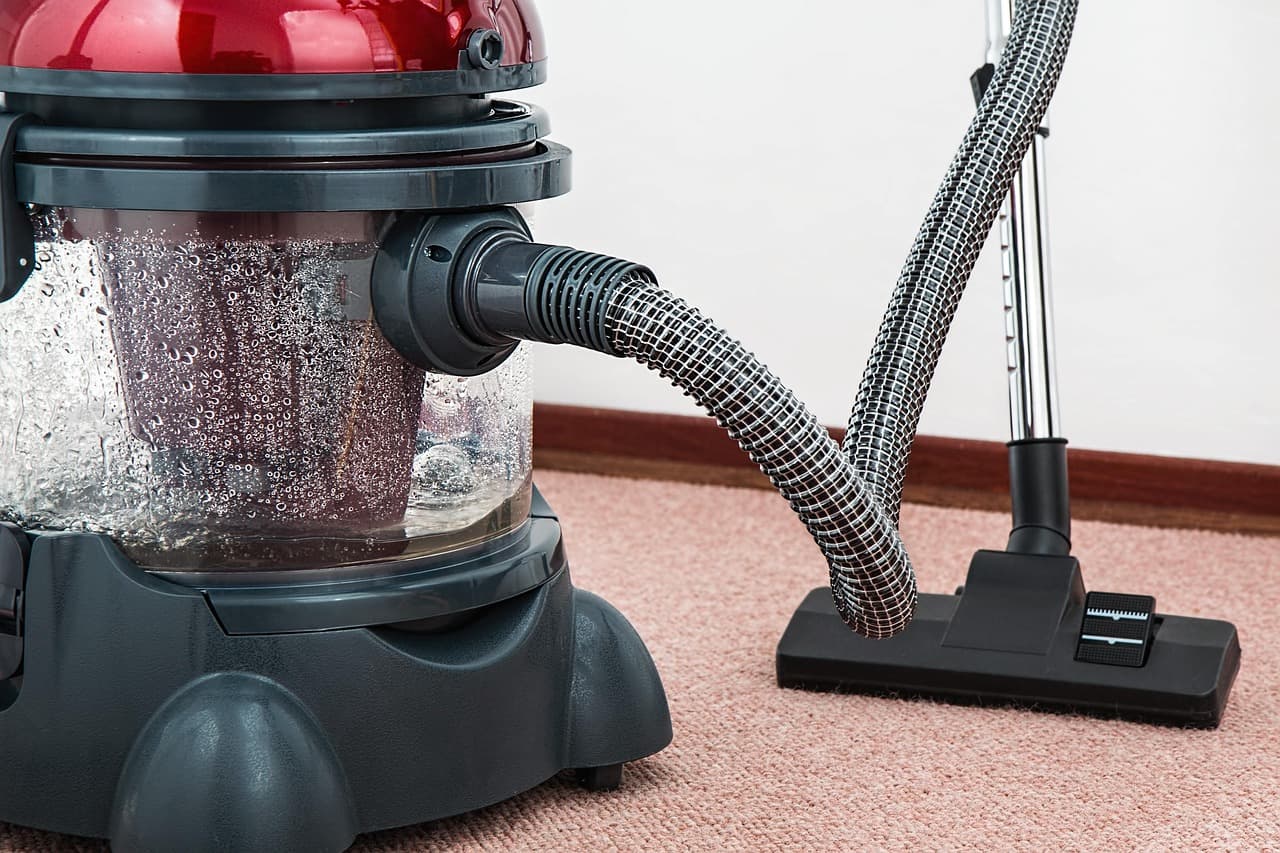
This is the finest fraction—particles below 10 μm, settling within days of installation. Standard household vacuums merely redistribute dust, making an industrial vacuum with H13-class HEPA filter (≥99.95% filtration efficiency for ≥0.3 μm particles) essential. Reefa uses Kärcher and Nilfisk units with 250–300 mbar suction power, equipped with antistatic brushes that won't mark fresh concrete.
Procedure:
- Two-pass vacuuming: first along the longer axis, second perpendicular.
- Special attention to edges, joints, areas under pipes and conduits.
- After vacuuming—microfiber antistatic mop pass (dry) to capture electrostatically charged particles.
Cement Laitance
A thin, glossy surface layer created by water migration and fine cement particles. Laitance reduces adhesive and primer bonding, so it must be completely removed before finishing installation. Visually, it appears as a shiny, smooth surface or whitish discoloration.
Removal methods:
- Mechanical: diamond grinding (only for screeds >20 MPa strength), single-disc machines with diamond pads (grit 100–200).
- Chemical: acidic products (5–10% citric acid, 3–5% diluted hydrochloric acid) applied to damp surfaces, left for 10–15 minutes, rinsed and neutralized with alkaline agents.
Reefa prefers the citric acid method—safer for crews and less aggressive on concrete than hydrochloric acid. After neutralization, we collect the solution with a wet mop and squeegee, then dry-vacuum again.
Mechanical Debris
Protective films, masking tape, mortar chunks, footprints—removed manually (plastic scrapers) or by vacuum after softening. Never use metal scrapers or steel wire brushes, which gouge the screed and leave streaks difficult to erase.
Typical work sequence for 1,000 m²:
- Heavy vacuuming: 2 hours (2-person crew).
- Laitance neutralization: 4 hours (application, reaction time, rinsing).
- Final vacuuming + antistatic treatment: 2 hours.
- Total: 1 working day for standard contamination.
Equipment and Chemicals—Industrial Standards
Professional post-construction cleaning in Cracow and Katowice requires investment in certified equipment. Below is a typical Reefa configuration for commercial projects.
Industrial Vacuum Cleaners
- H13 or H14 HEPA filter (H14 for medical facilities and labs).
- Tank capacity ≥50 liters to avoid frequent emptying on large areas.
- Suction power ≥250 mbar, with adjustable vacuum for delicate anhydrite.
- Option to connect power tools (grinders, mills) for dust-free operation.
Single-Disc Machines
For laitance removal, we use single-disc units at 150–300 rpm, equipped with diamond pads or synthetic-bristle brushes. Machine weight (40–70 kg) ensures uniform pressure without damaging fresh screeds.
Chemical Products
- 5–10% citric acid—laitance neutralization, pH 2–3, biodegradable.
- 3–5% hydrochloric acid—for heavily cemented stains (only in ventilated spaces, with full PPE).
- Alkaline solution, pH 9–10—acid residue neutralization.
- Antistatic detergent—final application to prevent dust re-settling.
For projects with LEED or BREEAM requirements (e.g., Class A offices), Reefa uses only products certified with EU Ecolabel or equivalent, meeting sustainable building criteria.
What NOT to Do—Common Screed Cleaning Mistakes
Improper procedures can permanently damage the substrate and derail schedules. Here is a prohibition list:
- Wetting fresh screeds (before day 14 for concrete, day 21 for anhydrite)—excess water flushes cement, weakens strength, causes efflorescence.
- Using pressure washers on unseasoneded surfaces—>100 bar pressure damages the top layer, creates unevenness, generates water cascades under waterproofing membranes.
- Walking without footwear protection in first 48 hours—fresh concrete absorbs oils and dust, creating permanent stains.
- Applying oil or silicone products—prevents primer and adhesive bonding, requires costly grinding for removal.
- Delaying cleaning until the day before installation—dust and laitance need time for complete removal; a 24–48 hour buffer eliminates stress and allows corrective action if needed.
In 2025, a Cracow contractor hired a cleaning firm to treat an anhydrite screed on day 10, used a pressure washer, and caused delamination over 120 m². Diamond-grinding repair cost 4,200 PLN and caused 5 days of downtime.
How Much Does Post-Screed Cleaning Cost? 2026 Price List
Pricing depends on area, contamination level, screed type, and location. Below are net rates for Cracow and Katowice.
| Service Scope | Net Rate (PLN/m²) | Notes |
|---|---|---|
| Basic vacuuming (1 pass) | 2.50–3.50 | Laitance removal not included |
| Vacuuming + laitance removal (chemical method) | 4.00–6.00 | Standard contamination |
| Vacuuming + mechanical laitance grinding | 7.00–10.00 | Heavily cemented stains |
| Comprehensive post-construction cleaning (screed + walls + joinery) | from 10.00 | See cleaning rates |
Minimum project value is 800 PLN net. For areas >2,000 m², we offer tiered discounts. Sample estimate for a 2,400 m² office building:
- Vacuuming (2 passes): 2,400 m² × 3.00 PLN = 7,200 PLN
- Laitance neutralization (chemical method): 2,400 m² × 2.50 PLN = 6,000 PLN
- Equipment transport + coordination: 600 PLN
- Total net: 13,800 PLN (5.75 PLN/m²)
Execution: 2 working days, 4-person crew, Kärcher industrial equipment, 10% citric acid, photo reports after each stage.
Anhydrite Screed Cleaning—Specifics and Differences
Anhydrite screeds (calcium sulfate-based) are gaining popularity in commercial construction due to self-leveling properties and ability to create thin layers (30–40 mm). However, they require a different cleaning protocol than concrete.
Drying Time and Moisture
Anhydrite releases moisture more slowly—standard 28 days at 50 mm thickness, 35–40 days at 70 mm. Before any wet cleaning, measure moisture using the carbide method (CM device). Acceptable levels:
- Under wooden flooring: ≤0.5% CM
- Under ceramic tiles: ≤0.3% CM
- Under epoxy resins: ≤0.2% CM
Top-Layer Removal (Grinding)
Anhydrite develops a surface "skin layer" (burnt layer) with reduced absorption. Adhesive manufacturers require its removal via diamond grinding (grit 40–60) to 0.5–1 mm depth. Grinding produces enormous quantities of gypsum dust, so Reefa uses industrial vacuums with ≥200 m³/h flow connected to grinding machines, minimizing room emissions.
After grinding:
- Industrial vacuuming (2 perpendicular passes).
- Mopping with neutral detergent solution (pH 7).
- Final dry vacuuming.
Cost of Anhydrite Grinding and Cleaning
Complete service (grinding + vacuuming + mopping) costs 8–12 PLN net/m². For areas >1,500 m², we offer 7.50 PLN/m². A typical 1,800 m² warehouse project in Katowice: 1,800 m² × 8.00 PLN = 14,400 PLN net, 3-day execution, 4-person crew plus 2 Flex single-disc machines with dust-free systems.
Case Study: 2,400 m² Office Building in Cracow
In Q2 2025, we completed post-screed cleaning on an anhydrite substrate in a new office building on Lubicz Street (Cracow). Developer: commercial investor; target tenant: IT firm. Requirements: flooring prepared for Class 33 LVT vinyl panels.
Scope and Challenges
- Area: 2,400 m² across 3 floors.
- Type: 50 mm anhydrite screed with underfloor heating.
- Issue: heavy gypsum dust from wall-finishing phase, acrylic paint stains, tape and film residues.
- Deadline: 5 days before LVT installation.
Procedure
Day 1 (after 21 days curing):
- Moisture measurement: 0.6% CM—requirement: ≤0.5% for LVT. Activated underfloor heating for 48 hours (22°C) to accelerate moisture release.
Day 2:
- Retesting: 0.4% CM—acceptable.
- Diamond grinding with Flex single-disc machines (grit 60), dust-free system with Nilfisk Attix 965 vacuum.
- Initial vacuuming.
Day 3:
- Paint stain removal with plastic scrapers and acetone.
- Full-surface mopping with neutral detergent, solution collection via autoscrubber.
Day 4:
- Final vacuuming (2 perpendicular passes).
- Antistatic mop application.
- Photo documentation for investor and site manager.
Day 5 (buffer):
- Inspection, no issues, flooring crew handover.
Results
Total net cost: 19,200 PLN (8.00 PLN/m²), including: grinding, triple vacuuming, mopping, stain removal, coordination, photo reports. LVT installers reported no adhesive bonding issues. Project delivered on schedule.
How Does Post-Construction Cleaning Differ from Post-Renovation Cleaning?
While both services share common elements (vacuuming, mopping, debris removal), post-screed cleaning is a highly specialized phase within broader post-construction work. Post-construction cleaning covers the entire facility—from facades to joinery to mechanical systems—whereas screed cleaning focuses solely on substrate preparation before finishing.
Post-renovation cleaning typically involves smaller areas and may not require wet cleaning if the screed was protected with film. When renovations include flooring replacement (e.g., in offices or schools), we often encounter screeds with old adhesive residue and finishing fragments—requiring mechanical grinding, which increases time and cost.
Reefa offers complete packages: post-construction cleaning with screed preparation included, simplifying logistics for general contractors and eliminating coordination risks between subcontractors.
Timing Before Flooring, Tiles, and Resins Installation—What Standards Say
Finished flooring requires a clean, dry substrate properly prepared for adhesion. Industry standards (PN-EN 13318 for self-leveling screeds, adhesive manufacturer guidelines) specify:
Wood Panels and Boards
- Screed moisture: ≤2% (CM method) for concrete, ≤0.5% for anhydrite.
- Cleanliness: no dust, laitance, or oil stains.
- Minimum time between cleaning and installation: 24 hours (for residual moisture evaporation).
Ceramic and Porcelain Tiles
- Moisture: ≤3% for concrete, ≤0.3% for anhydrite.
- Cleanliness: dust-free surface, laitance removed mechanically or chemically.
- Priming: mandatory before adhesive application (primer deepens penetration and improves bonding).
- Time between cleaning and priming: minimum 12 hours.
Epoxy and Polyurethane Resins
- Moisture: ≤0.2% CM (strictest requirement, often verified via certified protocol).
- Preparation: diamond grinding to CSP profile 2–3 (visible open concrete structure), vacuuming, degreasing.
- Time: 48 hours between cleaning and resin application.
In all cases, a moisture and cleanliness certification from the cleaning contractor is critical—Reefa provides CM readings and laitance-removal confirmation with photo documentation, protecting the investor against installer disputes.
Frequently Asked Questions
What is the best way to clean after renovation?
Professional post-renovation cleaning requires an industrial-grade vacuum with HEPA filter (≥99.95% efficiency for cement and gypsum dust), microfiber mops, laitance-removal agents (5–10% citric acid), and neutral detergent. Household equipment fails with cement and gypsum dust, which clogs filters and re-enters the room. For post-construction cleaning in Katowice or Cracow, Reefa operates Kärcher and Nilfisk machines with 250–300 mbar suction, guaranteeing thorough substrate cleaning before flooring installation.
How much does floor cleaning cost?
Post-screed floor cleaning costs 3–6 PLN net/m² for standard vacuuming and chemical laitance removal. Prices rise to 7–10 PLN/m² for mechanical laitance grinding or anhydrite screeds requiring grinding. Minimum project value is 800 PLN net. For areas >2,000 m², we offer tiered rates. Detailed cleaning rates in Cracow include comprehensive packages (screed + walls + joinery) starting at 10 PLN net/m². Estimates account for contamination level, site access, and timeline.
How much does post-renovation apartment cleaning cost?
Apartment post-renovation cleaning (50–100 m²) typically costs 800–1,500 PLN net, including vacuuming, window washing, paint stain removal, bathroom and kitchen sanitizing. Reefa specializes in B2B commercial facilities (offices, warehouses, schools, clinics), where typical areas are 500–5,000 m² and include facade washing, ventilation system cleaning, and technical-space decontamination. For residential communities, we offer block and common-area cleaning; private residences are handled on a case-by-case basis by appointment.
What does thorough cleaning mean?
Thorough cleaning is a comprehensive process covering all surfaces and systems: floors (vacuuming, mopping, stain and laitance removal), walls (debris and dust washing, paint-chip removal), joinery (windows, doors, frames), equipment (radiators, sills, stairs), and technical spaces (boiler rooms, shafts). In screed cleaning, thorough substrate preparation means removing cement dust, laitance, stains, and mechanical debris to ensure optimal flooring installation conditions. Reefa executes this in three stages: initial vacuuming, chemical or mechanical laitance neutralization, final vacuuming with antistatic treatment. Quality protocols and photo documentation verify pre- and post-state, protecting investors and contractors from warranty disputes.
Can you walk on a screed in the first days?
Walking on concrete screeds is safe after day 7 with soft-soled shoes or footwear protection—hard soles can indent uncured concrete. Anhydrite screeds require 10–14 days before safe pedestrian entry. For the first 48 hours, no loading is allowed, including light material stacks—even pallet loads can cause local subsidence. Mechanical vacuuming can start at day 7 (concrete) or day 14 (anhydrite); wet cleaning only after full curing (14–21 days for concrete, 21–28 for anhydrite). Early wet cleaning or chemical treatment risks flushing cement, reducing strength, and causing difficult-to-remove efflorescence.
When should cement laitance be removed?
Cement laitance must be removed minimum 24–48 hours before priming or flooring installation. Optimal window: days 14–21 for concrete screeds, days 21–28 for anhydrite—concrete is mature enough for wet cleaning, yet laitance hasn't hardened to require mechanical grinding. Delaying laitance removal by weeks often necessitates diamond grinding, raising costs from 4–6 PLN/m² to 8–10 PLN/m². Reefa coordinates with the site manager to time cleaning so work concludes 48 hours before flooring crews arrive.
Conclusion—Why Timing and Professionalism Determine Finishing Quality
Post-screed cleaning is a technical service demanding material science knowledge, certified equipment, and precise scheduling. Poor timing—too-early wet cleaning or delayed laitance removal—generates repair costs, delays flooring installation, and exposes investors to warranty claims from tenants or end users.
Since 2020, Reefa has delivered post-construction projects in Cracow and Katowice, equipped with industrial-grade HEPA vacuums, anhydrite-grinding single-disc machines, EU Ecolabel-certified chemicals, and a dedicated coordinator overseeing schedules and providing photo documentation after each phase. Our liability insurance covers up to 500,000 PLN, protecting investors against equipment or surface damage.
If you are planning a new development or renovation with concrete or anhydrite screeds, contact our team—we will prepare a custom estimate aligned with your construction schedule and flooring-product specifications. Request a free consultation via /krakow (Cracow) or /katowice (Katowice) and receive a quote within 24 hours.