Post-Installation Air Conditioning Cleaning — Drill Holes and Dust
Air conditioning installation leaves concrete dust, foam residue, and protective film. Learn how to professionally clean after split-unit installation with Reefa's specialized service.
Air conditioning installation leaves concrete dust, foam residue, and protective film. Learn how to professionally clean after split-unit installation with Reefa's specialized service.
Post-Installation Air Conditioning Cleaning: A Specialist Service
Post-installation air conditioning cleaning is a specialized service that removes concrete dust from drill holes, foam residue, protective films, and packaging left behind by installation crews. In offices and commercial facilities, cleanliness immediately after split-unit or multi-split installation directly impacts work comfort and prevents fine particles from entering ventilation systems.
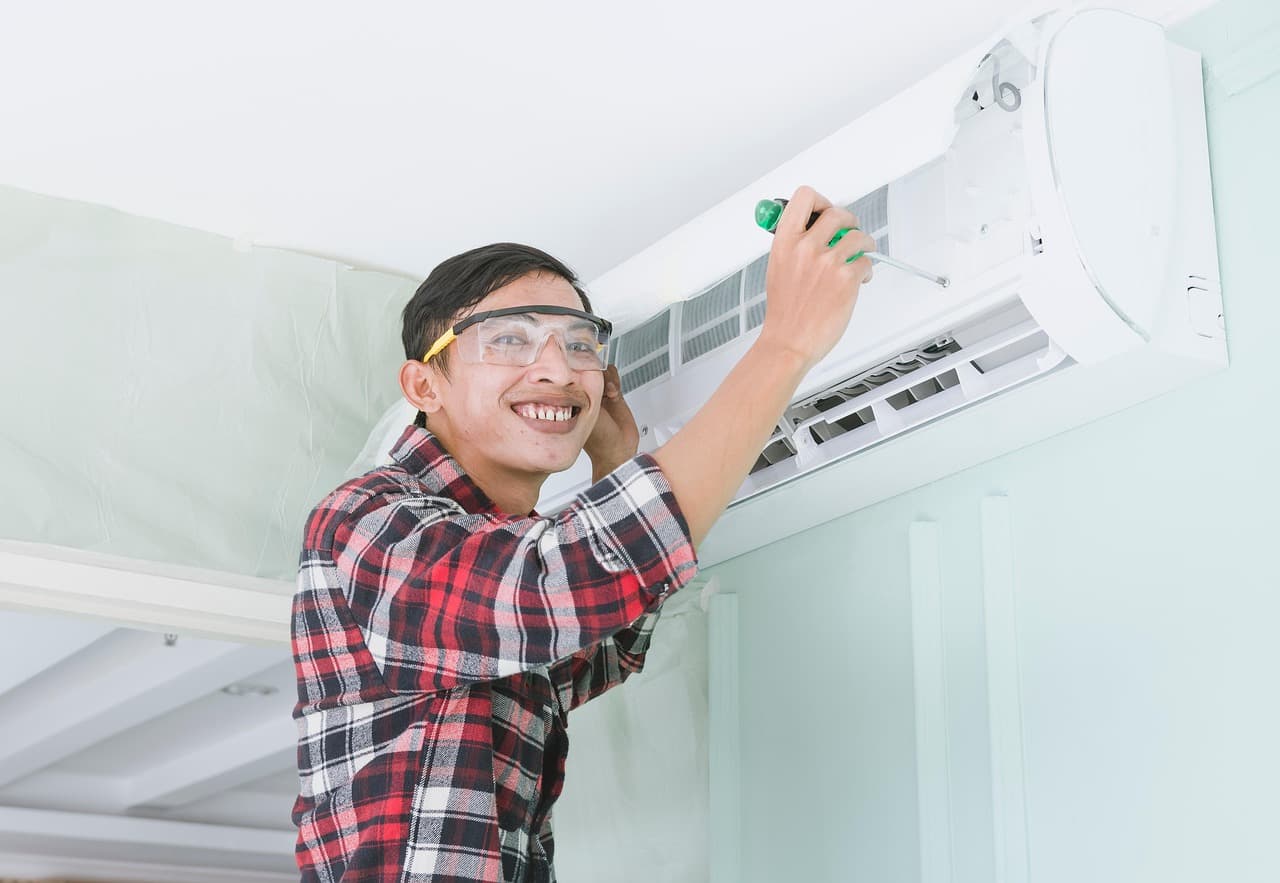
Air conditioning installation involves drilling holes through external and internal walls, running refrigerant lines, managing condensation drainage, and mounting internal and external units. Each phase generates specific contaminants: concrete dust spreads around the drill site, mounting foam leaves sticky residue on floors and windowsills, and cardboard packaging and films obstruct the work area. Reefa's team specializes in post-renovation cleaning — including targeted interventions like HVAC system installation.
Unremoved concrete dust settles on furniture, IT equipment, windowsills, and even inside drawers. This means the facility later requires multiple rounds of vacuuming and wiping, increasing cleaning maintenance costs. Professional post-installation air conditioning cleaning eliminates this problem from day one.
Quick Overview
- Scope: removal of concrete dust from drill holes, mounting foam residue, protective films, and split-unit packaging.
- Key areas: walls around internal units, floors (especially below drill sites), windowsills, furniture, office equipment.
- Equipment: HEPA-filter vacuum cleaners, microfiber cloths, detergents for adhesive residue removal.
- Cost: 200–500 PLN net depending on number of units and contamination level (Cracow, Katowice, 2026).
- Timing: immediately after installation completion, ideally same day or next day.
- Insurance: Reefa team covered by liability insurance up to 500,000 PLN, legally employed and trained in occupational safety.
Why Does Air Conditioning Installation Require Separate Cleaning?
Air conditioning installation resembles minor renovation work in character. Drilling holes 60–80 mm in diameter through reinforced concrete or brick walls generates substantial fine dust that becomes airborne and settles on all surfaces within several meters. In closed office spaces or medical facilities, dust migrates through the ventilation system, reaching neighboring rooms.
Polyurethane mounting foam used to seal refrigerant lines often leaves visible marks on walls and floors. Installation crews typically shield furniture and floors with film, but rarely use professional HEPA vacuum equipment — they focus on system startup and leak tests, not final cleanliness of the space.
In a typical 120 m² office with 8 split units (one per room), installation generates approximately 5–8 kg of concrete dust that settles on desks, shelves, keyboards, and monitors. Without cleaning intervention within the first 24 hours, dust enters a phase of secondary deposition — employee air movement lifts it again, dispersing it throughout the facility.
What Does Professional Post-Installation Air Conditioning Cleaning Include?
We tailor the service scope to the number of units, building type (office, medical facility, retail), and pre-installation protection measures. The standard protocol includes the following stages.
Concrete Dust and Debris Removal
We begin with mechanical floor vacuuming around drill sites using industrial vacuums with H13-class HEPA filters. HEPA filters capture particles above 0.3 µm in diameter, preventing secondary dust dispersal into the air. We vacuum walls around internal units, edges of baseboards, and gaps under windowsills — areas where dust accumulates most intensely.
In office spaces, we also vacuum desks, office chairs, shelving, and IT equipment. In medical facilities, we pay special attention to windowsills and work surfaces, where settled particles may compromise HACCP (Hazard Analysis and Critical Control Points) standards or infection-control procedures.
Removal of Mounting Foam and Adhesive Residue
Polyurethane foam is mechanically trimmed with a knife, and remaining traces are removed with polyurethane-dissolving preparations (such as acetone or specialized removers). It is important not to use aggressive solvents on painted surfaces — in such cases, we work gradually, testing the product on an inconspicuous wall section.
Mounting films, protective tape, and cardboard packaging are collected into segregated waste bags. Label remnants and tape fragments are removed manually or with mineral oils.
Floor and Horizontal Surface Washing
After vacuuming, we move to scrub-and-extract floor cleaning using neutral-pH detergents. For laminate or wooden office floors, we use damp (not wet) cleaning to prevent particle swelling. On industrial flooring (porcelain, PVC), we permit wet washing with simultaneous water extraction using flat mops or scrub-and-extract machines.
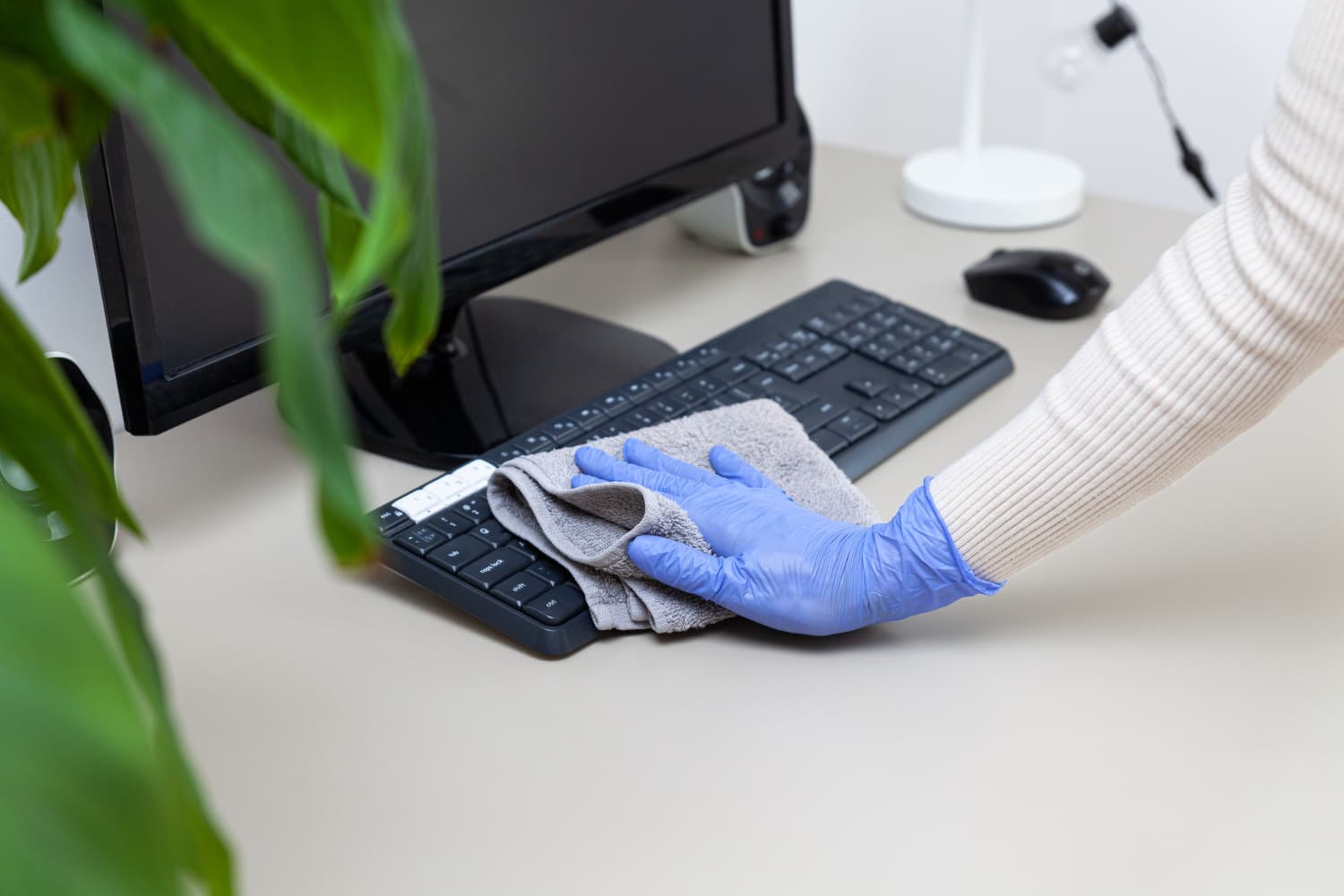
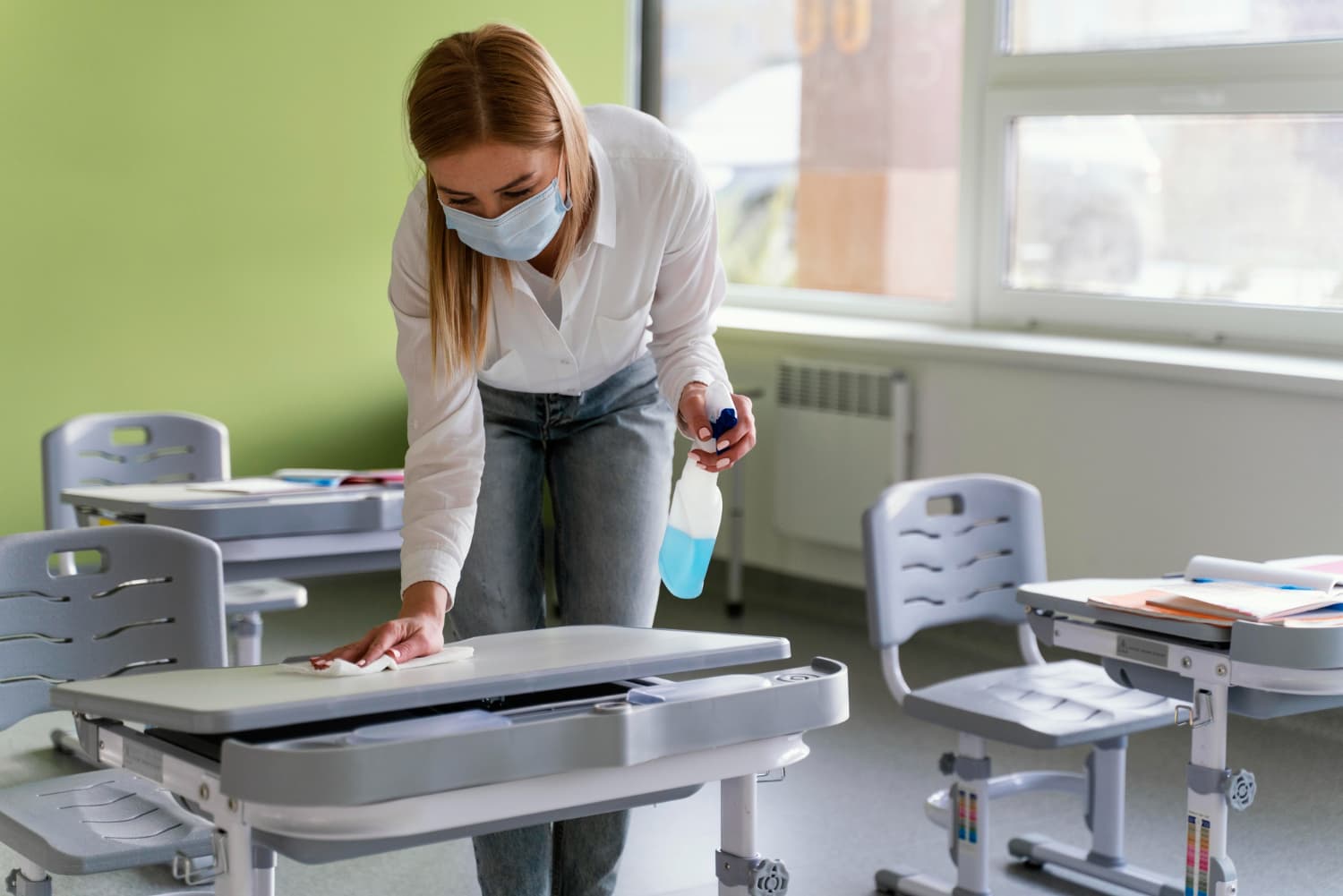
Windowsills, desks, shelves, and office equipment are wiped with microfiber cloths moistened with antistatic detergent, which reduces dust re-attraction. In offices with intensive IT work, we add keyboard and monitor housing cleaning with alcohol-free preparations.
Quality Control and Photo Documentation
After cleaning, the site coordinator performs a walk-through, inspecting selected surfaces for dust residue. As part of Reefa's standard practice, we provide photo reports documenting the before-and-after condition — useful for investor billing or ISO 9001 procedures. We send photo reports to the client within 2 hours of completion.
How Much Does Post-Installation Air Conditioning Cleaning Cost?
Service pricing for 2026 in the Cracow and Katowice market is as follows (net rates):
- Installation of 1–2 split units (space up to 40 m²): 200–280 PLN net per intervention.
- Installation of 3–5 units (office 60–100 m²): 320–420 PLN net.
- Installation of 6–10 units (office 100–200 m²): 450–650 PLN net.
- Multi-split or VRV system installation (area above 200 m², units >10): individual quote, from 15 PLN/m² net of installation surface area.
Costs increase if the installation crew did not protect floors or furniture with film, expanding the cleaning area. Additional services — such as upholstery cleaning if dust penetrated fabric — are quoted separately (from 25 PLN net per office chair).
Most facilities choose single post-installation cleaning; however, for phased installation (e.g., office building with 50 units installed in 5 phases), we offer discount packages. At 5 or more interventions, the rate drops by 10–15%.
When to Order Cleaning — Before or After Installation Handover?
The optimal timing is immediately after installation completion, but before formal system handover inspection. This way, during handover the investor or facility manager encounters no visual traces of construction work — no dirty walls, dusty furniture, or sticky foam on floors.
In practice, the installation crew finishes in the evening, and our cleaning team arrives that same evening or early next morning. Reefa guarantees response time under 24 hours from notification — the condition is facility access and schedule confirmation at least one day prior.
If the facility is operational (e.g., hybrid-mode office), we schedule cleaning for evening or weekend hours to avoid disrupting team work. In such cases, the site coordinator receives access code or key, and we document the entire process in our QR-code ticketing system — staff can scan the code and view visit details in real time.
What Tools and Preparations Should Be Used When Cleaning After Air Conditioning Installation?
Cleaning effectiveness depends on equipment and chemistry suited to contamination type. Standard brooms or domestic vacuums without HEPA filters merely disperse fine dust into the air rather than eliminate it.
HEPA-Filter Vacuum Cleaners
Industrial-class H (HEPA) vacuums with minimum 1400 W power and 20–30 liter tank capacity. H13 HEPA filter captures 99.95% of particles ≥ 0.3 µm, critical for concrete dust containing fine silica and calcium particles. Reefa uses models with automatic filter percussion, extending operation time without cleaning breaks.
Microfiber Cloths
Microfiber cloths with minimum 300 g/m² weight for dry surfaces (dust) and 400 g/m² for wet cleaning. Microfiber mechanically lifts dust without substantial water use, protecting office furniture and IT equipment. We apply color coding: blue for office surfaces, yellow for floors, red for restrooms (if facility also requires bathroom cleaning during installation).
Detergents and Removers
- Universal detergent pH 7–8: for washing laminate, PVC, porcelain floors.
- Antistatic preparation: for office furniture, monitors, IT equipment casings — reduces dust re-attraction.
- Polyurethane foam remover: acetone or dedicated products (e.g., PU Remover), applied spot-wise to foam stains.
- Glass cleaner: for window and mirror cleaning if external-unit installation required window work.
All preparations meet EU Ecolabel standards or carry safety certifications for office environments (e.g., Nordic Swan). In medical facilities, we additionally use detergents compliant with HACCP requirements.
Case Study: Katowice Office, 8 Split Units
In June 2025, we completed post-installation air conditioning cleaning at a technology firm's office in Katowice (140 m², open space plus 3 conference rooms). The installation crew mounted 8 Mitsubishi Electric split units, performing 8 drill-throughs of reinforced concrete walls and running installation beneath the suspended ceiling.
Work scope included:
- Floor vacuuming (laminate panels) across entire office — total 140 m².
- Removal of concrete dust from 18 desks, 8 conference chairs, 12 Ikea Kallax shelving units.
- Removal of mounting foam residue from 3 windowsills and 2 door frames.
- Collection of protective films, cardboard packaging, and pipe fragments — total 4 × 120 L bags.
- Floor washing with laminate preparation, wiping of windowsills and conference tops.
A 2-person team completed work in 3.5 hours. Cost: 480 PLN net. Client received photo reports documenting before-and-after condition and QR-system receipt confirmation. The office resumed operations the next day without additional cleaning interventions.
Differences Between Post-Installation Air Conditioning Cleaning and Standard Office Cleaning
While both aim for cleanliness, the nature of contamination and work intensity differ. Standard office cleaning includes regular vacuuming, floor washing, trash disposal, and restroom cleaning — repetitive tasks performed 2–5 times weekly. Post-installation air conditioning cleaning is a single intervention focused on removing high-difficulty construction contaminants.
Concrete dust has sharper edges than typical office dust and more easily scratches painted surfaces. Therefore, we use higher-grade cloths and avoid dry scrubbing. Mounting foam residue requires dissolving preparations not used in routine maintenance.
Execution time also differs: cleaning a 140 m² office takes 2–2.5 hours, whereas post-installation intervention for 8 air conditioning units requires approximately 3.5 hours, due to more surfaces to wipe and targeted stain removal.
Who Most Often Uses Post-Installation Air Conditioning Cleaning?
Service is typically ordered by:
- Facility managers of Class A and B office buildings — ensuring post-HVAC modernization offices remain fully operational without tenant interruption.
- Small and medium enterprises investing in office air conditioning — avoiding the need to engage own staff for post-installation cleaning.
- Installation companies offering "turnkey" services — outsourcing cleaning as part of the package, increasing customer value.
- Residential communities installing air conditioning in common areas (porter's lodges, conference rooms) — particularly in historic buildings and tenement houses where cleanliness holds aesthetic value.
- Medical facilities (clinics, dental offices) — requiring high cleanliness standards per disinfection procedures and HACCP.
In practice, over half of contracts come from installation firms that refer clients to us as a recommended post-work partner.
How to Prepare Your Facility Before Our Cleaning Team Arrives
While our teams manage any conditions, a few simple steps shorten work time and reduce service cost:
- Remove larger construction debris (packaging, cardboard, long pipes) — if installation crews left them. We can do this, but it will extend execution time by 20–30 minutes.
- Protect sensitive equipment — if facilities contain 3D printers, servers, or medical devices, best practice is to cover them with film or relocate to another room.
- Provide access to water — in most facilities we use office kitchen or restroom taps. If the facility lacks running water, we bring our own 20-liter containers.
- Indicate heavily soiled areas — if you know a foam canister was spilled in a specific room or a double hole was drilled, inform the coordinator. This allows us to select appropriate preparations and tools.
Reefa provides all equipment, preparations, waste bags, and personal protective equipment (FFP2 masks, nitrile gloves). The team arrives in a marked vehicle, facilitating identification and access to secure facilities.
Frequently Asked Questions
Can cleaning be done the same day as air conditioning installation?
Yes, provided notification arrives at least 24 hours prior. In practice, installation crews finish in the evening (e.g., 6:00 PM), and Reefa's team arrives at 7:00–8:00 PM and performs evening cleaning. This model works especially well in offices where employees return to work the next day expecting full cleanliness. We staff teams in Cracow (since 2020) and Katowice (since 2024), ensuring scheduling flexibility.
How long does cleaning after one split unit take?
For a single split unit in a space up to 20 m², execution time is approximately 45–60 minutes. This includes floor vacuuming around the drill site, concrete dust removal from wall and windowsill, collection of protective films, and floor washing. If mounting foam left marks on the door frame or baseboard, time extends by 10–15 minutes. With more units, per-unit time drops due to scale efficiency — cleaning 8 units in one office takes about 3–3.5 hours, or 25–30 minutes per unit on average.
Does cleaning include washing the internal air conditioning units themselves?
No — filter and heat exchanger cleaning of internal units is a service task that should be performed by the installer or an HVAC maintenance company. Our intervention focuses on removing contaminants around units: concrete dust on housings, fingerprints on front panels, mounting tape traces on walls below units. If after several months of operation the client needs filter cleaning, we recommend contacting the installer's service — we lack manufacturer certification for internal component work.
What waste is generated after cleaning, and who removes it?
Typical waste includes concrete dust (construction waste, code 17 01 01), cardboard packaging (code 15 01 01), plastic film (code 15 01 02), and polyurethane foam scraps (code 17 06 04). We collect them into segregated bags and transport to a waste collection point — disposal cost is included in the service up to total mass of 50 kg. If the facility generates more waste (e.g., 20-unit installation in an office building), we transport to an on-site container or, if the facility lacks one, arrange collection via a BDO-registered company (Product and Packaging Database and Waste Management Registry). Additional disposal over 50 kg costs from 80 PLN net.
Do you offer post-installation air conditioning cleaning in cities other than Cracow and Katowice?
Currently we serve Cracow and the Cracow metropolitan area (radius to 30 km) and Katowice and the Silesian agglomeration (Gliwice, Sosnowiec, Tychy, Dąbrowa Górnicza, Bielsko-Biała). For facilities outside these areas but within Silesian or Lesser Poland provinces, travel may be possible with prior agreement — we then add travel cost (1.50 PLN net per kilometer round trip). For locations outside our range, we gladly recommend trusted partner firms operating locally.
How is billing handled — is the cleaning invoice issued to the company or the end client?
The service is billed directly to the ordering party — which may be the end client (the firm receiving air conditioning), the installation firm (if outsourcing cleaning as part of a package), or the residential community. We issue VAT invoices within 3 business days of completion, with payment terms of 7 or 14 days (negotiable). We accept bank transfer; for regular clients we offer monthly consolidated billing. All our services are covered by liability insurance up to 500,000 PLN, protecting the client against potential damage during work.
Summary — Cleanliness as the Final Phase of Air Conditioning Investment
Air conditioning installation is an investment in thermal comfort and facility energy efficiency. However, the full value of HVAC systems emerges only when the space is clean and employees can return to work without concrete dust on desks or foam residue on walls. Professional post-installation air conditioning cleaning is the final stage that closes the installation process and prepares the facility for normal operations.
Reefa's team has completed such interventions in Cracow and Katowice for years, using HEPA vacuums, certified preparations, and dedicated coordinators who attend to every detail. If your facility is undergoing split-unit, multi-split, or VRV system installation, we invite you to get in touch — we will happily provide a quote tailored to your project scope and facility schedule.
Contact our team via the form on /krakow or /katowice — we will respond within hours and arrange a coordinator visit to assess work scope and present detailed cost breakdown.