Cleaning Historic Apartment Building Stairwells — Marble, Wood, Plasterwork
A guide for managers of historic buildings: how to clean marble steps, wooden railings, and plasterwork safely without risking damage. Professional methods, conservation standards, and pricing for heritage properties in Cracow and Katowice.
A guide for managers of historic buildings: how to clean marble steps, wooden railings, and plasterwork safely without risking damage. Professional methods, conservation standards, and pricing for heritage properties in Cracow and Katowice.
Overview
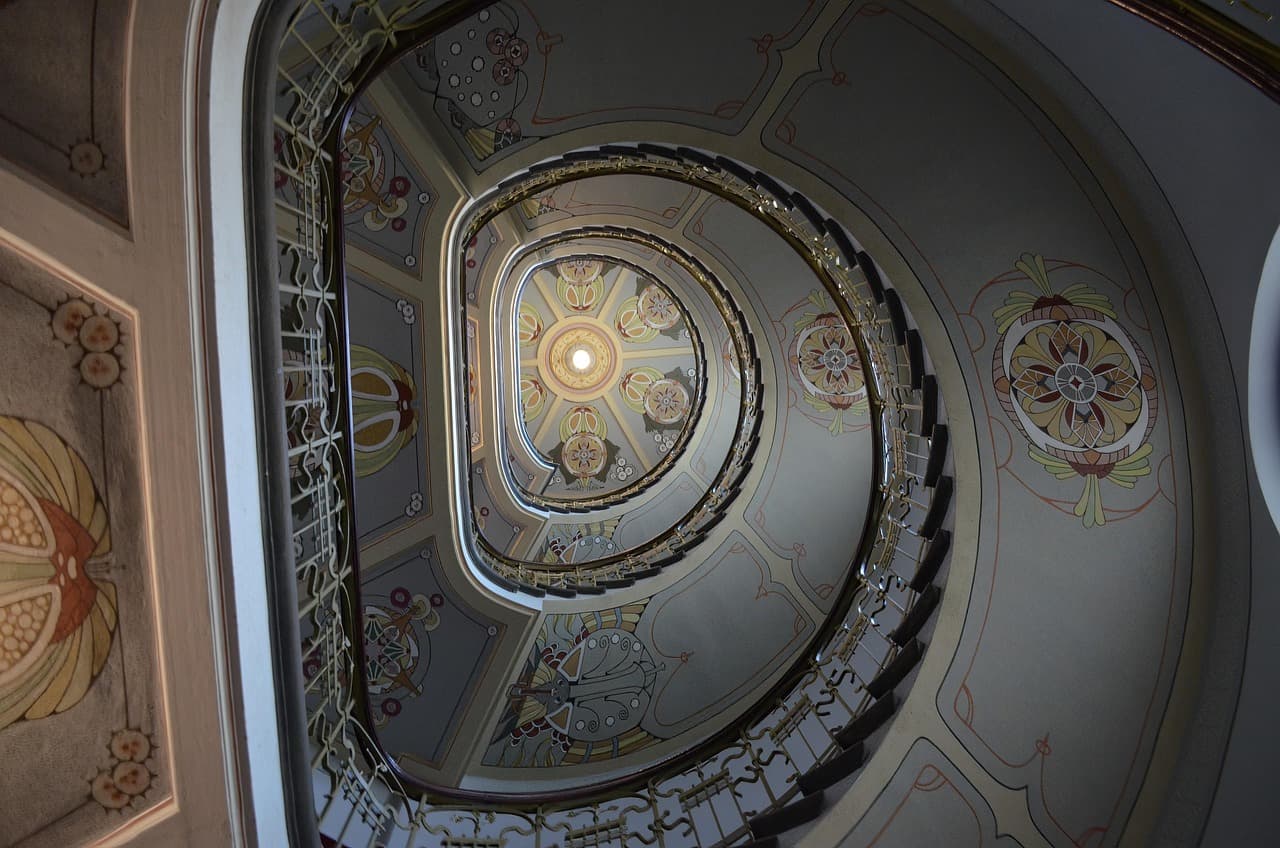
Cleaning a stairwell in a historic apartment building requires knowledge of materials used in the nineteenth and early twentieth centuries — marble steps, wooden railings, decorative plaster and stucco details. Inappropriate chemical products, overly aggressive wet cleaning, or mechanical damage destroy surfaces whose restoration to original condition costs tens of thousands of złotys and requires approval from a heritage conservation officer.
In Cracow and Katowice, we manage stairwells in buildings from 1880–1930, including properties within the Old Town and Kazimierz districts. We apply methods tailored to original materials, preserving the building's aesthetic and heritage value while meeting sanitary and resident safety requirements.
Key points
- Marble and natural stone require pH-neutral products only (6.5–7.5); acids and alkaline detergents dull surfaces and compromise structure.
- Wooden railings are cleaned dry or with minimal water; wax or oil maintenance quarterly protects against drying and cracking.
- Decorative plaster and stucco require dry cleaning with natural-hair brushes or vacuuming; wet washing dissolves gypsum and weakens detail adhesion.
- Frequency: minimum 2–3 times weekly for buildings with high occupant traffic; 1–2 times for smaller properties.
- Cost: 12–20 PLN net/m² monthly, depending on material condition, conservation requirements, and visit frequency.
- For heritage-protected buildings, photographic protocols and chemical approval from the Municipal Heritage Conservation Officer are mandatory.
Why Historic Buildings Require Different Cleaning Than Modern Apartment Blocks
Stairwells in heritage buildings differ from contemporary multifamily structures in materials, construction, and legal status. Most early twentieth-century properties retain original elements: steps of Carrara or Dębnicki marble, railings of oak or ash, gypsum plasterwork, terracotta or terrazzo flooring. These materials require specialist products that do not compromise structure or accelerate degradation.
For buildings registered in the heritage register — in Cracow this covers nearly the entire Old Town, Kazimierz, and parts of Podgórze — the manager must apply cleaning methods consistent with the Municipal Heritage Conservation Officer's guidelines. This prohibits chlorine-based products, acids, and high-speed scrubbing machines that can damage original surface texture. Our historic building cleaning service in Cracow incorporates these requirements from the initial property audit stage.
Heritage buildings typically have more stories than modern panel blocks, narrower stairwells, and no elevators, increasing pedestrian traffic on steps. Higher wear requires more frequent intervention, but without aggressive detergents — the balance between cleaning intensity and material protection becomes critical.
Safely Cleaning Marble Steps and Flooring
Marble is a metamorphic rock based on calcium carbonate. Acids — even organic ones like citric or acetic acid — react with carbonate, causing dulling, scratches, and loss of shine. Detergents with pH above 9 also damage surfaces by dissolving binder and exposing grainy structure.
pH-Neutral Products and Two-Stage Technique
We use liquids with pH 6.5–7.5, formulated for natural stone. Typical protocol:
- Dry sweeping or vacuuming — removing loose sand that acts as an abrasive when contact occurs with wet mop.
- Washing with pH-neutral solution — diluting per safety data sheet (typically 1:100), applying with microfiber flat mop, avoiding excess water.
- Rinsing with clean water — removing detergent residue, which attracts dust.
- Drying — microfiber cloth or dry mop to prevent streaking.
For organic stains (coffee, wine), we use white clay (kaolin) paste mixed with 3% hydrogen peroxide, left for 24 hours under film. The stain is absorbed into the clay without marble damage.
Polishing and Impregnation
Once quarterly — depending on traffic intensity — we polish with 3000-grit diamond paste, restoring natural shine without chemical surface modification. After polishing, we apply water-based sealers (not solvent-based), which fill micropores and ease daily cleaning.
For a property on Stradomska Street in Cracow, a 1890 building with original Dębnicki marble steps, we performed shine restoration and implemented a three-times-weekly cleaning protocol — avoiding the need for mechanical grinding, which would require conservation approval and cost over 15,000 PLN.
Caring for Wooden Railings and Handrails
Wood in heritage buildings — typically oak, ash, sometimes exotic species imported by wealthy investors — responds to moisture through swelling and shrinkage. Frequent water washing leads to finish failure (varnish, wax, oil), resulting in fiber delamination and requiring joinery restoration.
Dry Cleaning and Wax Maintenance
Standard procedure for wooden railings:
- Dusting with soft-bristle brush or natural-hair brush — removing dust from grooves, profiles, and ornaments.
- Wiping with microfiber lightly dampened with water — only for visible oily soiling; never fully wet.
- Maintenance with natural wax or wood oil — every 8–12 weeks, depending on intensity of use. Carnauba wax or linseed oil nourish wood, create hydrophobic barrier, and highlight natural grain patterns.
For varnished railings we use products dedicated to wood varnish, free of silicones — silicones deposit on surface, complicating later finish renewal. In our pricing for residential community cleaning in Cracow, wood maintenance is included in the monthly subscription fee for properties requiring regular care.
Renovation versus Routine Maintenance
If varnish is cracked or wood shows moisture damage, joinery intervention is necessary — sanding, finish renewal. This is a multistep process excluding stairwell use for 2–4 days. Regular maintenance extends periods between renovations from 5–7 years (with neglect) to 12–15 years (with proper care).
Cleaning Stucco Details and Decorative Plaster
Stucco in heritage buildings comprises gypsum or lime decorative elements — ceiling rosettes, cornices, pilasters, cartouches. Gypsum reacts with water, losing cohesion; lime also requires dry or semi-dry cleaning. Wet washing dissolves binder, causing discoloration and detail loss.
Dry Cleaning Techniques
- Natural-hair brush (goat, hog) — gentle dust removal from recesses and relief.
- Vacuum with adjustable suction and soft nozzle — low-pressure suction to avoid fragile fragments.
- Latex sponge (chemical sponge) — vulcanized specialist sponge binding dust without water; used in museum conservation.
For localized oily soiling (fingerprints, splatters), we use white clay paste water-based, removed by brush after drying. We never use ammonia, chlorine, or acid-based products — these react with gypsum and lime, causing irreversible color and texture changes.
Conservation Requirements in Cracow
For properties registered in the heritage register, the Municipal Heritage Conservation Officer in Cracow may require photographic documentation before work begins, presentation of a conservation plan, and use of products approved by the conservation inspector. In practice this means working with a firm experienced in heritage properties — since 2020 we have held contracts in Old Town and Kazimierz buildings, maintaining full documentary protocols for managers and communities.
Terracotta, Terrazzo, Tiles — Historic Flooring Specifics
Beyond marble, heritage buildings feature other flooring types: terracotta (glazed ceramic tiles), terrazzo (stone aggregate in cement binder, ground and polished), ceramic and cement patterned tiles (e.g., Moroccan, Viennese).
Terracotta
Terracotta glaze resists chemicals within pH 4–11 range, but old cement grout reacts to acids. Washing with pH-neutral products, without high-speed machines — these can damage tile edges and grout.
Terrazzo
Like marble — pH-neutral only. Terrazzo requires cyclical polishing with diamond paste (every 6–12 months) to maintain shine. For severe scratches, multistep grinding by specialist is necessary.
Patterned Tiles
Cleaning with brush or flat mop, without excess water — water seeps under tiles, dissolving historic lime mortar, leading to detachment. Hydrophobic impregnation annually protects against moisture penetration.
Cleaning Frequency and Heritage Building Schedule
For buildings with 8–12 apartments at traffic intensity of 25–40 people daily, we recommend cleaning 2–3 times weekly. Typical schedule:
- Monday, Wednesday, Friday (or Tuesday, Thursday, Saturday) — full step washing, railing wiping, sill and radiator wiping, entrance debris removal, lighting checks and defect reporting.
- Once monthly — lamp cleaning, dust removal from stucco details, entrance window washing, doormat cleaning.
- Quarterly — wood wax maintenance, marble polishing, flooring impregnation checks.
For smaller buildings (4–6 apartments), 1–2 times weekly is acceptable, accounting for material specifics and seasonality — autumn and spring see increased frequency due to mud and leaves.
For properties in historic building cleaning in Katowice, where conservation standards parallel Cracow's in districts like Śródmieście and Bogucice, we apply analogous protocols.
Professional Historic Building Stairwell Cleaning Costs
Historic building stairwell cleaning costs 12–20 PLN net per square meter monthly, depending on:
- Material condition — steps and flooring in good condition require standard maintenance; damaged or neglected surfaces require initial renovation and intensive upkeep.
- Story count and surface area — a four-and-a-half-story building with narrow stairwell (50–70 m²) has higher per-unit cost than a five-story property of 120 m² due to economies of scale.
- Cleaning frequency — three times weekly is standard for high-traffic buildings; twice weekly reduces cost by 15–20%.
- Conservation requirements — photographic documentation, product approvals, specialist products increase cost by 10–15%.
- Additional services — window washing, basement and attic cleaning, plant care in foyer, disinfection of handles and intercom buttons.
By comparison, standard panel-block stairwell cleaning costs 8–12 PLN net/m² monthly — the difference reflects universal product use and absence of conservation restrictions.
Example: Stradomska Street property in Cracow: 4 stories, 65 m² stairwell, marble steps, wooden railings, ceiling plasterwork. Frequency: 3 times weekly, photographic documentation, quarterly wood maintenance. Cost: 1,040 PLN net monthly (16 PLN/m²), equaling 12,480 PLN net annually. The community avoided estimated 15,000 PLN+ marble repair costs through regular maintenance and gained property value increase via improved entrance aesthetics.
Choosing a Historic Building Cleaning Firm
When selecting a contractor, consider these aspects:
Heritage Site Experience
The firm should have references from heritage-registered building contracts or conservation zones. Knowledge of historic materials and ability to adjust chemical products to conservation requirements are essential.
Liability Insurance and Employment Legality
Marble, stucco, or wood damage in a heritage building can generate costs from several to tens of thousands of złotys. The contractor must carry liability insurance of minimum 300,000–500,000 PLN (we provide coverage to 500,000 PLN) and legally employ and insure staff — ZUS and PIP checks can burden communities as principal if "black market" labor is used.
Dedicated Coordinator and Reporting System
In heritage properties, material condition monitoring is critical. Our service model includes a dedicated coordinator per property, photoreports after each cleaning, and a QR-code defect reporting system — residents can report issues (e.g., stucco detachment, step cracking), routing directly to manager and coordinator.
Flexibility and Availability
Heritage buildings require emergency intervention — spilled water on marble flooring, furniture-transport railing damage. Sub-24-hour response time is our standard, provided in Cracow since 2020 and Katowice since 2024.
Certifications and Standards Compliance
Though cleaning requires no specialist certification, products with EU Ecolabel or Nordic Swan certifications are preferable — confirming ecological safety and absence of substances aggressive toward delicate materials.
Heritage Building Manager Legal Obligations Regarding Cleanliness
Under municipal cleanliness and order statutes, property managers — housing communities, professional managers, or owners — must maintain stairwell cleanliness, including debris removal, hygiene, and sanitary safety. Practically this means:
- Regular cleaning — at least once weekly for multifamily buildings; more frequently with elevated traffic.
- Hazard removal — slippery flooring (snow, mud) must be immediately cleaned and dried.
- Touch hygiene — regular railing, handle, and intercom button washing; disinfection recommended during elevated epidemic risk periods.
For heritage buildings, additional obligation includes respecting conservation guidelines — using methods and products per Conservator approvals or recommendations. Non-compliance can trigger restoration orders and fines to 100,000 PLN.
Case Study: 1890 Building at Stradomska Street, Cracow
Pre-war rental building, 65 m² stairwell, 4 stories, 10 apartments. Initial state: dull marble steps with fine scratches from prior use of acidic cleaners; blackened oak wooden railings — varnish cracked, requiring renovation; dusty ceiling plasterwork, minor detail separation.
Implementation Stages
- Material audit — marble type identification (Dębnicki, pH-neutral), varnish condition assessment (maintenance carpentry required), stucco detail stability evaluation.
- Initial renovation — marble polishing with 1000 → 3000-grit diamond paste, hydrophobic impregnation; railing renovation by joinery (sanding, new matte polyurethane varnish); stucco detail cleaning with latex sponges and brushes.
- Regular schedule implementation — three-times-weekly cleaning with pH-neutral products, quarterly wood wax maintenance, photoreports after each visit.
- Monitoring and adjustment — dedicated coordinator inspected progress monthly, adjusted cleaning intensity by season (autumn — more frequent, summer — standard).
12-month result: marble steps maintained shine without re-polishing, railings free of varnish cracking, stucco clean and stable. The community avoided estimated 18,000 PLN in repairs and gained property value increase through entrance aesthetic improvement.
Seasonality and Schedule Adjustment
Heritage buildings in Cracow and Katowice climates undergo seasonal changes affecting cleaning schedule:
- Autumn (September–November) — leaves, mud, rain — frequency increases to 3–4 times weekly, absorbent doormats placed at entry.
- Winter (December–March) — snow, salt, sand — step washing daily or every other day during intense precipitation; using salt-neutralizing, pH-neutral, non-ionic products.
- Spring (April–May) — plant pollen, dust — window cleaning, pollen removal from sills; impregnation re-application review.
- Summer (June–August) — standard twice-weekly frequency, vacation season — lower traffic intensity.
Seasonal adjustment is included in monthly subscription pricing — no surcharges for elevated winter frequency.
Frequently Asked Questions
What does stairwell cleaning cost in a heritage apartment building?
Historic building stairwell cleaning costs 12–20 PLN net per square meter monthly, meaning a typical 60–70 m² stairwell runs 720–1,400 PLN net monthly. Final price depends on material condition (marble, wood, plasterwork), frequency (2–3 times weekly), conservation requirements, and extras (window washing, wood maintenance). For heritage-registered buildings, photographic documentation and specialist product requirements increase cost 10–15%. Standard panel-block stairwell cleaning is 8–12 PLN/m² monthly by comparison.
Can common household cleaners be used on marble?
No — marble, natural stone, and terrazzo react to acids (citric, acetic, hydrochloric) and alkaline products above pH 9. Acids dull surfaces, destroying shine and compromising calcium carbonate structure. Chlorine and ammonia detergents cause discoloration and weaken binder. Only safe products are pH-neutral liquids (6.5–7.5) formulated for natural stone, applied per manufacturer guidelines. For stubborn organic stains we use white clay and hydrogen peroxide pastes, which bind soil without chemical material reaction.
How often should wooden railings in heritage buildings receive maintenance?
Wooden railings require natural wax or wood oil maintenance every 8–12 weeks, depending on traffic and finish type. Carnauba wax or linseed oil nourish wood, protect against moisture, and highlight natural grain. Frequent water washing causes swelling, varnish cracking, and fiber delamination — cleaning should be dry or with minimally dampened microfiber. Proper maintenance extends renovation periods from 5–7 years (with neglect) to 12–15 years.
Who is responsible for stairwell cleaning — community or manager?
The housing community as property owner bears cleanliness obligation on stairwells, typically contracting with professional managers or cleaning firms. Communities set budgets, frequency, and standards; managers organize bids and oversee contractors. In practice communities approve annual cleaning budgets; managers contract with firms — often subscription models where monthly fees cover set visit frequency. Individual residents have no personal cleaning obligation unless community bylaws mandate rotating duties — rare in heritage buildings due to conservation constraints.
Can plasterwork be wet-cleaned?
No — gypsum and lime plaster requires dry or semi-dry cleaning. Gypsum reacts with water, losing cohesion and hardness; lime dissolves, causing discoloration and detail loss. Safe methods are natural-hair brushes, vacuums with low pressure and soft nozzles, and specialist latex sponges (chemical sponge) binding dust without water. For localized oily spots we use water-based white clay paste, removed by brush after drying. Wet cleaning is permitted only for plasterwork covered in oil paint or varnish — but requires heritage conservation consultation.
What documents are required for heritage building cleaning?
For heritage-registered buildings, the Municipal Heritage Conservation Officer may require:
- Photographic documentation of pre-work condition.
- Conservation plan detailing chemical products (trade names, safety data sheets, pH).
- Approval of cleaning methods and maintenance by conservation inspector.
- Protocols from periodic material condition reviews (marble, wood, plasterwork).
In practice the cleaning firm prepares documentation with the manager for approval — we provide full support including photoreports after each cleaning and annual condition summaries. For non-registered but conservation-zone buildings (Old Town, Kazimierz, Podgórze in Cracow), requirements are simplified but documentation retention is recommended for inspection contingencies.
Contact Our Team
Do you manage a heritage building with historic materials requiring regular conservation-compliant cleaning? We'll audit your property, propose a schedule, and select products suited for marble, wood, and stucco details. We've served Cracow since 2020 and Katowice since 2024 — maintaining buildings in the Old Town, Kazimierz, and Katowice Śródmieście. Dedicated coordinator, photoreports after each cleaning, 500,000 PLN liability coverage.
Request a quote via the form at reefa.pl/kontakt or call — we respond within 24 hours.