Office Disinfection Post-COVID-19 — 2026 Protocols
In 2026, office disinfection protocols have evolved: enhanced sanitization of high-touch surfaces remains standard practice, while daily ozone treatment and continuous temperature monitoring have been discontinued.
In 2026, office disinfection protocols have evolved: enhanced sanitization of high-touch surfaces remains standard practice, while daily ozone treatment and continuous temperature monitoring have been discontinued.
Office Disinfection Post-COVID-19 in 2026: Practical Protocols and Updated Standards
Office disinfection in 2026 no longer resembles the strict pandemic protocols of 2020–2022. We have retained what works in practice: regular sanitization of high-touch surfaces with virucidal agents, established procedures for team illness cases, and elevated hygiene standards during infection seasons. We have moved away from continuous temperature screening, daily ozone treatment of office spaces, and mandatory rotation of cleaning crews.
For facility managers and HR departments, the question today is not whether to disinfect, but when and how intensively. The key is flexible escalation — a system where cleaning standards can be quickly elevated in response to seasonal threats or confirmed illness cases, then return to baseline service. This article covers current protocols, chemical agents, cost structures, and practical recommendations based on Reefa's experience managing office properties in Cracow and Katowice since 2020.
Key Points
- Enhanced disinfection remains standard during October–March (flu season) and following reported employee illness
- Virucidal agents — alcohol-based (≥70% ethanol), peroxide-based (hydrogen peroxide), and quaternary ammonium compounds (QAC) — are now in routine rotational use
- Post-pandemic protocol costs typically represent a 10–20% increase over standard office cleaning
- Critical surfaces include door handles, light switches, railings, shared desks, kitchen counters, and elevator panels
- Ozone treatment and ULV fog disinfection remain intervention methods, not daily practices
- Photo reports and documentation enable tracking of SLA compliance and GDPR requirements regarding employee data protection
What Remained from Pandemic Protocols — and Why
2026 marks a point where the facility management industry has developed a balanced, sustainable model for office hygiene. From the extreme precautions, we have retained only those measures proven effective and economically justified.
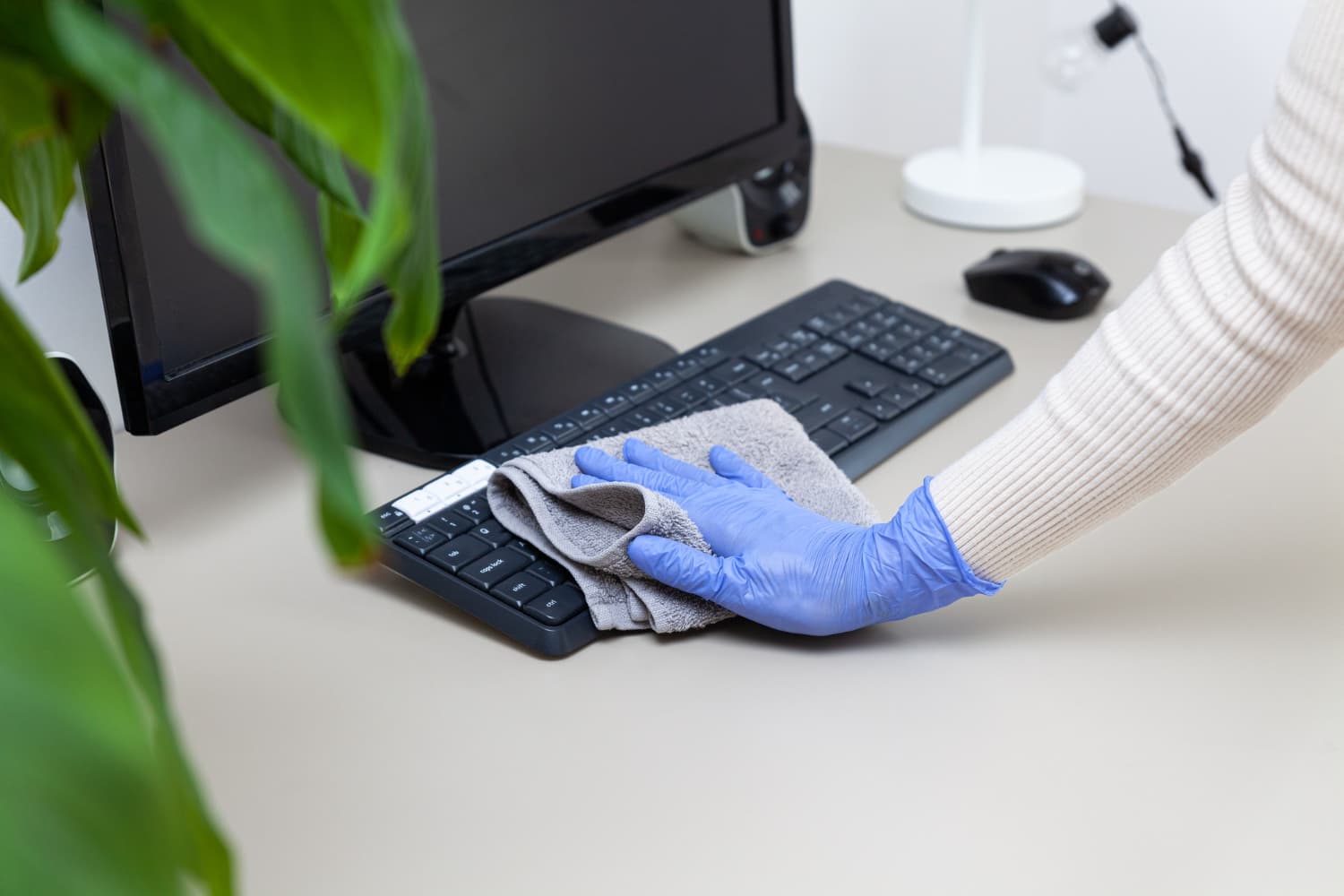
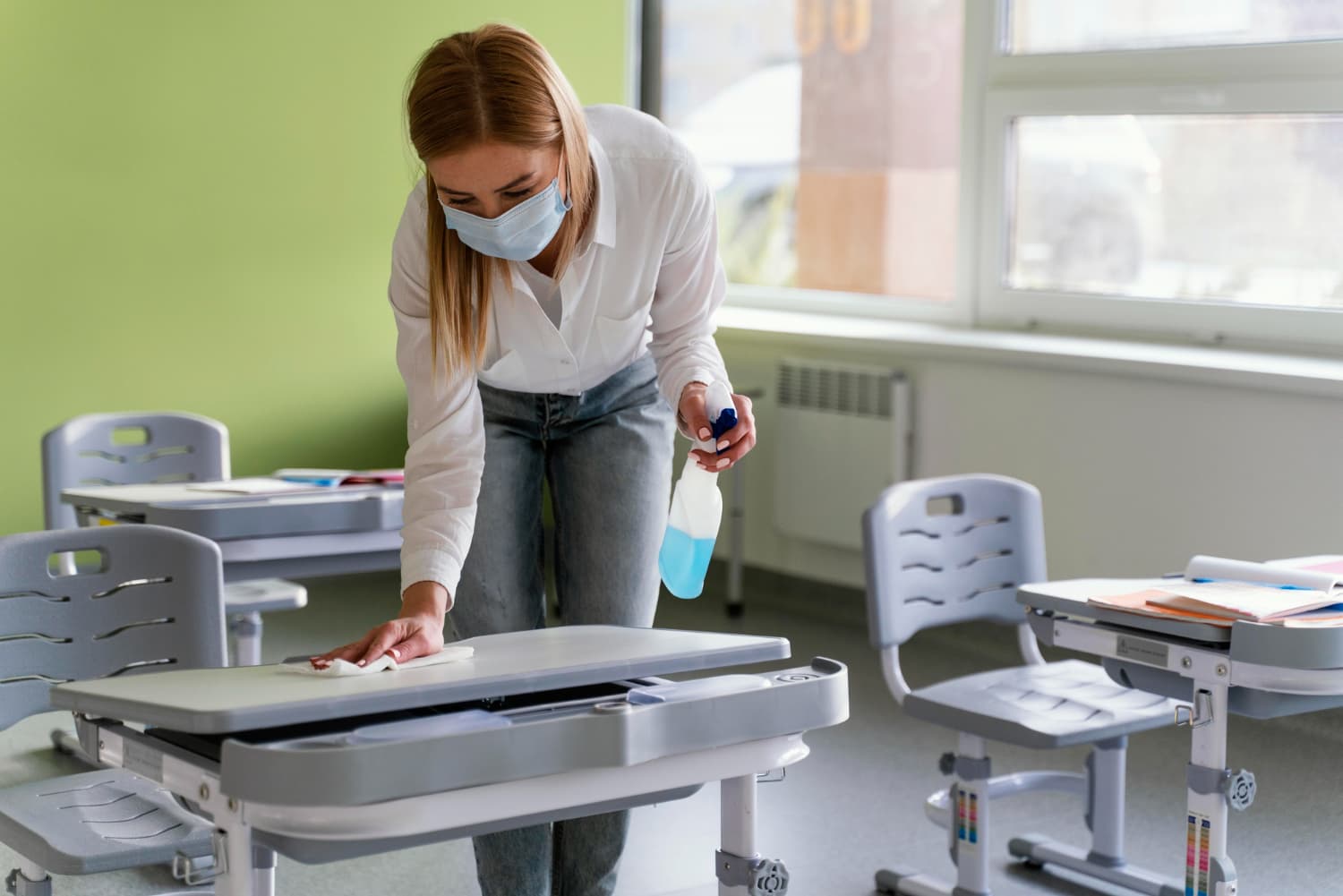
High-touch surface disinfection is now standard in office cleaning in Cracow and Katowice. Door handles, light switches, stair railings, elevator panels, shared desks (hot desking), kitchen counters, and keyboards in open-plan areas are cleaned with virucidal agents at least once daily, and in Class A buildings — twice.
Virucidal agents are now part of regular rotation. Alcohol-based formulations (≥70% ethanol or isopropanol), peroxide-based products (hydrogen peroxide at 0.5–3% concentration), and quaternary ammonium compounds (QAC) are rotated every 3–4 weeks to prevent microorganism resistance. All agents carry EN 14476 certification (virucidal efficacy) and EU Ecolabel certificates, which matters for companies prioritizing ESG (Environmental, Social, Governance) standards.
Intervention protocols for team member illness remain part of facility contracts. In practice, this means readiness for intensive disinfection of a sick employee's work zone within 24 hours of notification, plus a one-time disinfection of an entire floor or office — depending on risk level assessed by HR.
What Was Discontinued — and What to Avoid in 2026
Many practices from 2020–2022 proved ineffective or economically unjustifiable. Facility managers can safely abandon the following measures.
Continuous employee temperature screening at office entry is no longer required or recommended by health authorities. Research showed that a significant proportion of infected individuals show no fever, and the system generated operational costs and false sense of security.
Daily room ozonization was employed in early pandemic months as a rapid large-area disinfection method. In practice, ozone at virucidal concentrations is toxic to humans, requires multi-hour room evacuation, and damages electronics and upholstery. Today we use ozonization only as an intervention method — for confirmed outbreak sites or explicit client request, never as standard practice.
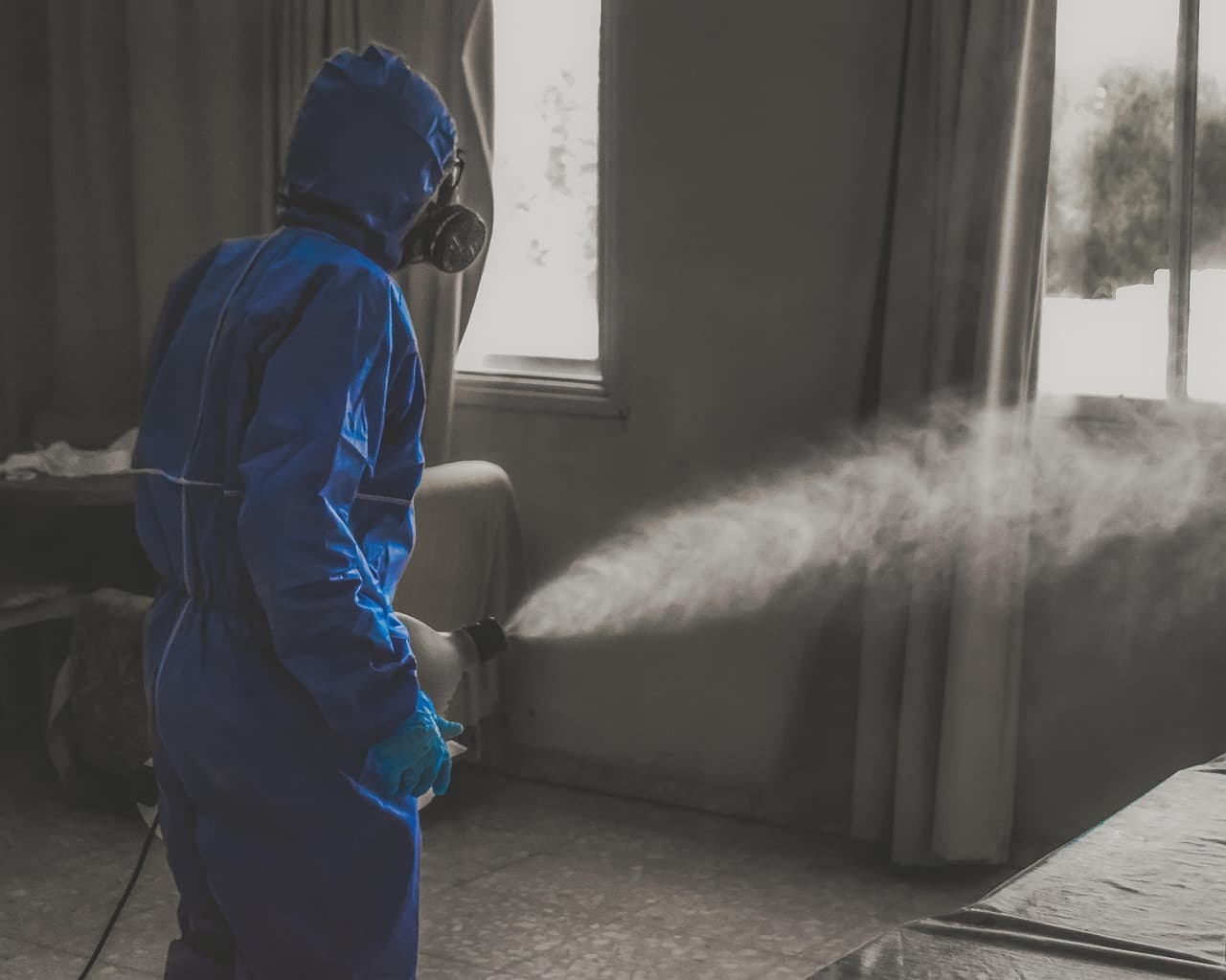
ULV fog disinfection (ultra low volume) also transitioned to intervention status. While the disinfecting mist reaches difficult-access areas, it requires specialized equipment, staff training, and temporary space evacuation. A single ULV disinfection for 500 m² costs approximately 800–1,200 zł net — justified only in crisis situations.
Rotating cleaning teams (to prevent cross-site contamination) generated enormous logistics costs without clear epidemiological gain. Since 2024, dedicated team assignment to specific properties has returned, which also improves service quality and continuity in coordinator relationships.
When to Apply Enhanced Disinfection in 2026
The facility manager's main question is no longer whether to disinfect, but when to escalate the protocol. Reefa recommends a two-tier system: daily standard and intensive protocol.
Flu season (October–March) is the natural period of heightened vigilance. National Health Fund statistics show that these months see sick leave rates rise by nearly 50% compared to summer. During flu season, we increase high-touch surface disinfection frequency from once daily to twice daily in common areas (kitchens, restrooms, conference rooms) and replenish antibacterial dispensers in visible locations.
Confirmed illness in the team is the second key trigger. The procedure works as follows: HR or the facility manager notifies the cleaning coordinator (via dedicated QR system or phone call at Reefa), within 24 hours the sick employee's work zone undergoes virucidal disinfection, and if more than three cases appear on one floor — we disinfect the entire floor. The cost of a one-time intervention for 200–300 m² typically runs 300–500 zł net.
Employee return after extended absence (after holidays, company breaks) is when many organizations opt for a one-time welcome disinfection of the entire property — especially if the office was closed or operated at reduced capacity for weeks.
On-site events and conferences attracting dozens of external guests warrant elevated standards before the event and disinfection afterward. More on event standards can be found in our guide to event cleaning in Cracow.
Chemical Agents and Disinfection Methods — 2026 Overview
Selecting a virucidal agent involves not only efficacy but also compliance with workplace safety regulations, impact on materials (steel, plastics, touchscreens), and user comfort.
Alcohol-based formulations (≥70% ethanol or isopropanol) work instantly, evaporate without residue, and are safe for most surfaces. We apply them to desks, keyboards, phones, and switches. The drawback is flammability and drying effect on skin — teams use nitrile gloves. A 5-liter concentrate canister costs approximately 80–120 zł net, sufficient for about 2–3 weeks in a 500 m² office.
Peroxide-based products (hydrogen peroxide at 0.5–3% concentration) decompose to water and oxygen, making them ecologically safe and requiring no rinsing. Effective against viruses, bacteria, and fungi, with 5–10 minute contact time. We apply peroxides in restrooms, office kitchens, and on porous surfaces (conference room chair upholstery). These products hold EN 14476 certification and are approved for use in medical facilities in Cracow and Katowice.
Quaternary ammonium compounds (QAC) work longer — the product layer persists on surfaces, forming an antibacterial coating for several hours. Effective, but may leave slight residue and require periodic rinsing. We apply them mainly to floor and wall washing in high-traffic zones. Cost comparable to peroxide products.
Product rotation every 3–4 weeks is recommended practice by chemical manufacturers and professional distributors. It prevents microorganism adaptation and ensures full spectrum coverage.
Cost Structure — Pricing the Post-Pandemic Protocol
For the facility manager, understanding how disinfection impacts total office management cost is essential. In 2026 in Cracow and Katowice, pricing breaks down as follows.
Basic standard office building cleaning starts at 10 zł net/m²/month for annual contracts, 5 days per week. Includes vacuuming, floor washing, trash removal, toilet paper and towel restocking, basic kitchen and restroom cleaning.
Post-pandemic protocol adds daily high-touch surface disinfection, rotating virucidal agent use, photo reports (after each cleaning), and <24-hour intervention readiness. Cost increases by 10–20%, reaching 11–12 zł net/m²/month. For a 500 m² office, this means an additional 500–1,000 zł net monthly.
Intervention disinfection (after illness, before an event) costs 300–500 zł net one-time for 200–300 m², depending on scope (desks and handles only, or full space including furniture and upholstery).
Floor ozonization (intervention method) costs approximately 800–1,200 zł net for 500 m², requires 3–4 hour evacuation and ventilation.
In practice, most Reefa clients opt for continuous post-pandemic protocol from October–March (flu season), then return to basic standard in other months with quick escalation option as needed. This approach is economically optimal and provides management and HR departments with peace of mind.
Case Study: Service Sector Corporation in Katowice
In 2025, Reefa took on cleaning services for a service-sector office in Katowice — 650 m² open-plan space with 80 hybrid employees (average 50–60 on-site daily). The client reported challenges with returning employees post-pandemic and a need to raise hygiene standards to build team confidence.
Solution: We implemented a two-tier protocol. October to March (flu season) — daily double disinfection of high-touch surfaces with rotating alcohol-based and peroxide formulations every 3 weeks, photo reports after each cleaning available through dedicated manager portal, antibacterial dispensers at 8 locations (entrance, kitchen, conference rooms, restrooms). April to September — basic standard with quick escalation capability on notification.
Results: Over 12 months, zero outbreak events requiring office closure. HR noted increased employee sense of safety and psychological comfort, translating to better office attendance. Service cost: 7,800 zł net/month during flu season (approx. 12 zł/m²), 6,500 zł net/month other months (10 zł/m²). Total annual cost: approximately 86,000 zł net — a 15% increase over pre-pandemic standard, justified by added services and documentation.
Building Your Internal Disinfection Protocol
Every office is different — varying in layout, workforce size, business profile, and organizational culture. Nevertheless, an effective disinfection protocol comprises several universal elements.
Risk zone mapping. Identify your office's highest-touch surfaces: door handles (especially main entrance and restroom doors), light switches, elevator panels, railings, shared desks, kitchen counters, coffee machines, keyboards and mice in open areas, refrigerator and microwave handles. These points require daily virucidal disinfection.
Chemical selection. Ensure products carry EN 14476 certification (virucidal efficacy), are approved for public facilities, and won't damage surfaces (especially touchscreens, stainless steel, ABS plastics). Rotating products every 3–4 weeks is best practice but requires experienced supplier partnership.
Frequency and schedule. Daily minimum is once after business hours. During flu season or in high-traffic facilities — twice daily (morning before team arrival, evening after departure). For hybrid offices, synchronize cleaning with peak occupancy days (typically Tuesday–Thursday).
Documentation and audit. Photo reports after each cleaning, available via portal or email, enable SLA compliance tracking. At Reefa, each property has a dedicated coordinator responsible for quality and communication. QR-code reporting systems placed at visible points let employees quickly flag issues (missing soap dispenser, kitchen contamination).
Intervention procedure. Clarify who reports illness cases and via what channel (HR? facility manager?), required response time (<24h is a good benchmark), which surfaces get disinfected (sick employee's desk? entire floor?), and who approves scope. Clear procedure saves time and eliminates chaos during stressful situations.
Disinfection and Other Facility Management Aspects
A disinfection protocol doesn't function in isolation — it must integrate with overall building management.
GDPR and personal data protection. Employee illness information is sensitive data. The procedure for reporting illness to the cleaning provider should protect employee anonymity (e.g., "illness on floor 3, desk zone 12–18" without names). Cleaning service contracts must include GDPR clauses governing personal data processing and confidentiality.
Workplace Safety and Team Training. Cleaning teams must be trained in chemical use (safety data sheets, dosing, personal protective equipment), intervention procedures, and first aid. At Reefa, all employees are legally employed and insured, possess current medical clearances and safety training — this is both legal requirement and foundation of service quality.
Liability Insurance. Work with chemicals and disinfecting electronics (desks with computers, screens) raises damage risk. Verify your cleaning provider carries liability insurance of at least 100,000 zł, ideally — like Reefa — up to 500,000 PLN.
Team Communication. Disinfection only works when employees know it's happening and feel safe. Simple signage in the kitchen or at entry ("Our office is disinfected daily with virucidal agents") plus a QR code for feedback builds culture of cleanliness and team engagement.
Looking Ahead to 2026–2028: What's Coming
The facility management industry is evolving toward predictive hygiene management. Rather than reacting to illness, companies want to anticipate high-risk periods and adjust protocols accordingly.
HR and attendance data integration. Access control systems and desk booking (hot desking) can automatically flag rising sick leave or dropping occupancy, triggering disinfection protocol escalation. This requires IT integration between HR, facility, and cleaning provider — technology is ready, the question is organizational culture and GDPR.
Air quality monitoring and IoT. CO₂ sensors, humidity monitors, and PM2.5 (fine particle) sensors increasingly appear in Class A offices. Research shows poor ventilation raises airborne virus transmission risk. Future air quality data could automatically escalate cleaning protocols or signal ventilation service needs.
WELL and BREEAM Certifications. Healthy building (WELL Building Standard) and sustainability (BREEAM) standards increasingly require documented disinfection protocols and regular hygiene audits. Facility managers must partner with providers offering not just service, but full documentation and international standard compliance.
Frequently Asked Questions
How long does COVID-19 remain viable on office surfaces?
According to CDC research, SARS-CoV-2 can remain infectious on plastic and stainless steel surfaces for 48–72 hours, on cardboard for 24 hours, and on copper for 4 hours. In practice, door handles, desk surfaces, elevator panels, and other high-touch points pose transmission risk for 2–3 days after contact with an infected person. This is why daily virucidal disinfection in your protocol — especially during flu season and high-traffic periods — remains justified. However, remember that COVID-19's primary transmission route is airborne (aerosol), so ventilation and air quality are equally important.
What are the main disinfection methods used in offices in 2026?
Three primary methods predominate in facility management practice. Manual disinfection with spray or wipe formulations is the daily standard for handles, switches, desks, and keyboards — contact time 1–5 minutes, no space evacuation needed. ULV fog disinfection (ultra low volume) is an intervention method where disinfectant aerosol reaches difficult spots; requires specialized equipment and 2–3 hour space evacuation during and after application. Ozonation uses O₃ gas at virucidal concentration; highly effective but toxic to humans and animals, damages electronics and rubber seals, requires 3–4 hour evacuation. In daily practice, the first method dominates; the others are reserved for crisis or explicit client request.
Does hand sanitizer kill viruses, including COVID-19?
Yes, provided it meets standards. Alcohol-based hand sanitizers with minimum 70% ethanol or isopropanol concentration effectively inactivate coronavirus SARS-CoV-2 and other enveloped viruses (influenza, RSV). Products must carry EN 14476 virucidal efficacy certification. Proper use matters: approximately 3 ml volume, 30-second minimum contact time, coverage of palm, fingers, and wrists. QAC-based sanitizers also show virucidal activity but require longer contact time. In offices we recommend automatic dispensers at entries, kitchens, and conference rooms — a simple way to build hygiene culture in your team.
What does comprehensive office disinfection cost after a confirmed COVID-19 case?
Cost depends on area, protocol intensity, and chosen method. Manual intervention disinfection (high-touch surfaces, desks, handles, restrooms) for a 200–300 m² office typically runs 300–500 zł net with <24-hour execution. ULV fog disinfection for an entire 500 m² floor costs approximately 800–1,200 zł net with 2–3 hour evacuation. Ozonation has similar pricing but requires longer ventilation and risks electronics damage. At Reefa, standard post-illness intervention covers sick employee's work zone with express execution — usually sufficient for most cases. For larger outbreaks (3+ cases on one floor), we recommend full-floor manual or ULV disinfection.
How often should office disinfection occur in 2026 now that the pandemic has ended?
COVID-19 has transitioned to endemic phase, meaning the virus circulates at steady low levels. In practice, we apply disinfection seasonally and flexibly. Flu season (October–March): daily high-touch surface disinfection with virucidal agents — the period when sick leave rates peak and office transmission risk increases. Spring and summer (April–September): basic cleaning standard with quick escalation capability on illness notification. Ad-hoc interventions: after any reported infection case, before large events or conferences, after extended team absence. This approach balances safety with economic rationality — you don't strain your facility budget while maintaining readiness for threats.
Must a cleaning company have special disinfection certifications?
Poland has no separate mandatory disinfection certification for office surfaces (unlike medical disinfection in hospitals, which requires health authority licensing). However, a professional provider should meet these criteria: current workplace safety training for teams (chemical use, product safety sheets, protective equipment), liability insurance of at least 100,000 zł (ideally to 500,000 PLN, as Reefa carries), EN 14476-certified products (virucidal efficacy) with EU Ecolabel certification (environmental safety), legally employed teams (employment contracts, social insurance, medical clearances), and documentation and audit systems (photo reports, checklists, client portal). Public tenders and corporate contracts increasingly require ISO 9001 (quality management) and ISO 14001 (environmental management) certification as well.