IT Office Cleaning — Server Room Protection and Workstation Security
Learn how to safely clean an IT office with server room control, humidity management, anti-static measures, and data protection compliant with GDPR standards.
Learn how to safely clean an IT office with server room control, humidity management, anti-static measures, and data protection compliant with GDPR standards.
Why IT Offices Require a Different Approach Than Traditional Offices
IT environments present specific challenges not found in typical corporate spaces. The first is electronic dust — fine conductive particles generated from device enclosures, cabling, and printer toner. In server rooms and workstation areas, this dust accumulates on components, causing overheating, short circuits, and system failures.
The second factor is the concentration of high-value equipment. Servers, disk arrays, networking devices, and developer workstations can collectively represent values ranging from hundreds of thousands to millions of PLN — translating to significant financial risk if damaged by improper cleaning agents or accidental water damage. For this reason, a cleaning contractor's liability insurance should be at least 1,000,000 PLN, as included in our security package.
The third risk area is data protection. IT offices process source code, project documentation, client data, business strategies, and information covered by NDAs. Cleaning staff have physical access to desks, filing cabinets, Kanban boards, screens, and printers — requiring implementation of GDPR procedures and confidentiality agreements. Any data breach incident, even unintentional, can result in GDPR sanctions up to €20 million or 4% of annual global revenue.
Our IT facility coordinators in Cracow — including spaces in the Technology Park — regularly meet with facility managers to align cleaning schedules with system maintenance windows and deployment cycles, minimizing collision risk between cleaning teams and DevOps operations.
Comprehensive office cleaning approach also includes adaptation to industry-specific requirements — from medical offices to technology spaces.
Server Room Cleaning Protocol — Humidity, Anti-Static Measures, and Access Control
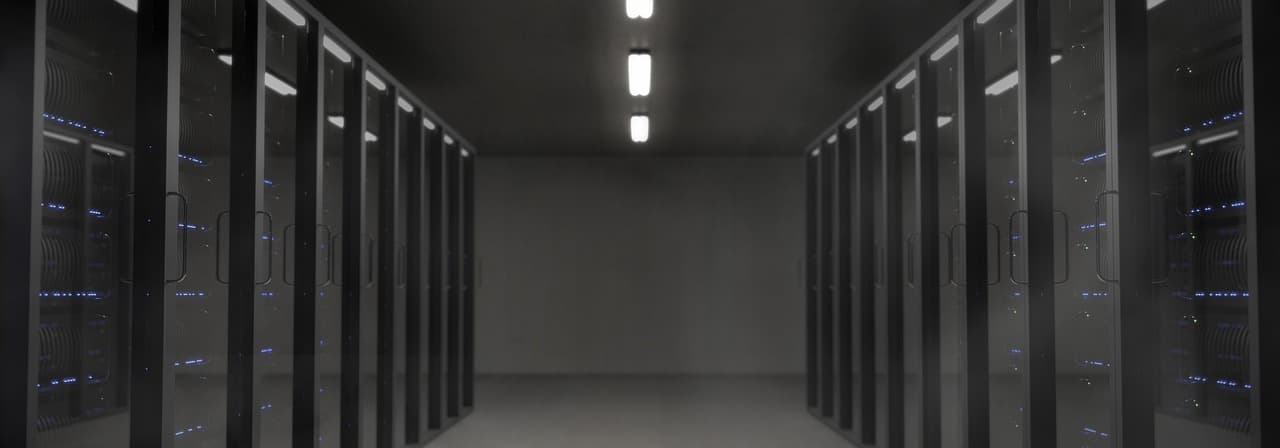
A server room is a space requiring exceptional environmental conditions and the highest level of access control. The critical parameter is relative air humidity, which must be maintained between 40–60% RH. Levels below 40% increase the risk of electrostatic discharge (ESD), which can damage electronic components. Levels above 60% promote corrosion and water vapor condensation on cold surfaces.
In practice, this means a complete ban on wet mopping, steam vaporizers, and spraying cleaning agents directly onto server room surfaces. Floors are cleaned using damp mops (not wet), well-wrung out, with minimal cleaning solution. Even small water spillage can seep beneath raised flooring and cause short circuits in power or cooling systems.
The next requirement is the use of anti-static cleaning agents. Standard detergents may leave conductive or insulating layers on surfaces, generating electrical charges during equipment or cable movement. The table below outlines categories of cleaning agents permitted in server rooms:
| Agent Type | Example Certifications | Application | Notes |
|---|---|---|---|
| pH-neutral anti-static detergent | EU Ecolabel, Nordic Swan | Technical floors, server enclosures | Alcohol-free, ammonia-free |
| Anti-static microfiber cloths | – | Cleaning rack cabinets, metal surfaces | Reusable, wash at max 60°C |
| HEPA H13/H14 filter vacuum | EN 1822-1 | Dust removal from ventilation grilles, floors | Minimum 99.95% filtration efficiency |
| Screen and plastic cleaning agent | Alcohol and ammonia-free | KVM monitors, control panels | Apply to cloth, not directly |
All agents used by our teams in IT spaces have Material Safety Data Sheets (MSDS) available to the facility manager and are approved by IT equipment manufacturers (Dell, HPE, Lenovo).
Server room access protocol must be as rigorous as for medical facilities. In contracts for IT facilities in Cracow and Katowice, we apply the following rules:
- Limited personnel — only an authorized, trained employee or two-person team designated by the client enters the server room
- Access monitoring — all entries and exits are logged; optional RFID access control cards may be used
- No unattended work — in highest-security facilities, cleaning occurs in the presence of a client representative or under CCTV recording
- Ban on personal devices — phones, cameras, USB drives remain outside the server room to eliminate unauthorized data copying or infrastructure photography risk
Each team member servicing the server room signs a separate NDA covering not only data but network topology, device locations, and security procedures. In our experience, 91% client retention results largely from infrequent staff rotation and long-term trust relationships with facilities.
Protecting Workstations and Personal Data Under GDPR
Desks belonging to programmers, testers, data analysts, and product managers house protected information. This may include technical documentation printouts, stand-up notes, password stickers (still encountered), system architecture sketches, or filing cabinets with client contracts. Cleaning these stations requires adherence to GDPR principles, particularly Article 32 (technical and organizational measures ensuring processing security).
Cleaning staff must not:
- Move documents, notebooks, or filing cabinets — even to wipe a desktop
- Connect devices to desktop computers, laptops, or network outlets without prior consent
- Photograph whiteboards, flipcharts, or screens (even if off) — even for quality reporting purposes
- Remove any materials beyond designated waste bags — many IT facilities require document destruction in cross-cut shredders or professional shredding machines
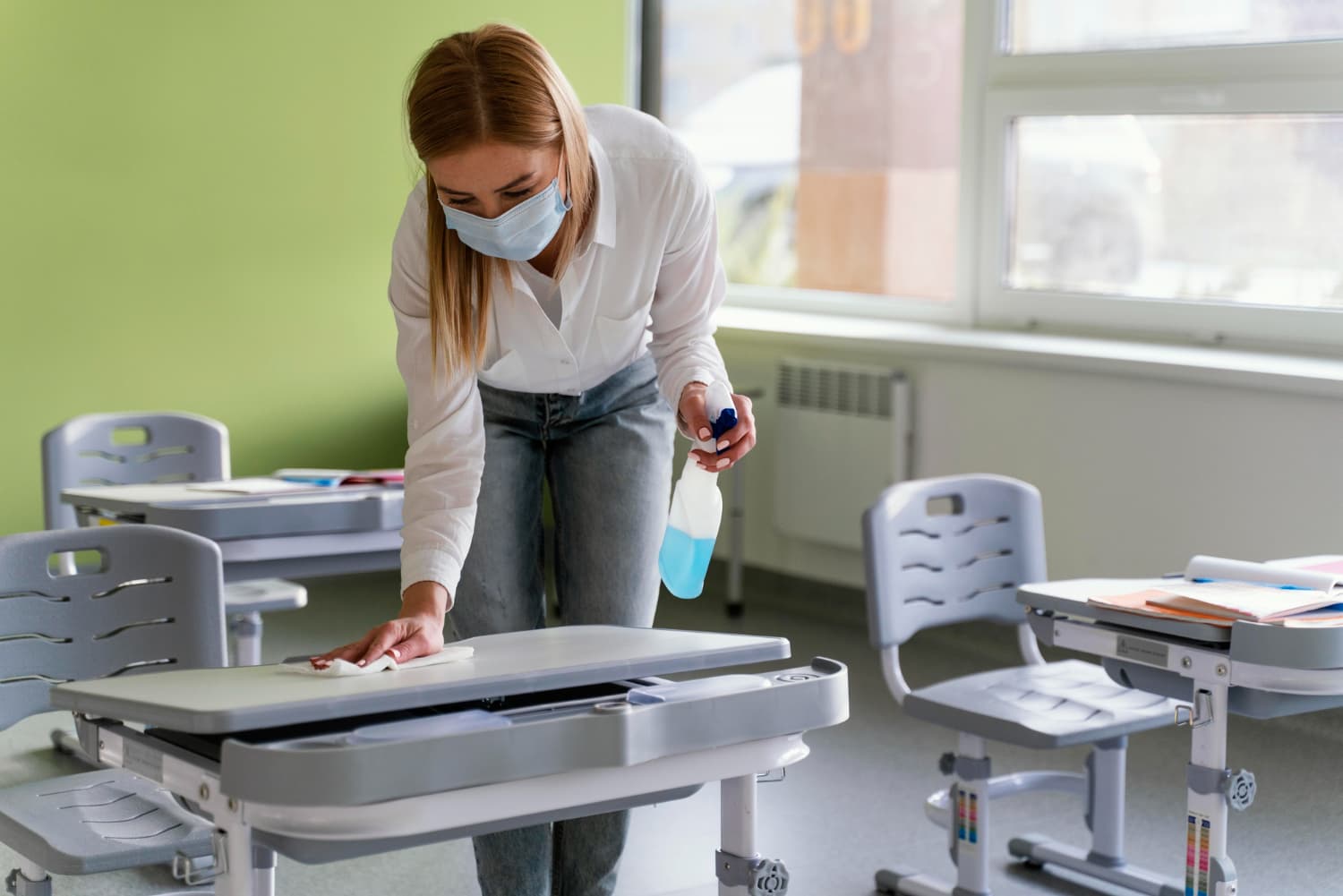
Instead, we implement clean desk policy support procedures. Before starting workstation cleaning, a designated coordinator or client employee confirms the station is ready — documents locked in drawers, screens off, laptop closed or secured in a cabinet. If a desk is not prepared, we skip it and note it in the photoreport. This protects both the client (from unauthorized access) and us (from GDPR violation accusations).
Open-space areas in IT offices often contain team collaboration visualization — Scrum boards, burndown charts, user story maps on walls. These are not cleaned routinely — only dusted at the base or wiped around edges, without touching notes. Changing note arrangements can disrupt team workflow and cause conflicts.
Before joining an IT office team, each of our staff completes personal data protection training delivered by a Data Protection Officer (DPO) or certified GDPR trainer. Training covers personal data definitions, processing principles, security incident reporting thresholds, and practical scenarios — for example, what to do if you notice a printout with passwords on a desk. Each trained employee receives a certificate, a copy of which is provided to the client.
Check our Cracow office cleaning offer to obtain a quote customized to your IT facility's specifics — the calculator lets you mark areas requiring elevated security levels.
Cleaning Agents Safe for Electronics — What to Use, What to Avoid
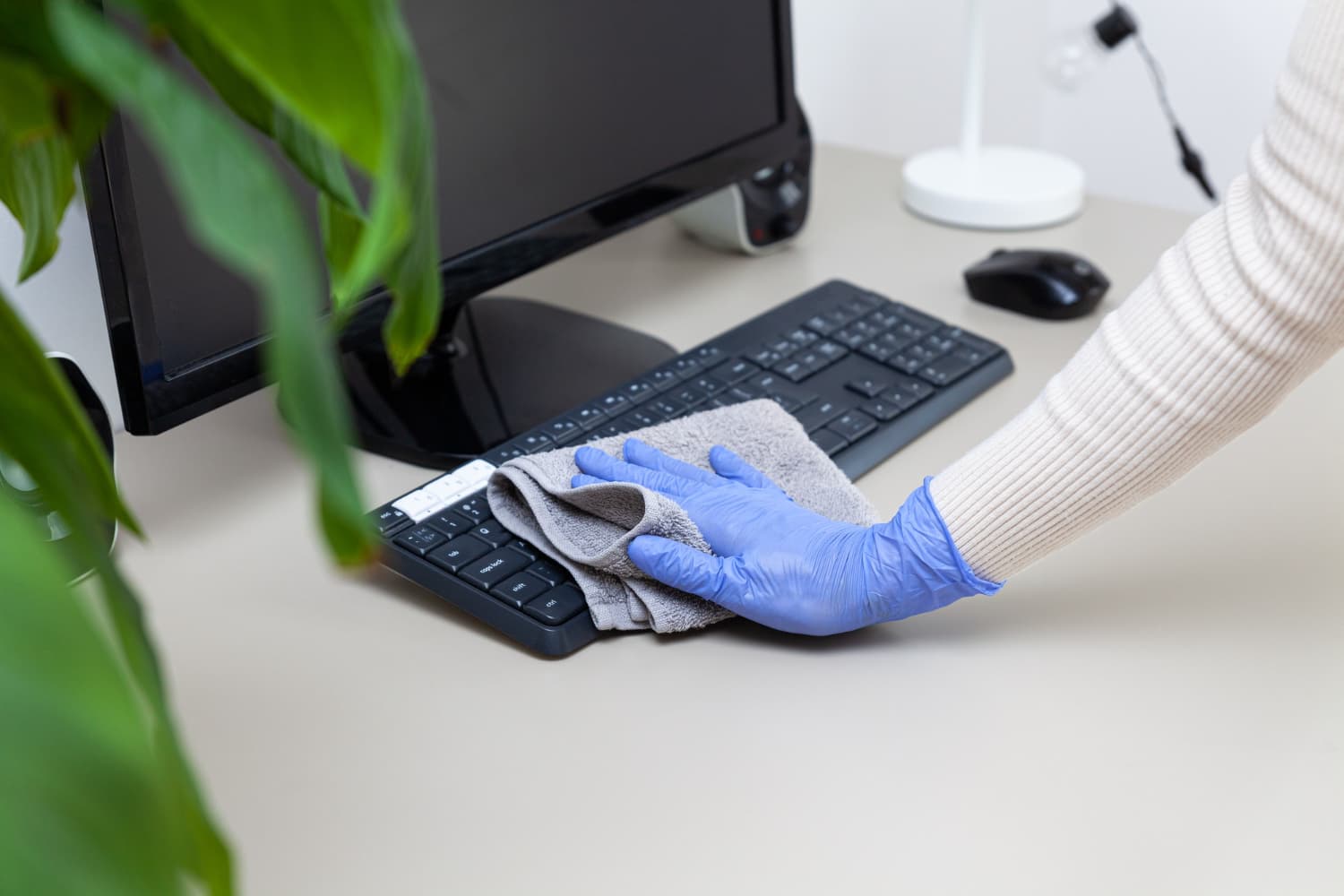
The choice of cleaning products in an IT office directly impacts equipment lifespan and worker safety. Key principles are: pH neutral (6.5–7.5), alcohol-free, and ammonia-free — substances that can damage monitor anti-reflective coatings, membrane keyboard matrices, and plastic enclosure materials.
What to Avoid
- Isopropyl alcohol (IPA) solutions > 70% — can dissolve protective lacquers and coatings on PCB boards, printed key markings; acceptable only at < 50% concentration for IT service staff cleaning contacts and joints
- Ammonia-based detergents — leave residue and cause LCD/LED screen hazing
- Chlorine bleach and hypochlorite products — corrode metal components (server enclosures, rack rails, connections) and damage rubber seals in precision cooling systems
- Agents with pH < 5 or > 9 — may react with electronic components and ABS plastics
- Aerosols and sprays — fine droplets can enter device crevices, under keys, or into USB/RJ45 ports
Instead, we use products certified for IT environments, possessing EU Ecolabel, Nordic Swan, Green Seal, or equipment manufacturer approval (e.g., Dell-approved cleaning agents). Example products include:
- Kärcher RM 769 — pH-neutral floor and surface concentrate, safe for electronics and anti-static
- 3M Electronic Equipment Cleaner — alcohol-free, dedicated to monitors, keyboards, and enclosures
- Techspray Foaming Cleaner — foam cleaner for plastic and metal surfaces, does not affect conductivity
All agents we use hold EU Ecolabel certifications and comply with guidelines for maintaining Class A office spaces, which we service in Cracow and Katowice.
Microfiber cloths must be anti-static and washable at 60°C without softeners — the latter deposit on fibers, creating conductive layers. Vacuums are equipped with HEPA H13 or H14 filters, eliminating > 99.95% of particles > 0.3 microns — protecting sensitive components from dust re-accumulation.
In IT facilities we manage, we maintain a chemical inventory available to the facility manager in digital format — each product with expiration date, batch number, safety data sheet, and certifications. This is part of our quality management system, facilitating environmental audits and occupational safety inspections.
Staff Training in IT Facilities — NDA, Safety, and Procedures
Working in an IT office involves much more than cleaning techniques. It requires understanding the client's business context, confidentiality risks, and the specific nature of technology teams, who often work 24/7 or in flexible hours.
Our staff, before arriving at an IT facility, complete at least three training modules:
1. Data Protection and NDA Training
- Definition of personal data, special categories of data, trade secrets
- GDPR breach scenarios (e.g., leaving a bag with printouts outside secure disposal)
- Security incident reporting procedure — immediate contact with facility coordinator
- Signing an NDA prohibiting disclosure of network topology, applied security measures, client names served by the IT firm, access codes, server locations, etc.
2. IT Environment-Specific Occupational Safety Training
- Safe movement in server rooms — avoiding cables on raised floors, emergency power-off (EPO) procedures
- Recognition of hazard labels: high voltage, ESD-protected areas, gas-suppression fire safety zones (e.g., INERGEN)
- Ban on water use if smoke or burning smell is detected — immediate evacuation and notification
- Use of personal protective equipment (anti-static gloves, non-conductive footwear) in high-rigor server rooms
3. Basic IT Equipment Handling Training
- Distinguishing equipment types (servers, UPS, switches, disk arrays) and basic safety principles
- Prohibition of unplugging cables, pressing buttons, moving equipment in rack cabinets
- Cleaning server enclosures only externally, without opening covers or service panels
- Reporting any irregularities (unusual sounds, alarm LEDs, coolant leaks) to the coordinator
An IT firm in Cracow's Technology Park, with whom we've partnered since 2022, added a requirement: each cleaning staff member must complete one-day job shadowing — accompanying a facility or IT manager during an initial facility tour before independent work. This allows the team to understand specific requirements (e.g., areas where fragrance-free products must be used due to employee allergies, or zones where cleaning occurs only on weekends due to deployment schedules).
Salaries for IT facility staff are typically 10–15% higher than standard offices — reflecting responsibility levels and additional competencies. Legally employed teams with employment or B2B contracts have clearly defined duties and full social insurance coverage — translating to service stability and quality.
Liability Insurance in Context — Why 1,000,000 PLN Is Minimum
IT office infrastructure value easily exceeds one million PLN. A medium-sized server room (10–20 rack cabinets) contains equipment worth 500,000–2,000,000 PLN. Add workstations (a developer laptop with GPU costs 8,000–15,000 PLN), 4K/5K monitors, 3D printers, networking devices, hardware licenses, and software.
Liability insurance (OC) for a cleaning company should be at least 1,000,000 PLN — preferably 2,000,000 PLN or more for high-value facilities. Our 1,000,000 PLN policy covers:
- Damage to client property from employee action or inaction (server flooding, power cable damage, monitor breakage)
- Damage to entrusted property — equipment we temporarily access during cleaning
- Personal injury — e.g., client employee slipping on wet server room floor
- Damage from data confidentiality breach — some OC policies extend coverage to GDPR claims, though this requires cyber-liability options
For IT contracts, facility managers should request a copy of the OC policy with payment confirmation before work begins. Check exclusions carefully — some policies exclude electronic equipment damage or cap liability at 100,000–200,000 PLN per incident, insufficient for IT infrastructure.
Our 1,000,000 PLN OC policy is issued by PZU — one of Poland's largest insurers — guaranteeing claims payment capacity. The amount renews annually, and clients receive, upon request, a Certificate of Insurance (COI) specifying coverage scope.
Beyond OC, we maintain an incident and damage register, documenting every event — even minor ones (e.g., knocking over a cup). Post-cleaning photoreports include timestamps, enabling quick determination of whether damage occurred during our work or earlier. In IT facilities with CCTV, recordings provide additional protection for both parties.
Detailed office cleaning pricing is available here — it also covers facilities requiring elevated insurance and certification levels.
Case Study — IT Facility in Cracow's Technology Park
Since 2022, we service a cybersecurity and data analytics IT firm based in Cracow's Technology Park. The 850 m² facility includes open space for 60 employees, four conference rooms, test labs, and a server room with 14 rack cabinets.
Initial Challenges
- 24/7 server room operation — servers cannot be shut down, DevOps works on-call; cleaning must occur without system disruption
- Strict GDPR and NDA policies — the firm processes personal data for millions of financial industry clients; each cleaning staff member required to sign NDA and pass security clearance
- Specific cleaning agent requirements — client provided a list of banned substances (including alcohol > 50%, ammonia, fragrances) and requested data sheets for all products
Solutions Implemented by Reefa
- Off-peak cleaning schedule — server room cleaned Sundays 8:00–10:00 when system traffic is lowest; open space cleaned evenings after 19:00
- Dedicated two-person team — same individuals throughout contract duration (over 2 years), building trust and eliminating rotation among server room-access personnel
- Electronic access protocol — each staff member received RFID card with entry logging; no card = no access
- Photoreports and QR codes — after each cleaning, client receives timestamped photo report and can flag concerns via QR system in each room
- Quarterly chemical audits — client representative verifies inventory, expiration dates, and compliance with requirements
Results After 24 Months
- Zero security incidents (GDPR breaches, equipment damage, unauthorized access)
- Average cleaning quality score in employee surveys: 4.7/5
- Contract renewal for two additional years with expansion to window cleaning and conference room carpet shampooing
- References used in bidding process for another client IT facility in Katowice
This demonstrates how combining technical competency, security procedures, and a stable team yields long-term partnership. Our 91% client retention in IT portfolio stems from this approach — we're not the cheapest, but we ensure predictability and zero operational risk.
IT Office Cleaning Costs — Pricing and Cost Components
Professional IT office cleaning in Cracow and Katowice in 2026 depends on five main factors:
- Area and topology — open space, closed offices, server rooms, labs
- Frequency — daily, 3× weekly, 2× weekly (higher frequency yields lower per-m² rates per visit)
- Security level — standard office vs. facilities with server rooms, NDAs, access control
- Add-on services — carpet shampooing, window cleaning, disinfection, conference room support
- Work hours — business hours cleaning (cheaper) vs. evening/night work (10–20% higher)
Sample monthly pricing ranges (net):
- IT office 200–400 m², 3× weekly cleaning, no server room — 1,400–2,200 PLN net/month
- IT office 400–800 m², daily cleaning, with server room, NDA — 2,800–4,500 PLN net/month
- Server room as add-on service — 300–600 PLN net/month (1× weekly cleaning)
- Post-event cleaning (hackathon, DevOps conference) — 18–28 PLN net/m² one-time
Use our online calculator to receive a preliminary quote tailored to your IT facility — you can mark server rooms and NDA-required spaces.
Note hidden costs when selecting the cheapest offer. Firms quoting 30–40% below market average often:
- Lack sufficient OC insurance to cover IT equipment value
- Employ staff off-books or on precarious contracts, meaning high turnover and instability
- Don't train teams on GDPR or sign NDAs — exposing clients to legal risk
- Use cheap, uncertified cleaning agents that may damage electronics
Investment in professional IT-experienced cleaning is investment in operational continuity and risk minimization. Our model includes all components: insurance, training, certified agents, dedicated coordinator, photoreports, and QR feedback system.
Frequently Asked Questions
Must cleaning staff sign NDAs at every IT office?
Yes, signing a confidentiality agreement (NDA) is standard in IT facilities processing client data, source code, or business strategies. NDAs prohibit disclosure of any information obtained during work — including network topology, client names, server locations, physical and digital security measures. In our contracts, each employee entering an IT facility signs an individual NDA and completes GDPR data protection training. The facility manager may also request employment verification and work history — which we provide in full. Check details of our Cracow office cleaning offer or Katowice to learn more about NDA procedures.
Which cleaning agents are safe for server rooms and electronics?
In server rooms and IT spaces, we use only pH-neutral products (6.5–7.5), alcohol-free, ammonia-free, and certified for use near electronics. Typical certifications include EU Ecolabel, Nordic Swan, Green Seal, or manufacturer approval (Dell, HPE, Lenovo). Examples include Kärcher RM 769, 3M Electronic Equipment Cleaner, Techspray Foaming Cleaner. All agents have MSDSs and are anti-static — generating no electrostatic discharge. Banned are spray-applied products, chlorine bleach, ammonia-based detergents, and alcohol concentrations > 50%. Vacuums use HEPA H13/H14 filters eliminating > 99.95% electronic dust. We provide the facility manager full product lists and certifications before starting work.
What is typical liability insurance for IT office cleaning firms?
Minimum OC liability should be 1,000,000 PLN — preferably 2,000,000 PLN for high-value infrastructure (server rooms, labs, expensive developer workstations). Our 1,000,000 PLN policy covers client property damage, entrusted property damage, personal injury, and equipment damage. PZU issued our policy; clients receive, upon request, a Certificate of Insurance (COI) listing coverage scope. Lower amounts (100,000–500,000 PLN) may be insufficient if server room equipment exceeds those values — a flooding incident could leave the client with uncompensated losses. Also verify exclusions and whether the policy covers electronics damage — not all standard OC policies guarantee it.
How does server room cleaning proceed step-by-step?
Our server room cleaning protocol includes nine steps: (1) Access authorization — staff with RFID card or in client representative presence logs entry. (2) Environmental check — verify humidity (40–60% RH) and temperature (18–27°C) before starting. (3) Raised floor dust removal — vacuum with HEPA H13/H14 filter, avoiding cables and cable trays. (4) Ventilation grille cleaning — remove dust from intake and exhaust grilles of precision cooling. (5) Rack cabinet enclosure wiping — microfiber anti-static cloth, lightly dampened with pH-neutral product, no spraying. (6) Floor cleaning — damp mop (not wet), well-wrung, minimal product. (7) Visual inspection — check for spills, foreign objects, unusual sounds, or alarm LEDs. (8) Waste removal and bin replacement. (9) Exit logging and photoreport — record departure time, take photos, send report to facility manager. Total time: 20–45 minutes depending on server room size. Contact our team to discuss protocol details customized to your facility.
Is IT office cleaning more expensive than standard office cleaning?
Yes, typically 15–30% more due to higher requirements: NDA and GDPR training, electronics-certified agents, server room access protocols, higher OC insurance, and stable low-rotation teams. For 400 m² daily-cleaned IT office with server room, typical Cracow/Katowice pricing is 2,800–4,500 PLN net/month vs. 2,200–3,500 PLN net/month for standard office. Server rooms add 300–600 PLN net/month. Higher cost reflects evening/weekend work (often required in IT), specialized equipment (HEPA vacuums, anti-static cloths), and audit/reporting time. Order an online quote for exact pricing — the calculator factors in IT specifics and server rooms.
How often should IT offices and server rooms be cleaned?
Open space and workstations should be cleaned 3–5 times weekly (depending on staff count and traffic intensity) to control dust affecting workstation performance and air quality. Server rooms require at least weekly cleaning — more frequently (2× weekly) in high air-circulation facilities, older cooling installations, or raised floors with incomplete sealing. Conference rooms and social areas are cleaned daily after use. In hot-desking facilities (no assigned desks), daily cleaning of all stations is recommended due to rotation increasing dust and microorganism transfer. Our typical IT contracts include: daily evening open space cleaning, Sunday server rooms, post-use conference rooms, 2× daily restrooms. The facility coordinator adjusts frequency based on actual usage and staff feedback.
Trust Our Experience — Book IT Office Cleaning with Reefa
Professional IT office cleaning combines technical knowledge, security procedures, and long-term partnership built on trust. Since 2020 in Cracow and 2024 in Katowice, we service technology, medical, educational, and corporate facilities — always respecting industry specifics, GDPR requirements, and quality standards.
If you manage an IT office in Cracow or Katowice and seek a cleaning firm understanding electronic dust control, server room protocols, and data protection — contact us. Our team will prepare a quote, discuss NDA requirements, and propose schedules aligned with your deployment cycles and service windows.
Learn more about our services on Reefa's blog — we regularly publish articles on commercial cleaning best practices, environmental certifications, and facility management trends.