Cleaning Architectural Offices — Protecting Models and Design Projects
Architectural studios require specialized cleaning that protects models, blueprints, and creative materials while maintaining premium aesthetics. Security protocols and rigorous care standards for valuable design work.
Architectural studios require specialized cleaning that protects models, blueprints, and creative materials while maintaining premium aesthetics. Security protocols and rigorous care standards for valuable design work.
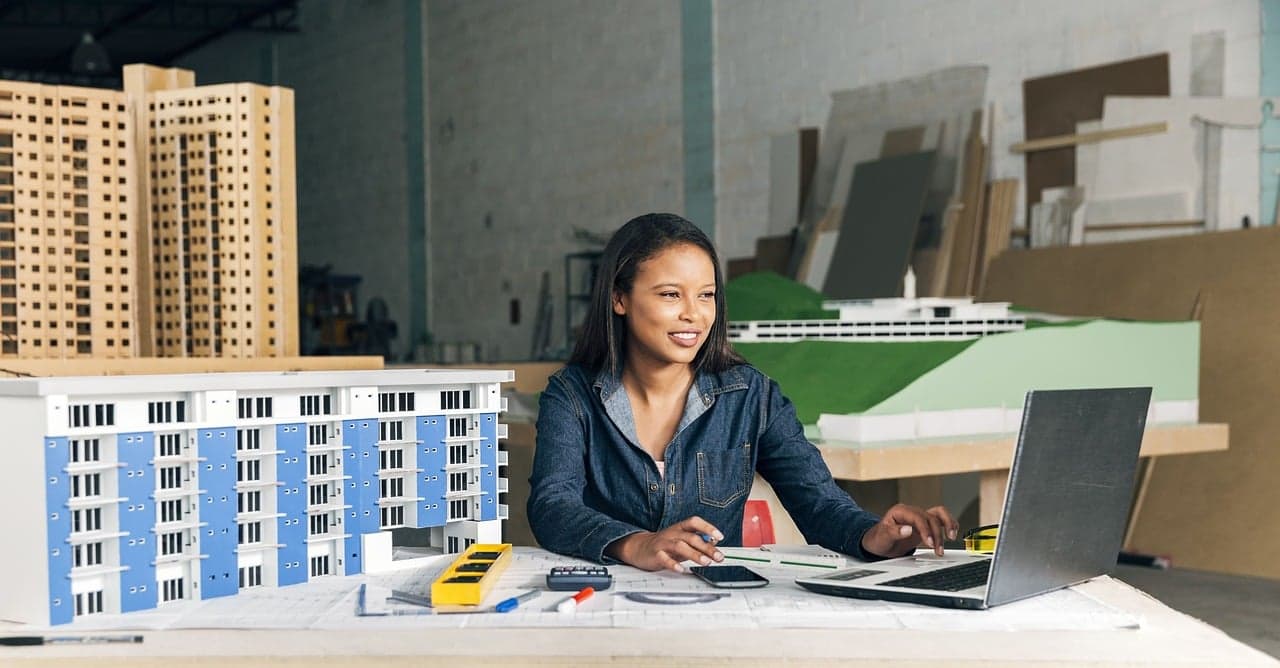
Cleaning an architectural office differs fundamentally from standard office maintenance due to the need to protect delicate materials — foam and cardboard models, technical drawings, 3D printers, and drafting tools. At Reefa, we have developed protocols that safeguard work-in-progress projects while ensuring the premium aesthetics required during investor and client meetings.
Architectural studios combine the character of a creative workspace with the operational requirements of an administrative office. This demands a differentiated approach: conceptual work zones require minimal interference and maximum care, while conference rooms and reception areas must maintain the visual standard of a boutique showroom. The cleaning team must understand which elements cannot be moved, which surfaces require specialized treatments, and how to work safely around expensive measuring equipment and wide-format plotters.
In brief
- Cleaning an architectural studio requires protection protocols for models, blueprints, and creative materials (foam, wood, cardboard, plexi)
- Creative zones are cleaned without moving objects; administrative and presentation areas are maintained at premium standard for investor meetings
- We use pH-neutral products safe for delicate surfaces and building materials; aerosols are avoided near models and electronics
- 2026 pricing in Cracow and Katowice: from PLN 12 net/m²/month on contracts of 100 m² minimum at 2×/week frequency
- A dedicated coordinator establishes a detailed map of "restricted zones," and the team receives specialist training before commencing service
- We provide photo reports after each cleaning and a QR system for immediate notifications—critical when preparing for client presentations
How is an architectural studio different from a standard office?
A typical B2B office consists of open desk-sharing spaces, conference rooms, and social areas. An architectural studio adds creative zones—spaces where models, technical drawings, 3D prints, and concept prototypes are created. These areas contain materials and objects requiring special attention: models made from modeling foam, balsa wood, foam board, plexi, and metal. Many are works-in-progress, unfinished, and easily damaged by vibration, moisture, or accidental contact.
At the same time, architectural studios frequently host clients—developers, institutional investors, and municipal representatives. This means the reception area, presentation room, and display space must be maintained at a visual standard significantly higher than an average production office. High aesthetic standards are not mere preference: professional presentation of an architectural project strengthens studio credibility and builds investor confidence when entrusting a multi-million-dollar budget.
Reefa's team services both class-A corporate offices and spaces requiring individualized approaches. Since 2020, we have managed office cleaning in Cracow, and since 2024 also in Katowice, regularly working with companies in the creative and technology sectors.
Protection protocols for work-in-progress—what is permitted, what to avoid?
The most critical principle in managing an architectural studio is establishing a restricted zones map. Before commencing a contract, Reefa's dedicated coordinator conducts a site visit with the office owner or facility manager. Together, we designate:
- "Do not touch" zones—workbenches with models under construction, material storage areas, shelves with prototypes. Cleaning is limited to floor vacuuming around these areas without moving furniture.
- "Restricted" zones—designer desks, plan cabinets, 3D printers. Dusting of equipment exteriors and trash disposal are permitted, but no touching of papers, tools, or devices during printing.
- "Full service" zones—conference rooms, kitchen, restrooms, reception, hallways. Standard service scope, including cleaning of horizontal and vertical surfaces and glass partitions.
We document the protocol in a graphic attachment to the contract (floor plan with color-coded zones) and update it quarterly or upon client request—especially when a studio is preparing for a major presentation and temporarily needs increased cleaning intensity in the display area.
The team undergoes brief in-house training before entering the site: we show photographs of typical models, explain the difference between modeling foam (lightweight, easily damaged) and resin-printed models (harder, but reactive to solvents). We establish protocol: if in doubt, do not touch. In case of uncertainty, the employee contacts the coordinator through the internal system.
Which cleaning products are safe for creative materials?
Standard office cleaning products—often containing isopropyl alcohol, ammonia, or ethyl acetate—can react with model adhesives, acrylic varnishes, or plotter film. Therefore, in architectural studios we use only pH-neutral preparations, certified with EU Ecolabel or Nordic Swan, free from organic solvents.
Floors—in most Cracow and Katowice studios we encounter epoxy resin, laminate panels, or oiled wood. We mop with microfiber pads using a pH 6–8 solution, avoiding excessive moisture (humidity lifts cardboard edges from the floor). In 3D printer areas we use antistatic products that reduce dust attraction to device housings.
Glass surfaces—partitions, model display cases, windows. We use ammonia-free products applied directly to a microfiber cloth (never spray mist in the air, which could settle on exposed models). Result: no streaks and zero risk to exhibits.
Furniture and countertops—most work surfaces are HPL laminate, lacquered MDF, or oiled solid wood. We dust with dry or lightly dampened microfiber. In conference areas we apply natural wax-based maintenance emulsions (especially important in studios emphasizing premium finish—a wooden conference table is the studio's calling card).
Electronic equipment—plotters, 3D printers, wide-format scanners. Housings are cleaned with dry antistatic microfiber. We do not use moisture-based products near fans and cooling vents. For contracts with technical studios we offer optional monthly cleaning of resin printer filters (using compressed air applied by a trained technician—additional service, PLN 50 net/device).
We supply all products, store them in a locked cabinet on-site, and replenish automatically. Clients need not order or monitor supply levels.
Creative zone versus administrative zone—how to differentiate intensity?
In a typical 150–300 m² architectural studio, we distinguish three main functional areas, each requiring different frequency and scope:
1. Creative / Workshop zone (design open space, model room)
Cleaning 2–3 times per week, in the evening after the team departs. Scope: floor vacuuming in walkways, emptying trash cans, restocking paper towels in the kitchenette. We do not touch work surfaces or move chairs (furniture arrangement around a model is often intentional). We dust sills, radiators, and ceiling fixtures—dust settling on a model can ruin a presentation photo.
2. Administrative zone (office manager stations, finance department, archives)
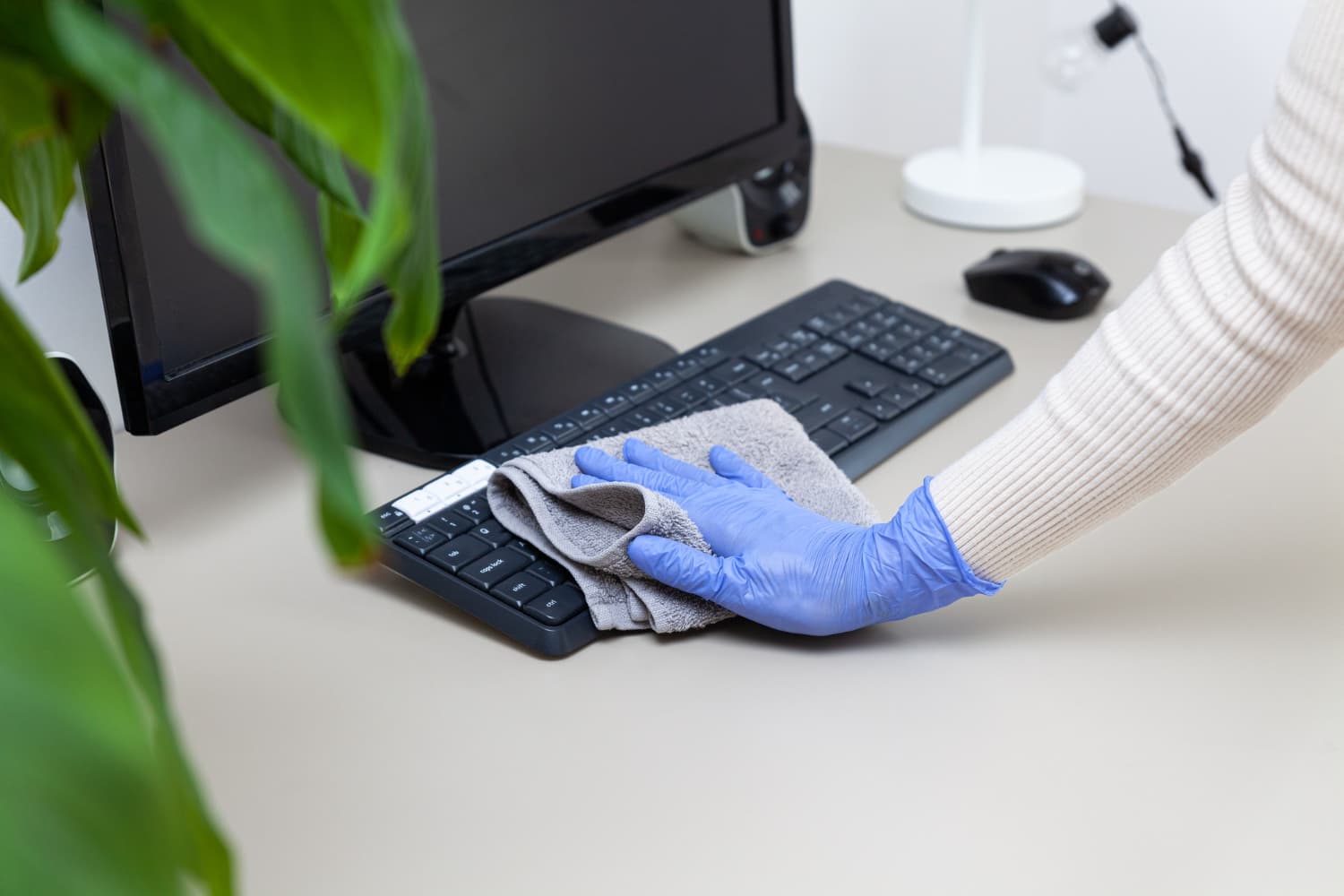
Standard office scope, frequency 2×/week. Includes: wet cleaning, surface dusting, cabinet front cleaning, keyboard and mouse cleaning (with user consent), upholstered chair vacuuming. This is a "typical" office area, serviced like any other office cleaning contract.
3. Presentation zone (reception, conference room, model gallery, kitchen, restrooms)
Daily or 5×/week cleaning, in morning hours (before client arrival) or evenings. Premium scope: mirror and glass partition washing, polishing of chrome elements, soap and air freshener refills, kitchen cabinet front cleaning, stain removal from conference chair upholstery. On a model presentation day for an investor, we offer optional express cleaning 2–4 hours before the meeting (service on demand, PLN 120 net).
For studios operating in hybrid mode—with part of the team working remotely—the schedule can be adjusted: more intensive cleaning on days when the office is occupied 70–80%, lighter maintenance mid-week. Contract flexibility is documented; schedule modifications are possible with 48 hours' notice via the QR request system or email to the dedicated coordinator.
How much does architectural studio cleaning cost in 2026?
Price depends on area, frequency, specialized scope, and location. In Cracow and Katowice, we apply the following rates (PLN net):
- 100–200 m², 2×/week, standard scope + model protection protocol—from PLN 12/m²/month
- 200–400 m², 3×/week, including daily presentation zone service—from PLN 14/m²/month
- Over 400 m² or 5×/week frequency—from PLN 16/m²/month, individual pricing considering restricted zones and documentation requirements (photo reports, quality audits).
For comparison, detailed cleaning pricing in Cracow is published on our website—prices valid in 2026, with no hidden charges.
What is included in specialized zone service?
Any room with models, plotters, 3D printers, plan archives, or material sample cabinets is treated as a zone requiring heightened attention. If such zones comprise over 40% of the area, we add 10% to the base rate (covering team training, extended work time due to working "around" objects, and expanded liability insurance covering client property up to PLN 500,000).
Additional services—à la carte pricing:
- Interior window washing (up to 3 m height)—PLN 8 net/m²
- Conference chair and waiting area upholstery cleaning—PLN 25 net/month
- 3D printer fan cleaning with compressed air—PLN 50 net/device/month
- Express cleaning before client presentation (2 hours, 2-person team)—PLN 120 net
- Outdoor display case / showroom window washing—PLN 10 net/m²
Minimum contract: 100 m², 2×/week, 6-month term with one-month notice termination. For annual contracts we offer a 5% discount from the monthly rate.
Premium aesthetics—why appearance matters beyond mere cleanliness?
Architects create spaces for people. Their own office is their best calling card. An investor entering a studio judges not only the presented model but the consistency of communication—from how the reception smells, through the clarity of the glass partition, to the shine of the conference table's wooden surface. In an industry where first impressions translate directly into signed contracts or rejection, the maintenance standard of the office has business significance.
Reefa does not clean "to achieve cleanliness"—we clean with visual experience in mind. This means attention to detail: no streaks on partitions, evenly arranged conference chairs, filled dispensers in restrooms, neutral or gently citrus scents (no harsh chemical notes). After each cleaning you receive a photo report on a secure platform or via email—images document completed tasks and serve as proof of SLA (Service Level Agreement) fulfillment. This is especially important before quality audits or visits from major clients: in 15 minutes you can verify whether the conference room meets requirements.
Additionally, since 2020 we offer a QR system placed in a visible location on-site. Scanning the code directs you to a reporting form: "I need urgent re-cleaning of Room 2 before a 2:00 PM meeting." The coordinator receives an SMS alert and responds within 24 hours (standard mode) or immediately (premium mode at 15% monthly rate surcharge).
How to choose a cleaning company for a design studio?
When selecting a facility service provider for an architectural office, consider five criteria:
1. Experience with non-standard spaces
Not every cleaning company understands the specifics of a creative studio. Control questions during a meeting: "Do you service offices with models?", "What protocols do you have for protecting work-in-progress?", "Can you provide team training on delicate materials?". If the answer is "we have no experience, but we'll learn"—that's a warning sign.
2. Quality of cleaning products and equipment
Ask about product certifications (EU Ecolabel, VOC-free). A good company will provide product information sheets on request. Check whether it offers antistatic products (crucial for electronics) and pH-neutral solutions (safe for wood, foam, cardboard). At Reefa all products meet CLP regulations and are safe for allergy sufferers (RODO—we process health data only as necessary, with user consent).
3. Liability insurance and legal team status
An architectural studio is a place where a single desk might hold a project worth hundreds of thousands in profit. Require liability insurance of at least PLN 250,000 (Reefa carries PLN 500,000). Verify that employees are legally employed and insured—in case of workplace injury, employer insurance covers costs, not your company.
4. Quality monitoring and reporting system
Photo reports, quarterly audits, satisfaction surveys, incident reporting system. This is fundamental to B2B contract management. Without these tools, quality management becomes subjective "they seem to have done a worse job today." Objective documentation allows constructive dialogue with the coordinator and quick correction of minor shortfalls.
5. Schedule flexibility and response time to ad hoc requests
Architectural studios operate on the rhythm of competitions, presentations, and project deadlines. The cleaning company must be able to respond: "On Friday at 3:00 PM a client arrives from Warsaw; I need extra conference room cleaning this evening." Check whether the provider has a fast-track procedure and what the realistic response time is.
Reefa assigns a dedicated coordinator to each site—this person knows your studio's specifics, has keys or access codes, answers calls 7:00 AM–6:00 PM (outside these hours, SMS/email response within 24h). Since 2020 we have serviced tech and creative company offices in Cracow—including Say Hi! (creative agency)—where "do not touch" protocols for in-production campaign materials also apply.
After-hours or weekend cleaning—what works best for a studio?
Most architectural studios in Cracow and Katowice operate 8:00 AM–6:00 PM, with possible extension before competition submissions. We recommend cleaning in the evening after the team departs (after 6:30 PM) or early morning before arrival (6:00–7:30 AM) to avoid disrupting designer work.
Evening cleaning has the advantage that the coordinator can consult with the last person leaving the office about areas requiring special attention. The drawback is potential noise (vacuum) reaching neighboring units in the building—in multi-use office buildings this is rarely an issue, but in townhouses this must be agreed with building management.
Morning cleaning guarantees the team enters a clean office with filled dispensers, empty trash, and a freshly cleaned kitchen. This is especially important on days when a client meeting starts at 9:00 AM—creating a "wow" effect from the entrance. The drawback may be requiring early building access (not all facilities open before 7:00 AM) and inability to consult directly with the studio team.
Weekends—worth considering for Monday–Friday studios. Saturday morning cleaning provides time for thorough, comprehensive service of all areas, including window washing and hard-to-reach surfaces (shelves, archive cabinets). Reefa services facilities on weekends without a weekend surcharge if this is a permanent part of the schedule (a 20% surcharge applies only to ad hoc requests made Friday for Saturday).
Schedule flexibility is one of our pillars—we adjust hours to your studio's operational rhythm, not vice versa.
Frequently asked questions
How much does architectural office cleaning cost in Cracow?
In Cracow, cleaning an architectural studio of 100–200 m² costs from PLN 12 net/m²/month at 2×/week frequency with standard scope. For larger facilities (300–400 m²) and higher frequency (3–5×/week), rates are PLN 14–16 net/m²/month. Additional services are added to the base rate: window washing (PLN 8 net/m²), display case cleaning (PLN 10 net/m²), express pre-presentation cleaning (PLN 120 net). Prices valid in 2026, no hidden charges.
What is the hourly rate for design studio cleaning?
The ad hoc hourly rate is PLN 40–50 net per worker, depending on location and scope. In practice, we do not bill fixed contracts hourly but on a flat-rate basis (PLN/m²/month), providing greater cost predictability. Express pre-meeting cleaning is a fast-track service: 2 people for 2 hours, PLN 120 net total (conference room, reception, restrooms). For studios operating with variable workload, we recommend a flexible contract with a monthly hour package.
What does architectural office cleaning include?
Standard scope includes: floor vacuuming and washing, dusting of horizontal surfaces (excluding work surfaces covered by "do not touch" protocol), emptying trash cans, restocking towels and soap, restroom cleaning (toilets, sinks, mirrors), glass partition washing, kitchenette cleaning (countertop, sink, refrigerator, dishwasher front). Extended scope: interior window washing, chrome element polishing, upholstered chair vacuuming, 3D printer fan cleaning, carpet and mat washing. All tasks are performed with pH-neutral products safe for models, blueprints, and building materials.
How do you properly clean offices with models and 3D models?
The key is establishing a restricted zones map before work begins. Zones with models under construction, blueprints laid out on workbenches, and 3D printers during printing are cleaned only "around"—we vacuum floor walkways without moving furniture or touching work surfaces. Dust is wiped from ceiling lights, sills, and equipment housings (but not from inside display cases unless explicitly requested). We use pH-neutral products without alcohol and ammonia that could damage model adhesive, acrylic varnish, or plotter film. The team receives brief training before site entry; a dedicated coordinator oversees execution.
Does the cleaning company insure models and projects against damage?
Reefa carries liability insurance up to PLN 500,000, covering damage to client property caused by our team—including models, equipment, and materials. Before signing the contract, we verify the value of movable assets on-site; if models are valued above standard coverage, we recommend reporting this to your insurer to extend the policy or purchasing property insurance (our policy then operates subsidiarily). Importantly: the "do not touch" protocol minimizes risk—the team does not move or manipulate protected objects, so damage likelihood is minimal. In 6 years of operation we have not recorded a single model damage case on sites we service in Cracow.
How often should an architectural studio be cleaned to maintain premium standards?
We recommend a minimum of 2×/week for creative and administrative zones, and daily or 5×/week for presentation zones (reception, conference room, kitchen, restrooms). This ensures cleanliness at premium level, required for investor and client meetings. During high-intensity periods—before competition submission, during Design Week, or with major presentations—temporary frequency increases or express pre-meeting cleaning are possible. The dedicated coordinator establishes the schedule and can modify it on an ongoing basis with 48 hours' notice.
Contact Reefa's team—quotation for your studio
Reefa has serviced architectural offices and design studios in Cracow since 2020 and in Katowice since 2024. We provide a legally employed and insured team, a dedicated on-site coordinator, photo reports after each cleaning, a QR system for feedback, and liability insurance up to PLN 500,000.
If you operate an architectural studio and are seeking a cleaning company that understands the specifics of model protection, creative material care, and premium aesthetics—we invite you to contact us. We will prepare an individualized offer accounting for zone mapping, a schedule aligned with your team's operational rhythm, and a complete cost breakdown of additional services. Request a free quotation via the form at Cracow Contact or Katowice Contact—we respond within 24 hours.