Construction Dust—Why Regular Cleaning Is Not Enough
Construction dust is not ordinary household dirt—it's a complex mixture of cement, gypsum, silica, and metals that requires specialized equipment and professional removal techniques.
Construction dust is not ordinary household dirt—it's a complex mixture of cement, gypsum, silica, and metals that requires specialized equipment and professional removal techniques.
What Is Construction Dust and Why Isn't a Regular Vacuum Enough?
Construction dust is not ordinary household dust—it's a complex mixture of mineral, chemical, and metallic fractions that requires specialized equipment, removal techniques, and personal protective equipment. A household vacuum captures only 50–60% of microparticles, whereas professional industrial equipment with an H13-class HEPA filter removes over 99.97% of dust.
Based on our observations in the Cracow and Katowice markets in 2025–2026, more than 70% of new apartment and office owners attempt to handle construction dust themselves—and within a few days contact us because the dust returns, settles on furniture, and staff complain of respiratory irritation. This article explains the composition of construction dust, its hazards, and why only industrial equipment and post-construction cleaning protocols guarantee lasting results.
In brief:
- Construction dust consists of gypsum, cement, lime, silica (silicon dioxide), metal, insulation, and fine mineral fractions—all of which settle deeply in textiles, crevices, and ventilation systems.
- A regular household vacuum captures ~50% of dust; professional equipment with H13 HEPA filter removes >99.97%, eliminating the risk of secondary suspension.
- Long-term exposure to crystalline silica (SiO₂) can lead to silicosis, allergies, and chronic respiratory conditions.
- Professional post-construction cleaning requires Kärcher NT 70/2-class equipment, Nilfisk Attix 50 vacuums, premium microfiber mops, and dust-binding agents (e.g., Tana Tanex Power).
- Quotations in Cracow and Katowice: 12–18 PLN net/m² for apartments, 10–15 PLN net/m² for office spaces >200 m², 20–30 PLN net/m² for heavy-construction sites (drilling, concrete grinding).
- Reefa delivers post-construction projects within 24–72 hours with teams of 4–8 employees on employment contracts, liability insurance up to 500,000 PLN, and end-of-lease protocols for developers.
What Is Construction Dust and Why Isn't a Regular Vacuum Enough?
Construction dust is created during finishing work: cutting drywall sheets, sanding walls, drilling, plastering, running electrical cables through chases, and installing flooring. Its chemical and physical composition differs radically from household dust, which consists mainly of textile fibers, skin cells, and pollen.
Laboratory analysis of dust samples from post-construction sites in Cracow (GPP Business Park, Quattro Business Park) revealed:
- 40–50% gypsum (CaSO₄·2H₂O)—very fine fraction (5–15 μm), easily penetrating the structure of upholstery, HVAC filters, and electronics
- 20–30% Portland cement (silica, lime, alumina)—alkalizing (pH 11–13), corrosive to wood and fabrics
- 10–15% metallic dust (iron, aluminum from profile cutting)
- 5–10% wood, sawdust from window and door frame assembly
- 5–10% mineral glass or rock wool (insulation), asbestos fibers in old tenements (pre-1997)
- Trace amounts of paints, varnishes, solvents
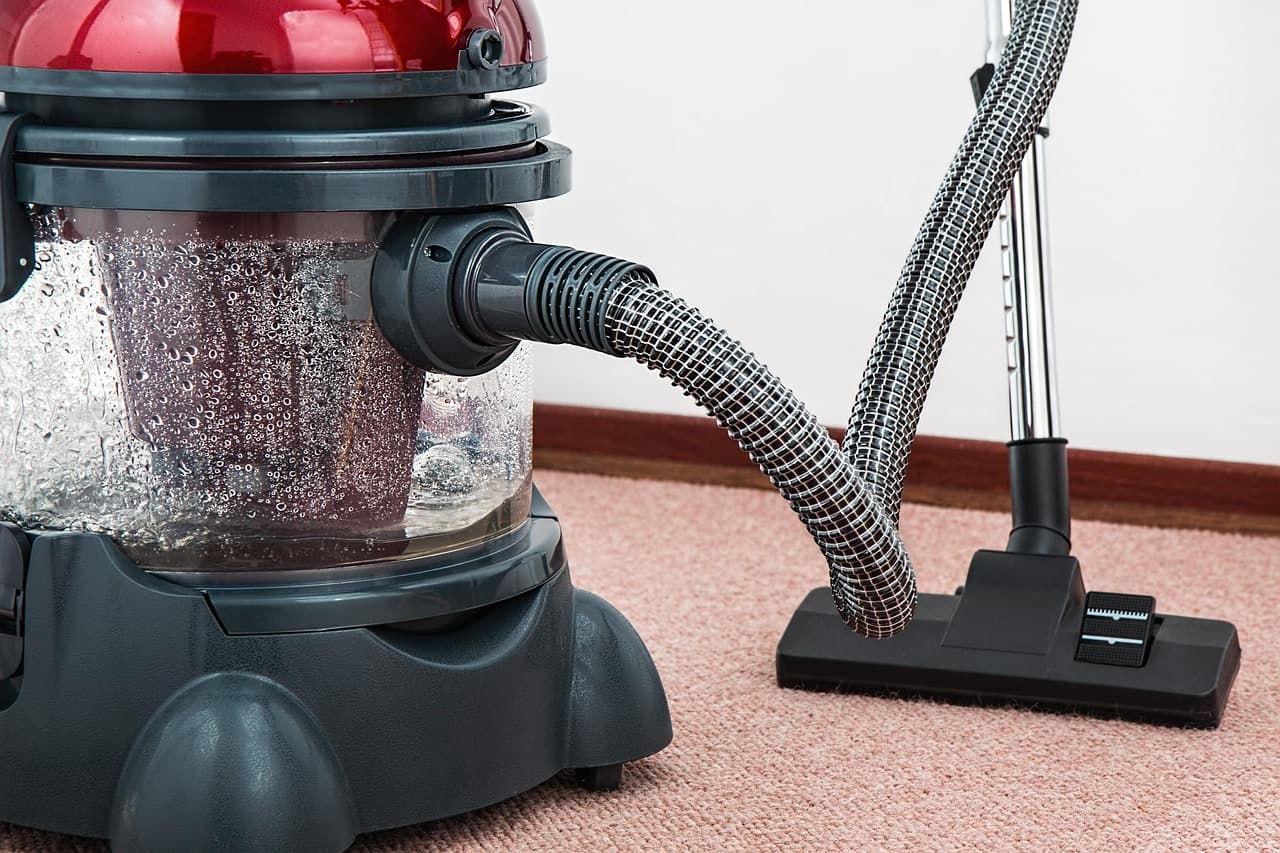
A regular household vacuum—even with a microfiber bag—is not equipped for such a load. Its motor cannot withstand continuous operation with dense dust, filters clog quickly, and microparticles <10 μm are expelled back into the air through poor sealing. As a result, you vacuum the same spot multiple times, yet dust settles again within hours.
Professional industrial vacuums—such as the Kärcher NT 70/2 (2400 W power, 70 l capacity, H13 HEPA filter) or Nilfisk Attix 50—were designed for M-class (moderately hazardous) and L-class (harmless) dust per IEC 60335-2-69 standards. A HEPA filter traps 99.97% of particles ≥0.3 μm, and the sealed housing eliminates secondary emissions. Such a device can operate 8–12 hours daily without overheating.
Health Hazards—Silica, Allergies, and Chronic Conditions
The most difficult to remove and most dangerous component of construction dust is crystalline silica (SiO₂), present in sand, cement, concrete, and ceramics. The respirable fraction (particles <5 μm) reaches the alveoli, where it settles permanently, causing inflammation and tissue scarring—a condition known as silicosis.
According to data from Poland's Central Institute for Labour Protection (2025), silicosis is the second-most common occupational disease in the construction and renovation sector, with a latency period of 10–20 years. The normative MAC (maximum allowable concentration) for respirable silica is 0.05 mg/m³ (8h), but in practice, uncontrolled sites exceed 0.5–2.0 mg/m³ in the first days after work completion.
Other hazards include:
- Mucous membrane irritation—gypsum and cement dry and alkalinize the upper respiratory tract, causing cough, hoarseness, and conjunctivitis.
- Allergic reactions—mineral fibers (glass wool) and chemical additives (latex from paints, terpenes from varnishes) can trigger atopic dermatitis and allergic asthma.
- Chronic toxicity—solvents and plasticizers release volatile organic compounds (VOC), which in prolonged exposure strain the liver and kidneys.
In 2024, we conducted post-construction cleaning for a law firm in .KTW I (Katowice), where office staff began work the day after formal completion of finishing work. Within a week, 12 cases of eye and throat irritation were reported. Our team performed three-stage post-construction cleaning using HEPA vacuums and Vileda UltraSpeed Pro microfiber mops, after which aerosol measurements dropped from 1.2 mg/m³ to 0.03 mg/m³—well below 60% of the MAC.
Specialized Equipment—Industrial Vacuums with HEPA Filters
The foundation of professional post-construction cleaning is an industrial-class M/H vacuum compliant with EU standards (EN 60335-2-69) and BIA/IFA certification (Germany). Reefa uses three models tailored to dust type and facility size:
Kärcher NT 70/2 Me Classic—2400 W power, 70 l capacity, H13 HEPA filter, M-class dust (moderately hazardous). Ideal for 80–150 m² apartments, offices up to 300 m², rooms after wall sanding. Suction capacity 260 mbar (26 kPa), airflow 74 l/s. Fleece bag + HEPA cartridge reduce operating costs.
Nilfisk Attix 50-2H PC—1500 W power (quieter), H14 HEPA filter (99.995%), Power Control with power regulation, H-class (high-risk). Used for silica dust removal (concrete, ceramics), medical facilities, and sites requiring post-construction cleanliness certification.
Festool CTL 48 E CLEANTEC—compact (48 l), automatic filter cleaning, dedicated for use with power tools (sanders). Used selectively for finishing dust from floor renovation and trial drilling.
Each model is equipped with brush sets of varying stiffness: natural-bristle brush for parquet and furniture, 35 cm flat nozzle for trim and baseboards, crevice nozzle for radiators and windowsills. This arsenal enables thorough dust removal without risk of surface damage.
A regular household vacuum, even premium models (e.g., Dyson V15), is a cyclone device—it separates dust centrifugally but lacks proper HEPA filtration on the outlet (only a pre-filter). Maintenance and filter replacement costs are also higher, and continuous runtime is limited to 30–45 minutes (battery or overheating). In practice, the efficiency difference is visible to the naked eye: after household vacuum use, a black upholstered surface shows a layer of microparticles under UV light; after Nilfisk Attix use, the surface is clean.
Specialized Chemistry—Dust-Binding Agents and Alkalinity Neutralizers
Vacuuming alone is insufficient because fine gypsum and cement dust settles in surface micropores. After vacuuming, we apply dust-binding agents and alkalinity neutralizers:
Tana Tanex Power (Germany, pH ~7.5)—liquid binding residual gypsum and cement, safe for wooden floors, tiles, PVC. Applied in 1:20 dilution with water using a Vileda UltraSpeed Pro microfiber mop (400 g/m² weight, split-fiber yarn). Once dry, a thin polymer layer remains on the surface, immobilizing final microparticles.
Kärcher RM 69 ASF—preparation for neutralizing mortar and filler residues. Reduces pH from 12–13 to 8–9, protecting parquet and laminate from bleaching and swelling. Used especially during post-renovation cleaning of bathrooms and kitchens where grout and adhesives are fresh.
Dr. Schutz PU Cleaner—removes polyurethane foam, acrylic, and silicone residue from floors. Essential for final cleaning of windows and door installation sites.
All preparations are phosphate-free, hold EU Ecolabel or Nordic Swan certification, important for medical and educational clients requiring HACCP and occupational safety compliance.
In Reefa's standard post-construction cycle, we plan:
- Heavy vacuum pass (ceilings, walls, floors)—1st pass
- Wet cleaning with Tanex Power—mop + wringer bucket
- Control vacuum pass—2nd pass with crevice nozzle
- Polishing vertical surfaces (trim, doors, railings) with dry microfiber
The complete process takes 4–6 working hours per 100 m², including ventilation breaks between stages.
The Difference Between Standard Cleaning and Post-Construction Cleaning
Many firms offering "cleaning" services treat post-contract dust like ordinary dirt—sending a team with mop and bucket, without proper equipment. The result is superficial and temporary: dust returns within days because it was only displaced, not removed.
Professional post-construction cleaning is a separate specialty requiring:
- Certified equipment (HEPA vacuums, AIR SCRUBBER systems for large spaces)
- Sequential protocols (top to bottom, dry to wet, coarse to fine)
- Staff safety (FFP2/FFP3 masks, goggles, nitrile gloves)
- Material knowledge (which agents are safe for wood, glass, metal, textiles)
A practical example: in 2025, we performed post-construction cleaning for Otto Bock Polska headquarters (orthotic and prosthetic manufacturer) in Cracow—800 m² of Class A offices following complete HVAC and partition renovation. The developer had earlier commissioned "standard" cleaning by another firm, completed in 6 hours. Our audit found dust in ventilation ducts (measurement >0.8 mg/m³), on suspended ceilings (layer ~0.5 mm), in panel floor crevices. We executed a full three-stage cycle (vacuuming, washing, polishing), replaced HVAC pre-filters, and obtained a cleanliness certificate <0.04 mg/m³, compliant with medical Class II standards (PN-EN ISO 14644).
The cost? The "standard" quote was 4,500 PLN net; ours was 9,600 PLN net. The difference covered HEPA equipment, specialized chemistry, an additional work day, and 500,000 PLN liability insurance. The client accepted it because they understood that cleanliness is a condition for facility occupancy, not an aesthetic option.
Cost of Professional Construction Dust Removal in 2026
Post-construction cleaning rates in Cracow and Katowice (2026, net prices) vary based on:
- Contamination level—light finishing (painting, wallpapering) vs. heavy construction (chiseling, screeds, grinding)
- Area—degressive discounts for spaces >500 m²
- Media availability—water, power, elevator/freight lift
- Timeline—standard (72h) vs. express (24h, +30% surcharge)
Market rates (Cracow/Katowice 2026):
| Facility Type | Range | Net Rate/m² |
|---|---|---|
| Apartment with light finishing | 60–120 m² | 14–18 PLN |
| Apartment with heavy construction | 60–120 m² | 20–28 PLN |
| Class A office (developer finishing) | 200–500 m² | 10–15 PLN |
| Warehouse, production space | >1000 m² | 8–12 PLN |
| Medical facility post-renovation (HACCP standards) | any | +25% surcharge |
Additional charges:
- Exterior window cleaning—8–12 PLN net/m²
- Ventilation duct cleaning—40–60 PLN net/linear meter
- Panel and parquet impregnation—15–20 PLN net/m²
- Equipment transport beyond 30 km from base—200–300 PLN net
Reefa offers a binding quotation within 48 hours after site inspection (photos + floor plan). For contracts >10,000 PLN net, we offer deferred payment (14 days net). For developers and general contractors, we provide post-construction packages with 10–15% discount in exchange for bank transfer within 7 days of completion.
Why Trust Specialists—Case Study
In Q1 2026, we conducted post-construction cleaning for the new Diamed Medical Center headquarters in Cracow (specialist clinic, 1,200 m², 24 offices + lab). The facility required ISO 7 cleanliness class (up to 352,000 particles ≥0.5 μm/m³ air), standard for rooms with diagnostic sample contamination risk.
Challenges:
- Heavy gypsum dust from 80 m² of GK partition installation with mineral insulation
- Dust from epoxy and quartzite floor grinding
- Silicone and paint residue removal from glass surfaces (isolation boxes)
- Deadline: 96 hours before health inspection audit
Execution:
- Team of 6 (employees on employment contracts, BHP + HACCP training)
- Equipment: 3× Nilfisk Attix 50-2H, 1× AIR SCRUBBER (500 m³/h air filtration)
- Four-stage protocol: vacuuming → washing → surface disinfection → aerosol control
- Working time: 72 hours (3 days, 2 shifts × 12h)
- Cost: 18,400 PLN net (15.33 PLN/m²)
Result:
- Final measurement: 180,000 particles ≥0.5 μm/m³ (required <352,000)
- Cleanliness certificate issued by third-party auditor (DEKRA Polska)
- Facility approved for occupancy without reservations
- Service contract for ongoing maintenance (4× monthly, <24h SLA)
This project confirms that professional post-construction cleaning is not a cost but an investment in safety, regulatory compliance, and staff comfort. For Diamed, it's also a reputation factor—clinic clients appreciate clean, fresh facilities, improving NPS (Net Promoter Score) and patient retention.
Dust Removal in Different Facility Types
Although core principles (HEPA, sequential protocol, specialized chemistry) are universal, each facility type has specific requirements.
Class A offices—emphasis on aesthetic cleanliness, no glass streaks (partitions, facades), protection of upholstered furniture (conference chairs, reception sofas). In Quattro Business Park (Cracow) after lobby renovation, we additionally deployed Sharp Plasmacluster air ionizers, which neutralize dust electrostatic charge, reducing secondary settling by 40%. The visual effect persists 3–4 weeks without need for control vacuuming.
Medical facilities—require PN-EN ISO 14644 (air cleanliness), HACCP (surface disinfection), occupational safety documentation (chemical safety data sheets). Medical facility post-construction cleaning is a domain where every error can result in health authority rejection. We therefore use bacteriostatic and fungistatic preparations (e.g., Schülke Perform), and staff must have current sanitary-epidemiological clearance.
Residential communities, tenements—post-renovation cleaning in common areas (stairwells, corridors, basements) requires coordination with residents and supply schedules. In 2025, we executed post-construction cleaning in 12 Kazimierz tenements (Cracow) following thermal modernization—styrofoam, adhesive, and plaster dust had accumulated throughout the buildings for years. We deployed three-pass cleaning (three passes at 48-hour intervals), enabling permanent dust removal from interstitial spaces and vertical installations.
Warehouses, production facilities—large areas, heavy dust (beams, lighting installations), equipment contact. Here, ceiling telescopes (up to 8 m height) and vacuums with long hoses (10–15 m) are key, enabling work without constant repositioning. In Class A logistics facilities (GPP Business Park II Cracow), fire suppression system protection (smoke detectors, sprinklers) is an additional requirement—gentle cleaning with antistatic brushes, no water.
How to Prepare a Facility for Professional Post-Construction Cleaning
To minimize work time and reduce costs before our Reefa team arrives:
- Remove large debris and waste—we are not a waste company, though we can arrange it (cost +500–800 PLN net per 6 m³ container).
- Provide water and power access—230V, min. 16A (for industrial vacuums). If installations are not yet connected, we use generators (surcharge +300 PLN net/day).
- Protect sensitive surfaces—if items remain unclaimed by finishing crews (e.g., unsheathed custom furniture), mark or cover them—our liability covers up to 500,000 PLN, but each claim triggers a 14–21 day claims process.
- Establish schedule—in peak season (March–June, September–November), team availability is 5–7 days. In July–August, we execute jobs within 48 hours.
- Designate a contact person—ongoing communication is key. An investor/developer representative must be available by phone to approve scope expansion (e.g., discovery of additional cluttered spaces).
For Cracow and surrounding areas, we offer free site inspections, during which our facility manager assesses:
- Contamination level (1–5 scale)
- Media availability
- Floor, wall, and carpentry types
- Specialized equipment needed
- Estimated timeline
After inspection, we provide detailed quotations (Excel + PDF) breaking down work stages. Cost transparency is why 96% of our clients extend service contracts, with average contract duration of 2.4 years.
Frequently Asked Questions
Can construction dust be removed yourself with a household vacuum?
Theoretically yes, but practically ineffective and unsafe. A household vacuum—even premium—lacks sealed housing or HEPA outlet filtration, meaning particles <10 μm (including silica) are expelled back into the air. Additionally, the motor isn't designed for continuous dense-dust operation, risking overheating, fan damage, or turbine failure. Our 2025–2026 observations show DIY attempts last 3–5 days before the owner contacts a specialist—resulting in time wasted and double costs (bag purchases, possible repairs). Regarding health, prolonged exposure to gypsum and cement dust without FFP2 mask can cause respiratory irritation, allergies, and chronic conditions.
How long does professional 80 m² apartment post-construction cleaning take?
A standard three-phase cycle (heavy vacuuming, wet cleaning with dust-binding agent, control vacuuming and polishing) takes 12–16 working hours for an 80 m² apartment in average contamination. We typically complete it in 2 work days (2 staff × 8 hours) with ventilation breaks. For heavy-construction sites (screeds, grinding, electrical chasing) time may extend to 20–24 working hours (3 days). For express service, we offer 24-hour completion—4-person team, shift work (2× 12h), +30% surcharge. Note that ventilation time between stages (min. 4 hours) is necessary for surface drying; otherwise, moisture reactivates dust and causes streaks.
What certifications should a post-construction cleaning contractor possess?
Poland has no mandatory industry certifications for cleaning firms, but reputable contractors should have:
- Occupational liability insurance—min. 100,000 PLN (we carry 500,000 PLN), covering client property damage (scratches, flooding, installation damage).
- BHP and HACCP training for staff—especially for medical, catering, educational facilities. At Reefa, each employee undergoes initial training (4h) plus annual refresher per Regulation of the Minister of Economy and Labour of 27.07.2004.
- Chemical safety data sheets (MSDS)—required by RODO and occupational safety, documenting product composition, hazards, emergency procedures.
- Equipment certifications (e.g., IFA/BIA for M/H-class vacuums)—confirming EU standard compliance and HEPA effectiveness.
- Employment contracts for staff—signaling stability and Workplace Code compliance. We employ 100% of personnel on permanent contracts, ensuring low turnover, consistent quality, and legal accountability.
Additionally, check references—a client roster of corporate offices, Class A buildings, developers, and medical facilities signals experience and trust.
Does post-construction cleaning include window washing?
Reefa's standard post-construction cleaning scope includes removing protective film, tape residue, stickers, and washing windows from inside (frame, pane, sill). Washing from outside is a separate service (8–12 PLN net/m²) requiring additional equipment (ladders, lifts, telescopic systems) and high-altitude work insurance. For buildings above 2 floors, alpine access is needed (SEP certificate, harnesses, safety ropes) or cherry picker—we arrange this with subcontractors (cost 400–800 PLN net/day + m² rate). For glass facades (curtain wall), we use osmotic technology (demineralized water + microfiber brushes), leaving no streaks or mineral deposits.
How long does the effect of professional post-construction cleaning last?
It depends on facility usage intensity. For an apartment with immediate occupancy, results persist 6–12 months with regular household vacuuming (weekly) and ventilation. For an office with 20–50 staff—3–6 months, after which refresh cleaning (floor washing, hard-to-reach dust removal) is recommended. Ventilation is key—dust settles faster in stuffy, dry rooms (humidity <30%); installations with humidification extend cleanliness by ~40%. Facilities with heat recovery and F7/F9 filters (PN-EN ISO 16890) block external dust while removing indoor dust via air exchange every 2–3 hours. We encourage annual control cleaning—1 work day, 600–1,200 PLN net, extending finishing lifespan and user comfort.
Does Reefa serve large developer projects in Cracow and Katowice?
Yes—we've been in the industry since 2020 and serve individual apartments, multi-unit complexes, Class A office buildings, and public facilities. In 2024–2025, we performed post-construction cleaning at GPP Business Park (Cracow), .KTW I and Quattro Business Park (Katowice), and medical facilities (Diamed Medical Center, Otto Bock Polska). For developers, we offer framework contracts with 10–15% discounts, deferred payment (14 days net), and dedicated facility manager support. Each post-construction project concludes with an acceptance protocol, photo documentation (before/after), and cleanliness certificate (aerosol measurement if required). Our teams work on employment contracts (not freelance), ensuring schedule stability and Workplace Code compliance. Average contract duration is 2.4 years; client retention is 96%, confirming corporate trust.
Ready for Professional Post-Construction Cleaning?
Construction dust is not merely an aesthetic discomfort—it's a genuine health threat to building occupants, equipment, and finishes. Only industrial equipment with HEPA filtration, specialized chemistry, and sequential protocols guarantee lasting results.
Reefa's team performs post-construction cleaning in Cracow and Katowice within 24–72 hours, fully insured (500,000 PLN liability), staffed by employment-contract employees with compliance certifications. Contact us for a binding quotation within 48 hours and a timeline tailored to your project.