Office Air Conditioning Disinfection: When and How Often?
Bacteria, fungi, and allergens in HVAC systems reduce indoor air quality. Learn when and how to disinfect office air conditioning systems, methods, and costs for 2026.
Bacteria, fungi, and allergens in HVAC systems reduce indoor air quality. Learn when and how to disinfect office air conditioning systems, methods, and costs for 2026.
Air conditioning system disinfection in an office is an essential element of maintaining a healthy work environment—neglecting this process leads to the development of bacteria, fungi, and allergens in the installation, which reduces air quality and can trigger sick building syndrome among employees.
Contaminated filters, evaporators, and ventilation channels are where microorganisms accumulate—especially during periods of intensive air conditioning use in summer and winter, when equipment operates almost continuously. For facility managers, administrative directors, and office owners, regular air conditioning disinfection is not optional but a safety and health requirement and an element of due diligence toward the team. In this article, we explain how frequently to conduct the process, which methods to apply, and how much professional service costs in 2026 across the Cracow and Katowice markets.
Quick Summary
- Frequency: office air conditioning should be disinfected 1–2 times per year, ideally in spring (before the cooling season) and autumn (before the heating season).
- Process: includes filter cleaning and replacement, disinfection of the evaporator and condenser, supply grilles, and—in central systems—ventilation channels.
- Methods: ozonation, biocide application, UVC lamps, depending on installation type and contamination level.
- Cost: single disinfection of a split-type air conditioner costs 80–150 PLN net; VRV systems and central installations require individual quotation.
- Standards: the process should comply with PN-EN 15780 (building ventilation) and recommendations from public health inspectors regarding indoor air quality.
- Health impact: regular disinfection reduces the risk of allergies, respiratory infections, and "sick building syndrome" among employees.
Why Is Air Conditioning Disinfection in an Office Necessary?
Air conditioning systems in commercial facilities—Class A offices, office buildings, medical centers—provide thermal comfort but simultaneously become a breeding ground for microorganisms if not regularly cleaned. Air filters trap dust, pollen, animal hair, and smog particles, while evaporators and condensers create humid conditions favorable for bacterial and fungal growth. As a result, the system intended to improve air quality actually spreads contamination throughout the office.
Sick building syndrome is a collection of health symptoms—headaches, fatigue, eye irritation, concentration problems—reported by employees in spaces with poor indoor air quality. Epidemiological studies link its occurrence to contaminated ventilation and air conditioning systems. Regular air conditioning disinfection reduces airborne allergen and microorganism concentrations, potentially decreasing sick leave absences and staff turnover.
From a health and safety perspective, employers are obligated to provide safe and hygienic working conditions. While regulations don't specify air conditioning disinfection frequency directly, indoor air quality requirements (including the Ministry of Health Regulation on chemical substances, their mixtures, factors, or technological processes with carcinogenic or mutagenic effects in the workplace) mandate monitoring and maintaining systems to ensure safety.
For companies in the medical, educational, or food industries, requirements are even more stringent—disinfection must follow HACCP procedures and recommendations from relevant health authorities. In practice, this means documenting each inspection, using certified biocides, and maintaining a maintenance log.
How Often Should You Disinfect Air Conditioning in an Office?
The optimal frequency for air conditioning system disinfection in an office is 1–2 times per year, adjusted to intensity of use and facility specifics. In most cases, two dates are recommended:
- Spring (March–April)—inspection and disinfection before the cooling season begins,
- Autumn (September–October)—re-disinfection after the intensive operating period and before the heating season (in reversible systems).
In offices where air conditioning runs year-round, where high humidity prevails (e.g., pools, spas, laboratories), or where vulnerable people are present (e.g., nurseries, clinics), disinfection should be performed quarterly. Conversely, in smaller offices with split-type air conditioners used occasionally, one annual intervention in spring is sufficient.
A key signal that air conditioning requires urgent disinfection is the appearance of unpleasant odors (mustiness, mold), visible moisture or deposits on supply grilles, employee reports of allergic symptoms, or more frequent respiratory infections in the team. In such cases, don't wait for scheduled maintenance—engage specialists immediately for inspection.
At Reefa, which provides comprehensive office cleaning in Cracow and office building services in Cracow, we observe growing interest in maintenance contracts combining routine cleanliness with periodic specialist work—including air conditioning disinfection. An assigned coordinator can schedule the inspection to avoid disrupting operations, and service protocols are automatically logged in the reporting system.
Air Conditioning Disinfection Process—Step by Step
Professional air conditioning system disinfection encompasses several stages carried out by a qualified team equipped with specialist equipment and biocides. Below is a typical procedure for a split-type (wall-mounted) air conditioner—the process for VRV systems and central installations differs in scope but follows similar principles.
1. Initial Inspection and Cover Removal
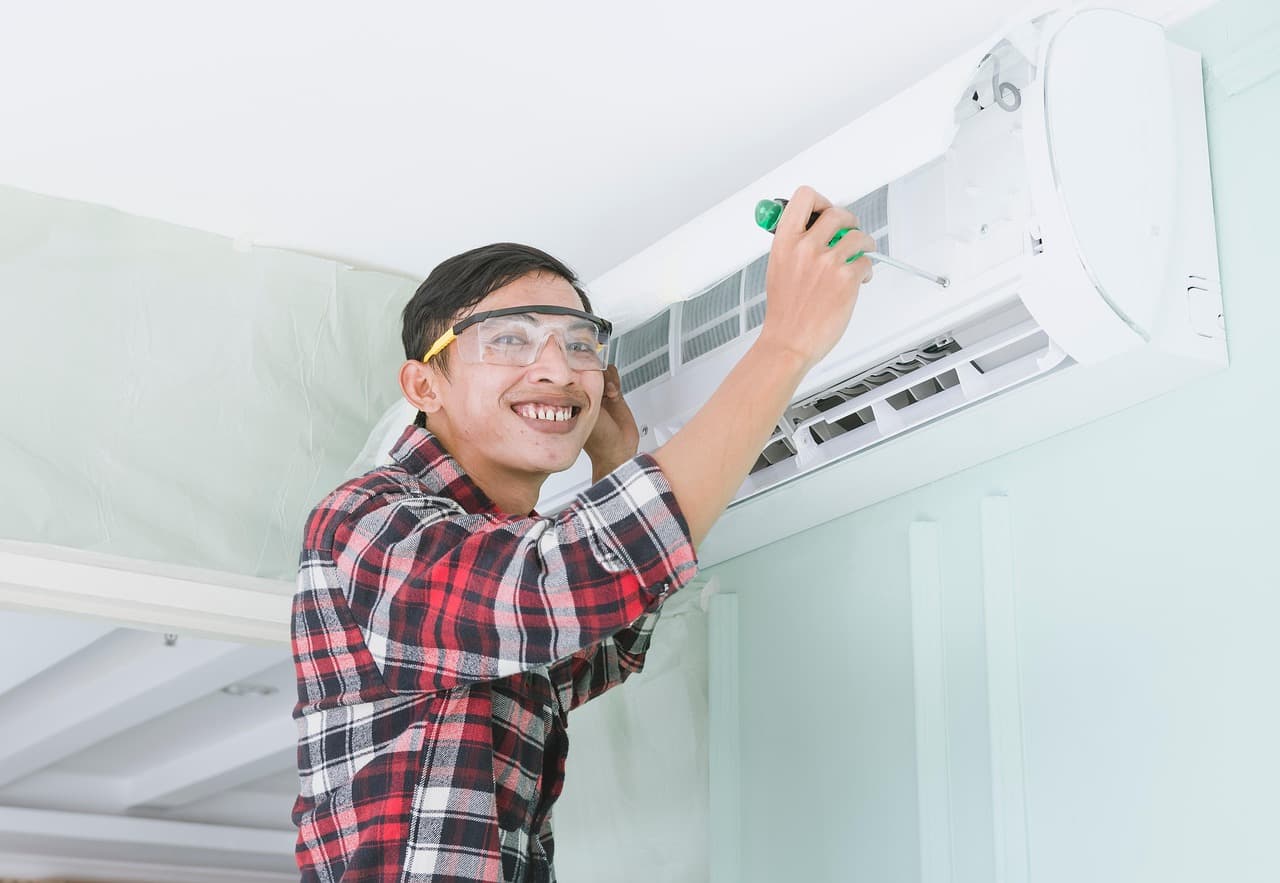
Before work begins, technicians visually assess the indoor and outdoor units, noting filter contamination level, moisture and mold presence on evaporators, and supply grille condition. They then remove the front panel to access air filters and the evaporator.
2. Filter Cleaning and Replacement
Air filters require periodic replacement—in intensively used offices every 3–6 months. For reusable filters, technicians flush them under pressure and then apply biocide treatment. Clogged filters reduce airflow and increase energy consumption, making this step critical for system efficiency.
3. Evaporator and Condenser Disinfection
The evaporator is where water vapor condenses—humid conditions favor bacterial and fungal growth. Technicians apply specialized biocides in foam or aerosol form, dissolving organic deposits and killing microorganisms. After the required contact time, the unit is flushed with deionized water under pressure, with contaminated water drained away.
The condenser (outdoor unit) also requires cleaning—dust and debris accumulated on fins reduce cooling efficiency. Depending on location (roof, facade), technicians wash the condenser with water or compressed air.
4. Cleaning Supply and Return Grilles
Supply grilles in the indoor unit and return grilles in ceilings or walls are visible parts often neglected during routine cleaning. We remove them, wash with detergent solution, disinfect, and reinstall. Grille cleaning is also part of office cleaning in Katowice, which we provide as part of comprehensive contracts.
5. Ventilation Channel Disinfection (Central Systems)
For central air conditioning systems (e.g., Class A office buildings), ventilation channels require separate disinfection. Technicians employ methods such as:
- Ozonation—injecting ozone into channels, which oxidizes microorganisms and removes odors,
- UVC lamps—exposing channels to ultraviolet radiation, destroying bacteria and viruses,
- Biocide aerosol—sprayed inside channels.
After disinfection, channels should be verified with an inspection camera to confirm process effectiveness. In practice, full channel maintenance occurs every 2–3 years unless the facility requires higher standards (e.g., operating rooms, laboratories).
6. Performance Check and Operation Test
After completing work, technicians restart the air conditioning and check operating parameters: refrigerant pressure, supply air temperature, airflow intensity, and noise level. If all is functioning properly, they issue a service protocol—a document containing the date, scope of work, products used, and technician signature.
Air Conditioning Disinfection Methods—Ozonation, Biocides, UVC
The industry employs several air conditioning disinfection methods, selected based on system type, contamination level, and client requirements.
Ozonation is one of the most effective disinfection methods. Ozone (O₃) is a powerful oxidizer destroying bacteria, viruses, fungi, and removing odors. Ozone generators inject the gas into ventilation channels or directly into spaces (after shutting down air conditioning and evacuating occupants). The process typically takes 30–60 minutes, after which the space must be thoroughly ventilated. Ozonation's advantage is the absence of chemical residue; the disadvantage is the safety requirement (high ozone concentrations are toxic to humans).
Biocides (disinfectant agents) are solutions based on alcohols, quaternary ammonium compounds (QAC), or peroxides. They are applied as foams, aerosols, or spray directly onto evaporators, grilles, and channels. Certified products meet EU standards (Biocidal Products Regulation 528/2012) and are safe for systems and users. It's important to rinse product residue or allow recommended airing time before restarting air conditioning.
UVC lamps (ultraviolet type C) emit radiation at 200–280 nm wavelengths, destroying microorganism DNA. UVC lamps can be permanently installed in central systems (continuous air disinfection) or applied periodically by technicians during service. The method is effective, environmentally friendly, and requires no chemicals, but requires power access and protection against direct human exposure.
In the context of sustainability and EU Ecolabel standards, increasingly many facility managers choose hybrid solutions: regular mechanical cleaning (filters, evaporators) plus ozonation or UVC instead of heavy chemical reliance. At Reefa, we employ similar approaches in routine office building cleaning in Cracow, preferring microfiber cloths, flat mops, and eco-certified products.
Differences in Disinfection: Split, VRV, Central Installation
Air conditioning system type determines work scope, execution time, and disinfection cost.
Split air conditioners (wall-mounted or ceiling-recessed) consist of an indoor and outdoor unit connected by refrigerant lines. Disinfection includes front panel removal, filter cleaning, evaporator disinfection, grille washing, and condenser cleaning. One split unit costs 80–150 PLN net. A typical 150 m² open-plan office may have 4–6 units, totaling 320–900 PLN net for complete service.
VRV/VRF systems (Variable Refrigerant Volume/Flow) are advanced multi-split installations where one outdoor unit serves a dozen or more indoor units. Disinfection requires coordinated work on all indoor units and system central control verification. Due to complexity, cost is individually quoted—usually 100–200 PLN net per indoor unit plus overhead for outdoor unit and control system service.
Central air conditioning (ducted) requires disinfection of not just HVAC units but also the extensive ventilation channel network running through suspended ceilings. The process includes ozonation or UVC, grille cleaning, central filter replacement, and—if necessary—mechanical channel cleaning via brushing or high-pressure air. Cost depends on channel footage and can reach several thousand PLN net in a medium office building.
For premium facilities—e.g., Class A offices in Cracow we service under comprehensive contracts—we recommend annual indoor unit disinfection and channel inspection every 2–3 years, unless indoor air quality audit indicates earlier intervention necessity.
Air Conditioning Disinfection Costs in an Office in 2026
Disinfection service prices in Cracow and Katowice for 2026 are as follows (net rates):
- Split air conditioner (wall-mounted)—80–150 PLN/unit,
- Cassette air conditioner (ceiling-recessed)—120–180 PLN/unit,
- VRV/VRF system (indoor unit)—100–200 PLN/unit,
- Office room ozonation (up to 50 m²)—150–250 PLN,
- Ventilation channel disinfection (central systems)—from 30 PLN/m of channel or fixed price (e.g., 2,000–5,000 PLN for a medium office building),
- Filter replacement—20–80 PLN/piece (depending on type).
For contract customers combining cleaning and air conditioning service within one SLA (Service Level Agreement), service companies often offer annual packages with preferential rates. At Reefa, we partner with selected service providers, allowing our clients to obtain discounts on air conditioning disinfection at facilities where we perform comprehensive maintenance.
Remember that cutting corners on disinfection can generate higher indirect costs: increased sick leave, employee turnover due to poor working conditions, higher energy bills (clogged filters increase electricity consumption by several percent), and potential sanctions during public health inspections. Investment in regular HVAC inspection pays off through a healthier, more productive team and extended equipment lifespan.
Standards and Recommendations: PN-EN 15780, Public Health, Safety
Indoor air quality and ventilation-air conditioning system condition are regulated by several legal acts and industry standards:
- PN-EN 15780:2012—Building ventilation. Ventilation ducts. Cleanliness of ventilation systems. This standard classifies duct contamination and recommends cleaning and inspection frequencies.
- Ministry of Infrastructure Regulation on Technical Conditions for Buildings and Their Location—mandates proper operation of mechanical ventilation and air conditioning.
- Labor Code (articles 207–212)—employers must provide safe and hygienic working conditions, including adequate air quality.
- Chief Sanitary Inspectorate Recommendations—public health authorities may audit indoor air quality and mandate HVAC disinfection if microorganism concentrations exceed permitted limits.
In practice, health inspectors scrutinize documentation: service protocols, invoices, biocide certifications. Lack of documentation or system maintenance neglect can result in post-inspection orders; in extreme cases, facility operation suspension until issues are resolved.
For medical, food, or educational sector companies, requirements are even more stringent. For example, HACCP-covered medical facilities must maintain detailed documentation of all hygiene and disinfection activities, and biocides used in healthcare settings must be approved for use in health facilities.
Case Study: Cracow Office—Employee Allergy Problem
In 2025, Reefa was asked to help diagnose an indoor air quality problem at a Cracow technology company office with approximately 40 employees. Staff reported escalating allergic symptoms: eye itching, cough, nasal congestion, headaches—particularly in afternoons when air conditioning ran at full capacity.
Initial inspection revealed that air conditioning units (6 split systems) had not been serviced since installation—over two years prior. Air filters were completely clogged with dust, and evaporators showed black mold deposits. The client had no documentation of any inspection, and the installation company offered no service packages.
We organized comprehensive disinfection of all units with our service partner: filter removal and replacement, evaporator disinfection with biocide, room ozonation, and grille cleaning. Total cost was 720 PLN net (6 units × 120 PLN). A week after completion, the client confirmed allergic symptoms had subsided and the team noticed improved work comfort.
Based on this experience, we proposed a year-round contract combining office cleaning and twice-yearly air conditioning inspections. For over a year since, no air quality issues have been reported, and the Reefa coordinator monitors the service schedule and reminds of upcoming inspections. This exemplifies how integrated facility management—combining cleaning, disinfection, and minor repairs through one provider—improves service quality and reduces neglect risk.
Air Conditioning Disinfection and Other Facility Management Services
Air conditioning disinfection is just one element of a comprehensive strategy for maintaining a healthy and safe work environment. In facility management context, it should be considered alongside:
- Regular office cleaning—dust, pollen, and allergens settling on furniture and floors can be drawn in by air conditioning and redistributed,
- Window and facade washing—clean windows improve natural lighting and reduce energy consumption for artificial lighting,
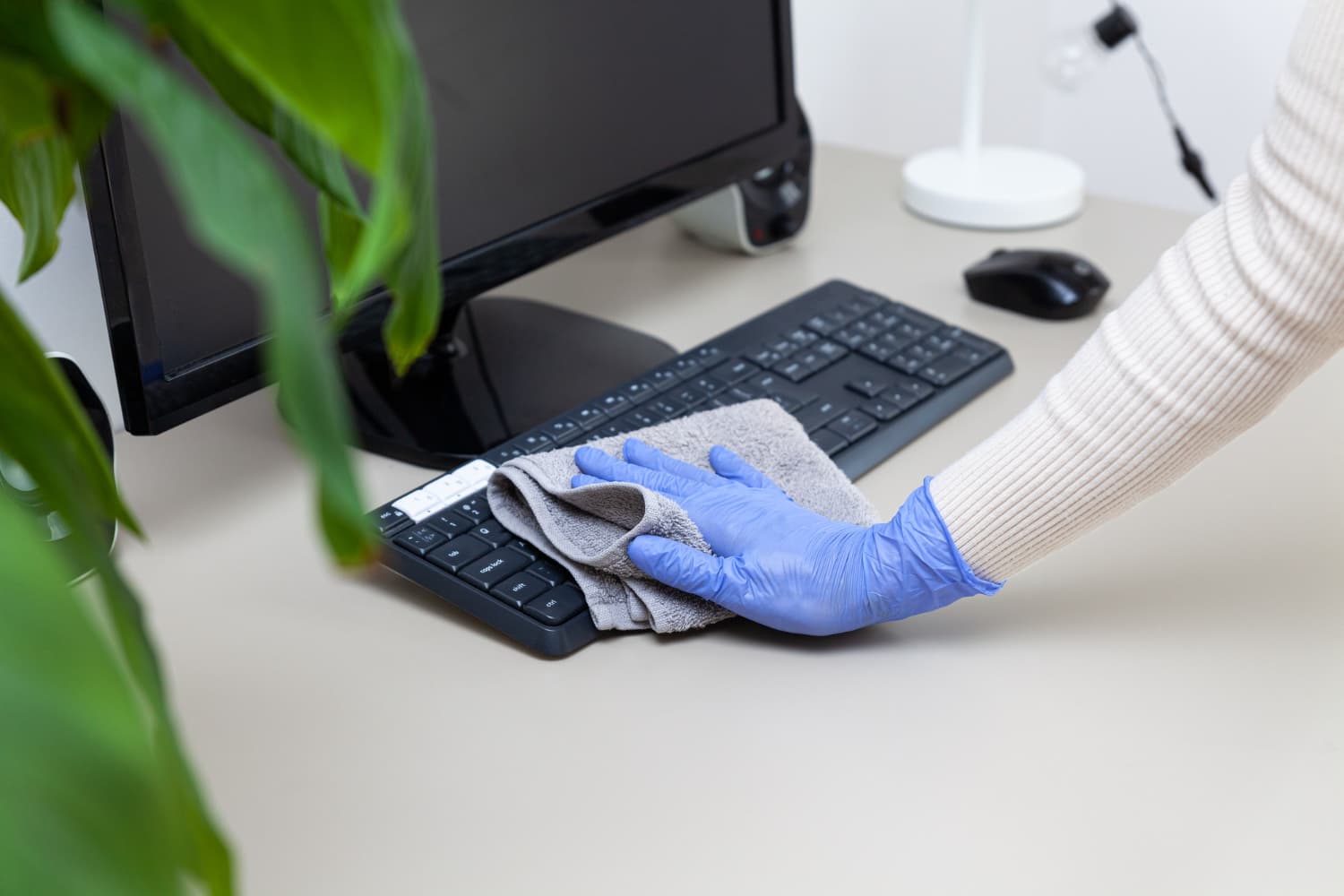
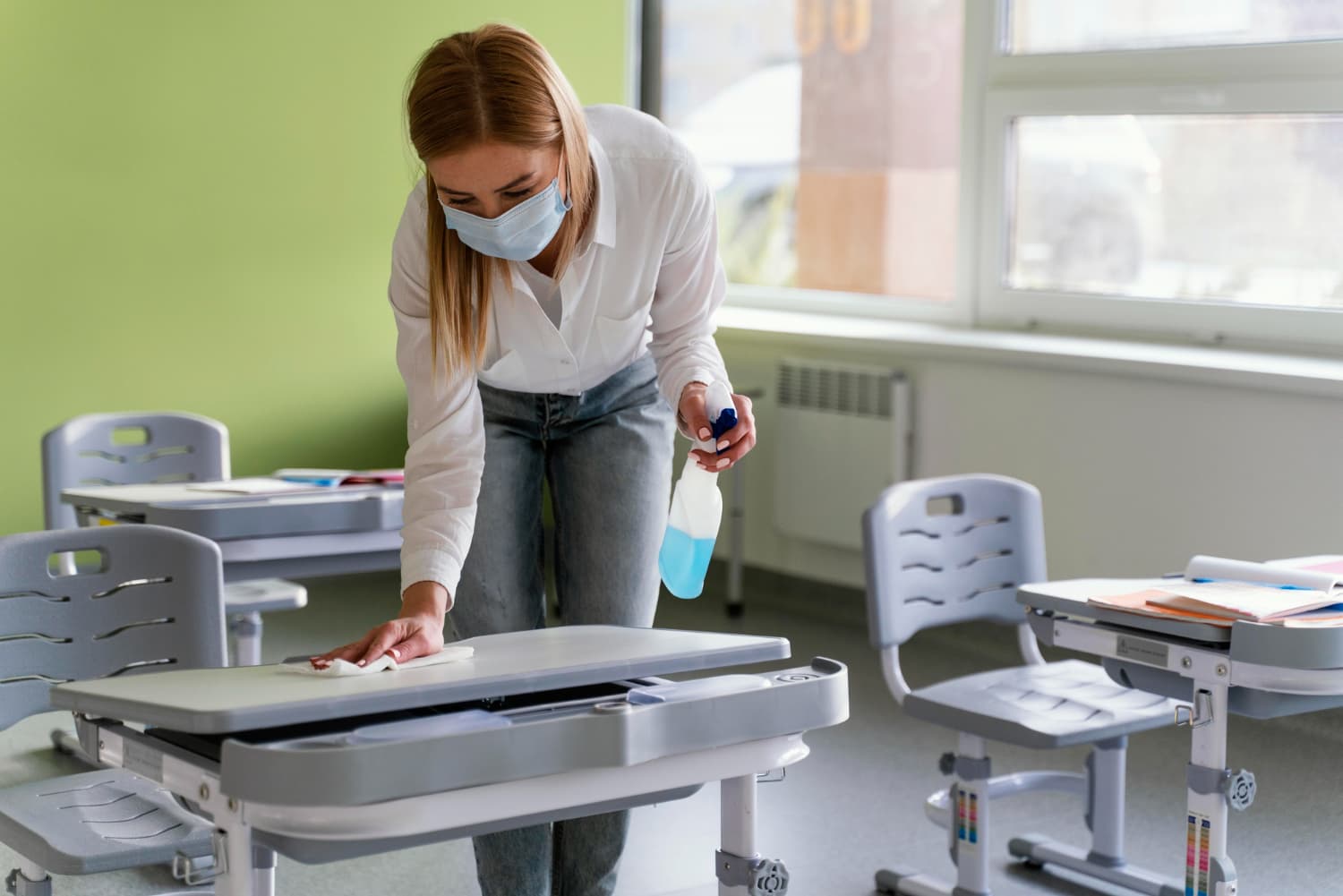
- Touch-surface disinfection—door handles, light switches, handrails are high-risk points for microorganism transmission,
- Plumbing system maintenance—leaks, bathroom moisture, or clogged drains can raise facility humidity and create additional mold development risk.
At Reefa, we offer comprehensive facility contracts for offices and office buildings in Cracow and Katowice, including routine cleaning, periodic specialist work (window washing, carpet cleaning, facade cleaning), and technical service coordination—including HVAC disinfection. With a dedicated coordinator per facility, a QR system for issue reporting, and photo reports after each cleaning, clients maintain full visibility and process transparency.
How to Choose an Air Conditioning Disinfection Company
When selecting an HVAC disinfection service provider, consider several key criteria:
- Experience and references—verify how long the company has operated and whether it serves commercial facilities (not just residences). Request references or case studies of similar projects.
- Certifications and insurance—the firm should have liability insurance (OC) and use biocides approved for EU market circulation. Certifications like ISO 9001 (quality management) or ISO 14001 (environmental management) are additional strengths.
- Service scope—ensure the offer includes not just filter cleaning but evaporator disinfection, grille cleaning, and—if applicable—ventilation channel work. Request a detailed process description.
- Documentation and protocols—professional contractors issue a service protocol upon completion, detailing work performed, methods, and products used. This document may be requested by health authorities or safety auditors.
- Flexibility and availability—HVAC disinfection should occur during hours that don't disrupt office operations—e.g., evenings or weekends. Verify the firm offers such flexibility.
- Price versus value—the cheapest offer isn't necessarily best. Compare work scope, methods, and service quality. In the long term, paying 20 percent more for reliable service beats risking rework or equipment damage.
Since 2020 in Cracow and since 2024 in Katowice, Reefa has built a facility management team based on legally employed and insured staff, transparent processes, and dedicated coordinator support. While our main specialty is cleaning, we help clients organize technical services—including HVAC disinfection—through trusted industry partners as part of comprehensive contracts.
Frequently Asked Questions
How much does office air conditioning cleaning cost?
Office air conditioning cleaning and disinfection costs depend on system type. A single split air conditioner (wall-mounted) costs 80–150 PLN net, a cassette unit (ceiling-recessed) costs 120–180 PLN net, and units in VRV/VRF systems run 100–200 PLN net per indoor unit. If your office uses central systems with ventilation channels, complete disinfection can cost several thousand PLN net depending on channel footage and contamination level. For contract customers combining cleaning and HVAC service, annual packages with preferential rates are often available.
How often should office air conditioning be cleaned?
Optimal frequency is 1–2 times per year: spring before cooling season (March–April) and autumn after intensive use (September–October). In offices where air conditioning runs year-round or in high-humidity environments (e.g., gyms, pools), quarterly inspections are recommended. If unpleasant odors, visible mold, or employee allergy reports occur, disinfection should be performed immediately, regardless of scheduled intervals.
How much does office air conditioning defunging and cleaning cost?
Defunging air conditioning—removing fungi and mold from evaporators, grilles, and channels—is integral to the disinfection process. A split unit typically costs 80–150 PLN net and includes filter cleaning, evaporator biocide disinfection, grille washing, and outdoor unit check. For advanced mold growth requiring specialized products or multiple applications, costs may rise 30–50 percent. For central systems with fungus-colonized channels, mechanical cleaning via brushing or high-pressure air may be necessary, raising total cost to several thousand PLN.
Can I disinfect my office air conditioning myself?
Office owners can perform basic maintenance: remove the front panel, extract air filters, rinse with water and detergent, dry, and reinstall. Wiping supply grilles with a damp cloth is also doable. However, full disinfection requires specialist biocides, equipment (e.g., ozone generator, UVC lamp), and technical knowledge—improper chemical use can damage the evaporator or condenser and pose health risks. Therefore, we recommend hiring a professional service firm, especially given workplace safety and health standards in commercial facilities.
Is air conditioning disinfection mandatory?
Regulations don't directly mandate specific disinfection frequency, but labor codes and safety standards obligate employers to provide safe and hygienic conditions. This means if contaminated HVAC systems degrade air quality, cause discomfort, or create health problems, employers must act—including disinfection. Public health authorities may order disinfection if microorganism concentrations exceed limits. For specialized facilities (medical, food, educational), requirements are stricter and regular disinfection is standard practice.
Which air conditioning disinfection methods are most effective?
The most effective methods combine mechanical cleaning (filter, evaporator, grille removal and washing) with chemical or physical disinfection. Ozonation—injecting ozone into channels or spaces—destroys bacteria, fungi, and removes odors but requires occupant evacuation and ventilation. Biocides (alcohol-based, QAC, peroxide) applied to evaporators and grilles are safe for systems and effective with regular use. UVC lamps emit radiation destroying microorganism DNA and can be permanently mounted in central systems. Best results come from a hybrid approach: mechanical cleaning + ozonation or biocides + UVC lamps for continuous prevention.
Summary and Next Steps
Air conditioning disinfection in an office is an essential process for maintaining high indoor air quality, employee health, and health and safety compliance. Regular inspections—ideally twice yearly—prevent bacteria, fungi, and allergen development in systems while extending equipment lifespan and reducing operational costs. Professional split unit disinfection at 80–150 PLN net represents a justified investment in light of health and operational benefits.
If you manage an office, office building, or other commercial facility in Cracow or Katowice and seek a partner for comprehensive cleanliness and work environment quality—contact Reefa's team. We offer facility contracts covering both routine cleaning and technical service coordination, including air conditioning disinfection. A dedicated coordinator, photo reports after each cleaning, legally employed and insured staff, and 500,000 PLN liability insurance guarantee peace of mind and professional service.
Request a free quote and discover how an integrated facility management approach can elevate your facility's standards. Contact: /kontakt or directly /krakow/kontakt for Cracow-area offices.