Removing Stains from Office Carpeting — A Facility Manager's Guide
A practical guide for facility managers on responding effectively to common carpet stains in office environments, choosing the right cleaning agents, and determining when to call professional services.
A practical guide for facility managers on responding effectively to common carpet stains in office environments, choosing the right cleaning agents, and determining when to call professional services.
Removing stains from office carpeting requires knowledge of the soil type and carpet fiber, proper application technique, and the judgment to recognize when a problem exceeds the scope of in-house intervention. Swift action within the first 5–10 minutes can prevent permanent fiber damage and avoid the cost of replacing an entire section.
Carpet flooring in Class A offices serves not only as an aesthetic element but also as an acoustic tool, user comfort feature, and brand asset. In corporate environments, facility managers are responsible for maintaining cleanliness standards under intensive traffic — an average 500 m² office can generate 10 to 30 stain incidents monthly, from spilled coffee to printer toner leaks.
At Reefa, we have served office facilities in Cracow since 2020, and in Katowice since 2024. Over the years, we have developed immediate-response protocols and carpet deep-cleaning procedures tailored to client schedules and SLA (Service Level Agreement) requirements. Each facility has a dedicated coordinator who can respond to major stain incidents in under 24 hours.
In Brief
- Blot, don't rub — most carpet stains should be removed by pressing absorbent material against them, never by vigorous scrubbing, which drives soil deeper into the fiber structure.
- The first 5–10 minutes are critical — immediate action with paper towel or microfiber often suffices; delay of an hour or more significantly increases the risk of permanent staining.
- Know your carpet type — polyamide (nylon 6.6) can handle alkaline detergents, wool requires neutral pH, PVC and LVT demand different chemistry entirely.
- Stock essential products on-site — neutral pH spray, vinegar, baking soda, absorbent paper, white microfiber cloths, natural-bristle brush.
- Limits of in-house intervention — stains larger than 30 × 30 cm, spilled greasy substances, paint, wax, blood, and dried organic soils require professional extraction or wash cleaning.
- Documentation — photograph stains before and after treatment; valuable for insurance claims (liability coverage up to 500,000 PLN covers client property damage) and facility management system reporting.
Why Carpet Stain Removal Requires a Protocol
In office environments, the variety of substances and intensity of use create a unique challenge. In retail or hospitality settings, stains are expected and predictable; in an office, every incident is operational and demands swift, work-disruption-free response.
The facility manager must define which tasks are handled by in-house or on-site cleaning staff (interventions under 10 minutes, minor spills) and which require coordination with an external provider, such as Reefa's office cleaning in Cracow or Katowice. Proper task allocation protects the budget, reduces downtime, and safeguards materials from damage.
In practice, most office stains (coffee, tea, juice, mud) can be removed with basic tools if action is immediate. Organic stains (blood, vomit), chemical stains (correction fluid, oils, inks, paint), and persistent stains (dried food, wax) almost always require hot-water extraction at 150–200 bar pressure plus enzymatic or specialized solvents.
The protocol should include stain classification (substance type, response time, surface area), defined escalation thresholds, and emergency contact lists. Consider implementing a QR-code reporting system — a solution we use at Reefa that allows staff to report a stain with precise location and photo directly to the coordinator.
How to Remove the Most Common Office Stains — Step-by-Step
Coffee and Tea
Immediate response (liquid is fresh):
- Blot excess liquid with dry paper towel or white microfiber (colored cloth may bleed dye). Apply quick pressing motions from the stain's edges toward the center to avoid spreading.
- Mix solution: 200 ml lukewarm water + 1 tablespoon white vinegar (pH ~3–4, neutralizes tannins). Alternatively: neutral carpet spray (pH 6–8).
- Dampen clean microfiber in solution, wring excess, blot stain from outside edge to center.
- Every 10–15 seconds, apply dry absorbent cloth to draw out moisture and coffee color.
- Repeat the dampening–blotting–drying cycle until microfiber picks up no more color.
- Air-dry the area with cool air or fan to prevent mold.
Dried stain:
Dried coffee tannins penetrate deeply into polyamide fiber structure. Try baking soda solution (1 tablespoon per 250 ml lukewarm water), which breaks down organic deposits. Blot for 2–3 minutes, then rinse with clean water and dry. If the stain persists, professional hot-water extraction with enzymatic detergents is needed (available in professional carpet wash systems).
Printer Ink and Toners
Water-based ink (most inkjet printers) can be partly removed with isopropyl alcohol (IPA 70%) or specialist ink solvent. Never use water — water-based ink will spread further.
Immediately:
- Collect larger ink particles with clean spoon or stiff card edge.
- Dampen a cotton pad or microfiber edge with IPA, blot gently from edge toward center.
- Every few strokes, use a clean pad to assess progress and avoid smearing pigment.
- After removing visible stain, rinse area with lukewarm water (damp microfiber, wrung out), dry.
Dried ink:
Professional pigment solvents (e.g., ethylene glycol–based) or extraction wash with anionic detergents. Most facility managers treat this as the threshold for calling external teams.
Mud and Loose Dust
Street mud contains clay, sand, and oils from asphalt surfaces.
Immediately:
- Allow mud to dry completely — paradoxically, wet mud smears and embeds. Wait 30–60 minutes.
- Vacuum thoroughly with HEPA-filter machine, using a narrow nozzle attachment to pull particles from fibers.
- If stain remains, mix lukewarm water with a drop of neutral detergent (pH 7 for carpet or liquid soap) and blot.
- Dry and vacuum again.
Dried mud:
Brush with natural-bristle brush (horsehair, soft nylon) in the direction of the pile, then vacuum. If stain persists, deep extraction wash is needed.
Food and Greases (Mayonnaise, Sauces, Butter)
Greases require emulsifying agents.
Immediately:
- Remove solid residue with spoon.
- Sprinkle stain with baking soda or talc (absorbs grease over 15–30 minutes).
- Vacuum powder.
- Blot with lukewarm water mixed with detergent (neutral or slightly alkaline pH 8–9, breaks down lipids).
- Rinse with clean water, dry.
Dried greases:
Require solvents (limonene, ethanol) or hot-water wash (60–80°C) under pressure. This is professional territory.
Office Chemistry: Correction Fluid, Markers, Adhesives
Solvent-based correction fluid ("liquid paper") is dissolved by acetone or IPA. Caution: solvents may discolor fibers — always test on a hidden carpet area first.
Immediately:
- Remove excess.
- Dampen cotton pad with pure acetone, blot gently.
- Rinse with water, dry.
Permanent markers:
Isopropyl alcohol or professional graffiti spray. Dried applications need repeated cycles or carpet section replacement.
Chemical vs. Ecological Cleaning Agents — What to Choose for an Office?
Choosing cleaning products in an office environment is subject to several constraints: user safety (GDPR and occupational health), alignment with environmental certifications (ISO 14001, EU Ecolabel), impact on carpet durability, and operational cost.
Conventional chemical products (anionic detergents, alcohol, solvents, chlorine bleach) work fast and effectively on a broad spectrum of stains. Downsides: potentially irritating to airways, require ventilation, can weaken adhesive in modular carpet tiles.
Ecological products (vinegar, baking soda, Marseille soap, plant detergents with Ecocert or EU Ecolabel certification) have neutral environmental impact, low toxicity, and are accepted in BREEAM or LEED facilities. Downsides: lower efficacy on grease and pigments, sometimes requires longer dwell time.
In facilities served by Reefa, we prefer EU Ecolabel–certified products where clients have ESG (Environmental, Social, Governance) policies or WELL Building Standard requirements. For emergency interventions (spilled chemicals, ink, blood), we use specialist agents with hazardous substance data sheets (MSDS) and occupational health application protocols.
Recommendation for facility managers: maintain an ecological basic kit (vinegar, baking soda, neutral pH spray) for routine interventions, but keep access to specialist products (IPA, enzymes, solvents) in a locked safety cabinet with application instructions.
Common Mistakes When Removing Carpet Stains — What to Avoid
Rubbing Instead of Blotting
Every horizontal motion drives soil particles deeper into the fiber structure and widens the stain. Blotting — vertical pressing of absorbent material — draws contamination into the cloth without spreading it.
Using Hot Water on Protein Stains (Blood, Eggs, Milk)
Heat coagulates protein, bonding it permanently to the fiber. Always use cold or lukewarm water (below 30°C) initially; deploy protein-breaking enzymes in the second phase.
Over-Wetting Carpet
Carpet tiles mounted on adhesive can separate if the backing layer becomes saturated. Wet carpet also risks mold and odor. Always wring excess liquid from microfiber; air-dry with ventilation or fan.
Using Chlorine Bleach (Domestos, ACE) on Colored Carpets
Chlorine destroys fiber dye, leaving light patches. If dealing with biological hazard (blood, vomit), use hydrogen-peroxide–based products at max 3% concentration with pH control.
Failing to Test Products on Hidden Areas
Always test new products — especially solvents, acetone, alkaline detergents — on an inconspicuous carpet section. Some fibers (wool, mass-dyed polypropylene) may shift color or texture.
Ignoring Drying Time
Undried carpet becomes a breeding ground for bacteria, fungi, and unpleasant odors. After every wet intervention, ensure ventilation (window, fan) for a minimum of 2–4 hours.
When to Call Professionals vs. When In-House Handling Suffices
In-house intervention (on-site cleaning staff, facility manager):
- Stains under 20 × 20 cm, fresh (within 30 minutes of incident).
- Water-soluble substances: coffee, tea, juice, dry mud.
- Basic products and tools available on-site.
- No risk of fiber damage (carpet type known, products pre-tested).
Call professionals (Reefa's office cleaning):
- Stains larger than 30 × 30 cm or multi-point (spilled toner, HVAC system leaks).
- Difficult substances: grease, paint, lacquer, wax, blood, vomit, urine (pet-friendly offices).
- Stains dried for over 24 hours, especially organic matter (bacterial risk).
- Need for hot-water extraction at 150–200 bar pressure (deep wash, sanitization).
- Insurance requirements — documentation of incidents covered by liability (Reefa's coverage up to 500,000 PLN).
- Specialty carpets (wool, natural blends, antistatic carpet in server rooms).
In practice, facility managers of facilities over 1000 m² typically sign maintenance contracts that include emergency interventions as part of the SLA. Response time under 24 hours, professional equipment (Kärcher Puzzi, Tennant extraction machines), and trained occupational health and HACCP-compliant teams minimize downtime and carpet replacement costs.
Reefa offers an immediate-intervention protocol for clients under standing service contracts. The facility coordinator has access to mobile equipment and can respond within hours, documenting incidents with photoreports and system entries.
Checklist of Products and Tools for On-Site Stain Intervention
Every office should maintain a secure cabinet (access for facility manager, cleaning coordinator, reception) stocked with essentials:
Cleaning Products:
- Carpet spray, neutral pH (6–8), with EU Ecolabel certification.
- White vinegar 10% (breaks down tannins, neutralizes odors).
- Baking soda (grease absorbent, odor neutralizer).
- Isopropyl alcohol 70% (inks, correction fluid, markers).
- Enzymatic detergent (proteins, organics) — optional for pet-friendly offices or internal food service.
- Hydrogen peroxide 3% (sanitization, blood stains — non-bleaching).
Tools:
- White microfiber cloths (minimum 10 pieces) — colored cloth may bleed dye.
- Absorbent paper (industrial paper towels, high gsm).
- Natural-bristle brush (soft, for blotting and brushing).
- Plastic spatula or disposable spoons (collecting solids).
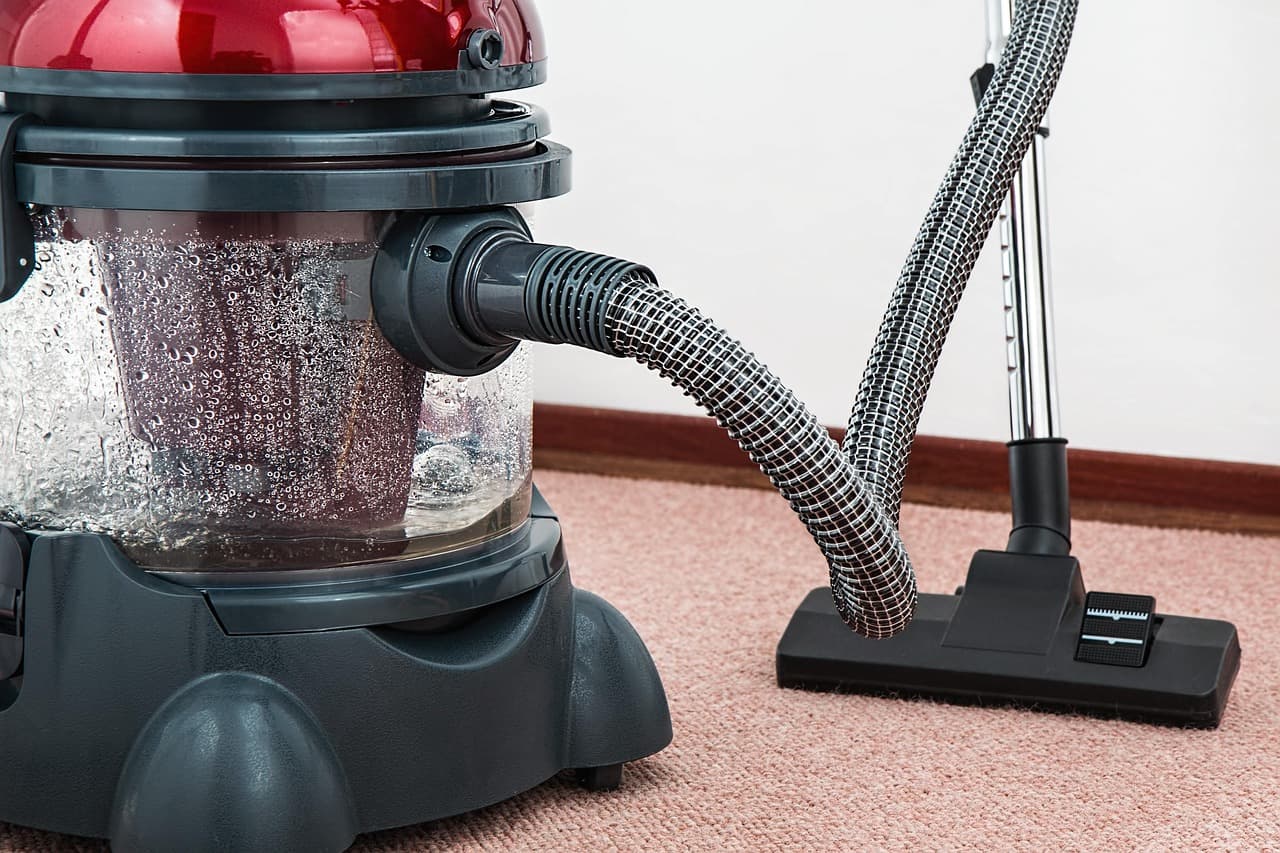
- Vacuum with narrow nozzle and HEPA filter.
- Portable fan or hair dryer (speeds drying).
- Nitrile gloves (occupational health protection).
- Zip-lock bags for samples (documentation for insurer or lab).
Documentation:
- Intervention card (date, location, stain type, product used, outcome, signature).
- Camera or phone for before/after photos.
- QR-code system for incident reporting (optional, Reefa solution).
Basic set cost: 150–300 PLN net (products) + 200–400 PLN (durable tools). ROI follows avoiding one carpet section replacement (50–150 PLN net/m² + installation labor).
How to Care for Carpet to Minimize Stain Risk
Prevention always beats intervention. Several organizational and technical measures reduce stain frequency and intensity:
Entry mats and buffer zones:
Main entrance should have a scraping mat (rubber, polypropylene) at least 3–4 steps long (2.5–3 m). This mat removes up to 80% of dust, sand, and moisture from footwear — directly improving cleanliness throughout the space.
"Clean desk" policy and no-eating-at-workstations rule:
In facilities with strict standards (finance, IT sectors), eating in designated zones (kitchen, cafeteria) significantly cuts organic and grease stains.
Regular vacuuming (minimum 3× weekly in high-traffic areas):
Dust and sand act like sandpaper, damaging fibers and deepening stains. Vacuums with rotating brush (beater brush) and HEPA filter remove particles before they embed.
Professional extraction wash 1–2× annually:
Hot-water extraction removes invisible soils (perspiration, dust, allergens), regenerates fiber, and extends carpet life by 30–50%. Reefa uses Kärcher Puzzi machines with accelerated-dry mode — spaces ready for use in 4–6 hours.
Fiber impregnation (optional):
After wash, apply hydrophobic treatments (fluorocarbons, silicones) that create a protective barrier on fibers. Liquids bead; you gain seconds before soil penetrates. Cost: 3–6 PLN net/m², durability 6–12 months.
Carpet Types — What You Need to Know Before Intervening
Polyamide (nylon 6, nylon 6.6) carpet:
Most common in offices. Abrasion-resistant, tolerates alkaline detergents (pH 8–10), can be washed with hot water (up to 80°C). Susceptible to dye stains (wine, fruit juice) — fast response required.
Wool and wool-nylon blend carpet:
Premium, used in Class A+ offices, conference rooms. Require neutral pH (6–8), cold or lukewarm water, enzyme products. Wet wool shrinks — dry immediately. Cost: 120–250 PLN net/m².
Polypropylene (PP) carpet:
Budget-friendly, often in back-office or archive areas. Resists chemical and grease stains but difficult for deep cleaning (hydrophobic fiber). Extraction less effective than on nylon.
Carpet tiles (modular):
Modular system — advantage is replacing individual tiles (50 × 50 cm) if stain is permanent. Cost per tile: 15–40 PLN net. Reefa clients often stock 5–10% spare tiles from the same production batch (color match).
PVC and LVT (luxury vinyl tiles):
Not technically carpet but often confused with it. Stain removal: damp microfiber with neutral detergent, dry. Resistant to almost all substances except organic solvents (acetone, MEK).
Case Study: Intervention in a Class A Office
In 2025, Reefa serviced a 1200 m² downtown Cracow office with modular nylon 6.6 carpet (50 × 50 cm tiles, charcoal color). Wednesday, around 10:00 AM, an employee spilled 0.5 liters of coffee with milk in the open workspace — stain approximately 60 × 40 cm, deep brown.
Response:
- Reception notified Reefa coordinator via QR system within 3 minutes.
- Security staff (trained in basic intervention) applied paper towels, collected excess (90 seconds).
- Reefa coordinator arrived in 25 minutes with mobile kit (neutral pH spray, microfiber, dryer).
- Vinegar solution blotting (3 minutes), carpet spray follow-up (5 minutes), fan drying (15 minutes).
- One hour later — stain invisible. Photoreport sent to client's facility manager.
- Friday, during weekly cleaning, area additionally vacuumed and inspected — no residual odor, no color shift.
Cost: no additional charge (incident covered under SLA emergency interventions). Alternative scenario (no response, dried stain): replacement of 6 carpet tiles, cost ~180 PLN net + 1 hour installation labor.
Frequently Asked Questions
What removes carpet stains in an office?
Office carpet stains are removed by blotting with agents matched to the soil type. Coffee and tea: vinegar solution (1 tablespoon per 200 ml lukewarm water) or neutral pH spray. Grease: baking soda, then detergent. Ink and markers: 70% isopropyl alcohol. Mud: dry first, vacuum, then blot with water–detergent mix. Key principles: immediate response (5–10 minutes), blot not rub, use white absorbent microfiber, air-dry. For stains over 30 × 30 cm, dried, or chemical (paint, lacquer, blood), professional hot-water extraction at 150–200 bar with enzymes is essential.
How is office carpet cleaned?
Office carpet is professionally cleaned using hot-water extraction (hot water extraction, "steam cleaning"). A machine injects 150–200 bar hot solution (60–80°C) with detergent under pressure, then immediately extracts it with soils. Process takes 20–40 minutes per 100 m², drying 4–8 hours (depends on ventilation and humidity). Recommended 1–2 times yearly in high-traffic offices, evenings or weekends to avoid work disruption. Nylon (most office carpet) tolerates up to 80°C; wool requires max 40°C and neutral pH. Reefa uses Kärcher Puzzi machines with accelerated-dry mode, shortening unavailability to 4–6 hours. Cost: 8–15 PLN net/m² depending on soil level and fiber type.
How do I remove stains from PVC carpet?
PVC (vinyl) carpet is stain-resistant and easy to maintain. Blot fresh stain with paper towel, then wipe with microfiber damp in lukewarm water–neutral detergent (pH 6–8) or liquid soap. Dry with cloth. Greasy stains: sprinkle baking soda for 15 minutes, vacuum, wipe. Markers and ink: 70% isopropyl alcohol on cotton pad, gentle blotting. Note: avoid acetone, organic solvents (MEK, toluene), and abrasives — they damage PVC's protective layer. Dried stains: apply vinyl-floor cleaner (available from industrial suppliers), let sit 5 minutes, wipe with soft sponge. PVC needs no deep wash — regular mopping (2–3× weekly) with detergent suffices.
How do I clean heavily soiled office carpet?
Heavily soiled carpet (intensive traffic, neglected maintenance, multiple stains) requires professional extraction wash. Process: pre-vacuum (remove dust and sand), pretreat stains with enzymes or solvents (15–30 minutes), hot-water extraction (60–80°C, 150–200 bar, alkaline detergent pH 8–10 for nylon, neutral pH 7 for wool), water recovery, fan or dryer drying (4–8 hours). Office cost: 10–18 PLN net/m² depending on soil level. Alternatively, for polypropylene or synthetics: dry-cleaning method with powder (drying time 1–2 hours). Heavily soiled carpet in entry zones or corridors often needs washing every 3–6 months rather than standard 12-month intervals.
How often should office carpet be professionally cleaned?
Professional wash frequency depends on traffic intensity, fiber type, and facility policy. Standard recommendation: 1–2 times yearly for moderate-traffic offices (up to 100 occupants per 500 m²). High-traffic areas (open workspace, corridors, entry zones): every 6 months or more. Low-traffic zones (conference rooms, executive offices): once per 18–24 months. Regular washing removes allergens, dust, bacteria, regenerates fiber, and extends carpet life by 30–50%. Neglected carpet leads to embedded soils, permanent stains, color dulling, and premature replacement before end-of-life (typically 8–12 years for nylon). In facilities served by Reefa in Katowice and Cracow, wash schedule is set with the facility manager per SLA, timed to client's business calendar.
Can I operate carpet wash machines myself in an office?
Yes, machines like Kärcher Puzzi SE 4001 can be rented (cost: 80–150 PLN/day). This requires machine operation knowledge, correct detergent selection (pH, temperature, concentration), and proper technique. Common mistakes: over-wetting (mold, delamination), wrong pH (fiber damage, discoloration), long drying (surface unavailability over 24 hours). For facility managers without experience, we recommend testing on a small area (5–10 m²) in a discrete spot. In practice, most offices over 300 m² outsource to professional firms — service cost (10–15 PLN net/m²) approximates rental + detergent + labor, but includes quality guarantee, liability insurance, and documentation.
Summary — Effective Stain Management as a Facility Operations Element
Removing stains from office carpeting is an operational surface-management function — it requires protocol, team training, proper tools, and a clearly defined escalation threshold. A facility manager who deploys an on-site product checklist, incident-reporting system, and maintenance contract with a cleaning partner saves budget, minimizes downtime, and protects facility reputation.
In a corporate environment, every stain incident tests operational standards. Immediate response (5–10 minutes), correct tools (blotting, fiber-matched pH agents), and documentation (photoreports, intervention cards) build operational advantage and user confidence.
Reefa has supported facility managers in Cracow since 2020 and in Katowice since 2024, helping manage cleanliness in office, medical, and educational facilities. A dedicated coordinator, QR incident-reporting system, liability coverage up to 500,000 PLN, and SLA-aligned intervention protocols are the standards enabling premium carpet condition throughout its lifecycle.
Contact our team via the contact form to discuss a stain-intervention protocol tailored to your facility.