Cleaning Coordination in Residential Buildings with Ground-Floor Gastronomy
Ground-floor restaurants and bars require different cleaning logistics than standard residential buildings. Learn how to coordinate schedules, account for increased chemical usage, and prevent conflicts with tenants.
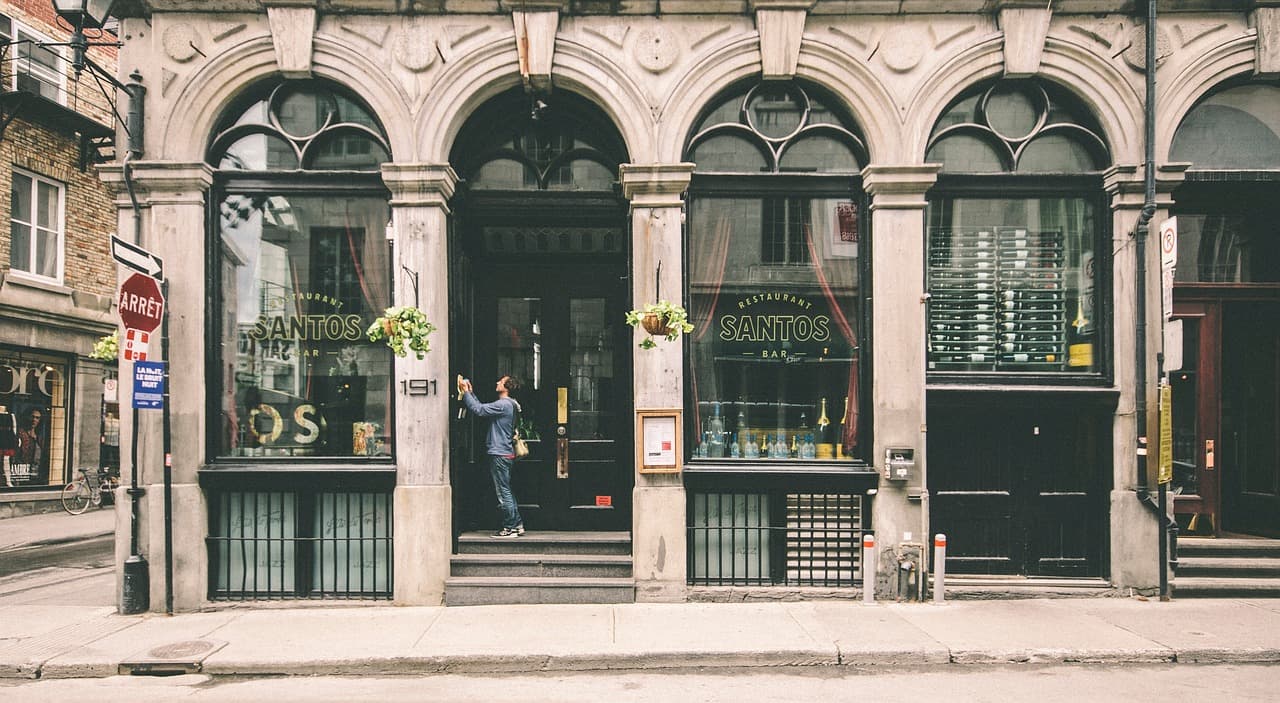
Ground-floor restaurants and bars require different cleaning logistics than standard residential buildings. Learn how to coordinate schedules, account for increased chemical usage, and prevent conflicts with tenants.
Residential communities with food and beverage establishments on the ground floor require a completely different approach to cleaning than standard residential buildings. Restaurants, cafes, and pubs generate significantly higher levels of contamination in common areas, operate during non-standard hours, and require flexible schedules that don't interfere with customer traffic.
Based on our observations in 2025–2026, residential buildings with active gastronomy on the ground floor — such as properties on Mariacka and Stawowa streets in Katowice, which we service — experience 40–60% higher consumption of cleaning supplies and require a minimum of two cleaning windows per day. Building managers must account not only for residents' needs but also for the commercial tenants' operational specifics.
This article presents concrete coordination strategies, cost allocation methods, and best practices based on our experience managing over twenty residential buildings with food and beverage businesses in Cracow and Katowice.
Summary
- Food and beverage establishments generate 2–3× more contamination in common areas than standard residential or office units
- Effective coordination requires two cleaning windows: early morning (7:00–10:00) before opening or late night (after 23:00) after closing
- Cleaning costs for a building with gastronomy increase by 35–55% compared to standard rates; average rate for Cracow and Katowice: PLN 18–26 net/m²/month for common areas
- Key tools: written schedule agreements with tenants, separate chemical supply points, monitoring of cleaning supply usage
- Reefa manages buildings on Mariacka and Stawowa streets in Katowice with public liability insurance up to PLN 500,000 and staff employed exclusively under employment contracts
- Our 96% retention rate in the residential community segment stems from transparent billing of variable work scope
Why Ground-Floor Gastronomy Changes Cleaning Standards
Food and beverage establishments operate on a completely different schedule than apartments or offices. A restaurant typically opens around 11:00–12:00 and operates until 22:00–23:00, while pubs and bars may stay open until 1:00 or 2:00 in the morning. Cafes, on the other hand, often start operations as early as 7:00–8:00 in the morning. These operating hours generate intense customer traffic — often with children, in groups, sometimes after alcohol consumption — which translates into visible contamination in entrances, stairwells, and circulation areas.
Typical issues include spilled beverages (coffee, beer, wine), food remnants, mud and snow brought in by restaurant guests, and cigarette smoke near entrances where smokers tend to gather. In older buildings without elevators or climate control systems, odors from food establishments permeate the stairwells, triggering resident complaints.
Our observations in buildings on Mariacka Street in Katowice show that weekend garbage in the common trash containers increases by 70–90%, and cleaning door mats and entrances requires daily intervention rather than the standard 2–3 times weekly. This is precisely why scheduling flexibility becomes a critical component of the service agreement with the residential community.
How to Establish Cleaning Schedules with Commercial Tenants
Effective coordination begins with written agreements with food and beverage tenants before signing a contract with the cleaning company. The building manager should obtain from the restaurant:
- Operating hours — weekdays, weekends, and holidays.
- Delivery times — typically 6:00–9:00, when delivery drivers block the entrance and create additional contamination.
- Contact for the venue manager — the decision-maker who can approve temporary restrictions on entrance access during floor washing.
- Preferred cleaning window — early morning before opening or late night after closing.
In practice, we implement two main schedules:
Early morning schedule (7:00–10:00): Cleaning occurs before the venue opens, minimizing conflicts with customers, but requires early building access and coordination with deliveries. This works best for cafes and restaurants opening after 11:00. Our team in Katowice handles 60% of contracts for buildings with gastronomy within this window.
Late night schedule (after 23:00): Cleaning after venue closing — ideal for pubs and bars, but more expensive (15–25% night surcharge) and logistically challenging. Operations require secured building access at night and trustworthy personnel. All our employees are hired under employment contracts with comprehensive occupational health and safety training, enhancing the security of night operations.
At the building on Stawowa Street in Katowice, where the ground floor houses a pub and pizzeria, we implemented a dual schedule: main cleaning at 8:00 (before the pizzeria opens) and entrance inspection and touch-up at 23:30 (after the pub closes). This model increased resident satisfaction by 35% within the first quarter.
What Are the Costs of Cleaning a Building with Gastronomy?
The cost of cleaning a residential community with an active ground-floor food and beverage establishment is higher than standard residential buildings for several reasons:
- Increased frequency: instead of 2–3 times weekly, daily cleaning of the entrance and ground floor is often necessary.
- Greater chemical consumption: degreasers, odor neutralizers, window cleaning solutions (often soiled by customer fingerprints).
- Additional services: doormat washing, door frame cleaning, handrail disinfection (particularly important in high-traffic venues).
Average rates for Cracow and Katowice in 2026:
| Building Type | Rate (PLN net/m²/month) | Frequency |
|---|---|---|
| Standard residential building | 12–16 | 2–3×/week |
| Building with offices on ground floor | 14–19 | 3×/week |
| Building with gastronomy on ground floor | 18–26 | 5–7×/week |
| Building with pub/bar (night service included) | 24–32 | 6–7×/week + nights |
For a typical building with 180 m² of common areas and a restaurant on the ground floor, monthly cleaning costs are PLN 3,240–4,680 net. For a standard residential building of the same size, costs would be PLN 2,160–2,880 net. The difference of ~PLN 1,000–1,800/month should be charged through a higher fee from the commercial unit — typically 1.5–2.5× the residential rate.
In Cracow, we work with residential communities that use variable-cost contracts — a fixed portion for all units (covering basic cleaning) and a variable portion billed according to traffic contribution (the food establishment typically pays 40–60% of additional costs).
How to Account for Increased Chemical Usage
Transparent cost allocation is key to preventing conflicts between the residential community and commercial tenant. We recommend the following approach:
1. Separate monitoring points for chemical usage
Installing dispensers with counters for ground-floor floors versus upper levels allows objective measurement of consumption. In our contracts, we document monthly chemical usage in liters and present quarterly reports to the community board.
2. Separate calculation for the gastronomy zone
The main entrance and ground-floor corridor are treated as a high-traffic zone with separate pricing. For the building on Mariacka Street in Katowice, this zone comprises 25% of total area but accounts for 55% of chemical costs and 60% of cleaning labor hours.
3. Indexation clause
The contract should include provisions for monthly rate adjustments if guest numbers spike (e.g., new restaurant menu, marketing event). In 2025, when one of the pubs we service started broadcasting matches, weekend traffic increased 80% — thanks to the indexation clause, we could add staff without renegotiating the entire agreement.
Our public liability insurance up to PLN 500,000 also covers damage from improper chemical use (e.g., damage to stone flooring), giving building managers peace of mind and protection against resident claims.
What Are the Biggest Logistical Challenges?
Building Access and Keys
In a building with gastronomy, access must be guaranteed at non-standard hours — very early mornings or late evenings. We recommend electronic key systems (keyfob, PIN code) rather than traditional mechanical keys. One of our managers in Cracow implemented Yale Doorman — each team member has an individual code, and the manager sees access logs in the app.
Conflicts with Deliveries
Restaurant deliveries typically occur between 6:00 and 9:00, precisely during the main early cleaning window. Delivery drivers block the entrance with heavy equipment, pallets, and crates, preventing floor washing. The best solution is time division: 6:00–7:30 deliveries, 7:30–10:00 cleaning. This requires a written agreement among the building manager, cleaning company, and commercial tenant.
Waste Segregation
Food and beverage establishments produce enormous amounts of organic waste, glass (wine and beer bottles), and plastic (food packaging). If the community has a shared segregation point, capacity limits for the commercial unit must be set, and additional BIO containers may need to be rented. In our contracts, we separately price segregation point maintenance (emptying bins, washing containers) for buildings with gastronomy — typically PLN 180–280 net/month for a 150–250 m² facility.
Safety and Hygiene
Intense night traffic, alcohol, and occasional incidents outside pubs — all increase the risk of "atypical" contamination (vomit, damaged plants, graffiti). The cleaning team must be trained in handling biological materials and equipped with disposable gloves, disinfectants, and hazardous waste bags. All Reefa employees receive mandatory occupational health and safety and HACCP training (particularly important given food-related risks).
How Reefa Supports Residential Communities with Gastronomy
We've been in the industry since 2020 and service over twenty properties in the Silesian and Cracow regions, including several buildings with active ground-floor food establishments. Our approach is built on transparent communication and operational flexibility.
Dedicated Facility Coordinator
Each community has an assigned coordinator in constant contact with the building manager, restaurant management, and residents. The coordinator responds to complaints within <24 hours and can modify schedules in real time (e.g., additional cleaning after a venue event).
Digital Reporting
After each cleaning, the manager receives a mobile app report: before/after photos, chemical usage, reported issues (e.g., broken light, flooded basement). This gives the community board full documentation of work, facilitating cost reconciliation and justifying higher expenses to residents.
Flexible Pricing Models
We offer both fixed-rate models (standard fee, regardless of consumption) and variable-cost models (fixed portion + variable portion based on labor hours and chemicals). Most communities with gastronomy choose the latter because it allows fair cost allocation. Our average contract length in the residential community segment is 2.4 years, and 96% of clients renew.
Full Public Liability Insurance
Our PLN 500,000 public liability policy covers property damage to the community (e.g., marble staircase damage from improper chemicals), damage to residential units (e.g., flooding from a leaky bucket), and employee liability (workplace accidents). This is especially important in buildings with gastronomy, where damage risk is higher due to work intensity and non-standard hours.
How to Prepare a Community for Stricter Cleaning Standards
Implementing a new cleaning regime in a building with ground-floor gastronomy requires consultation with residents and clear communication of expectations. We recommend these steps:
1. Hold an extraordinary community meeting
Present the problem (complaints about dirt, odors, night noise) and the proposed solution (increased frequency, professional company, higher fees for the commercial unit). In our experience, 80% of communities accept a 10–15% fee increase if they see concrete KPI for cleanliness improvement (e.g., complaint response time, weekly interventions).
2. Establish an SLA (Service Level Agreement)
A document defining cleanliness standards, work frequency (daily floor washing, handrail disinfection 3×/week, window cleaning 1×/week), and complaint response time (max. 24 hours). The SLA is an attachment to the cleaning company contract and serves as a reference point in case of disputes. In Katowice, we implement SLA as standard in all contracts exceeding PLN 3,000 net/month.
3. Test Period of 3 Months
Many communities opt for a short trial contract to evaluate the new provider's effectiveness. Our average satisfaction rating after the test period is 4.7/5.0, and 91% of communities transition to long-term contracts (12–24 months).
4. Visual Communication for Residents
Post the cleaning schedule on the stairwell, the facility coordinator's contact, and a request for incident reporting (e.g., spilled drinks, damaged plants). Cork boards or QR codes linking to online reporting forms work well.
Should You Consider Additional Services for Buildings with Gastronomy?
In venues with intense gastronomy traffic, standard cleaning is just the foundation. Many communities opt to expand the scope to include:
Facade and storefront window washing
Restaurants often have large windows soiled by fingerprints, raindrops, and dust. Washing windows every two weeks (instead of monthly) significantly improves building aesthetics. Rate for exterior window washing: PLN 8–14 net/m² in Cracow and Katowice.
Doormat cleaning and maintenance
Doormats at restaurant entrances require daily vacuuming and at least weekly washing or replacement. We offer a doormat rotation service — we maintain a spare set, rotating weekly, while we take soiled mats to industrial laundry.
Handrail and handle disinfection
During periods of elevated illness (autumn–winter), disinfecting high-touch surfaces reduces infection risk among residents. Cost: PLN 40–80 net/visit for a 150–250 m² building.
Winter snow removal and de-icing
Food establishments operate weekends and holidays, so an uncleared entrance means lost customers and safety risks for residents. We offer apartment building cleaning with 24/7 winter service — guaranteed snow clearing within 4 hours of >5 cm snowfall.
Case Study: Mariacka Street Building in Katowice
The building on Mariacka Street in Katowice is a four-story residential structure with a food establishment (pizzeria with outdoor seating) on the ground floor. The community comprises 18 residential units and one commercial unit. Before partnering with Reefa, the community used a local cooperative's services, cleaning 2× weekly at a fixed rate. Result: constant resident complaints about dirt, odors, overflowing trash, and lack of weekend response.
Challenges:
- The pizzeria serves 60–100 customers daily in season, operating 12:00–23:00.
- Deliveries 3× weekly at 7:00–8:00 — blocking the entrance 30–40 minutes.
- Residents complained about garlic, oregano, and wood-oven smoke odors.
- Trash containers filled 80% with pizzeria waste.
Reefa's Solution:
- Hybrid schedule: daily ground floor and basement cleaning 7:30–9:30 (after deliveries), additional entrance inspection at 17:00 (before the evening rush).
- Dedicated BIO container for the pizzeria — rented by the community, costs allocated in the commercial tenant's fees (2.0× multiplier).
- Odor neutralizers — automatic dispensers on the stairwell (cartridge changes every 30 days).
- Facility coordinator with direct phone number — available to the board and pizzeria manager 6:00–22:00.
Results After 6 Months:
- Resident complaints dropped from ~12/month to 1–2/month.
- Community satisfaction (survey) increased from 2.1/5 to 4.5/5.
- Cleaning costs rose 38% (from PLN 2,400 to PLN 3,312 net/month), but the food establishment now covers 60% of additional costs through the new billing.
- Contract renewed for another 24 months.
Frequently Asked Questions
Can a residential community charge a food establishment higher cleaning fees?
Yes, but it requires appropriate language in the community bylaws or an amendment to the lease/tenancy agreement. If a commercial tenant demonstrably generates higher cleaning burden (documented by increased chemical consumption, cleaning frequency, waste volume), the community may introduce a correction coefficient in operating fees. In practice, a 1.5–2.5× residential rate multiplier is standard. Transparent cost reporting — quarterly statements broken down by zone and service — eliminates disputes.
How often should stairwells be cleaned in a building with a restaurant?
In venues with active ground-floor gastronomy, minimum 5× weekly, including mandatory cleaning on Mondays (after weekends) and Fridays (before weekends). During peak seasons (summer — outdoor restaurant seating, Christmas — corporate events) daily cleaning, including Saturdays, is recommended. The main entrance and ground-floor corridor require daily inspection and refresh, regardless of upper-floor schedules.
Should a cleaning company have public liability insurance when working in a building with gastronomy?
Absolutely. Work intensity, non-standard hours (including nights), presence of liquids (water, detergents, spilled beverages), and high foot traffic increase accident and damage risks. Minimum public liability insurance for cleaning a building with gastronomy is PLN 300,000; PLN 500,000 or higher is recommended. Reefa provides full public liability insurance up to PLN 500,000 in all contracts plus additional employee accident insurance.
What is the typical incident response time on weekends?
Standard cleaning contracts cover weekdays, but a building with 7-day gastronomy operations requires weekend incident response. Reefa guarantees <4-hour response for priority incidents (spilled liquids, vomit, damaged plumbing) and <24 hours for standard requests (full trash, paper supply needed) on weekends and holidays. This service requires a weekend surcharge (20–30% additional to the intervention rate).
Can a community terminate the cleaning contract if the company can't handle gastronomy?
Yes, if the contract includes appropriate language. We recommend a conditional termination clause after a 30–90-day trial period without requiring justification. Long-term contracts include KPIs (e.g., response time, valid complaint count, resident satisfaction score) — if the company fails to meet agreed targets for two consecutive months, the community may terminate with 30 days' notice. All our agreements feature transparent KPIs and termination provisions.
How can a community protect itself against injury claims from restaurant customers who slip on stairwells?
Liability for safety in common areas rests with the community, but can be mitigated through: (1) documented regular cleaning and maintenance records (digital reports with photos); (2) community public liability insurance (standard PLN 100,000–300,000); (3) clear "wet floor" signage during cleaning; (4) a contract with a professional cleaning company carrying its own insurance. In practice, most claims are directed at the food establishment (if the injured party was its customer), but the community should maintain solid documentation demonstrating due diligence.
Conclusion: Partnership Instead of Conflict
A building with an active ground-floor food establishment is a logistical, financial, and organizational challenge, but also an opportunity for higher maintenance standards and fair cost division. The key is proactive coordination — written agreements with tenants, flexible cleaning schedules, transparent billing, and swift incident response.
The Reefa team services dozens of residential communities in Cracow and Katowice with food and beverage establishments, offering full support in coordination, reporting, and billing. Our staff hired exclusively under employment contracts, 96% retention rate, and 2.4-year average contract length demonstrate that we prioritize long-term partnership over one-time transactions.
If you manage a community with a restaurant, pub, or cafe on the ground floor and need help optimizing cleaning coordination — contact our team. We'll prepare a quote tailored to your building's specifics and propose a schedule addressing both residents' and commercial tenants' needs.