Elevator Cleaning in Apartment Blocks: Frequency, Products, and Cost
A practical guide to elevator cleaning in residential buildings: how often to clean, which chemicals to use, typical service costs, and common mistakes that damage control panels.
A practical guide to elevator cleaning in residential buildings: how often to clean, which chemicals to use, typical service costs, and common mistakes that damage control panels.
Elevator cleaning in residential apartment buildings requires a systematic approach, proper chemical products, and understanding of the specific materials used in cabin construction. An elevator is one of the most intensively used common areas—in an 11-story building with a single cabin, 300–500 people pass through it daily.
Neglecting daily elevator cabin maintenance translates to faster degradation of walls, mirrors, and control panels, as well as reduced comfort for residents and guests. Based on our observations in 2025/2026, over 60% of cleanliness complaints in apartment blocks concern elevators and stairwells. For housing associations and property managers, professional elevator cleaning has become not just an option, but an operational necessity.
Quick Summary
- High-rise buildings (12+ stories): minimum 2 times daily — morning (6:00–8:00) and afternoon (14:00–16:00)
- Standard apartment blocks (4–11 stories): minimum once daily, preferably in the morning before peak usage
- Disinfection of touch surfaces (buttons, handrails) after each cleaning with 70% alcohol or QAV preparations
- Mirrors: streak-free polishing with cream cleaners like Cif Cream, without aggressive solvents
- Cost of additional elevator cleaning service: PLN 100–200 net/monthly per cabin
- Most common mistake: using aggressive products (acetone, ammonia-based liquids) that damage LCD panels and touch buttons
Why Does Elevator Cleaning Require Specialized Knowledge?
Elevator cabins are engineered for durability, but finish materials—stainless steel, tempered glass, laminates, LCD panels—differ in sensitivity to pH and mechanical damage. Cleaning with a universal floor product can result in dull mirrors, discoloration of steel walls, or damage to the protective coating on buttons.
Frequency is equally important. An elevator in a residential building is a critical hygiene point: hundreds of hands touch it daily, strollers and dogs enter after walks, and during autumn and winter residents track mud and road salt inside. Without daily intervention, dirt accumulates on the floor, streaks appear on mirrors, and buttons become covered in layers of grease and dust.
At Reefa, we maintain dozens of housing associations in the Cracow and Katowice agglomeration—from four-story townhouses to residential high-rises such as developments near Central Station or downtown Katowice. Our staff are employed on permanent contracts and undergo training in occupational health and safety, GDPR, and use of chemical products compliant with EU Ecolabel standards, ensuring the safety of residents and finish materials.
How Often Should You Clean an Elevator in a Residential Block?
Cleaning frequency depends on building height, number of residents, and traffic intensity. We recommend the following standard for residential buildings in 2026:
High-rise and tall buildings (12+ stories)
Minimum 2 times daily: between 6:00 and 8:00 (before morning rush to work) and between 14:00 and 16:00 (before children return from school and parents from work). In buildings over 20 stories or with heavy traffic (e.g., buildings with commercial spaces on the ground floor), consider a third evening cleaning—around 19:00–20:00.
Standard apartment blocks (4–11 stories)
Minimum once daily, preferably in the morning before 8:00. If the building houses over 100 residential units or contains a kindergarten, clinic, or other public facility, we recommend two daily passes. More on comprehensive service for residential blocks can be found in our article Apartment Block Cleaning in Cracow.
Low-rise buildings (up to 3 stories) with disabled-access elevators
Minimum 3 times weekly, with flexibility—if traffic is light, cleaning can be less frequent with daily cabin condition monitoring. With heavier traffic (e.g., senior resident buildings), consider a daily schedule.
Remember that disinfection of touch surfaces—buttons, handrails, door handles—should occur after each cleaning, regardless of cabin washing frequency. In practice, this means that even if the cabin is cleaned once daily, buttons and handrails should be disinfected at least twice.
Which Chemical Products Should Be Used to Clean Elevators?
Product selection is a key decision affecting material durability and visual results. Here are four categories of surfaces requiring different approaches:
Buttons, Control Panels, and LCD Screens
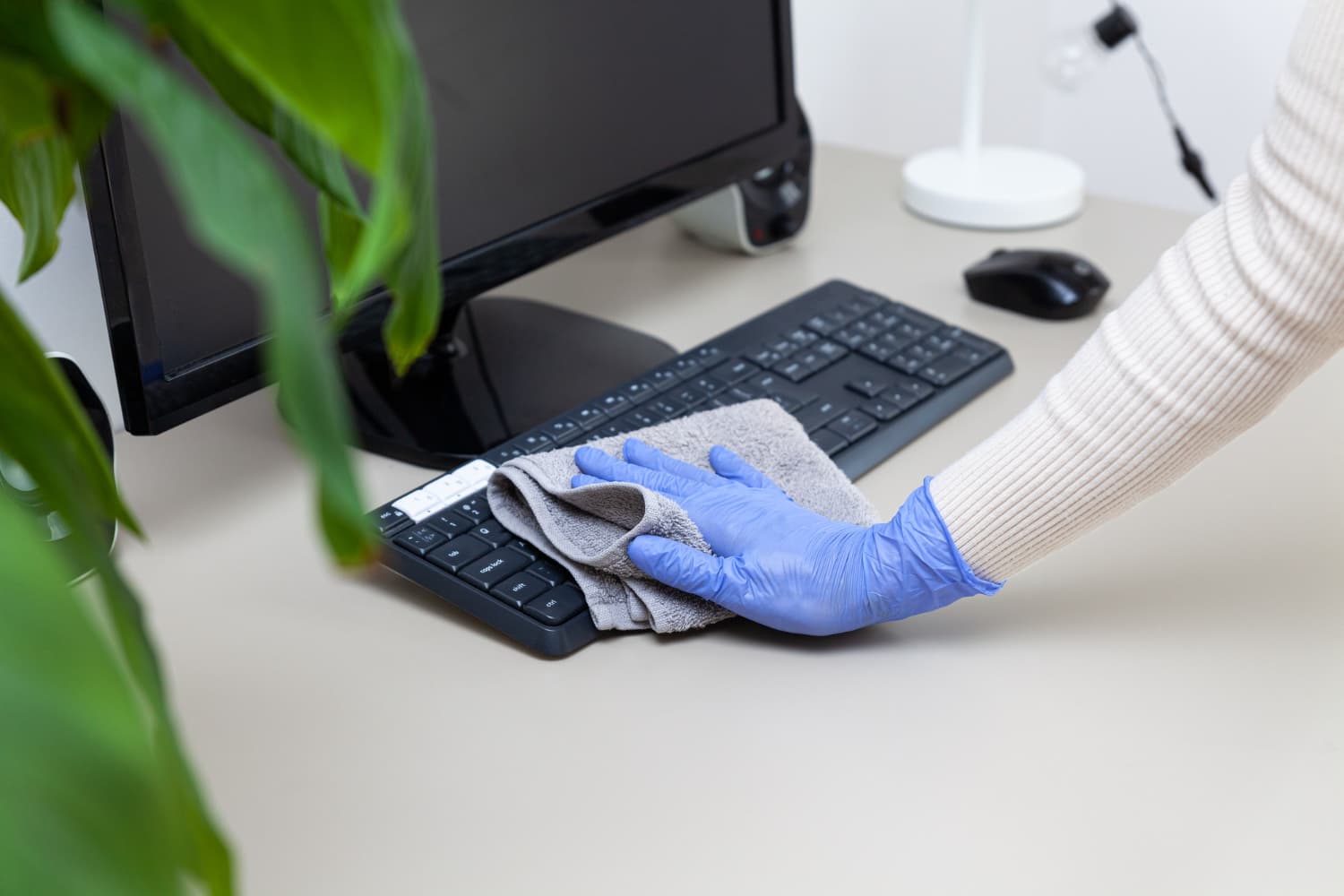
We use 70% isopropyl alcohol or products containing quaternary ammonium compounds (QAV) dedicated to electronics disinfection. Never use products containing acetone, ammonia, chlorine, or high-concentration alcohols (>80%), which can damage protective coatings, obscure labels, or cause short circuits.
Procedure: spray the microfiber cloth (not directly on the panel), gently wipe buttons, wait 30 seconds to dry. For capacitive touch buttons (responding to touch without pressure), avoiding excess moisture is especially important.
Mirrors and Glass Panels
We use ammonia-free glass cleaning products (e.g., Cif Cream, Ajax Optimal 7) or professional streak-free products with alcohol. Wipe mirrors in two stages: first with a microfiber cloth dampened with product, then with a dry cloth or rubber squeegee from top to bottom.
The most common mistake? Using the same cloths for mirrors and floors. Result: streaks, scratches, and sand particle transfer. At Reefa, cleaning teams for housing associations have color-coded tool sets—blue for mirrors and glass, green for floors and walls.
Stainless Steel Walls
Stainless steel is a forgiving material, but requires polishing along the grain direction (typically vertical or horizontal). We recommend products containing mineral or silicone oil (e.g., Sidolux Professional Metal), which not only clean but create a protective layer that resists dust and fingerprint accumulation.
Procedure: light spray, rub with a soft cloth, polish with a dry microfiber velour cloth. Avoid chlorine and acid-based products, which can cause discoloration.
Elevator Floor
Elevator floors are typically rubber, linoleum, PVC, or ceramic tiles. We use a damp mop with neutral pH (6–8) and anti-slip products. Water should be changed every 3–4 cabins to avoid dirt transfer. During winter months (December–March), consider adding a product to neutralize road salt residue, which damages PVC protective coatings.
For carpeted floors (rare in apartment blocks, more common in premium buildings), we recommend daily vacuuming and quarterly extraction cleaning.
How Much Does Professional Elevator Cleaning Cost in an Apartment Block?
The cost of additional cleaning service for an elevator as part of housing association maintenance ranges from PLN 100 to 200 net monthly per cabin, assuming daily service. Price depends on several factors:
- Frequency: 1 time daily typically costs PLN 100–130/month; 2 times daily costs PLN 160–200/month
- Number of cabins: a second elevator in the same building reduces cost by 15–25% (economy of scale)
- Access and location: buildings with dedicated utility rooms, staff facilities, and easy access are less expensive to maintain
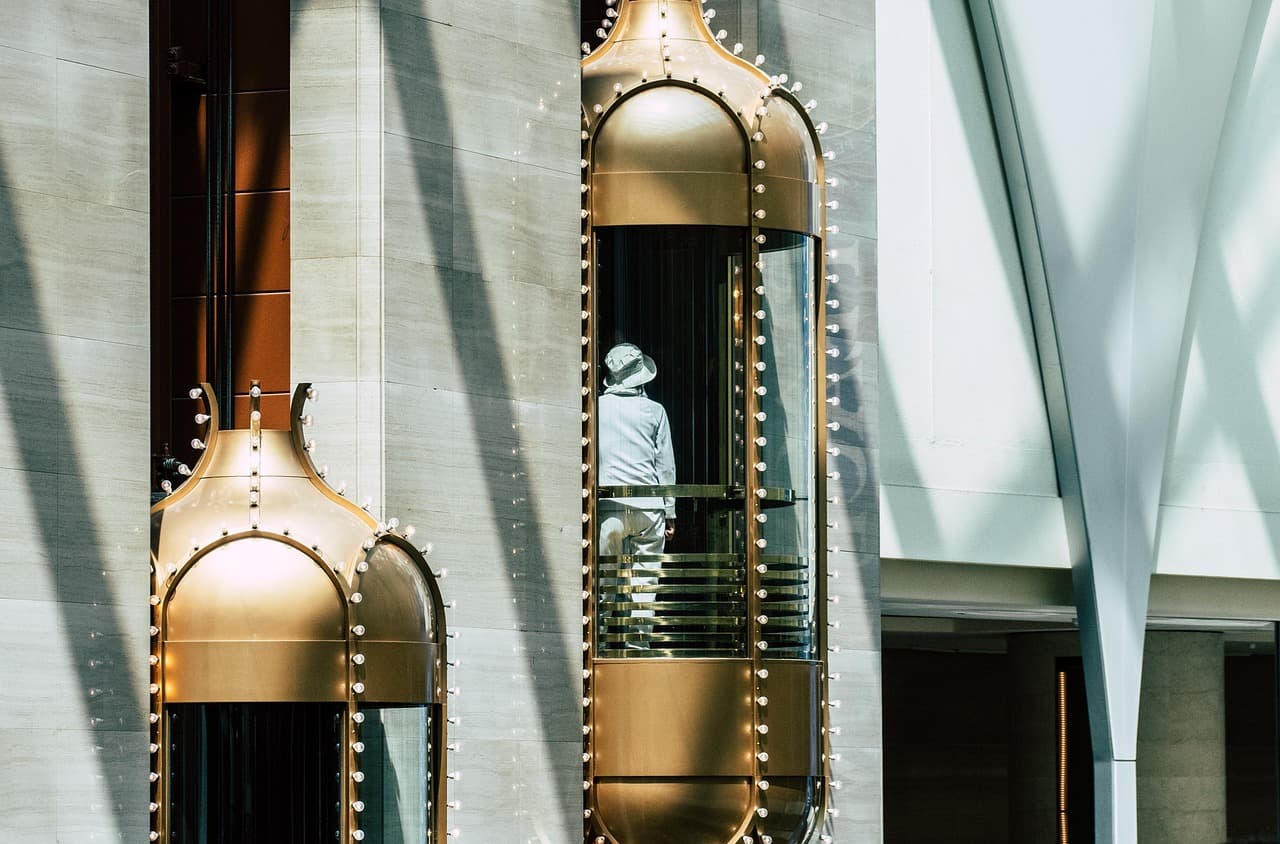
- Finish standard: cabins with panoramic glass, LCD panels, or marble require more time and specialized products
For comparison: full stairwell cleaning (all floors, lobby, basements) in a 5-story building costs PLN 400–600 net monthly. An elevator thus represents approximately 15–25% of a residential building's cleaning budget. In the context of total operating costs (maintenance, energy, administration), this cost amounts to approximately PLN 0.20–0.40 net monthly per residential unit.
At Reefa, we offer packages for housing associations including lobbies, stairwells, basements, and elevators in a fixed monthly fee, with flexibility to adjust frequency by season (more visits in winter, fewer in summer). Thanks to permanent employment contracts for staff, we guarantee service continuity—our 96% client retention rate and 2.4-year average contract reflect predictability and quality.
What Mistakes Most Often Damage Elevator Control Panels and Finishes?
From our observations in 2020–2026, 80% of aesthetic cabin damage results from improper chemical selection or incorrect technique. Here are five common mistakes:
1. Using chlorine or ammonia products on buttons
Chlorine and ammonia corrode touch button protective coatings, obscure labels, and can cause short circuits. Control panel repair costs PLN 800–2,000 net, while the correct product costs PLN 15–25 per liter.
2. Polishing mirrors with acetone or solvent-based products
Acetone dissolves the adhesive securing the mirror to the wall and damages the amalgam layer (metallic backing). Result: discoloration, black spots, mirror replacement needed (PLN 300–800 net per m²).
3. Mopping floors with hot water (>60°C) in cabins with PVC flooring
Hot water warps PVC, creating bumps and delamination. Standard is water at 30–40°C.
4. Using cotton mops instead of microfiber
Cotton leaves lint, fibers, and streaks, and requires significantly more water. Microfiber reduces water consumption by 70% and product consumption by 50%, while collecting more dirt.
5. Lacking separate tool sets for each elevator cabin
Moving the same water, mop, and cloths from stairwells to elevators transfers bacteria and dirt. Professional cleaning uses a color-coding system: separate tools for restrooms, stairwells, elevators, and residential areas.
Housing associations choosing to work with a cleaning company should ask about staff training, product certifications, and liability insurance availability—at Reefa we have a policy for up to PLN 500,000 covering material damage in properties we maintain.
How to Manage Elevator Cleaning Schedules in Large Buildings?
For buildings with multiple elevators and large resident populations (>200 units), synchronizing cleaning time with traffic peaks is crucial. Practical tools:
Weekly Schedule with Zone Division
If a building has two elevators (e.g., main and service), clean the main one between 6:00–7:00, the service elevator between 7:00–8:00. This ensures one cabin is always available for residents.
Cleaning Time Signage
A simple poster in the elevator—"Daily cleaning at 6:30 and 15:00"—reduces complaints about elevator unavailability. Transparent information management is the foundation of good resident relations.
Coordination with Technical Maintenance
If a technician regularly inspects the elevator on Thursday mornings, cleaning should happen after the visit to avoid undoing their work.
QR-Code Quality Control Cards
In some associations, we install a QR-code system in the cabin: residents can scan the code and in 10 seconds report cleanliness concerns. Feedback reaches the operations manager in real time.
In buildings with heavy traffic (e.g., facilities with kindergartens, clinics, commercial spaces), consider an SLA (Service Level Agreement) specifying response time to complaints—e.g., "intervention within <24h on business days." Such contracts are standard in our service for apartment blocks in Cracow and housing associations in Katowice.
Disinfection of Touch Surfaces — Standards and Practice
Touch surfaces in elevators include internal and external buttons, handrails, door handles, and LCD panels (if touch-operated). Disinfection is not the same as cleaning—cleaning removes dirt mechanically, disinfection destroys microorganisms.
According to guidelines from Poland's Chief Sanitary Inspectorate (GIS) for public-use facilities, touch surfaces should be disinfected at least once daily, and in high-risk facilities (e.g., medical offices, schools)—at least twice daily. In apartment blocks where children, seniors, and immunocompromised persons live, we recommend the same twice-daily disinfection standard.
QAV (quaternary ammonium) compounds act as virucides and bactericides within 30–60 seconds. 70% isopropyl alcohol works faster (15–30 seconds) but evaporates without leaving a protective layer. In practice, we combine both: alcohol for buttons and LCD panels, QAV for handrails and handles.
Critical: the product must remain on the surface for the time specified by the manufacturer. Immediate dry wiping negates disinfection effectiveness.
Case Studies: How Reefa Cleaned Elevators in Cracow and Katowice Properties
Since 2020, Reefa has maintained dozens of residential buildings in Cracow and Katowice—from townhouses in central Cracow (Kazimierz, Old Town areas) to modern residential high-rises in Katowice (e.g., downtown areas). From our experience, we identify three main building types:
Four- to five-story townhouses with disabled-access elevators
Cleaning 3 times weekly, schedule coordinated with stairwell maintenance. Characteristics: light traffic, but often historic finishes requiring gentle products. More on townhouse service: Townhouse Cleaning in Cracow.
Eight- to eleven-story buildings from the 1970s–1990s
Daily morning cleaning, twice daily in winter (December–March). Characteristics: heavy traffic, older finishes (PVC, tiles) requiring frequent anti-slip protective renewal.
Modern high-rises of 15+ stories
Twice-daily cleaning, disinfection of touch surfaces three times (morning, afternoon, evening). Characteristics: LCD panels, panoramic mirrors, stainless steel, premium finishes. Requires material science knowledge and certified products (EU Ecolabel).
In each type, consistency and predictability are key. Residents must know the elevator will be clean at a set time. This is why our clients—associations and property managers—stay with us an average of 2.4 years, which is a very high indicator in the facility management industry.
Frequently Asked Questions
How many times daily should an elevator be cleaned in a 10-story block?
In a 10-story block, we recommend cleaning at least once daily in the morning before 8:00, with additional disinfection of buttons and handrails in the evening. If the building houses more than 100 residential units or contains a kindergarten, clinic, or offices, consider two full daily cleanings (morning and afternoon). From our 2025/2026 observations, twice-daily cleaning reduces resident cleanliness complaints by 60–70%.
What products should be used for touch panels in elevators?
For touch panels and buttons, use 70% isopropyl alcohol or products containing quaternary ammonium compounds (QAV) dedicated to electronics. Never use acetone, ammonia, chlorine, or products with pH >10 or <4. Procedure: spray the microfiber cloth (not directly on panel), wipe gently, wait 30 seconds to dry. Aggressive products damage protective coatings, obscure labels, and can cause costly damage (PLN 800–2,000 net for panel replacement).
How much does monthly cleaning of one elevator in an apartment block cost?
Professional cleaning service for one residential building elevator costs PLN 100–200 net monthly, depending on frequency (1 or 2 times daily), finish standard (simple PVC or panoramic mirrors and stainless steel), and number of cabins in the building. Calculated per unit (50–100 apartments), this is PLN 0.20–0.40 net monthly. Price includes labor, chemicals, tools, and liability insurance. At Reefa, we offer comprehensive packages for associations, including elevators, stairwells, lobbies, and basements in a fixed monthly fee.
Can you clean an elevator with the same products as a stairwell?
Theoretically yes, but in practice we don't recommend it. Stairwells mainly feature floors, painted walls, and metal handrails—materials resistant to a wide pH range. Elevators contain electronic panels, mirrors, stainless steel, and decorative coatings requiring neutral pH products (6–8) and no aggressive solvents. Universal "all-purpose" cleaners often contain ammonia or chlorine, which damage buttons and screens. Professional cleaning uses dedicated products: alcohol 70% for buttons, streak-free products for mirrors, polishing products with mineral oil for steel, and neutral pH floor products with anti-slip additives.
How often should elevator buttons be disinfected?
Buttons and handrails in elevators should be disinfected at least twice daily: morning (before work rush) and evening (before residents return). In buildings with heavy traffic (high-rises, buildings with commercial spaces) or during flu season (October–March), three daily disinfections are recommended. Disinfection differs from cleaning—the product must remain on the surface for 30–60 seconds (QAV) or 15–30 seconds (70% alcohol) to destroy bacteria and viruses. According to GIS guidelines for public facilities, frequently touched surfaces should be disinfected at least daily, but twice-daily disinfection is more secure in practice.
Is it better to hire a cleaning company for elevators or assign it to the building superintendent?
The decision depends on several factors: building size, superintendent workload, and elevator finish quality. In small buildings (up to 30 units, one simple elevator), a properly trained superintendent with access to correct products can manage alone. In larger, multi-cabin buildings, or with premium finishes (mirrors, LCD panels, stainless steel), we recommend a cleaning company. Reasons: access to certified products (EU Ecolabel), materials science training, liability insurance covering material damage (e.g., damaged panel costs PLN 800–2,000 net), and service continuity (during superintendent vacation or illness, the company provides coverage). At Reefa, permanent staff have set schedules, resulting in 96% client retention.
Conclusion: Elevator Cleanliness as an Investment in Comfort and Durability
Elevator cleaning in residential blocks requires systematicity, material science knowledge, and proper product selection. Minimum frequency is once daily for 4–11-story blocks and twice daily for high-rises, with button and handrail disinfection occurring independently of cabin washing—at least twice daily.
Professional service costs per elevator (PLN 100–200 net monthly) are a fraction of association budget, while protecting against costly repairs to damaged panels or mirrors (PLN 800–2,000) and boosting resident satisfaction. From our 2020–2026 observations, associations investing in professional elevator cleaning report 60–70% fewer cleanliness complaints and 30% longer cabin finish lifespan.
If you manage a housing association in Cracow or Katowice and seek a reliable cleaning partner—we invite you to contact us. Reefa offers fixed monthly contracts, permanent staff, liability insurance up to PLN 500,000, and flexible schedules tailored to building rhythm. Reach out via our contact page—we'll provide a quote within 24 hours.