Post-Construction Cleaning for a Class A Office Building — Case Study
A detailed account of post-construction cleaning for a modern office building: 8,000 m², 13 floors, 8–12-person team over 5 days. Procedures, phases, coordination with the general contractor.
A detailed account of post-construction cleaning for a modern office building: 8,000 m², 13 floors, 8–12-person team over 5 days. Procedures, phases, coordination with the general contractor.
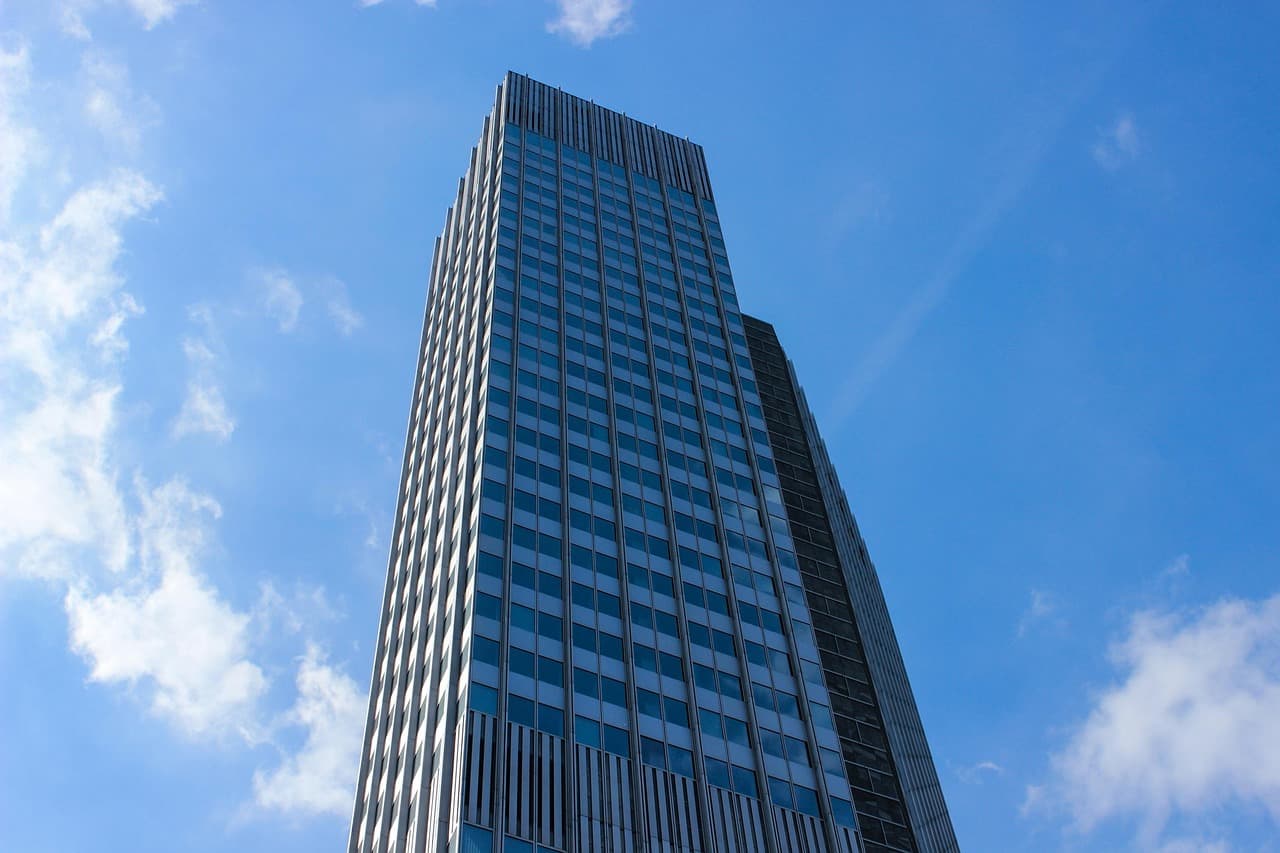
Post-construction cleaning for a Class A office building is one of the most demanding assignments in the facility management industry — it requires not only operational precision but also strict coordination with the general contractor, property manager, and investor. In this article, we present a detailed case study of a 13-floor office building in Cracow with 8,000 m² of leasable space and an underground parking lot for 350 vehicles.
We completed the project in November 2025, on the fifth day after the official end of finishing works. The general contractor (Skanska Polska) was in the process of technical handover, and the first tenant batch — an international law firm and a pharmaceutical company's technology division — was scheduled to move in within three weeks. The investor expected a ready-to-occupy standard in line with BREEAM Excellent certification, which meant removing all traces of construction while protecting freshly applied coatings and high-end joinery.
In Brief
- Facility: 13-floor Class A office building, 8,000 m² leasable area, 4 passenger elevators, 350-space underground parking
- Team: 8–12 people over 5 working days, hired on permanent employment contracts with full safety training and working-at-height procedures
- Scope: removal of construction dust, PVC protective film from aluminum joinery, mortar from glass, cleaning of 600 m² flooring with grout, disinfection of elevators and common areas
- Coordination: daily reports to general contractor, property manager, and investor representative; hot zones / cold zones system for phased work sequencing
- Unit cost: PLN 18–26 net per m² depending on condition and number of revisits
- Result: on-time delivery, zero complaints, tenants moved in as scheduled
What Does Post-Construction Cleaning for a Class A Office Building Look Like in Practice?
Post-construction cleaning differs fundamentally from routine maintenance. In our case, the main challenge was multilayered contamination: gypsum dust settled on freshly painted walls, protective stickers covered aluminum window and door profiles extensively, and cement mortar residue adhered to thermally insulated glass panes covering more than 2,200 m².
We worked with Skanska's site coordinator and a property manager from Cushman & Wakefield's team, representing the investor — a local real estate fund. The key to success was implementing the concept of hot zones and cold zones. Hot zones — main lobby, ground-floor reception, common corridors on floors 1–4, elevators, and conference-area restrooms — were top priority and had to be ready within three days. Cold zones included technical rooms, elevator shafts, underground parking, and utility areas with less restrictive deadlines.
Based on our observations in 2025/2026, this segmentation reduces collision risk with other finishing teams (electricians, access control installers, IT) and allows the investor to gradually accept different sections of the building. In this project, we avoided four potential conflict situations we had observed in other builds.
Stage 1: Removing Construction Dust from Walls and Ceilings
Gypsum and mineral dust settled on all horizontal and vertical surfaces — from ceiling lamps to window sills. Traditional vacuuming is insufficient: dust particles are fine enough to pass through standard vacuum filters, and dry wiping causes scratches on acrylic paint finishes.
We used industrial-grade M-class vacuums (EN 60335-2-69) with ≥99.9% filtration for particles ≥0.3 µm, followed by a two-stage wet-cleaning process: first pass with microfiber cloth and minimal water (spray + cloth), second inspection pass after 24 hours. For suspended ceilings, we used telescopic ladders with work platforms — our staff completed working-at-height training in accordance with the Polish Regulation of the Minister of Labor and Social Policy of 26 September 1997.
For walls and ceilings totaling approximately 14,000 m² (counting both sides of partition walls), work took two days with 6 people per shift. This stage cost approximately PLN 3.20 net per m² of wall surface.
Stage 2: Removing Protective Film from Aluminum Joinery
Window and door frames were protected with PVC film featuring acrylic adhesive. Across 13 floors, there were approximately 420 windows and 78 aluminum door sets (office entries, glass partitions in corridors). Some stickers exposed to southern sunlight had "burned on" — the adhesive hardened and required specialist products.
We applied a citrus-ester-based preparation (EU Ecolabel), which does not attack frame coatings, and plastic-fiber-blade scrapers (leaving no marks on aluminum). Each window set took an average of 12–18 minutes, depending on size and number of sashes. For glass doors with SoftClose systems, we additionally protected mechanisms with protective tape to prevent solvent from entering the hinge cavity.
We assigned 4 people for 2.5 days. Unit cost was approximately PLN 22 net per complete window, equating to about PLN 1.15 per m² of leasable area.
How Do You Remove Cement Mortar from Glass Without Risk of Scratching?
Cement mortar, grout, and tile-adhesive residue on glass is a problem requiring knowledge of building chemistry. Traditional acids (hydrochloric, orthophosphoric) can damage seals, Low-E coatings on modern insulated glass units, and aluminum frames.
We conducted a preliminary test on three representative windows (each from a different floor, different sun exposure) using a glycolic-acid-based preparation at pH ~2.5, which is sufficiently aggressive against CaCO₃ (mortar component) but safe for glass coatings. After application, we left it for 5–8 minutes, mechanically removed residue with a ceramic scraper, then rinsed with demineralized water and dried with a rubber squeegee and microfiber cloth.
For this office building, we had to clean 2,200 m² of external glazing. At an average output of 35 m²/hour per person, work took 3 days with 4 people certified for working at height (window cleaning above the second floor). Total cost was approximately PLN 8.50 net per m² of glazing — translating to approximately PLN 2.35 per m² of leasable area.
Property manager coordination was critical at this stage: we had to schedule access to the facade basket (shared with the BMS installation team) and obtain consent to temporarily disable vibration sensors on security windows.
Cleaning Flooring with Grout — 600 m² of Technical Tile
In common areas — corridors, lobby, restrooms — anti-slip technical porcelain tiles 60×60 cm were installed with epoxy grout in gray (3 mm width). Grout was contaminated with cement dust, adhesive residue, and construction footwear marks. Grout in porous anti-slip tile (R10) requires rotary machines with appropriate pad hardness.
We applied a two-stage process:
- Pre-cleaning: single-disc rotary machine with red (aggressive) pad, alkaline preparation pH ~11 (dissolves fats and organics), pressure ~50 kg on pad. Water consumption: ~120 l per 100 m², wet vacuum removal with industrial sludge vac.
- Precision grout cleaning: mechanical brush with nylon bristles, acidic preparation pH ~3 (removes cement residue from grout), manual touch-up of corners and thresholds.
For 600 m² of public-area flooring, work took 1.5 days with 3 people. Unit cost was PLN 12 net per m² of flooring, equating to approximately PLN 0.90 per m² across the entire office space.
What Safety Procedures Apply to Post-Construction Cleaning?
Work on a construction site — even in the final phase — requires strict compliance with safety regulations. Our permanent employees completed mandatory pre-employment safety training and site-specific instruction tailored to the facility. During the project, we applied the following procedures:
- Personal protective equipment (PPE): hard hats on all floors (including the lobby — ceiling work was still ongoing), safety glasses, nitrile gloves, S3-rated footwear with steel toe cap.
- Working at height: for work above 1 m from floor level — EN 131-certified ladders; for window cleaning above 3 m — safety harness with self-locking fall arresters, anchoring to steel structure confirmed by site manager.
- Ventilation: when using chemical preparations (especially acids and bases) — forced ventilation of spaces, vapor concentration monitoring (we never exceeded 50% of OEL for glycolic acid).
- Zone signaling: warning tape, information boards in elevators and at stairwell entrances (other teams were working simultaneously in the building).
- Liability insurance: Reefa's policy covers damages up to PLN 500,000, including investor property damage and third-party injury (e.g., general contractor workers). No reportable incidents occurred during execution.
From our observations in 2025/2026, more investors now require not only liability insurance but also construction all-risk (CAR) coverage — especially for projects with investment value exceeding PLN 50 million. In this case study, the investor required presentation of liability insurance and proof of staff training before project start.
How Do You Coordinate Post-Construction Cleaning with the General Contractor and Property Manager?
Effective coordination requires establishing a single point of contact (SPOC) and a clear communication protocol. In our project, this was a daily report submitted by 4:00 PM containing:
- Progress status (% completion split into hot zones / cold zones).
- Number of people on site (name, surname, ID number — required by security).
- Material and chemical consumption (for environmental inventory — the building had BREEAM certification).
- Technical notes — e.g., discovery of construction-phase damage (cracked grout, scratched glass, leaky fixture). Such notes entered the site diary and formed the basis for claims during handover procedures.
- Next-day plan — locations, scope of work, expected number of personnel.
The property manager accepted our work in stages: first hot zones (day 3), then cold zones (day 5), finally underground parking (day 6 — in this case we extended by one day due to emergency-lighting installation delays). Each handover was documented with a protocol and photographs at ≥5 Mpx resolution, stored in a cloud system for 5 years (GDPR requirement and building documentation archival obligation).
We rate collaboration with Skanska very highly — their site coordinator provided us access to utilities (electricity, technical water from fire hydrants), logistical support (freight elevator during 7:00–9:00 AM for equipment transport), and ongoing consultation with the interior designer on ambiguous points.
If your company is planning a project of similar scale, we invite you to review our post-construction cleaning services in Cracow and post-construction cleaning services in Katowice.
How Much Does Post-Construction Cleaning for a Class A Office Cost in 2026?
Post-construction cleaning rates depend on three main factors: facility condition after works completion, execution timeline (express schedules involving weekends and nights), and complexity degree (e.g., multi-story atriums, structural glass facades).
For the described office building, the final cost was PLN 21.50 net per m² of leasable area, totaling PLN 172,000 net for 8,000 m². This package included:
- 5 working days, team of 8–12 people daily (~520 labor hours total)
- Complete chemistry, tools, equipment (rotary machines, industrial vacuums, ladders, facade basket — rental)
- Liability insurance up to PLN 500,000
- Daily reports and three-phase handover with property manager
- 14-day guarantee for any touch-ups (no corrections needed)
For reference, market rates in Cracow and Katowice in 2026 typically range as follows:
| Facility Type | Net Rate/m² | Notes |
|---|---|---|
| Class A office, good condition | PLN 18–24 | No heavy soiling, short timeline |
| Class A office, difficult condition | PLN 24–32 | Mortar, adhesives, heavy dust |
| Class B/C office | PLN 12–18 | Lower aesthetic requirements |
| Production facility / warehouse | PLN 8–14 | Large areas, fewer details |
| Medical facility / laboratory | PLN 28–40 | Disinfection, HACCP procedures |
Remember that price is not the only selection criterion. From our 2025/2026 observations, more investors choose firms with documented experience and reliability — especially after several publicized cases of subcontractor non-compliance that delayed building handover and exposed investors to tenant penalties.
How Do Hot Zones Differ from Cold Zones?
The hot zones and cold zones concept originates from construction project management and enables flexible work phasing while maintaining control over critical areas.
Hot zones are highest-priority spaces for the investor and future tenants:
- Main lobby with reception (first impression for guests and clients)
- Circulation corridors on floors leased first
- Passenger elevators (high traffic, easily soiled)
- Restrooms in common areas
- Facade glazing on representative sides (south and west)
In our project, hot zones comprised ~35% of total area but consumed ~55% of labor hours due to required finish level. The property manager accepted these zones first, allowing the investor to conduct prospective tenant viewings while cold zones were being finalized.
Cold zones include:
- Technical rooms, elevator machine rooms, server rooms
- Underground parking (350 spaces, ~7,000 m² total)
- Emergency stairwells (excluding ground and first-floor areas)
- Utility rooms, waste areas, transformer stations
Cold zone work is typically less aesthetically demanding but more time-intensive — for example, the underground parking required cement dust removal from 7,000 m² of epoxy flooring, which with a small crew (3 people) took 2 days.
Such segmentation also prevents double cleaning — situations where other teams re-contaminate already-cleaned surfaces. Through tight coordination with the general contractor, we avoided repeating any stage in this project.
Why Choose Reefa for Post-Construction Cleaning?
We have been in the industry since 2020 and specialize in Class A commercial facilities in the Cracow and Silesian regions. Our client retention rate is 96%, and our average contract duration is 2.4 years — above-average for facility management.
Key strengths of our offering:
- Permanent employment staff — we do not use freelance or work-for-hire contracts, ensuring team stability, lower turnover, and higher-quality safety training.
- Liability insurance up to PLN 500,000 — covers material and personal injury claims, including damage to finishing elements (glass, flooring, paint).
- General contractor coordination experience — we have delivered projects with Skanska, Mota-Engil, Budimex, and Erbud; we understand building handover procedures and BREEAM / LEED certification requirements.
- Owned equipment and chemicals — we are not dependent on rental agencies; we own rotary machines, industrial vacuums, facade-cleaning systems, and steam generators.
- Transparent pricing — billing by m² or labor hour, no hidden mobilization or weekend surcharges (provided deadlines are confirmed in advance).
We serve clients including GPP Business Park in Cracow, .KTW in Katowice, Quattro Business Park, and medical facilities such as Diamed Medical Center and Otto Bock Polska (orthopedic equipment manufacturer). In each facility, the priorities have been: punctuality, operational flexibility, and zero complaints.
If your company needs a post-construction cleaning partner, please contact us — we will provide a quote within 24 hours based on technical documentation (floor plans, area schedules) or an on-site visit.
Frequently Asked Questions
How long does post-construction cleaning take for an 8,000 m² office building?
For a Class A facility of 8,000 m² in good technical condition (without excessive mortar or adhesive soiling), typical execution time is 5–7 working days with a team of 8–12 people. In our case study, work took 5 days for above-ground floors plus 1 additional day for the underground parking (executed in parallel with cold zone finalization). Timelines can extend if the general contractor restricts simultaneous access to all spaces or if collisions occur with other finishing teams. From 2025/2026 observations, approximately 30% of projects see 1–2-day adjustments due to delays in electrical or IT installations.
Does post-construction cleaning include facade glass washing?
Yes, facade glass washing is a standard component of Class A office post-construction cleaning scope. In our case study, we washed 2,200 m² of external glazing using both facade baskets and interior platforms (casement windows). We removed cement mortar, adhesives, protective films, and mounting-tape residue. Facade washing typically costs PLN 8–12 net per m² of glazing. Important: if the building features a curtain wall with Low-E coating, use specialist preparations that do not damage the low-emission layer — Reefa has appropriate chemistry and trained personnel.
What are the most common challenges in post-construction cleaning?
Most frequent issues include: (1) cement mortar on glass — requires acids or specialist products; risk of scratching with improper scrapers; (2) sun-baked protective stickers — adhesive hardens, difficult removal without solvents; (3) gypsum dust in ventilation systems — if ventilation ran during finishing, dust settles in intake grilles; (4) collisions with other trades — electricians, BMS installers, furniture movers — requiring strict schedule coordination; (5) hidden damage — cracked tiles, aluminum scratches, fixture leaks — discovered only after cleaning and potentially misattributed to the cleaning team. Therefore, we photograph all questionable areas before starting work.
Can Reefa clean only select areas (e.g., lobby and corridors)?
Yes, we offer flexible scope — both comprehensive facility cleaning and partial hot-zone cleaning. Some investors prefer we handle representative areas (lobby, reception, corridors, elevators, restrooms) while completing other zones independently or with general contractor support. In such cases, unit rates may be higher (PLN 24–28 net per m² instead of PLN 18–22) since fixed costs (travel, equipment mobilization) spread over smaller area. We also offer touch-up cleaning — corrections before final investor handover if subsequent trades re-contaminate areas.
How should a facility be prepared for post-construction cleaning?
For smooth execution, the investor or general contractor should provide: (1) media access — electrical power (outlets on each floor), technical water (preferably from fire hydrants if water main is not yet pressurized); (2) lighting — all fixtures installed and operational (cleaning under portable lights significantly extends timelines); (3) ventilation — at least minimal air exchange, especially when using chemicals; (4) surface protection — if furniture, appliances, or textiles are already on-site, they should be film-covered; (5) logistical access — freight elevator or stairwell clear of building materials, parking for our service vehicle. If these conditions are not met, execution time may lengthen.
Does Reefa offer post-construction cleaning warranty?
Yes, we provide a standard 14-day warranty on completed work. If within two weeks of handover the property manager or investor raises concerns (e.g., missed window streaks, uncleaned grout), we dispatch a team for free corrections. Warranty does not cover new soiling after our work (e.g., if another contractor spills paint in lobby) or mechanical damage (e.g., scratches from furniture moving). In our case study, no warranty intervention was needed — the facility was accepted without notes and tenants moved in as scheduled. Our 96% retention rate and 2.4-year average contract duration reflect sustained high-quality service.
Summary and Contact
Post-construction cleaning for a Class A office building demands precision, multi-party coordination experience, and modern cleaning technology knowledge. The case study in this article — 8,000 m², 13 floors, 350-space parking, collaboration with general contractor Skanska and property manager Cushman & Wakefield — demonstrates that even highly complex projects can be delivered on time and without complaints, provided professional planning and safety-procedure implementation.
If your company is preparing for handover of a newly built or modernized facility in Cracow or Katowice, we welcome you to contact Reefa's team. We will prepare a detailed quote, timeline, and coordination plan tailored to your project's specifics. Reach out through the form on our contact page — we respond within 24 hours.