Window Replacement Cleaning — Scope, Timeline, and Challenges
Window replacement in offices and residential buildings generates construction dust, polyurethane foam, and mortar residue. Learn how to thoroughly clean your property across four stages.
Window replacement in offices and residential buildings generates construction dust, polyurethane foam, and mortar residue. Learn how to thoroughly clean your property across four stages.
Cleaning After Window Replacement — A Comprehensive Guide
Window replacement cleaning is the process of removing construction dust, polyurethane foam, mortar, silicone, and debris generated during the removal of old frames and installation of new windows. In office buildings, residential communities, and structures undergoing thermal modernization, a staged approach is required: debris removal, frame and glass cleaning, windowsill and wall washing, and finally HEPA filtration vacuuming — to leave surfaces ready for use or technical handover.
For property managers in residential communities and facility managers in office buildings, window replacement represents one of the most common renovation scenarios. Thermal modernization, mandatory for many municipal buildings and residential communities under energy efficiency regulations, typically includes comprehensive window frame replacement. After the installers' work is complete, the building contains specific types of contamination that require dedicated methodology and proper equipment. This guide presents the structure, time requirements, and characteristics of window replacement cleaning in a B2B context.
Quick Summary
- Window replacement generates four main types of contaminants: drilling dust from installation holes, residual PUR (polyurethane) foam, cement mortar, and silicone traces.
- The cleaning process comprises four stages: debris and waste removal, frame and glass washing, windowsill and wall cleaning, final vacuuming with HEPA filters.
- Time estimates: 60 m² apartment (4–6 hours), 200 m² office (1–2 business days) — depending on the number of replaced windows and the level of installer protection measures.
- Approximate cost: from 15 PLN net/m² of surface or 50–120 PLN net per window, depending on contamination level.
- Essential equipment includes industrial vacuums with HEPA filtration, foam and silicone scrapers, specialized chemicals, and respiratory protection for the team.
- Reefa's team has completed post-renovation cleaning projects since 2020 in Cracow and since 2024 in Katowice, providing a dedicated coordinator and photo reports upon completion.
Why Does Window Replacement Cleaning Require Specialist Approach?
Window replacement is an intervention in the sealed building envelope. Installers typically cut frame cavities, drill mounting holes, and seal connections with polyurethane foam and silicone. Each of these steps generates contaminants requiring different removal methods.
Drilling and cutting dust contains fine particles of plaster, concrete, or brick. This type of dust settles on windowsills, floors, furniture, and ventilation systems. Without proper HEPA (High-Efficiency Particulate Air) filtration, PM10 and PM2.5 particles can become airborne again, prolonging discomfort and threatening user health — especially in medical facilities or Class A offices where sanitary standards are strict.
Installed PUR foam hardens and adheres to frames, casings, and floors. Its removal requires mechanical means — plastic scrapers for foam or specialized foam knives — and solvents. Improper use of acetone-based solvents can damage the paint finish of new windows or laminated windowsills.
Mortar and silicone present additional challenges. Mortar remains in joints and on interior windowsills, particularly after frame leveling. Construction-grade silicone — commonly used to seal connections — requires removal of excess material either before complete curing or later using chemistry suitable for neutral and acid silicones.
A professional post-renovation cleaning company possesses both chemical knowledge (selecting appropriate products for different substrates) and equipment — industrial vacuums with class M or H filtration, microfiber mops, multi-purpose scrapers, and personal protective equipment for the team.
Four Stages of Window Replacement Cleaning — Practical Timeline
To ensure complete facility readiness for use, we recommend a staged approach. Each step has a defined sequence and purpose, allowing us to avoid spreading contaminants and preventing re-soiling of already-cleaned surfaces.
1. Debris and Solid Waste Removal
The first step is collecting waste left by installers: pieces of old frames, foam fragments, mortar bags, seal trimmings, protective films. In a standard window replacement project in a multi-family building, approximately 1–2 bags of construction debris (around 50 liters) are generated per 10 windows.
Waste is segregated by type: wood, metal, plastics, mixed waste. For residential communities, documenting segregation is important — an increasing number of municipalities in the Cracow and Katowice metropolitan areas require construction waste reporting.
At this stage, we preliminarily vacuum horizontal surfaces: windowsills, floors, window frames. We use industrial vacuums with a pre-filter bag to protect the HEPA filter from rapid clogging.
2. Washing Window Frames and Panes
New PVC, aluminum, or wooden windows require gentle washing. Profiles with protective film should be cleaned before film removal — underneath remains acrylic adhesive, which is easier to remove with specialized solution than later.
For PVC profile cleaning, we use pH-neutral detergents without aromatic solvents. Glass is cleaned in two passes: the first with detergent removes dust and greasy fingerprints from installers; the second — with isopropyl alcohol addition — ensures a streak-free finish.
Interior windowsills (engineered stone, laminate, natural stone) require matched chemistry. Engineered stone is washed with acid-free products; natural stone — with dedicated preparations (neutral pH 7); laminate — with damp microfiber and no wet spillage.
In high-traffic office environments (reception areas, conference rooms), it's worthwhile to additionally protect windowsills with nanoimpregnat — a hydrophobic coating that facilitates future cleaning.
3. Cleaning Windowsills, Walls, and Floors
After window work completion, we move to walls and floors in the work zone. Construction dust settles up to 3 meters from the drilling location, forming a thin layer on vertical surfaces.
Walls painted with latex or acrylic paint can be cleaned with a damp sponge. If plaster is fresh (window replacement combined with frame renewal), wait a minimum of 14 days before washing — premature cleaning may cause discoloration.
Floors — panels, ceramic tiles, PVC flooring — are vacuumed twice. The first pass removes large particles; the second (after frame washing) removes secondarily settled dust. Flooring after renovation often requires gentle detergent washing with low foam to remove white residue from gypsum dust.
For residential communities, where window replacement occurs in stages (staircase by staircase), it's worthwhile to schedule cleaning at the end of each stage — this prevents dirt accumulation and simplifies quality control.
4. Final Vacuuming with HEPA Filters
The final stage involves vacuuming all horizontal and vertical surfaces with a vacuum featuring an H13 or H14 class HEPA filter. An H-class HEPA filter retains >99.95% of particles ≥0.3 μm, including pollen, fungal spores, and fine mineral dust.
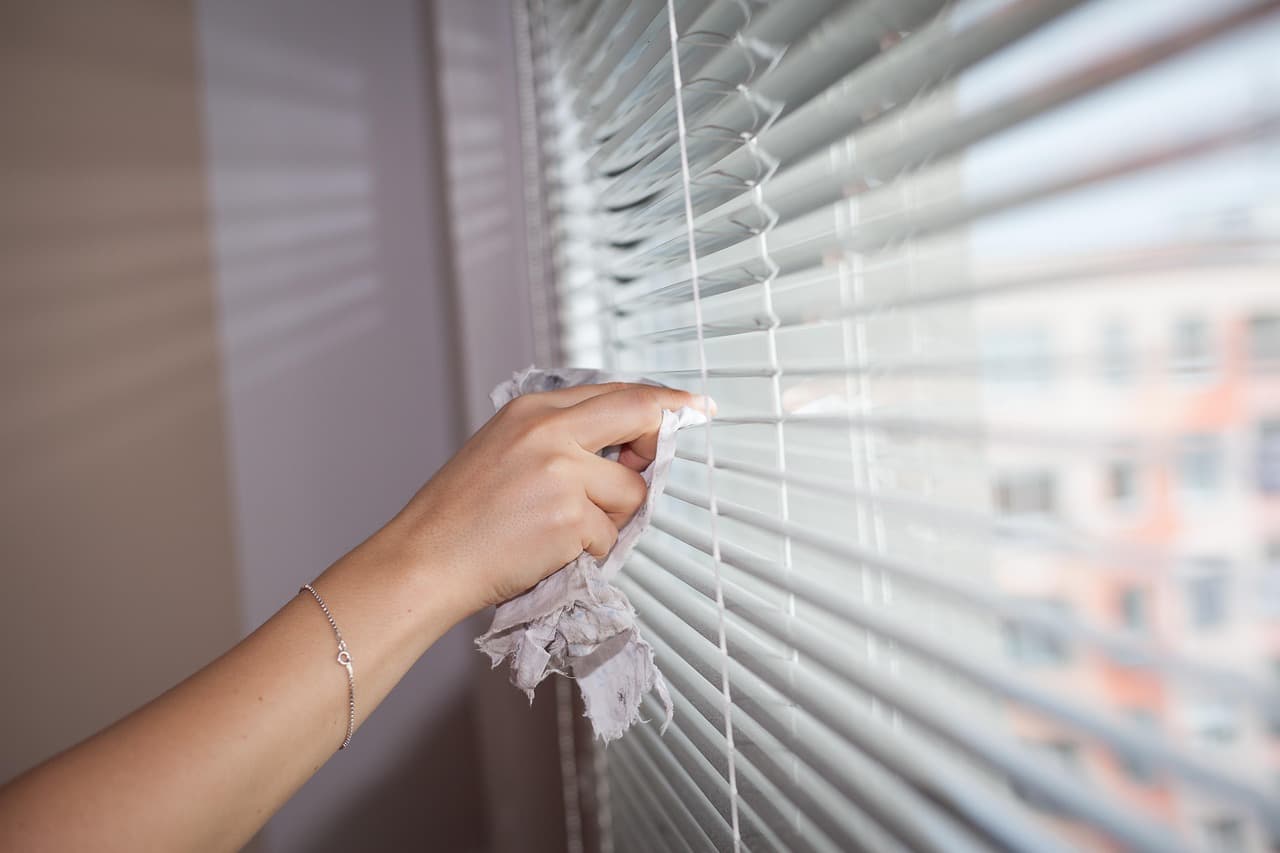
We vacuum in sequence: upper furniture surfaces, windowsills, baseboards, window frame edges, supply and exhaust ventilation. In offices and medical facilities, we recommend also vacuuming ventilation grilles and interior blinds.
Upon completion, Reefa's team prepares photo reports from each room — visual documentation provided to the manager or facility manager, facilitating technical handover and serving as proof of service completion per SLA (Service Level Agreement).
Window Replacement Cleaning Duration — B2B Property Estimates
Completion time depends on three main factors: property size, number of replaced windows, and the level of installer protection measures.
60 m² apartment with four standard windows (1.4 × 1.4 m) requires 4–6 hours of two-person team work. Practically, this represents a single visit within one business day. If installers applied protective floor film and furniture covers, time may reduce to 3–4 hours.
200 m² office with 15 windows (including large balcony glazing) typically takes 1–2 business days for a 3–4-person team. Day one covers debris removal, window and windowsill washing; day two covers final HEPA vacuuming and floor washing. For Class A offices with open-plan layouts and glass surfaces, acoustic silence must be maintained — work is scheduled after hours or on weekends.
Residential community — 40-unit building, window replacement in common areas (stairwells, corridors) — represents a 3–5 business-day project for a 4–6-person team. The schedule adjusts to installer timing to minimize downtime and ensure smooth community board approval.
For properties in Cracow and Katowice, Reefa offers flexible scheduling — we adjust team deployment to building traffic intensity to avoid disrupting office work or residents' comfort.
Window Replacement Cleaning — Pricing Guide 2026
Rates for post-window replacement cleaning in the B2B segment depend on billing model, contamination level, and property location. Below are indicative net rates for the Cracow and Katowice market.
Per-square-meter billing:
15–25 PLN net/m². This model suits offices and commercial spaces where window replacement affects the entire area. Lower rates apply to projects >150 m² with good installer protection; higher rates — smaller spaces or high contamination levels (no protective films, scattered foam).
Per-window billing:
50–120 PLN net per standard window (up to 2 m²). Lower rate — windows without severe contamination, dust and glass cleaning only. Higher rate — windows with excess foam, silicone on frames, mortar on windowsills. This model includes cleaning both interior and exterior frames (if accessible from floor level), windowsill, and flooring up to 1 meter from the window.
Comprehensive package for residential communities:
For large-scale projects (thermal modernization, building-wide window replacement), we offer individual quoting — accounting for unit count, stairwells, common areas, and work schedule. Example: 30-unit building, 120 windows replaced, stairwell and corridor cleaning — from 4,500 PLN net (4-day project).
Additional services:
- Alpinist-level window cleaning (facades) — from 8 PLN net/m² of glass.
- Removal of protective films from frames and windowsills — 5 PLN net/window.
- Impregnation of stone windowsills — 12 PLN net/running meter.
Current rates and a detailed calculator available at Cracow pricing. For Katowice properties, we also offer dedicated post-renovation cleaning services with analogous billing models.
Essential Equipment and Chemicals — What Should Your Contractor Have?
Professional window replacement cleaning requires equipment exceeding standard maintenance supplies. Below is a list of essential tools ensuring effectiveness and safety.
Industrial vacuums with HEPA filter — class M (moderately hazardous dust) or H (hazardous dust) model, suction power ≥250 mBar, container ≥30 liters. The vacuum should have automatic pre-filter cleaning to prevent power loss during operation.
Multi-purpose scrapers — plastic foam scraper (non-damaging to PVC profiles), metal scraper for concrete and mortar, ceramic-blade silicone knife (non-damaging to glass). Complete with replaceable blade cartridges.
Specialized chemicals:
- PUR foam removal solution (containing glycol ethers) — applied before hardening or as a post-hardened foam version.
- Silicone cleaner (containing aliphatic hydrocarbons) — removes silicone residue from frames, glass, windowsills.
- pH-neutral detergent for profile washing — ammonia-free, non-dulling to PVC surfaces.
- Glass cleaner with isopropyl alcohol — rapid evaporation, streak-free.
- Limescale remover for stone windowsills (pH 3–4, citric acid) — removes cement mortar from marble, granite.
Personal protective equipment:
- FFP2 or FFP3 filtering masks (respiratory protection against PM2.5).
- Nitrile gloves resistant to solvents.
- Safety glasses when working with solvent-based chemistry.
- Knee pads (work at windowsill floor level).
Reefa's team possesses a complete set of certified equipment and health and safety training for all team members — legally employed and insured staff have current medical examinations and instruction in safe handling of construction chemicals.
How to Prepare Your Property for Window Replacement Cleaning
For the process to proceed smoothly and within scheduled time, the property manager or facility manager should ensure several organizational matters before the cleaning team arrives.
Installer work scope documentation. It's worthwhile to obtain from the installation company a list of replaced windows, work schedule, and confirmation that installers removed all packaging and temporary debris. Some window companies include "basic cleaning" in installation cost — usually meaning only removal of bags and basic foam scraping. Full cleaning requires a separate contract with a professional contractor.
Access to water, power, and premises. The cleaning team needs access to water points (bathrooms, kitchenettes) and 230V outlets on each floor. In multi-family buildings with electronic access systems, confirm door codes or temporary access cards. For residential communities, we recommend designating a contact person (caretaker, board member) to provide keys or codes and remain available by phone during work.
Furniture and equipment protection. If office equipment, computers, printers remain in spaces — cover them with film or relocate outside the work zone. Responsibility for protecting valuable fixtures rests with the client, unless the SLA states otherwise.
Waste disposal plan. Construction debris from window replacement should be delivered to a municipal waste collection point or a construction waste container should be ordered. Reefa's team can coordinate debris removal — we partner with licensed waste transport firms in Cracow and Katowice, simplifying billing and documentation for residential communities.
Cleaning schedule relative to installation. Optimal sequence: window installation → 1–2 day break (foam and silicone curing) → cleaning. If cleaning begins the same day as installation, PUR foam may still be wet and harder to remove. Conversely, too long a delay (>7 days) allows construction dust to settle into joints, baseboards, and ventilation openings, extending cleaning time.
Common Challenges and Prevention Methods
Even the best-planned projects encounter site issues. Below are the most frequent challenges and solutions we've developed through years of work for residential communities and offices.
PUR foam on new profiles. Installers often apply excess foam, which overflows onto frames. Hardened PUR foam doesn't dissolve in water or alcohol. Solution: mechanical removal with scraper, followed by residue treatment with an ester or acetone-based product (test on inconspicuous area to prevent profile lacquer damage). For wooden profiles, we recommend mechanical methods only, without solvents, to avoid damaging the protective coating.
Cement mortar on windowsills. Fresh mortar can be removed with water-vinegar mixture (1:3 ratio). Old, hardened mortar — requires limescale remover with citric or hydrochloric acid. On engineered stone or marble windowsills, avoid acids with pH <3 to prevent surface etching. For large mortar quantities (e.g., after windowsill replacement), mechanical scraping with a ceramic-blade knife, followed by microfiber polishing, is more effective.
Dust settling in intake and exhaust vents. In mechanical ventilation systems, construction dust can settle in grilles and the first 30 cm of ducting. Standard practice cleans grilles; full duct cleaning is a separate service — requiring technical access and professional rotary brushes. For office facility managers, we recommend combining window replacement with annual ventilation inspection.
Lack of installer protections. Without protective film applied by installers, dust spreads throughout the space, settling on furniture, lamps, curtains. In such cases, cleaning time increases 30–50%, and cost rises proportionally. We recommend verifying in the installer contract the obligation to protect floors and furniture before work begins.
Coordination in multi-family buildings. In residential communities, window replacement often occurs resident-by-resident — individual owners order windows separately at different times. Lack of central coordination complicates planning stairwell and common area cleaning. Solution: the community should appoint a "thermal modernization project lead" who collects installer schedules and sets a common stairwell cleaning date — typically after all installation work concludes.
Window Replacement Cleaning Across Different B2B Property Types
Offices and Office Buildings
In office buildings, window replacement typically coincides with facade modernization or thermal upgrading. Key requirements are minimizing downtime and maintaining Class A cleanliness standards (per EN 13549 norm for commercial property cleaning).
We schedule work on weekends or 17:00–7:00 hours to avoid disrupting employee work. A dedicated site coordinator (each Reefa project has an assigned contact person) oversees the schedule and communicates with building security and the facility manager.
In office buildings with access control systems (RFID cards, biometric readers), the team receives temporary passes valid during the work window. Photo reports are delivered within 24 hours — the facility manager can remotely verify quality without needing personal inspection.
Residential Communities and Apartment Blocks
Thermal modernization of residential communities includes window replacement in private units and common areas (stairwells, basements, storage areas). The community board often commissions cleaning of common areas only — residents clean their own units independently or contract the service individually.
Reefa offers a flexible model: basic package (stairwells, corridors, entrances) + option to extend to private units (apartments requesting service after board announcement). This model reduces per-unit cost and simplifies billing.
In block cleaning, we emphasize proper waste bin and utility room organization — installers often leave debris bags and packaging waste there, requiring segregation and disposal.
Medical and Educational Facilities
Window replacement in a clinic, hospital, or school represents a scenario requiring particular hygiene and documentation attention. Medical staff expect that post-renovation, no dust remains that could contaminate operating rooms or sterile areas.
For medical facilities, we apply a double HEPA vacuuming protocol: first vacuuming after debris removal, second after all surface washing. In high-hygiene environments (medical offices, diagnostic labs), we additionally disinfect touch surfaces with virus-killing and bactericidal agents.
In educational facilities (schools, preschools), window replacement often falls during school breaks or holidays — when facility availability is maximum and the absence of children and staff facilitates logistics. Cleaning is executed as a single operation after full project completion or staged (wing by wing).
Choosing a Window Replacement Cleaning Contractor
For managers and facility owners, contractor selection is critical for quality and on-time delivery. Here are four criteria worth verifying before signing an agreement.
Experience in B2B projects. The firm should have references from similar properties — offices, residential communities, public facilities. Reefa's portfolio includes projects for clients such as Ottobock (orthopedic equipment manufacturer), Diamed Medical Center (private diagnostic facility in Katowice), and Say Hi! creative studio in Cracow. Proven references help assess capability to manage projects of varying complexity.
Certified equipment and chemicals. Ask about HEPA filter classes (H13/H14), vacuum types (power, tank size), chemical certifications (Safety Data Sheets per CLP regulations). The firm should provide material safety data sheets upon request — particularly important for facilities with RODO and occupational safety requirements (e.g., offices handling personal data, medical facilities).
Liability insurance and employment legality. Reefa holds public liability insurance up to 500,000 PLN, covering property damage and accidents during work. The entire team is employed under employment contracts with full social insurance — a standard requirement for public tenders and large communities. Request ZUS confirmation and liability insurance copy before engagement begins.
Dedicated coordinator and ticketing system. Each Reefa project has an assigned coordinator responsible for inquiries, quality oversight, and scheduling. We employ a QR-code ticketing system — the manager or facility manager can report concerns by scanning a code placed on-site. The ticket reaches the coordinator directly and generates automatic confirmation within 24 hours (<24-hour response time).
Photo reports and documentation. After each project, Reefa's team produces photo reports — a set of images from each room or work zone. The report includes date, time, property name, and the coordinator's digital signature. For residential communities and office buildings, photo reports serve as service completion proof, facilitating billing and technical handover.
Frequently Asked Questions
What cleaners work best after renovation?
Post-window replacement dirt is primarily construction dust, PUR foam, silicone, and mortar. For dust, we use HEPA-filtered vacuums and damp microfiber mops — dry wiping redistributes particles. PUR foam is removed by scraper, with residue cleaned by glycol-based product. Silicone is dissolved by aliphatic hydrocarbon cleaner. Cement mortar is washed with water-vinegar (fresh) or limescale remover (hardened). A professional firm possesses a complete set of dedicated products matched to substrate type — PVC profiles, glass, stone, laminate.
What are the step-by-step window replacement cleaning stages?
We execute post-window replacement cleaning in four stages. Stage 1: Remove debris, mortar bags, and installer waste; segregate waste. Stage 2: Wash window frames, panes, and windowsills using pH-neutral cleaners and foam scrapers. Stage 3: Clean work-zone walls (within 3 meters of windows) and wash floors with low-foam detergent. Stage 4: Final vacuuming of all surfaces with H13 or H14 HEPA filter, photo reports, and handover. This sequence ensures dust doesn't resettle on cleaned surfaces and the property is ready for use.
How do I remove post-renovation dust?
Construction dust — especially fine PM2.5 particles — requires HEPA filter vacuuming, which retains >99.95% of particles. Standard home vacuums with foam or cloth filters recirculate fine particles back into air. Professional industrial vacuums (e.g., Kärcher NT, Nilfisk ATTIX) have three-stage filtration: pre-filter (coarse contamination), main filter (dust >1 μm), HEPA filter (dust <1 μm). After vacuuming, wet-clean floors and walls with microfiber — damp fabric traps particles, preventing re-aerosolization.
What's needed for post-renovation cleaning?
Professional post-window replacement cleaning requires an industrial vacuum with HEPA filter, foam and silicone scrapers, specialized chemicals (PUR, silicone, pH-neutral detergents, glass cleaners), microfiber mops and cloths, segregated debris bags, and personal protective equipment (FFP2 masks, nitrile gloves, safety glasses). For B2B facilities, it's worthwhile to contract a firm with complete certified equipment and liability insurance — this minimizes risk of damage to new windows and sills during cleaning.
What does window replacement cleaning cost in 2026?
Approximate cost is 15–25 PLN net/m² of surface or 50–120 PLN net per standard window. Model selection depends on project scale: for offices and communities, per-square-meter billing is convenient; for individual apartments — per-window. The rate includes debris removal, frame and glass washing, windowsill and floor cleaning, HEPA vacuuming, photo reports. Additional services (facade alpinist cleaning, windowsill impregnation, waste removal) are quoted separately. For large-scale projects (building-wide thermal modernization), we offer volume-discounted packages. Detailed pricing available at reefa.pl/krakow/cennik.
How long does office window replacement cleaning take?
For a 200 m² office with 15 windows, realistic duration is 1–2 business days with a 3–4-person team. Day one: debris removal, window and windowsill washing, wall cleaning. Day two: HEPA vacuuming, floor washing, photo reports. For extensive glazing (e.g., conference room glass wall) or absence of installer protections, duration may increase 20–30%. For facility managers, we schedule work on weekends or after hours to avoid disrupting office work. A dedicated coordinator synchronizes actions with installer timing and building security.
Contact and Quotation — How to Order Window Replacement Cleaning
If you manage an office, residential community, or a building undergoing thermal modernization and need comprehensive post-window replacement cleaning, Reefa's team is ready to partner. We've operated in Cracow since 2020 and in Katowice since 2024, handling both one-time projects and ongoing maintenance contracts.
Submit quotation requests through the form at reefa.pl/kontakt or direct contact with your regional coordinator. The quotation covers:
- Property site visit (Cracow and Katowice — complimentary; other locations negotiable).
- Work scope tailored to post-installation condition (window count, contamination type, space accessibility).
- Execution schedule aligned with installer completion.
- Billing model: per-square-meter, per-window, or comprehensive community package.
- Photo reports and service completion documentation.
All projects are executed by legally employed and insured staff, with a dedicated coordinator and QR ticketing system. Liability insurance up to 500,000 PLN ensures peace of mind — even for unexpected events.
Post-window replacement cleaning is the final detail in thermal modernization or property renovation — let's invest together in professional execution, so you enjoy cleanliness and comfort from your new windows on day one.