Logistics Warehouse Cleaning — Long-Term Contract
Comprehensive cleaning for high-bay storage warehouses. Rates from 1.5–3 PLN/m² monthly, specialist equipment, night shifts between operations.
Comprehensive cleaning for high-bay storage warehouses. Rates from 1.5–3 PLN/m² monthly, specialist equipment, night shifts between operations.
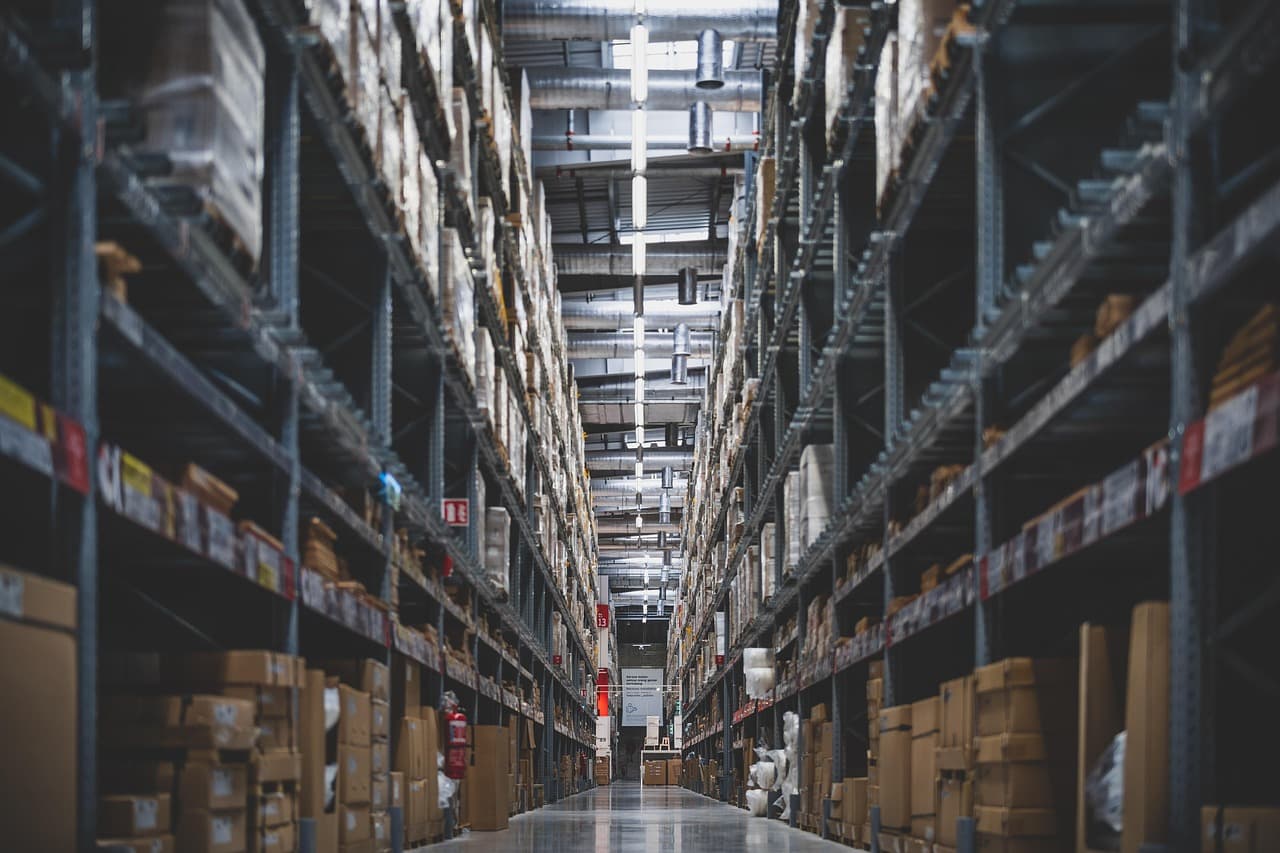
Logistics warehouse cleaning requires a fundamentally different approach than office or healthcare facility maintenance. We're dealing with facilities spanning 10,000 to 100,000 m², equipped with high-bay racking reaching 12 meters, continuous forklift traffic, and specific types of soiling—cardboard dust, tire marks, and plastic wrap residue. In the Cracow region (Targowisko, Niepołomice, Skawina) and Katowice, we manage logistics centers under long-term contract models, ensuring continuity and cost predictability at rates from 1.5 to 3 PLN net per square meter monthly.
Since 2020, Reefa has specialized in servicing large-volume B2B facilities—from office building cleaning to garage hall washing. In high-bay warehouses, three factors are critical: industrial equipment scaled to the space, knowledge of health and safety procedures (working near forklifts, pallets at height), and temporal flexibility—most operations are performed at night or between shifts to avoid disrupting the supply chain. Our staff are employed exclusively on employment contracts, undergo mandatory health and safety training, and hold certifications required for work in industrial environments.
In Brief
- Warehouse rates: 1.5–3 PLN net/m²/month depending on frequency and scope (base package: sweeping, aisle scrubbing, bin emptying)
- Typical facility size: 10,000–100,000 m² (centers in Targowisko, Niepołomice, Skawina, .KTW)
- Specialist equipment: scrubber-dryers with 200–400 l capacity, industrial floor polishers, pressure washers
- Work cycles: night or between shifts (typically 22:00–6:00) to avoid conflicts with logistics operations
- Long-term contract: average partnership duration 2.4 years, 96% retention rate, liability insurance up to 500,000 PLN
- Flexibility: team scaling (4–12 staff) during peak season (pre-holiday, Black Friday)
What Does Warehouse Cleaning Involve?
Warehouse cleaning is far more than sweeping a floor. In logistics centers handling e-commerce, FMCG distributors, or automotive parts, continuous goods rotation generates specific types of soiling. Cardboard dust settles on floors and racking, forklift tire marks create black streaks on epoxy surfaces, and plastic wrap and packaging tape accumulate along packing lines.
Based on our observations in 2025/2026, warehouses exceeding 20,000 m² require daily cleaning in traffic zones (main aisles between racks, loading ramps, pick areas) and weekly scrubbing in lower-traffic zones. In facilities meeting BRC (British Retail Consortium) standards—typical for food warehouses—we add surface disinfection and cleanliness monitoring per HACCP.
Key processes include:
- Mechanical sweeping with a sweeper having a 1.2–1.5 m working width—efficiency up to 8,000 m²/h
- Floor scrubbing with a scrubber-dryer using disc or cylindrical brushes—removes stubborn soiling, refreshes epoxy surfaces
- Bin emptying and waste management—segregating cardboard/plastic/mixed waste per client guidelines
- Restroom and administrative office cleaning for warehouse staff
- Window and skylight washing (2–4 times yearly)—essential for naturally lit facilities
- Removing cobwebs and dust from steel structures—requires boom lifts or telescopic ladders
All work follows a schedule agreed with the warehouse manager, accounting for delivery windows, inventory, and operational peaks.
Warehouse Cleaning Costs — 2026 Pricing Structure
For a 15,000 m² facility in Niepołomice (the logistics zone near Cracow), a base package—5-day-per-week sweeping, weekly aisle scrubbing, bin emptying, restrooms—costs 2.2 PLN net/m²/month, roughly 33,000 PLN net monthly. In practice, the rate depends on four main variables:
Frequency and Scope
Daily sweeping plus weekly scrubbing is standard. If a client needs daily scrubbing across the entire space (e.g., a pharmaceutical warehouse with GMP requirements), the rate rises to 2.8–3.2 PLN/m²/month. Conversely, low-traffic facilities (e.g., long-term storage or cold storage) may require sweeping 3× weekly—then the rate drops to 1.5–1.8 PLN/m²/month.
Size and Layout
Larger facilities benefit from economies of scale. A 50,000 m² warehouse in .KTW I (Katowice) costs 1.6 PLN/m²/month, while an 8,000 m² hall runs 2.5 PLN/m². Critical is the racking layout—narrow aisles (under 2.5 m) hamper scrubber maneuverability and extend work time.
Working Hours
Night work (22:00–6:00) incurs a ~15% premium for night wages. Many clients prefer this, as it eliminates collisions with forklift traffic. Alternatively, "window" shifts—e.g., 14:00–18:00 between first and second shift—require no night premium.
Additional Services
High-level cleaning (racking, beams, steel structures)—0.3–0.5 PLN/m² monthly; HACCP disinfection—0.2 PLN/m² monthly; skylight washing—custom quote (typically 800–1,200 PLN net per facility quarterly).
All rates are stated in PLN net per square meter monthly, under a subscription model—monthly invoice, fixed amount regardless of working days. Long-term contracts (minimum 12 months) allow rate negotiation—data shows clients signing 24–36 month agreements receive 8–12% discounts versus base rates.
Specialist Equipment for High-Bay Warehouses
For facilities exceeding 10,000 m², traditional methods (mop, service cart) are ineffective. Industry standard is ride-on machines—sweepers and scrubber-dryers—with efficiency of 3,000–8,000 m²/h. Reefa operates a fleet of industrial equipment tailored to logistics centers:
Scrubber-Dryers, 200–400 l
A clean-water tank of 200–400 liters enables 3–4 hours of uninterrupted operation, covering 12,000–15,000 m² in one cycle. Disc or cylindrical brushes effectively remove tire marks, cardboard dust, and oil stains. The suction system collects dirty water, leaving the floor dry—critical for safety (zero slippage) and immediate forklift resumption.
Mechanical and Diesel Sweepers
A battery-powered sweeper with 1.2 m working width is standard for enclosed spaces (zero emissions). For very large halls (>40,000 m²), we deploy diesel/LPG sweepers reaching 2 m width—efficiency to 18,000 m²/h—provided adequate ventilation exists.
Polishers and Single-Disc Machines
Maintaining epoxy and polyurethane floors requires diamond-pad polishers—they restore shine and remove micro-scratches. Typical frequency: quarterly for high-traffic areas.
Pressure Washers
For loading ramps, entry gates, and external zones (maneuvering areas), we use 120–180 bar washers. In food warehouses, hot water plus food-contact-approved disinfectants.
Boom Lifts and Telescopic Ladders
Cleaning steel structures, beams, and LED lighting at 6–12 meters height requires access equipment. Teams undergo training in elevated work (UDT certification) and height-safety procedures.
All equipment is covered by a maintenance plan—inspections every 200 working hours or quarterly, ensuring operational continuity. In case of failure, a replacement machine is available within 12 hours.
Health and Safety Procedures in Warehouse Environments
Working in a high-bay warehouse carries specific hazards: forklift traffic (up to 25 km/h in aisles), elevated pallets (falling-load risk), limited visibility in narrow passages, noise (up to 85 dB in pick zones). All Reefa team members servicing logistics centers undergo mandatory training:
- General health and safety training—16 hours, valid 36 months
- Position-specific training—warehouse work specifics, forklift operator communication, no-go zones
- GDPR and asset-protection briefing—access to high-value zones (appliances, electronics) requires additional authorization
- First aid—minimum one trained staff member per team
During operations, reflective vests Class 2 (yellow with reflective strips), safety footwear with steel toe (S3), and hearing protection in zones exceeding 80 dB are mandatory. Machines are fitted with warning lights (flashing lamps) and reverse alarms—identical to forklift requirements.
We enforce traffic segregation: teams move only via designated aisles (marked by yellow floor lines), staying clear of active loading or picking zones without shift manager approval. Communication is via PMR radio or mobile app—the crew coordinator maintains constant contact with the warehouse dispatcher.
Liability insurance up to 500,000 PLN covers potential damage from our operations (e.g., cargo damage, equipment-to-racking collisions). Our 2025/2026 data shows incident rates below 0.01 per 1,000 working hours under proper procedures.
Work Cycles: Night Shifts and Between-Shift Operations
Most logistics centers operate 2- or 3-shift systems, with peak activity between 6:00 and 22:00. To avoid disrupting the supply chain, we clean in a night window—typically 22:00–6:00 or 23:00–5:00. A typical team (6–8 staff plus equipment) covers 18,000–25,000 m² per night.
Night Shift Schedule — Example for 20,000 m² Facility (Targowisko, Cracow)
- 22:00–22:30: Facility handover, briefing with night-shift manager, priority zones identified
- 22:30–2:00: Full-surface sweeping (2 sweepers), bin emptying (120–160 l), waste removal
- 2:00–4:30: Main aisle and pick-zone scrubbing (2 scrubbers, 300 l each), restroom and office cleaning
- 4:30–5:30: Loading ramp cleaning (pressure washer), entrance washing, quality control
- 5:30–6:00: Work handoff to client coordinator, cleanliness report, facility release
An alternative is between-shift operation—e.g., 14:00–18:00, if the warehouse has a break. This appeals to automotive clients (JIT deliveries at fixed windows) or pharmaceuticals (validated cleaning windows).
During peak season (October–December, pre-holidays), team scaling is possible—adding 2–4 staff on weekends to match increased goods rotation and resulting soiling. Long-term contracts allow flexible resource adjustment without changing monthly rates (overtime billed at actual hours above baseline).
Specialized Requirements: Food, Pharmaceutical, and Automotive Warehouses
Some logistics centers are subject to stringent industry standards beyond routine cleaning. We serve three primary segments:
Food Warehouses (BRC, IFS)
British Retail Consortium and International Featured Standards mandate documented cleaning procedures, food-contact-approved chemical use, and regular microbiological audits. All detergents carry safety data sheets (MSDS) and manufacturer declarations. Disinfection frequency: packing and pick zones daily; racking and structures monthly. Staff wear disposable shoe covers, caps, and nitrile gloves.
Pharmaceutical Warehouses (GMP, GDP)
Good Manufacturing Practice and Good Distribution Practice apply to medicines. They require controlled environment (temperature, humidity), HEPA air filtration, and validated cleaning (written protocols, test swabs). Reefa partners with a microbiology lab—quarterly sampling from 10 control points, results documented in client reports. Rate for this segment: 3.5–4.5 PLN/m²/month due to procedural complexity.
Automotive Warehouses (5S, Lean)
The automotive industry (parts, components) employs 5S philosophy (Sort, Set in order, Shine, Standardize, Sustain)—cleanliness is an element of operational culture, not aesthetics. We collaborate on visual standards: colored floor lines, zone markings, cleanliness audits with checklists. Typical frequency: sweeping 2× daily (post-shift) and scrubbing 3× weekly.
Regardless of industry, long-term contracts ensure a dedicated team—the same staff service the facility for the contract duration (average 2.4 years). This enables familiarity with client specifics, faster procedure implementation, and rapport with warehouse staff.
Logistics Centers Near Cracow and Katowice — Locations
The Cracow and Katowice regions are key logistics hubs in southern Poland, with direct access to the A4 (east-west) and S7 (north-south) expressways. We service facilities in the following areas:
Cracow and Surroundings
- Targowisko—zone near A4, facilities 15,000–80,000 m², clients: e-commerce, FMCG, fashion
- Niepołomice—Logistics Park, near CPK (Central Communication Hub, in planning), spaces 20,000–50,000 m²
- Skawina—Cracow's south bypass, S7 access, automotive and industrial parts
- Wieliczka—smaller facilities (8,000–15,000 m²), regional distribution
Katowice and Silesian Region
- .KTW I and II (Katowice)—modern Class A centers, 30,000–100,000 m², international tenants
- Gliwice (Panattoni Park)—zone near A4, automotive and industrial
- Sosnowiec, Dąbrowa Górnicza—facilities 10,000–40,000 m², FMCG and construction
For clients in these areas, we provide on-site quoting—our coordinator visits, measures floor space (Leica laser), assesses surface condition, racking layout, and utilities (water, 400V power for machinery), and coordinates scheduling. Ready quote in 24–48 hours; offer valid 30 days.
As with office building cleaning or garage hall washing, success hinges on local market knowledge—we know which facilities have specific needs (e.g., Panattoni Park Gliwice—access via HSE airlock only, mandatory CTM registration), typical traffic patterns (avoiding delivery collisions), and decision-makers (usually operations or facility directors).
Long-Term Contracts — Cost Stability and Predictability
Our 2025/2026 data shows 96% of warehouse clients renew after year one. Average contract duration is 2.4 years—well above the industry benchmark (1.6 years). Why does long-term partnership make sense for a logistics center?
Budget Predictability
A fixed monthly rate (PLN net/m²) means zero surprises in P&L. A 24-month contract can lock in price freeze for the term (optional CPI adjustment from year two onward). For a finance director, this is crucial—cleaning typically represents 0.8–1.2% of warehouse operating costs and is fully controllable.
Dedicated Team and Continuity
Staff turnover in facility services averages ~40% yearly. Ours, thanks to employment contracts, benefits (medical packages, transport subsidies), and training, is <15%. For a warehouse, this means the same people maintain the hall throughout the contract—they know the racking, client procedures, and can communicate with operators.
Peak-Season Flexibility
Long-term contracts permit scaling without renegotiating. If November volume (Black Friday, Cyber Monday) spikes 40%, we add a weekend team—billing for actual hours at contract rates. Post-season, we revert to baseline.
SLA and Penalties
Service Level Agreements define measurable KPIs: incident response time (<4 hours during working hours), minimum scrubbing frequency (1× weekly), cleanliness standard (spot audits, minimum 85/100 points). Failure to meet SLA triggers a 5% invoice credit. Conversely, if client satisfaction exceeds 95/100 points for three consecutive months, we offer scope expansion (e.g., free quarterly window washing).
Insurance and Compliance
Liability coverage up to 500,000 PLN, all-risk policy for client property damage, current certifications (health and safety, HACCP, ISO 9001 in implementation). For international clients (e.g., Amazon, DHL), this is contractually required.
Typical structure: 12-month base with auto-renewal, 3-month termination notice, rate renegotiation possible every 24 months. Optionally—an "all-inclusive" package covering chemicals, consumables (pads, brushes), and small equipment (mops, buckets)—adds 0.2 PLN/m²/month, but eliminates client worry over detergent supply.
Frequently Asked Questions
What does warehouse cleaning involve?
Logistics warehouse cleaning is a specialist service covering facilities of 10,000–100,000 m² with racking up to 12 meters. The process combines mechanical sweeping (removing cardboard dust, plastic remnants, tire marks), floor scrubbing with 200–400 l scrubber-dryers (refreshing epoxy surfaces, removing oil stains), bin emptying and waste segregation, restroom and administrative office cleaning, and washing loading ramps and external zones.
For facilities meeting BRC, GMP, or IFS standards, we add surface disinfection, cleaning protocols, and microbiological audits. Coordination with warehouse operations is key—typically we work nights (22:00–6:00) or between shifts to avoid supply-chain disruption. Staff complete mandatory health and safety training in industrial environments, forklift operator communication, and height-work procedures.
How much does warehouse cleaning cost?
For a 15,000 m² facility in the Cracow region (Niepołomice, Targowisko), a base package—5-day-per-week sweeping, weekly aisle scrubbing, restrooms, bins—runs 2.2 PLN net/m²/month, or approximately 33,000 PLN net monthly. Cost varies with frequency (daily scrubbing raises it to 2.8–3.2 PLN/m²/month), size (facilities >40,000 m² start from 1.6 PLN/m²/month via economies of scale), working hours (night shifts +15%), and extras (HACCP disinfection +0.2 PLN/m²/month, high-level cleaning +0.3–0.5 PLN/m²/month).
Long-term contracts (24–36 months) offer 8–12% discounts versus base rates. All figures in PLN net, subscription billing—fixed monthly invoice regardless of working days. On-site quoting (laser survey, surface assessment, scheduling) available within 24–48 hours of inquiry.
What's the hourly rate for warehouse cleaning?
On a hourly basis—rarely used for logistics centers due to cost unpredictability—rates run 45–65 PLN net/h per worker with basic equipment (mop, service cart, industrial vacuum). Adding a scrubber or sweeper machine costs 80–120 PLN net/h (depreciation, fuel/power, maintenance). For a 15,000 m² facility, comprehensive cleaning (sweeping, scrubbing, restrooms) by a 6-person crew plus 2 machines takes roughly 6 hours—a one-time cost of ~2,200–2,800 PLN net.
The subscription model (PLN/m²/month) is much more cost-effective—for the same scope, at 5 weekly cleanings, monthly cost is 33,000 PLN net (2.2 PLN/m² × 15,000 m²), versus hourly: ~11,000 PLN × 4 weeks = 44,000 PLN net. Plus, long-term contracts guarantee continuous team availability, priority service, and seasonal flexibility.
What are work standards for warehouse cleaners?
Per Poland's Labor and Social Policy Ministry regulations (1996) and 2026 industry practice, cleaner output standards in logistics warehouses are: mechanical sweeping (ride-on sweeper)—6,000–8,000 m²/h, machine scrubbing (scrubber-dryer)—1,200–1,800 m²/h, manual sweeping (broom, brush)—150–250 m²/h (narrow, machine-inaccessible areas only), restroom cleaning—25–35 m²/h or 3–4 stalls/h.
For night-shift teams (6–8 work hours), realistic output is 18,000–25,000 m² swept plus 8,000–12,000 m² scrubbed per shift. Standards account for zone access time, machine loading/unloading, breaks (15 min per 4 hours per Labor Code), and coordination with forklift traffic. All Reefa staff are employed (not contracted), ensuring compliance with work-hour rules, 2026 minimum wage (4,666 PLN gross), and health-and-safety regulations.
Can warehouse cleaning happen during working hours?
Yes, but it requires tight coordination with warehouse operations and typically reduces efficiency 20–30% due to forklift avoidance, access restrictions during picking, and safety constraints. Our 2025/2026 experience shows most logistics centers prefer a night window (22:00–6:00) or between-shift times (e.g., 14:00–18:00) so cleaning doesn't conflict with supply chains.
In 24/7 facilities (e.g., peak e-commerce), we use a "zone" model—dividing the warehouse into 3–4 sectors, cleaning one daily at the lowest-traffic hour, in close radio/app coordination with dispatch. Staff wear Class 2 reflective vests; machines have warning lights; traffic separation (yellow floor lines) is enforced. For automotive clients (JIT, Lean), we sync schedules with production takt—2,000–3,000 m² segments in 30-minute windows.
What equipment is needed for large-warehouse cleaning?
Professionalwarehouse maintenance (>10,000 m²) requires: a scrubber-dryer with 200–400 l capacity, 70–110 cm working width, 1,200–1,800 m²/h efficiency (removes tire marks, dust, oil stains, leaves floors dry), a mechanical sweeper (battery or diesel), 1.2–2 m width, up to 8,000 m²/h efficiency (collects cardboard, plastic, debris), a pressure washer 120–180 bar for ramps, gates, and exterior zones, a single-disc polisher with diamond pads for epoxy/polyurethane floor maintenance, and boom lifts or telescopic ladders for cleaning steel structures, beams, skylights at 6–12 m height.
Additionally: industrial vacuums (HEPA filter for food/pharma), segregated waste carts, 40–60 cm mops, chemicals with EU Ecolabel or food-contact approval (BRC/IFS compliant). Reefa provides a complete fleet—clients don't buy or lease. Technical inspections every 200 hours or quarterly; backup equipment within 12 hours of failure.
Logistics warehouse cleaning is an investment in operational continuity, personnel safety, and business-partner image (client audits, certifications, ISO standards). A long-term contract at 1.5–3 PLN net/m²/month ensures cost predictability, a dedicated team, and seasonal flexibility. We've been in the industry since 2020, serving centers in Targowisko, Niepołomice, Skawina, .KTW, and other Cracow and Katowice locations. Average partnership lasts 2.4 years, 96% retention, liability insurance to 500,000 PLN.
Contact our team—on-site quotes within 24 hours, service start within 7–14 days of signing. Call, email, or fill out the form at reefa.pl/kontakt—we respond same business day.