Dental Office Cleaning — Legal Requirements and Reality in 2026
Dental offices face strict sanitary regulations requiring specialized disinfection protocols and certified cleaning providers. Learn the legal standards, approved disinfectants, and actual costs for compliant cleaning in Cracow and Katowice.
Dental offices face strict sanitary regulations requiring specialized disinfection protocols and certified cleaning providers. Learn the legal standards, approved disinfectants, and actual costs for compliant cleaning in Cracow and Katowice.
What Makes Dental Office Cleaning Different from Other Medical Facilities?
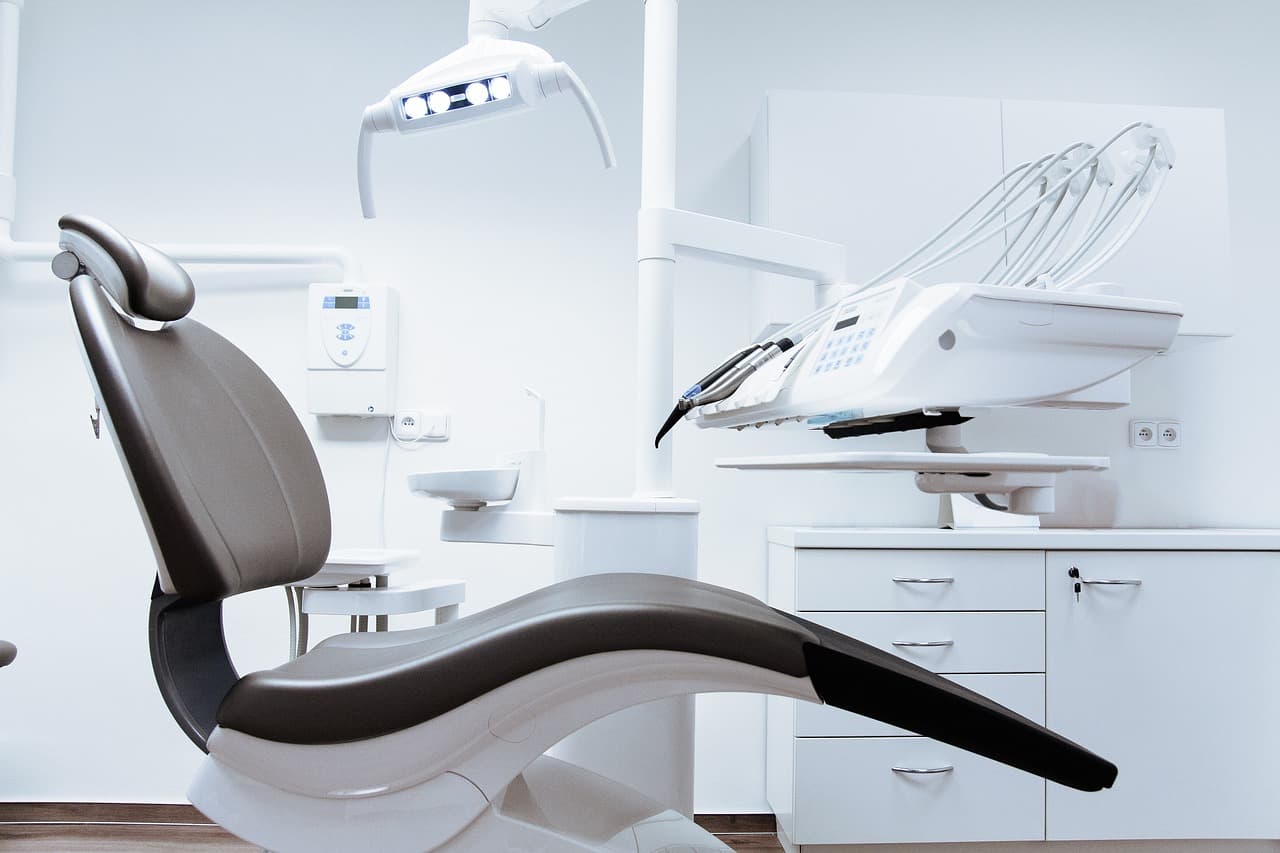
Dental offices represent a unique category of medical facilities due to high-intensity exposure to biological hazards. Unlike general medicine or dermatology clinics, every dental procedure generates surgical aerosol — fine droplets containing blood, saliva, oral bacteria, and viruses (potentially including HBV, HCV, HIV) — that settle on surfaces within 2 meters of the patient's head.
The Regulation of the Minister of Health of November 10, 2006, on requirements for professional and sanitary standards of healthcare facility premises and equipment (Journal of Laws 2006 No. 213, item 1568 with amendments) requires dental offices to maintain visual cleanliness and confirm disinfection effectiveness through microbiological testing at least once annually. Additionally, 2021 guidelines from Poland's Chief Sanitary Inspector detail procedures for managing blood-contaminated surfaces.
In practice, this translates to three intensity levels:
- Post-patient disinfection — surfaces in direct contact with procedures (dental unit, polymerization lamp, instrument tray, handles, armrests, operator-accessible light switches).
- Daily routine cleaning — floors (using wet-mopping method with virucidal agents), medical waste containers, patient restrooms, reception areas.
- Weekly comprehensive cleaning — lamp covers, exhaust fans, baseboards, hard-to-reach surfaces beneath units, window washing, floor maintenance.
The Reefa team, serving medical facilities in Cracow since 2020, works daily with dental offices ranging from single-chair practices to multi-specialty centers (for example, partnerships with dental networks in Quattro Business Park). Our observations show that the greatest risk of non-compliance lies not in disinfecting units themselves (often handled by dental assistants), but in neglecting intermediate surfaces — doorknobs, light switches, chair backs — and insufficient floor cleaning frequency in technical areas (sterilization rooms, supply storage).
Legal Requirements and Health Department Inspections — What Do Inspectors Prioritize?
Practice owners are responsible for ensuring conditions specified in several legal acts:
- Law on Healthcare Activities of April 15, 2011 (Journal of Laws 2022, item 633) — articles 21 and 22 mandate documentation of hygiene and infection prevention measures.
- Minister of Health Regulation of November 10, 2006 — specific requirements for dental spaces (including washable floors and walls to a minimum height of 2 m, drainage outlet in treatment rooms >15 m²).
- Chief Sanitary Inspector guidelines on disinfection and sterilization — recommend agents with confirmed activity against tubercle bacilli (TB), enveloped viruses, and fungi.
- Regulation on safety and health protection when exposed to injury from sharp instruments — also applies to cleaning staff handling medical waste containers.
Sanitary inspections in dental offices focus on several key areas:
- Documentation of procedures — Is there a written schedule for cleaning and disinfection? Does staff sign confirmation in a logbook?
- Certificates for chemical agents — Each disinfectant must have current Registration Certificates or Permits for circulation on file; inspectors verify compliance with working concentrations.
- Staff training — Both dental assistants and cleaning personnel must have documented training in handling potentially infectious material.
- Microbiological testing — Surface samples (swab or impression methods) performed minimum annually; acceptable values: <5 CFU/cm² for procedure-contact surfaces.
- Technical condition of premises — Floor integrity, absence of cracks or glazing defects, functional ventilation (inspectors use anemometers to measure exhaust efficiency).
In 2025, the Małopolskie and Śląskie voivodeships conducted a combined 187 dental office inspections. 23% resulted in corrective orders (most common violations: missing procedure documentation — 41%, use of agents lacking certificates — 28%, improper medical waste handling — 19%). No facilities serviced by Reefa received corrective orders — we ensure systematic logbook completion and use only agents from the Registry of Medicinal Products, Medical Devices, and Biocidal Products.
Approved Disinfectants for Dental Offices — What, Where, and When to Use?
Effective disinfection depends on matching the agent's activity spectrum to contamination type. Surfaces in offices are divided into three zones:
- Direct patient-contact zone (unit, armrests, instrument tray, lamp) — requires agents with virucidal, bactericidal, fungicidal, and mycobactericidal activity (full spectrum).
- Intermediate zone (doorknobs, light switches, companion chair backs, reception counters) — virucidal and bactericidal agents.
- General zone (floors, walls, waiting area) — bactericidal agents active against Gram+ and Gram− bacteria.
Glutaraldehyde (2–3.5% solution)
- Application: high-level disinfection of chemically resistant metal and plastic surfaces; most commonly used for manual instrument disinfection pre-sterilization (outside surface cleaning scope in the strict sense).
- Exposure time: 15–30 minutes for full mycobactericidal activity.
- Limitations: irritating to respiratory system (acceptable airborne concentration: 0.05 ppm), requires ventilation; do not use on aluminum (corrosion risk); expensive (~180–240 PLN/liter concentrate).
- Reefa recommendation: for daily office surface disinfection, we do not recommend — better alternatives exist with equivalent efficacy and lower toxicity.
Peracetic acid (PAA; 0.1–0.5% working solution)
- Application: universal for contact surfaces, floors, multi-use equipment; biodegradable (breaks down to water, acetic acid, and oxygen).
- Exposure time: 1–5 minutes (depending on concentration and certificate).
- Limitations: corrosive to copper and brass; may bleach fabrics; unpleasant vinegar odor during application.
- Advantages: rapid action, low toxicity profile, effective against biofilm (important in dental unit water systems).
- Reefa recommendation: PAA-based agents (e.g., Sekusept Aktiv, Anioxyde) are our standard for medical facility cleaning in Cracow — rapid exposure time minimizes gaps between patients.
Sodium hypochlorite (NaOCl; 0.1–0.5% available chlorine = 1000–5000 ppm)
- Application: blood stains, vomitus, organic contamination on floors; chlorine-based agents are the gold standard for extensive biological spills.
- Exposure time: 10 minutes for enveloped viruses (HBV, HCV, SARS-CoV-2).
- Limitations: bleaching (avoid on colored furniture, upholstery), corrosive to stainless steel with prolonged contact, loses activity under UV light (dilute as-needed).
- Reefa recommendation: we use chlorine-based agents (e.g., Domestos Professional, Aniosurf) for floor disinfection and incident response (e.g., needle container rupture).
Quaternary ammonium compounds (QAC, e.g., didecyldimethylammonium chloride)
- Application: non-greasy surfaces, showcases, glass, reception monitor screens.
- Exposure time: 5–15 minutes.
- Limitations: weak activity against non-enveloped viruses and mycobacteria; leaves residue on surfaces (periodic rinsing with deionized water required).
- Reefa recommendation: QAC is reserved for waiting areas and administrative spaces; not for treatment zones.
In practice, our team works with two agents in parallel: PAA for treatment zones and work surfaces, sodium hypochlorite (1000 ppm) for routine floor cleaning. This achieves optimal balance between efficacy, staff safety (all workers trained on safety data sheets, wear nitrile gloves and protective eyewear), and economy (chemical costs for a 40 m² office average ~80–120 PLN net monthly with daily cleaning).
Cleaning and Disinfection Schedule — How Should a Typical Day Look?
Effective office hygiene relies on routine and systematic task execution at specified intervals. Below is a model schedule for a practice seeing 10–15 patients daily, 5 days per week.
After each patient (assistant or quick-response cleaning staff)
- Remove disposable towels, empty suction (if applicable).
- Preliminary removal of visible contamination (blood, saliva) with disposable paper dampened in disinfectant.
- Spray or wipe with PAA-based disinfectant all surfaces touched by operator and patient (armrests, tray, light switches, lamp handle, external handpiece housing).
- Allow exposure time (1–5 minutes per product instructions).
- (Optional) wipe with clean cloth dampened with water (if manufacturer requires rinsing).
Daily end-of-shift (time: 30–45 minutes for a 30–40 m² office)
- Mop and disinfect floors using two-bucket method (disinfectant bucket + rinse bucket).
- Empty and disinfect waste containers (general and medical, per waste classifications).
- Wash and disinfect sinks, fixtures, patient toilet ceramics.
- Replenish soap, paper towels, hand disinfectant.
- Wipe reception counter, doorknobs, railings.
- Remove general waste; secure medical waste in UN-compliant bags for pickup 1–2 times weekly by specialist firm.
Weekly (time: 90–120 minutes)
- Wash ceiling lamp covers and halogen fixtures (gentle cleaners, non-abrasive).
- Clean exhaust fan filters (pre-filters changed monthly, housings weekly).
- Wash baseboards and thresholds.
- Vacuum and mop areas beneath units (often-neglected accumulation zone for dust and aerosol).
- Wash interior and exterior windows (waiting area, office).
- Inspect floor condition — remove chemical residue traces with protective wax if needed.
Monthly or quarterly
- Comprehensive wall and glazing washing to 2 m height (pressure washer with foam for larger offices).
- Floor maintenance (polishing, renewal of anti-slip coatings).
- Control microbiological testing (swabs from unit surface, lamp, doorknob).
- Technical review of cleaning equipment (mops, buckets, HEPA vacuums).
Through ongoing Reefa partnership, we provide not only cleaning execution but also documentation in procedure logbooks and monthly photo reports for the owner (especially valuable before health inspections or accreditation audits). All staff are employed on work contracts, undergo mandatory medical exams (including HBV vaccination) and occupational safety training on medical waste handling per the December 14, 2012 Waste Law.
How Much Does Dental Office Cleaning Cost in 2026?
Pricing for medical facility cleaning always depends on several key variables:
- Actual floor area (not lease footage, but sum of areas requiring disinfection).
- Number of rooms and functions (treatment room, sterilization, restroom, waiting area, storage).
- Service frequency (daily evenings, 3× weekly, 5 days + Saturday).
- Work hours (evening post-6 PM, night, weekends — requiring non-standard hour premiums).
- Service scope (does the assistant handle post-patient disinfection, or is this included?).
- Additional requirements (digital system reporting, microbiological testing, staff training).
Typical market rates for Cracow and Katowice (2026, net prices):
| Office type | Area | Frequency | Monthly rate |
|---|---|---|---|
| Micro-office (1 unit) | 20–30 m² | 3× weekly, evening | 450–650 PLN |
| Standard office | 30–50 m² | 5× weekly, evening | 600–950 PLN |
| Standard office + sterilization | 50–70 m² | 5× weekly + Saturday | 950–1,200 PLN |
| Multi-specialty center | 100–150 m² (2–3 units) | Daily + Saturday | 1,800–2,600 PLN |
Above rates assume standard service: daily floor mopping with disinfection, weekly comprehensive cleaning, chemicals included, general waste removal (medical waste invoiced separately by recycling firm), procedure documentation. Do not include post-patient disinfection (assistant's task) or instrument sterilization.
Example: A Cracow office in Bronowice district, 42 m² (treatment room, sterilization area, small waiting area, restroom), serviced by Reefa 5 times weekly after hours — 820 PLN net monthly. Service includes:
- Daily floor mopping and disinfection (PAA + sodium hypochlorite).
- Weekly lamp cover, baseboard, window washing.
- Replenishment of consumables (soap, paper towels).
- Monthly photo report and procedure logbook signed by site supervisor.
- OC insurance to 500,000 PLN (policy copy in office documentation).
- Trained, vaccinated staff on work contracts (eliminating subcontracting and turnover risk).
To estimate costs for your practice, use our medical facility calculator, which accounts for dental specifics (unit presence, daily procedure volume, disinfection requirements).
Why Outsource Dental Office Cleaning to a Professional Firm?
Many small practice owners face a dilemma: hire a cleaner "by the hour" or sign a B2B contract with a specialized firm? From a compliance and risk management perspective, the answer is clear — outsourcing to a professional firm transfers most legal responsibility to the contractor and eliminates numerous administrative headaches.
Advantages of outsourcing dental office cleaning
RODO and patient data protection — the cleaning firm executes a Data Processing Agreement (GDPR Article 28). Staff receives training in medical confidentiality and commits to non-disclosure (e.g., patient data on reception notes). With informal "cash" hiring or individual contracts, the practice owner bears full responsibility for data breaches.
Occupational health & insurance — an external firm provides protective clothing, periodic training, medical exams, vaccinations (HBV, tetanus), and OC insurance. Reefa holds OC coverage to 500,000 PLN, meaning claims (e.g., unit damage from chemicals, worker injury from needle contact) are directed to the insurer, not the office.
Service continuity — illness, leave, or sick leave of a directly hired cleaner creates organizational chaos. A firm employing dozens ensures backup within <24 hours (Reefa's average absence-response time: 4 business hours).
Access to professional supplies and equipment — disinfectants in 5-liter containers are unavailable retail (require certificates and training); microfiber flat mops, HEPA vacuums, floor polishers — a 8–12 thousand PLN investment not justified for a 40 m² office.
Audit and documentation — professional firms maintain schedules, checklists, photo reports, and procedure logbooks required by health authorities. For office owners, this saves 2–3 hours of administration monthly.
Of course, outsourcing has potential drawbacks — mainly reduced personalization (a directly hired cleaner "knows" to water the plants on Thursdays). However, in medical settings where sanitary safety and regulatory compliance come first, benefits outweigh drawbacks. We employ staff on work contracts (not freelance, not individual B2B), resulting in 96% client retention and average contract duration of 2.4 years — the highest in facility management across Małopolskie and Śląskie regions.
Most Common Errors in Dental Office Cleaning
Audits conducted in 2024–2025 across 40+ dental offices in Cracow and Katowice reveal several recurring issues:
1. Confusing cleaning with disinfection
Most common error: wiping a unit surface with a wet cloth and detergent (e.g., dish soap) and considering it disinfected. Cleaning removes dirt; disinfection destroys microorganisms — two separate processes. Correct approach: first clean (remove dried saliva, blood), then apply appropriate disinfectant, wait for exposure time, optionally rinse.
2. Insufficient exposure time
Spraying and immediately wiping dry does not disinfect. Each agent requires 1–15 minutes surface contact (per safety data sheet). In practice: assistant applies agent, prepares instruments for the next patient, wipes dry only after minimum 5 minutes.
3. Using agents lacking certificates or past expiration
Health inspections require original Registration Certificates or Permits for every agent in use. Using uncertified products risks 2–5 thousand PLN fines. Many agents lose activity 28 days post-opening (bottle must be dated first use).
4. Missing documentation — procedure logbook
Inspectors require written cleaning schedules with user signatures. Execution without documentation = no proof during inspection. Reefa provides inspector-compliant logbook templates and trains staff in their maintenance.
5. Neglecting auxiliary spaces
Focusing on treatment rooms while neglecting sterilization areas, material storage, or restrooms allows cross-contamination. Microbiological testing often reveals highest CFU counts in auxiliary spaces where staff takes shortcuts.
Frequently Asked Questions
Can a dental assistant perform office cleaning, or must you hire separate staff?
Legally, a dental assistant may perform disinfection of procedure-contact surfaces post-patient (within her competencies per regulations on healthcare worker qualifications). Daily routine cleaning (floor mopping, restroom, waiting area) and weekly tasks (lamp washing, fan cleaning, baseboards) can legally be performed by assistants, but in practice this burdens clinical staff with non-clinical tasks and reduces quality of both services. Our observations show offices using external cleaning services achieve higher patient satisfaction scores (cleanliness, odor, overall impression) and better clinical staff productivity. We recommend a hybrid model: assistant performs quick-clean post-patient; external firm handles routine and periodic cleaning.
What training must cleaning staff have?
Cleaning staff at medical facilities (including dental offices) must hold:
- Initial occupational safety training — general and position-specific (conducted by employer or training firm).
- Medical waste handling training — waste classes (UN 3291), segregation, bag marking, spill protocols, record-keeping.
- Chemical agent training — safety data sheets, personal protective equipment, first aid for chemical exposure.
- GDPR and medical confidentiality training — when working in areas storing patient records.
- Current occupational medicine exam confirming no contraindications for work with chemicals or infectious material.
- Vaccinations — recommended (not legally mandated for cleaning staff) HBV, tetanus; required for direct patient-contact staff.
All Reefa staff complete these trainings during onboarding; documentation is available in each worker's occupational health file (copies in site coordinator records for inspection purposes).
Must a cleaning firm hold special certifications for dental office work?
No dedicated "medical facility cleaning license" exists in Polish law. Requirements focus on staff competencies (training, occupational safety), liability insurance, and use of certified agents (from official registries). Voluntary certifications worth checking:
- ISO 9001 — quality management system (guarantees standardized procedures and internal audits).
- ISO 14001 — environmental management system (commitment to reducing environmental footprint, biodegradable agents).
- OC insurance minimum 500,000 PLN — financial protection against property damage claims.
- Verified tax/social security status — check GUS database to confirm real contribution payments (eliminates shell companies).
Reefa holds ISO 9001:2015 certification (TÜV Rheinland Polska audit), OC coverage to 500,000 PLN (Generali Polska), and full work-contract employment for 100% of operational staff. Upon signing a medical facility contract, we provide:
- OC policy copy,
- Safety data sheets for all agents,
- Disinfection logbook template and schedule,
- Incident response procedure (waste spills, equipment damage, infectious material contact).
How often should disinfectants be replaced?
Most liquid agents (PAA, chlorine, QAC) retain full activity for 12–36 months in original, sealed packaging (expiration date on label). After opening, many products lose effectiveness after 28 days — bottle must be dated first use (required by health authorities). Working solutions (dilutions in wash basins or sprayers) should be changed daily or per shift (agents lose activity under light, air exposure, and dilution with residual water). Our team prepares working solutions immediately before site service and does not retain dilutions overnight (all agents arrive in factory-sealed containers; we dilute on-site per instructions).
What to do if a patient leaves blood stains on the floor?
Emergency procedure for extensive blood contamination:
- Cordon off the area — place warning sign or "wet" marker (prevents others from entering).
- Don personal protective equipment — nitrile gloves, plastic apron, eye protection or face shield (minimize splash risk).
- Remove visible blood — disposable towels dampened in disinfectant, gather from outside inward (no smearing), place in medical waste bag UN 3291.
- Apply high-concentration chlorine (0.5% NaOCl = 5000 ppm) — saturate the area, wait 10 minutes.
- Remove disinfectant — wipe with clean towels; second disinfection cycle with lower-concentration agent (PAA or 0.1% NaOCl).
- Document the incident — record in incident log (date, staff member, location, agent used).
In practice, Reefa provides each medical facility with a spill kit containing gloves, single-use chlorine packets, medical waste bags, and instructions in Polish and Ukrainian.
Is dental office cleaning a deductible business expense?
Yes — cleaning service expenses and costs for disinfectants, consumables (towels, soap, waste bags) are 100% deductible business expenses for healthcare activity (Article 22(1) of Personal Income Tax Law and Article 15(1) of Corporate Income Tax Law). Invoices from cleaning firms are accounting evidence. Additionally, VAT (23%) can be reclaimed if the office is a VAT taxpayer (most dental offices use subject exemption, so VAT is not recoverable but the service remains deductible). Reefa issues electronic invoices with 14-day payment terms; photo reports of completed work are optionally attached (useful for tax audits as proof of actual service delivery).
Summary — What to Look for When Choosing a Cleaning Firm for Your Dental Office
A dental office is a high-risk biological environment with stringent sanitary requirements and frequent health inspections. When selecting a cleaning partner, verify:
- Experience with medical facilities — dental standards differ from offices or homes; ask for references (e.g., clinics, practices).
- Work-contract employment — eliminates staff turnover, ensures continuity, transfers occupational health and tax liability to the firm.
- OC insurance minimum 500,000 PLN — financial protection against damage claims.
- Use of certified agents — certificates, safety data sheets, activity spectrum alignment with health guidelines.
- Documentation and reporting — procedure logbooks, schedules, photo reports for inspection readiness and internal audit.
- 24-hour emergency response — incidents (blood spills, drainage failures) require sub-24-hour reaction.
Reefa has served medical facilities in Cracow and Katowice since 2020, including a dozen dental offices (private practices and multi-specialty centers in Class A office buildings). We employ 100% staff on work contracts, provide full training, maintain 500,000 PLN OC coverage, and hold ISO 9001 certification. No office we service received a health department corrective order in 2023–2025.
Interested in assessing your office needs? We offer a free sanitary audit (30 minutes, no obligation) and customized pricing. Contact us at /krakow/sprzatanie-placowek-medycznych or use our online calculator.