Garbage Room Cleaning — Legal and Hygiene Requirements
A practical guide for property managers covering legal requirements, cleaning frequency, procedures, and costs of professional garbage room sanitation services.
A practical guide for property managers covering legal requirements, cleaning frequency, procedures, and costs of professional garbage room sanitation services.
Garbage room cleaning is a legal obligation for every residential community under hygiene maintenance and sanitation standards. In practice, this means systematic washing, disinfection, and deodorization of waste storage areas — a minimum of twice weekly under standard conditions, more frequently during summer months.
Based on our observations in 2025 and 2026, garbage rooms in residential communities in Cracow and Katowice generate the highest resident complaints between June and August, when temperatures accelerate fermentation of organic waste and bacterial growth. Professional management of this area is not only a legal requirement, but also an effective tool for maintaining community reputation and resident comfort.
Below we present a comprehensive guide for residential community managers, covering legal frameworks, technical procedures, service frequency, and cost allocation.
Quick Summary
- The 2021 Ministry of Climate and Environment Regulation imposes an obligation on managers to maintain garbage room cleanliness
- Minimum frequency: 2 times weekly; in summer months (June–August) 3–4 times weekly is recommended
- Professional procedure includes pressure washing (min. 100 bar), disinfection with QAV or chlorine-based agents, deodorization
- Most common issues: animal urine traces, organic residue, rodents, litter outside containers
- Monthly external service for one garbage room: PLN 80–200 net (depending on size, condition, and frequency)
- Failure to maintain cleanliness may result in city office sanctions or resident complaints to management
What Are Garbage Rooms and Why Do They Require Systematic Cleaning?
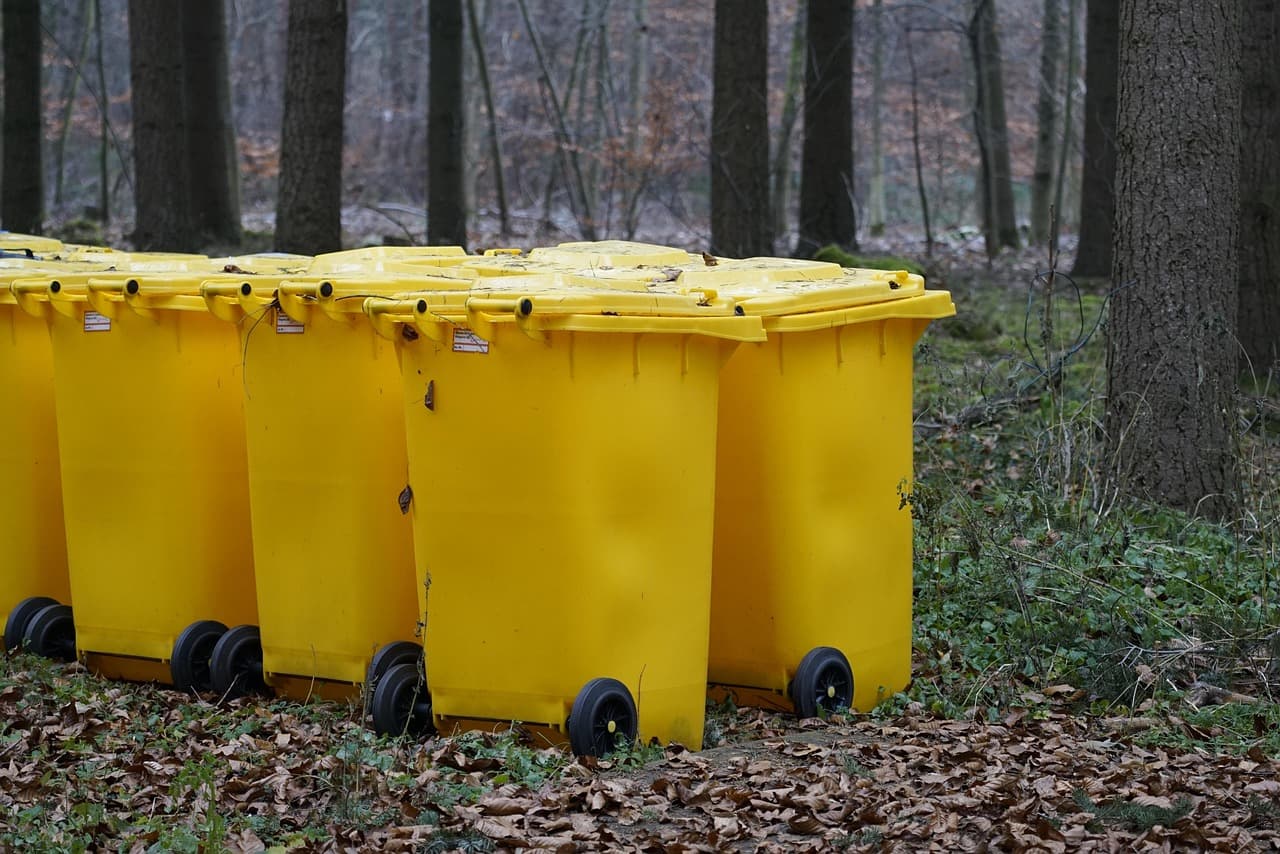
A garbage room (also known as a waste shelter or bin enclosure) is a designated, typically roofed space intended for storing municipal waste containers. It occurs in multi-family buildings (apartment blocks, townhouses), detached housing complexes, and commercial facilities.
From a public health perspective, a garbage room is a location with very high microbial contamination levels. Organic food residue, liquid from packaging, meat scraps, waste falling outside containers, and biological animal waste create an environment conducive to harmful bacteria multiplication (including Salmonella, E. coli, staphylococci), mold, and attract rodents and flies.
In 2026, sanitation standards for residential communities in Cracow and Katowice are enforced by health inspectorates and through administrative procedures by city environmental protection departments. Neglect of cleanliness may result in fines, administrative orders, and in extreme cases — outbreaks of infectious disease.
What Do the Regulations Say? Legal Requirements for Community Managers
Key legal frameworks concerning garbage room cleanliness are contained in:
- The Regulation of the Minister of Climate and Environment of December 10, 2021 on the detailed method of selective collection of selected waste fractions — establishes the obligation to maintain cleanliness in waste storage areas.
- The Act of September 13, 1996 on maintaining cleanliness and order in municipalities — Article 5 imposes on property owners (including communities) the obligation to maintain cleanliness and order on their premises.
- Local regulations on maintaining cleanliness and order in the municipality — each municipality (Cracow, Katowice) specifies the frequency and method of maintaining cleanliness.
In practice, the community manager is obligated to:
- Systematically wash and disinfect internal and external garbage room surfaces
- Remove litter spilled outside containers
- Neutralize unpleasant odors
- Ensure proper technical condition of the facility (gate, lighting, water drainage)
- Document completed work (protocols, before/after photographs)
Failure to fulfill these obligations may result in a fine of PLN 500 to 5,000 for the manager or community board.
What Is the Optimal Garbage Room Cleaning Frequency?
The answer depends on several factors: number of residents, seasonality, waste type (selective collection vs. mixed), presence of rodents, and technical condition of the room.
Minimum frequency according to sanitation requirements
- Standard season (September–May): 2 times weekly
- Summer season (June–August): 3–4 times weekly
- Communities with over 100 residential units: consider daily cleaning during peak season
When should frequency be increased?
- After holidays (Christmas, Easter) — sudden increase in organic waste
- During heat waves (temperature > 28°C) — accelerated fermentation
- If rodent or fly problems are detected
- After container failures or missed waste collection by municipal company
In our portfolio of cleaning services for residential communities in Cracow, we serve communities with 2x weekly service during standard season and 3x during summer — an optimal cost-to-quality solution for most residential properties.
Professional Garbage Room Cleaning Procedure — Step by Step
Properly executed service consists of seven stages:
1. Inspection and photographic documentation of initial condition
Before beginning work, the operator photographs the room from all angles. Visual documentation allows for later work scope verification and serves as proof for the community.
2. Removal of waste spilled outside containers
Manual collection of debris (bags, cardboard, bottles) and placement in appropriate containers. In cases of large amounts of litter — use of heavy-duty bags with 120 l capacity.
3. Pressure washing of internal and external surfaces
Use of pressure washer with minimum 100 bar power, preferably 120–150 bar, with hot water (60–70°C). Hot water more effectively dissolves fats and organic proteins.
- Internal walls
- Floor (concrete, paving stones)
- Gates and doors
- Waste containers (if community property)
Washing time for standard room (approx. 10–15 m²): 20–30 minutes.
4. Disinfection of surfaces
After drying (5–10 minutes), apply disinfectant using spray or foam method. Recommended preparations:
- Quaternary ammonium compounds (QAV) — broad spectrum action, safer for environment, neutral pH
- Chlorine-based agents (e.g., sodium hypochlorite 0.5–1%) — stronger action, but more corrosive and irritating
- Enzymatic preparations — particularly effective on fats and animal proteins
Disinfectant exposure time: 10–15 minutes.
5. Rinsing and removal of excess chemicals
Repeat pressure rinsing to remove detergent and disinfectant residue. Critical for facilities with drainage to municipal sewers — compliance with RODO environmental protection.
6. Deodorization
Application of odor-neutralizing preparation (not perfuming). Most effective are active oxygen or enzymatic agents — they don't mask odors but break down organic molecules responsible for the smell.
7. Water drainage and ventilation check
Verify that drainage grates are not clogged and gravitational ventilation (if present) is functioning properly. In case of technical problems — report to management.
Most Common Problems and How to Solve Them
Animal urine traces (dogs, cats)
Problem frequently encountered in open garbage rooms or those without gates. Urine leaves dark stains and intense ammonia odor.
Solution: Enzymatic urine breakdown preparation (e.g., BactoTreat, BioS+), spot application, minimum 30-minute exposure, rinsing. For persistent problems — consider installing locked gate.
Decomposing remains and organic residue
In summer, appearance of dead rodents, birds, or decomposing meat scraps.
Solution: Removal of remains in protective gloves, sealed bag, delivery for proper disposal (not in regular waste containers). Disinfect the area with 1% chlorine preparation, 15-minute exposure.
Rodents (rats, mice)
Rodent presence indicated by droppings (small black pellets), bite marks on bags, characteristic odor.
Solution: Professional pest control by licensed pest management company. Cost of single intervention: PLN 200–400 net. As part of our block cleaning services in Cracow, we cooperate with a certified pest management partner — joint ordering reduces costs by approximately 20%.
Litter outside containers
Most common problem — residents leave bags on the ground instead of in containers (lack of space or negligence).
Solution: Resident education (flyers, emails from management), increased container capacity, more frequent collection by municipal company. Systematic cleaning breaks the "vicious cycle" (more litter on ground attracts more).
Cleaning Chemicals — What to Choose for Disinfection and Cleaning?
When selecting preparations for residential communities, three criteria are key: microbiological effectiveness, safety for environment and residents, and cost-to-quality ratio.
Preparations recommended by Reefa in 2026
| Preparation Type | Application | Advantages | Disadvantages | Price (5 l) |
|---|---|---|---|---|
| QAV (quaternary ammonium compounds) | Surface disinfection, walls, floors | Broad spectrum, safe pH, no odor | Slower action on spores | PLN 40–60 net |
| Sodium hypochlorite 0.5% | Heavy contamination disinfection | Highly effective, inexpensive | Corrosive, irritating, chlorine odor | PLN 15–25 net |
| Enzymatic preparations | Organic stain and odor breakdown | Eco-friendly, effective on proteins and fats | Higher cost, longer exposure time | PLN 80–120 net |
| Alkaline detergents | Washing greasy surfaces | Excellent fat dissolution | Require thorough rinsing | PLN 30–50 net |
All preparations used by our team have PZH (Polish State Hygiene Institute) certificates and comply with EU biocidal product directive guidelines (BPR 528/2012).
How Much Does Professional Garbage Room Cleaning Cost?
Pricing depends on:
- Room surface area (standard 8–20 m²)
- Service frequency (1x, 2x, 3x weekly)
- Initial condition (neglected room requires 2–3 intensive cleaning visits)
- Access to water and electricity (lack of utilities = need for generator and tank)
- Distance from cleaning company base
Estimated pricing for 2026 (Cracow, Katowice)
Single one-time cleaning: PLN 120–180 net
Monthly subscription (8 visits/month, 2x weekly): PLN 80–140 net per visit
Monthly subscription (12 visits/month, 3x weekly): PLN 70–120 net per visit
Post-renovation or emergency cleaning: PLN 200–350 net
Example calculation for community of 60 units, 12 m² garbage room, 2x weekly service:
- 8 visits monthly × PLN 100 net = PLN 800 net/month
- Cost per unit: PLN 13.30 net/month (approx. PLN 16 gross)
As part of comprehensive community management, we offer combined packages — garbage room cleaning together with stairwell washing, corridors and basements. Package approach reduces unit costs by 15–25% compared to separate orders.
How Does Cooperation With a Cleaning Company Look — From Inquiry to Execution?
Stage 1: Inquiry and condition audit
Community manager contacts our team (online form, phone, email). Within 24–48 hours we arrange an audit visit — inspector assesses room condition, size, utility access, specific challenges (rodents, strong odor).
Stage 2: Quotation and schedule proposal
Based on audit, we prepare detailed quotation including:
- Visit frequency
- Scope of work (washing, disinfection, deodorization)
- Chemicals used (with safety data sheets)
- Time for single visit
- Contract terms (minimum period, SLA, liability insurance up to PLN 500,000)
Stage 3: Service launch and photo documentation
After contract execution (typically 12 months) we perform first visit on agreed date. Each visit documented with before/after photos and report entry accessible to community board in our CRM system.
Stage 4: Quality monitoring and procedure adjustment
Quarterly we conduct community satisfaction audit. If conditions change (e.g., increased residents, container replacement, rodent detection), we adjust frequency or procedures without fee change — within flexible SLA.
In 2025 and 2026 we cooperate with over 30 residential communities in Cracow and Katowice, maintaining 96% retention rate — the highest retention in B2B cleaning industry in Małopolska and Silesia.
Summer vs. Winter Season — What Are the Procedural Differences?
Summer season (June–August)
- Higher temperature → accelerated organic decomposition, intense odor, higher risk of flies and wasps
- Increased frequency: 3–4 visits weekly recommended
- Chemicals: long-lasting enzymatic and deodorizing preparations
- Typical issues: broken eggs, fermented fruit juices, meat scraps in bags left in sun
Winter season (December–February)
- Low temperature → slower decomposition, but frozen stains harder to remove
- Ice and snow: necessity for snow removal around room and sand spreading (not salt — concrete corrosion)
- Chemicals: detergents with lowered freezing point, water heated to 70°C
- Typical issues: floor icing, frozen drains, difficult access to room
Transitional season (March–May, September–November)
- Stable frequency: 2 times weekly
- Standard procedures: pressure washing, QAV disinfection, deodorization
- Watch for: leaves and mud — spring and fall leaves and mud tracked in on shoes — ground sweeping needed before washing
Manager's Legal Responsibility — What Risks Exist for Neglect?
Community residential manager (individual or management company) bears administrative, civil and — in extreme cases — criminal liability for property sanitation condition.
Administrative sanctions
- Fine from health inspector: PLN 500–5,000 (Article 116 of cleanliness maintenance act)
- Administrative order to restore condition: 7–14 day deadline, failure to comply — penalty up to PLN 10,000
- Substitute execution by municipality: city outsources cleaning to company and bills community with 30–50% markup
Civil liability
Residents may seek damages for reduced living comfort, especially if neglect resulted in rodent invasion into apartments or infectious disease. Manager liability insurance (required by law since 2023) covers such claims, but deductible increases premiums in next period.
Criminal liability
In case of gross negligence resulting in health or life risk (e.g., salmonella outbreak from garbage room), prosecutor may file charges under Article 165 criminal code (endangering public safety) — penalty up to 3 years imprisonment.
In practice such cases are rare, but manager legal awareness should extend beyond "aesthetics" and include actual sanitation risk.
Reefa in Residential Community Management — Why Trust Us?
Since 2020 we specialize in comprehensive residential community management in Cracow and Katowice. Our employment model is based exclusively on employment contracts — we don't use freelance or piece-work contracts. This means:
- Stable, trained team (staff turnover < 8% annually)
- Full occupational health and social insurance coverage
- Compliance with joint liability regulations
All employees undergo training in:
- Pressure washer and specialized equipment operation
- Safe chemical handling (safety data sheets, SDS)
- Occupational health procedures for enclosed spaces with biological hazard
- Photo documentation and work reporting systems
Average contract duration with communities is 2.4 years — highest industry average. 96% retention rate confirms high client satisfaction.
We carry liability insurance up to PLN 500,000, protecting the community in case of accidental property damage or incident during work. Each policy is available electronically in client dashboard.
Interested parties are invited to contact us through our Cracow page or Katowice page.
Frequently Asked Questions
How many times per month should garbage room be cleaned according to law?
Minimum frequency specified in regulations is twice weekly, translating to 8–9 visits monthly. In summer season (June–August) increase to 3–4 times weekly (12–16 visits monthly) is recommended, especially in large communities. Community manager should establish final frequency with cleaning company considering local conditions and resident complaints. Remember that municipal cleanliness regulations may specify higher standards than national requirements.
What cleaning chemicals are safest for garbage room disinfection?
Safest and most effective are quaternary ammonium compound (QAV) based preparations — they have broad bacterial and fungal action, neutral pH, and emit no irritating fumes. Alternative is enzymatic preparations, which break down organic odor and stain sources without chemical aggression — ideal for buildings with sensitive residents (elderly, children, allergy sufferers). Chlorine agents (sodium hypochlorite) are more effective but more corrosive and irritating to airways — recommended for exceptional situations (after rodent detection, presence confirmed). All used preparations should have PZH certificate and comply with EU biocidal product directive (BPR 528/2012).
Can a manager organize garbage room cleaning without external company?
Yes, manager can assign cleaning to own staff (caretaker, janitor) or board members. Key is ensuring professional equipment (pressure washer, disinfectants with certificate, safety equipment) and work documentation (protocols, photos). In practice most communities choose outsourcing to specialist company because:
- Cost of professional equipment investment (pressure washer 120–150 bar: PLN 2,000–4,000) exceeds annual external service cost
- Legal risk (lack of certificates, improper agents) rests with board
- Quality of trained team work is predictable and repeatable
In our portfolio, over 85% of communities choose subscription model after testing internal solutions for 3–6 months.
What to do when rodents appear in garbage room?
Immediately contact professional pest management company with biocide application license. Do not use home traps or over-the-counter poison — may be ineffective or dangerous to pets. Standard pest management procedure includes:
- Inspection and species identification (brown rat, house mouse)
- Installation of bait stations at strategic points (entrances, feeding areas)
- Inspection after 7–14 days, bait replacement, removal of dead animals
- Securing room against re-entry (sealing cracks, installing door sweeps)
Intervention cost: PLN 200–400 net for single service, severe cases may need 2–3 visits. As part of our block cleaning subscription in Cracow, we offer 20% discount on our partner's services.
Is photo documentation of cleaning mandatory?
Photo documentation is not legally required, but represents best management practice and legal protection for the manager. Before/after photos prove work completion and enable:
- Objective service scope verification in case of resident complaints
- Presentation of room condition at community meeting
- Evidence in dispute with cleaning company (if work not done to contract standards)
- Documentation of recurring problems (e.g., persistent littering by same residents)
In our reporting system each visit is documented with 4–6 photos automatically sent to manager's electronic dashboard. Typically takes operator 2 additional minutes per visit, but client value is disproportionately high relative to effort.
What is average annual cost of garbage room cleaning for 50-unit community?
For 50-unit community with single 10–12 m² garbage room, at 2 weekly visits (8 monthly visits), estimated annual cost is:
- 8 visits × PLN 100 net × 12 months = PLN 9,600 net (PLN 11,808 gross)
- Cost per unit: PLN 19.20 net/month (~PLN 23.60 gross)
If summer period (3 months) frequency increases to 3 weekly visits (12 visits/month), additional cost: - (12 – 8) × PLN 90 × 3 months = PLN 1,080 net (PLN 1,328 gross)
Total annual cost: PLN 10,680 net (PLN 13,136 gross), i.e., PLN 21.36 net/unit/month. Compared to risk of health fines (PLN 500–5,000) and reduced resident comfort, investment in professional service pays for itself many times over.
Summary — Garbage Room Cleanliness as Community Management Standard
Garbage room cleaning is a legal obligation, element of community management culture, and investment in resident health and comfort. Systematic disinfection, pressure washing, and deodorization prevent not only administrative sanctions, but also rodent problems, intense odors, and resident complaints.
Professional cleaning company ensures repeatable quality, occupational health and RODO compliance, liability insurance and work documentation — values difficult to achieve internally. Cost of subscription service (PLN 80–200 net per visit, depending on size and frequency) averages PLN 15–25 gross monthly per unit — a modest amount compared to potential losses from neglect.
We encourage residential community managers in Cracow and Katowice to contact our team. We offer free condition audit, detailed quotation, and option to begin cooperation in pilot mode (3 months) without long-term commitment. Contact us through Cracow contact page — we respond within 24 hours.