Cleaning a 3,000 m² Production Facility After Construction — Cracow Case Study
How to prepare a 3,000 m² production facility for GMP audit in 3 days? A Cracow case study covering challenges, solutions, concrete costs, and a team of 8 people.
How to prepare a 3,000 m² production facility for GMP audit in 3 days? A Cracow case study covering challenges, solutions, concrete costs, and a team of 8 people.
Cleaning a production facility after construction is a service requiring engineering precision, particularly in industries bound by rigorous quality standards. In pharmaceuticals, food processing, or electronics, a single particle of construction dust can prevent a positive audit and delay production startup — and every day of downtime represents tens of thousands of zlotys in losses.
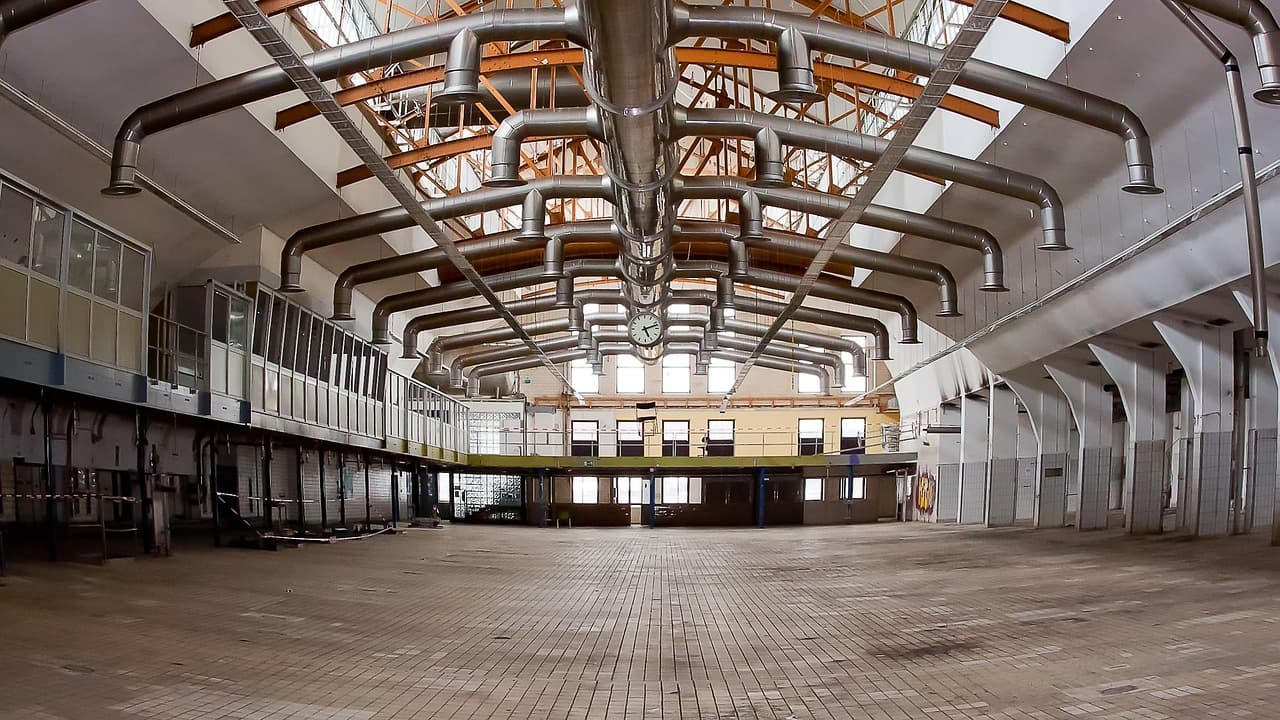
In this case study, we present a concrete project executed by the Reefa team: preparing a 3,000-square-meter production facility near Cracow for a GMP (Good Manufacturing Practice) audit in just three working days. We describe the technical challenges, applied solutions, team composition, and final costs and results. This article is aimed at facility managers, operations directors, and general contractors seeking a partner for post-construction cleaning in industrial facilities.
In Brief
- Facility: 3,000 m² production hall, pharmaceutical industry, GMP certification required
- Challenge: 5 days to audit, intensive construction contamination (concrete dust, oils, grout, protective films)
- Solution: 8-person team, 3 days (2 shifts daily), scrubbing-collection machines with HEPA filters, alcohol-free detergents compliant with pharmaceutical requirements
- Result: positive GMP audit on schedule, facility ready for operation without delays
- Cost: PLN 42,000 net (PLN 14/m²), including specialist equipment mobilization and 24/7 coordination
- Collaboration: close synchronization with general contractor and investor team, daily reporting via photo reports
How Does Production Facility Cleaning Differ from Standard Post-Construction Cleaning?
Production facility cleaning requires an understanding of sanitary regimes characteristic of a given industry. Unlike typical post-construction objects — office buildings, shopping centers, or residential buildings — production facilities are subject to quality standards (GMP, HACCP, ISO 14644 for cleanrooms) and workplace safety requirements (occupational health and safety, ATEX zones).
Key differences include:
- Solid particle control: in the pharmaceutical industry, the permissible number of dust particles per m³ of air is strictly specified by ISO standards. Standard industrial vacuum cleaners do not meet this criterion — equipment with HEPA filters class H13 or H14 is necessary.
- Detergents and cleaning agents: some chemical products used in construction contain alcohol or volatile substances prohibited in pharmaceutical production. Approved, odorless, non-ionic preparations are required.
- Documentation and auditability: every stage of cleaning must be documented — photographically and via a handover protocol. In our project, we used photo reports after each shift (morning and evening), sent via email to the investor and general contractor.
- Coordination with other trades: in the final construction phase, electricians, automation technicians, and production line servicers work in parallel. Cleaning must be synchronized to avoid generating secondary contamination.
The Reefa team has been operating in the industry since 2020, and from the beginning we have emphasized specialist training — every operator receives occupational health and safety, HACCP, and sanitary procedure instruction for regulated facilities. In the Cracow project, only legally employed and insured workers participated, each with at least one year of experience in industrial cleaning.
Challenge: 5 Days to GMP Audit — What Did We Find on Site?
The investor — a pharmaceutical preparations manufacturer — contacted us on February 19, 2025, five days before the scheduled GMP certification audit. The facility had been formally completed by the general contractor, but characteristic end-of-construction traces remained:
- Construction and concrete dust: settled on all horizontal surfaces — steel shelving, ventilation ducts, technological channels, suspended ceilings. The layer thickness locally reached 2–3 mm.
- Adhesive residue and grout: on the industrial floor (epoxy resin) visible smudges of adhesive and polyurethane grout from window and gate installation were evident.
- Oils and greases: residues from lubricating rails, conveyor tracks, and bearings of construction machinery — incompatible with pharmaceutical cleanliness requirements.
- Protective films and tapes: on windows, wall panels, and ventilation equipment. Their removal generated additional electrostatic dust attraction.
- No preliminary cleaning: the general contractor performed only "broom and dustpan" work, which was insufficient in the context of a GMP audit.
The investor required:
- Complete removal of dust from all surfaces (floors, walls, ceilings, installations).
- Machine washing of the floor with disinfection.
- Photographic documentation of each stage.
- Compliance with GMP requirements, including use of detergents approved by the investor's QA department.
- Delivery of the facility in white glove ready condition — prepared for production line installation.
Deadline: maximum 3 working days (72 hours), with the possibility of work in a two-shift system.
Solution: Team, Equipment, Schedule
Team Composition and Organization
We mobilized an eight-person team from our Cracow base — a coordinating operator (shift manager) + 7 field operators. All possessed current health certificates, occupational health and safety training for industrial facilities, and GMP instruction conducted by the investor's QA representative (1 hour, the day before start).
We worked in a two-shift system:
- Shift I: 6:00 a.m.–2:00 p.m.
- Shift II: 2:00 p.m.–10:00 p.m.
Totaling 48 working hours per day, which over three days gave 144 working hours (18 person-days).
Equipment and Materials
For the project, we deployed:
- 2 scrubbing-collection machines (Nilfisk SC6000, working width 105 cm) equipped with cylindrical brushes and HEPA H13 filter. These machines collect water by suction, minimizing secondary evaporation and aerosol settling.
- 4 industrial HEPA vacuum cleaners (Kärcher NT 65/2 Tact² with H14 filter) for cleaning vertical runs, shelving, ventilation channels.
- Mobile scissor lift platform (working height up to 6 m) for cleaning suspended ceilings, roof windows, and ventilation grilles.
- Detergents: alcohol-free alkaline preparation (pH 11, approved by investor), acidic agent for removing concrete residue, disinfectant solution (quaternary ammonium salts, broad bactericidal spectrum).
- Microfiber cloths: color-coded (blue — technical surfaces, green — floor, yellow — ventilation installations).
- Photography system: tablets with real-time reporting application — geolocated photos, timestamp, cloud upload.
Work Schedule (3 Days)
Day 1 — Removal of Gross Contamination
- Dismantling protective films and tapes (2 people, 4 h).
- HEPA vacuuming of ceiling, grilles, overhead installations (4 people on platform + vacuums, 12 h).
- Initial floor cleaning: vacuuming + washing with alkaline preparation (2 people, scrubbing machines, 8 h).
Day 2 — Detailed Cleaning and Disinfection
- Washing of panel walls with alkaline preparation (3 people, 10 h).
- Removal of adhesive and grout residue with acidic agent, neutralization, rinsing (2 people, 6 h).
- Cleaning of steel shelving, rails, cable channels (3 people, 12 h).
- Machine washing of floor for second time, with disinfection (2 people, 6 h).
Day 3 — Quality Control and Touch-up
- White-glove inspection (white cotton glove wiped across surfaces — visual cleanliness test).
- Spot corrections: detailed cleaning of hard-to-reach areas, smudge removal, final disinfection.
- Final photo reports (before/after for each zone).
- Handover protocol signed by construction manager, investor, and Reefa coordinator.
What Were the Key Operational Challenges?
Coordination with Other Contractors
During cleaning days, production line installers (Italian supplier) and electricians completing guaranteed power supply installation worked in parallel. We had to synchronize the schedule daily — in practice this meant:
- Cleaning zones A and B (assembly lines) during nighttime and early morning hours when installers were absent.
- Designating zone C (technical support area) for electricians, cleaning that zone on day 3.
- Daily 8:00 a.m. meeting with construction manager — coordinating priorities, safety, media access.
GMP Requirements for Detergents
The investor's QA department supplied a list of approved chemical products — we could use only preparations from that list. In practice, this meant purchasing specialist detergents (cost ~PLN 3,500 net), which are not used in standard post-construction cleaning. We collaborated with Dr. Weigert, a supplier specializing in industrial chemistry for pharma and medical sectors.
Air Quality Control
The investor hired an external firm to measure dust levels using particle counter methodology. Measurements were conducted after each shift. Requirement: <100,000 particles ≥0.5 µm/m³ (ISO cleanliness class 8). After day 1, measurement showed 240,000 particles/m³ — additional ventilation was required (24-hour continuous airing with open gates) + repeated HEPA vacuuming. Only after day 2 did we achieve 78,000 particles/m³, meeting the standard.
Equipment Logistics
Some machines and the scissor lift platform required delivery from our Cracow base. We completed transport and unloading the evening before day 1, allowing the team to start work without delays the following morning. Equipment mobilization cost was PLN 4,200 net (transport, insurance, platform assembly).
How Much Does Production Facility Cleaning Cost? — Project Breakdown
The total project cost was PLN 42,000 net (PLN 51,660 gross), equaling PLN 14 net/m² for the 3,000 m² facility. Below is the detailed cost structure:
| Item | Net Value |
|---|---|
| Labor (144 working hours × PLN 85/hour) | PLN 12,240 |
| 24/7 Coordinator (3 days × PLN 1,200) | PLN 3,600 |
| Scrubbing-collection machine rental (2 units × 3 days) | PLN 3,600 |
| HEPA vacuum rental (4 units × 3 days) | PLN 1,440 |
| Scissor lift platform rental | PLN 2,100 |
| Transport and equipment mobilization | PLN 4,200 |
| Detergents and consumable materials | PLN 4,820 |
| GMP specialist detergents | PLN 3,500 |
| Photo reports, documentation, protocols | PLN 800 |
| Project liability insurance (PLN 500,000 limit) | PLN 1,200 |
| Coordination markup and contingency | PLN 4,500 |
| TOTAL | PLN 42,000 |
For comparison: standard post-construction cleaning in non-residential facilities (offices, retail) costs PLN 8–12 net/m². The elevated rate for a production facility results from:
- GMP requirements (specialist detergents, HEPA filters, audit documentation).
- Tight implementation deadlines (two-shift mobilization, weekend work).
- Coordination with other contractors and investor.
- Higher team competencies (industry training, certifications).
Result: Positive GMP Audit and On-Time Facility Handover
The facility was delivered to the investor on February 24, 2025 at 6:00 p.m. — 36 hours before the GMP certification audit. The GMP audit conducted by a notified body (TÜV SÜD) lasted two days and concluded with a positive assessment. In the audit report under "Production Area Cleanliness," zero critical findings were noted, with one informational remark concerning zone marking — unrelated to cleaning.
Thanks to on-time execution, the investor avoided production startup delays. The estimated cost of each day of downtime in this facility was ~PLN 60,000 (lost revenue + fixed costs). The PLN 42,000 investment in professional cleaning returned many times over by avoiding audit postponement risk.
After project completion, we signed an agreement with the investor for ongoing facility maintenance (daily cleaning + periodic machine washing every 2 weeks). This collaboration continues today — the facility operates in full GMP regime, and the Reefa team maintains continuity of the standard established during post-construction cleaning.
How to Choose a Production Facility Cleaning Company?
When selecting a partner for production facility cleaning after construction, facility managers and operations directors should focus on the following criteria:
1. Experience in Regulated Facilities
Not every cleaning company has the competencies to work in pharmaceutical, food, or electronics production halls. Ask for references from similar projects, training certifications (GMP, HACCP, ISO 14644), and a client list from your industry. The Reefa team serves medical facilities (e.g., Diamed Medical Center in Katowice), requiring similar sanitary discipline.
2. Certified Equipment
HEPA vacuums, scrubbing machines, and filters should have certificates confirming effectiveness (e.g., EN 1822 certification for HEPA filters). Ask for specific brand and model — if the company cannot provide details, it likely lacks professional equipment.
3. Flexibility and Mobilization
Post-construction projects often require accelerated work, night shifts, and weekend operation. Check whether the company can mobilize an appropriate team quickly. Reefa maintains a field operator base in Cracow and the Silesian Agglomeration, enabling project startup within 48 hours of inquiry.
4. Documentation and Reporting
In regulated facilities, documentation is as important as cleaning itself. Photo reports, handover protocols, detergent safety data sheets — these are essential for audit. Since 2020, we use QR-code systems for submissions and photo reports after each cleaning, facilitating coordination with investor QA and HSE departments.
5. Liability Insurance and Legal Employment
Damage to expensive production line equipment or technological installations can cost hundreds of thousands of zlotys. Require confirmation of liability insurance — at Reefa, our policy limit is PLN 500,000. Additionally, all our operators are legally employed and insured, eliminating risk of labor authority inspections at the client's site.
6. Dedicated Project Coordinator
For large facilities (>1,000 m²) and tight deadlines, a 24/7 coordinator is essential — a liaison between the cleaning team, general contractor, investor, and other subcontractors. In our model, each project has a dedicated coordinator available by phone and email throughout execution.
Frequently Asked Questions
How much does production facility cleaning cost?
Production facility post-construction cleaning costs range from PLN 10 to 18 net/m², depending on sanitary requirements and contamination scale. GMP facilities (pharma, cosmetics) and cleanrooms require specialist detergents, HEPA equipment, and audit documentation — rates typically PLN 14–18/m². Warehouse halls, logistics facilities, or lightly contaminated production halls (without GMP regime) can be cleaned for PLN 10–12/m². In the described case study (3,000 m², GMP, 3 days), cost was PLN 42,000 net, or PLN 14/m². This includes labor, specialist equipment, detergents, 24/7 coordination, and liability insurance up to PLN 500,000. For smaller facilities (<500 m²), unit rates may be higher due to fixed mobilization costs.
How much per hour for industrial facility cleaning?
The working-hour rate for industrial facility cleaning in the Cracow and Katowice region in 2026 ranges from PLN 70 to 95 net, depending on operator qualifications and work complexity. Standard projects (warehouse halls, production zones without sanitary regime) use PLN 70–75/hour. Work requiring certification (GMP, HACCP, ATEX) costs PLN 85–95/hour — the operator must hold training certification, current health records, and regulated-facility experience. In the described case study, we applied PLN 85/hour (144 working hours × PLN 85 = PLN 12,240). Note that labor costs are complemented by equipment rental, consumables, coordination, and insurance. In two-shift and emergency mode (execution in <5 days), rates may increase 15–25%.
What is the "3:30 rule" in cleaning?
The "3:30 rule" in cleaning management is a method used in commercial and industrial facility cleanliness governance. It involves daily facility inspection at 3:30 p.m. (15:30) — when the facility is actively used but before the workday ends. The inspection assesses cleaning effectiveness under real-world conditions, not just immediately after morning cleaning. In production halls, we adapt this to facility specifics: if production runs on three shifts, inspection occurs mid-main shift (most intensive). In the Cracow project, we conducted inspections twice daily — at 12:00 p.m. (end of shift I) and 8:00 p.m. (end of shift II) — to verify progress in real time and adjust the schedule.
What are methods for cleaning industrial machinery?
Post-construction or renovation industrial machinery cleaning involves several methods, adapted to surface type and contamination level. Dry cleaning: HEPA vacuuming or compressed air blowing (with outlet filter) — used for electronics, motors, control boxes. Wet cleaning: gentle washing with non-ionic detergents, typically microfiber cloth dampened with pH-neutral preparation. Used for stainless steel housings, operator panels, plastic covers. Degreasing: alkaline detergents (pH 10–12) or solvents (isopropanol, hexane) — removes oils, greases, and preservatives from rails, bearings, conveyor chains. Disinfection: after mechanical cleaning, in pharma and food industry — quaternary ammonium salts, hydrogen peroxide, 70% isopropyl alcohol. Steam cleaning: water vapor at 120–180°C, effective for removing adhesive, silicone, label residue — requires moisture-resistant machinery materials. In the Cracow hall, we used a combination of HEPA vacuuming, alkaline detergent washing, and final disinfection — all methods approved by investor QA.
Does Reefa handle production facility cleaning in other cities?
Yes. The Reefa team operates in two agglomerations: Cracow and surroundings (since 2020) and the Silesian Agglomeration — Katowice, Gliwice, Sosnowiec, Chorzów (since 2024). We serve production halls, warehouses, logistics facilities, and other industrial spaces requiring professional post-construction cleaning and ongoing maintenance. Depending on location and project scale, we can mobilize 4–12 operators and supply specialist equipment (scrubbing machines, HEPA vacuums, work platforms). Each project has a dedicated 24/7 coordinator, and after every cleaning, we deliver photo reports and handover protocols. Contact our team via contact form to discuss your facility details and receive a quote tailored to your industry and construction schedule.
How long does standard production facility cleaning take (1,000–3,000 m²)?
Production facility cleaning time depends on square footage, contamination level, and quality requirements. 1,000 m² hall — post-construction cleaning (dust removal, machine floor washing, installation cleaning) takes a 4–6 person team approximately 1.5–2 working days (12–16 working hours per person). 2,000 m² hall — in standard mode (no GMP requirements), a 6-person team completes work in 2–3 days. 3,000 m² hall with GMP requirements — as in the described case study — requires 3 days of 8-person team work on two shifts (144 total working hours). For facilities >5,000 m² we recommend continuous operation (3 shifts daily) or extending to 5–7 days to avoid team fatigue and maintain detail quality. During quotation, we always include time buffer (+10–15%) for unforeseen events — other trade delays, additional contamination, scope changes by investor.
Summary — When Is Professional Production Facility Cleaning Worth the Investment?
Production facility cleaning after construction is not a cost — it is an investment in operational continuity. A positive GMP audit, timely production startup, and avoidance of contractual penalties often return the cleaning service cost many times over.
In the discussed project, the Reefa team mobilized 8 people, specialist equipment, and pharmaceutical detergents to prepare a 3,000-square-meter facility near Cracow for GMP audit in 3 days. The final cost of PLN 42,000 net (PLN 14/m²) included full coordination, photo documentation, and liability insurance up to PLN 500,000. The facility was delivered on time, the audit succeeded, and the investor avoided losses from production delays.
If your company is planning construction or expansion of an industrial facility in Cracow, Katowice, or surrounding areas, we invite you to contact the Reefa team. We will prepare a dedicated offer reflecting industry specifics, construction schedule, and audit requirements. Contact us — we'll respond within 24 hours and propose an optimal solution for your facility.