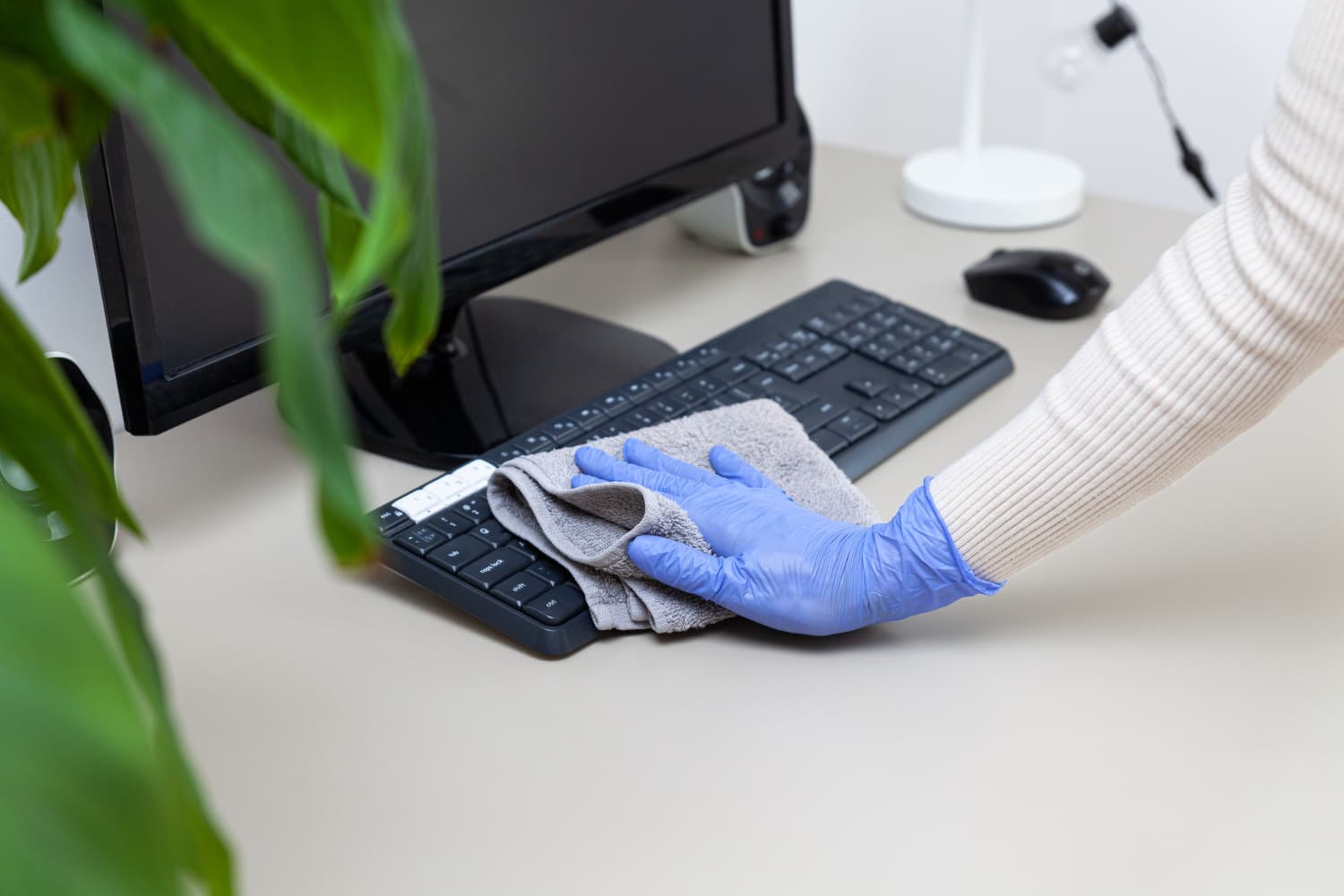
Office Cleaning Quality Audits — KPIs and Contract Penalties
A practical guide to cleaning quality audits for property managers: KPI measurement, control tools, contractual penalties, and a sample inspection template for office buildings.

A practical guide to cleaning quality audits for property managers: KPI measurement, control tools, contractual penalties, and a sample inspection template for office buildings.
A cleaning quality audit is a systematic inspection of cleanliness standards and contract compliance in an office building, measured through objective KPI (Key Performance Indicator) metrics and defined in a service agreement (SLA — Service Level Agreement).
A well-designed audit system protects property managers and facility managers from invisible drops in service quality, reduces tenant complaints, and ensures transparency in relationships with cleaning contractors. Our observations from 2025–2026 show that office buildings that implemented monthly digital audits with KPIs saw an average 62% reduction in complaints within the first six months of deployment.
This article presents practical tools and metrics used by the Reefa team, discusses contractual penalties commonly applied in professional B2B cleaning contracts, and provides a quality control template you can adapt to your facility's specific needs.
In brief
- Office cleaning quality audits include measurable KPIs: response time, completion rate, complaint rate, and inspection score
- Control tools include QR code systems, monthly PDF reports, and spot checks conducted by facility managers
- Contractual penalties can include percentage deductions from invoices, immediate termination rights, and payment withholding
- A professional audit template contains 20–30 control points, a rating scale, and an escalation procedure
- Monthly digital audits reduce complaint rates by approximately 60% in the first six months of implementation
- At Reefa, we conduct 100% location audits in the first month, followed by random spot checks covering 25% of facilities monthly
Why cleaning quality audits are essential in B2B contracts
In cleaning contracts for office buildings in Cracow and Katowice, the standard of "visually clean" is insufficient. Class A office buildings, particularly those with multiple tenants, require documented compliance with contractual parameters. An audit serves three functions:
Transparency for both contract parties. Property managers receive objective evidence of service delivery quality, while cleaning companies have clear guidelines on exactly what will be inspected. Our data shows that contracts with monthly audits have an average duration of 2.4 years (96% retention rate), compared to contracts without audits that terminate after an average of 14 months.
Legal protection in case of disputes. If a tenant files a complaint with building management, the property manager can reference the audit system as evidence that cleaning standards were regularly monitored or — if a failure is confirmed — that disciplinary procedures were initiated against the contractor.
Motivation to maintain standards. Knowing that spot checks can occur at any time and that results have financial consequences ensures cleaning staff follow operational procedures. At GPP Business Park in Cracow, where we manage nighttime cleaning across six floors, monthly audits cover 30% of randomly selected spaces, which disciplines the team and minimizes the risk of procedure shortcuts after several months of contract operation.
Key performance indicators (KPIs) in office cleaning audits
A professional cleaning quality audit is based on four main measurable indicators that can be tracked objectively and automatically:
1. Response time. The maximum time from service request submission to start of action. In premium contracts, we set <24 hours for standard requests and <2 hours for emergency interventions (e.g., spilled liquid in hallway, toilet failure). In the contract for the .KTW office building in Katowice, we use a digital ticket system: each request receives a timestamp for start and completion, and the platform automatically calculates median response time for the month.
2. Completion rate. The percentage of planned tasks that are completed in full and on time. Example: if the schedule requires vacuuming 100% of floor space daily but the team skips every third conference room, the completion rate drops to 66%. The contractual standard is ≥98%. In Reefa's practice, we track completion rate through QR scanning: each room has a code that staff scan upon finishing cleaning. If the code is not scanned, the task is marked as incomplete.
3. Complaint rate. The number of formal tenant complaints per 1,000 m² per month. We set an alarm threshold at 0.5 complaints per 1,000 m²/month. Above this level, we trigger an internal audit of operational procedures. At Diamed Medical Center—a private medical facility in Cracow—the complaint rate has not exceeded 0.2 complaints per 1,000 m² over the last 18 months, demonstrating the effectiveness of HACCP hygiene protocols and regular manual checks by the coordinator.
4. Monthly inspection score. An audit result expressed on a 0–100 point scale or 1–5 star rating. It comprises 20–30 control points, each rated as: met (1 point), partially met (0.5 points), or not met (0 points). The standard contractual minimum is typically 85/100 points (4.25/5 stars). Below this threshold, percentage penalties are applied to the invoice.
What does a professional audit template look like?
Below is a sample template we use at Reefa during monthly office building inspections. This template can be adapted to facility-specific needs—for example, adding control points for locker room cleanliness in sports facilities or HACCP procedures in medical facilities.
Inspection areas and scoring points
Common areas (20 points):
- Corridor floors free of dust, stains, and footprints — 2 pts
- Mirrors and glass reflections without streaks and fingerprints — 2 pts
- Trash bins emptied, bag replaced — 1 pt
- No unpleasant odors in circulation areas — 2 pts
- Handrails, handles, and light switches wiped with disinfectant — 2 pts
- Elevator: floor, mirrors, and button panel clean — 2 pts
- Stairwell: handrails and corners dust-free — 2 pts
- Potted plants watered and wiped (if in contract scope) — 1 pt
- Window sills free of dust, debris collected from corners — 2 pts
- Bulletin boards and reception area without dust — 2 pts
- Lights and ceilings free of cobwebs — 2 pts
Restrooms (20 points):
- Toilets and urinals: clean, scale-free, disinfected — 3 pts
- Sinks, faucets, and mirrors free of water marks, soap, and fingerprints — 3 pts
- Floors washed, free of stains and puddles — 2 pts
- Stall walls, handles, and doors wiped — 2 pts
- Waste bins emptied, fresh bag installed — 2 pts
- Soap, paper towel, and hand towel dispensers refilled — 3 pts
- No unpleasant odors — 3 pts
- Exhaust fans and vents free of dust — 2 pts
Conference rooms and workstations (15 points):
- Desks and tables: free of dust, stains, food residue — 3 pts
- Chairs and armchairs wiped, upholstery vacuumed — 2 pts
- Monitors, keyboards, and phones wiped (if in contract scope) — 2 pts
- Trash bins emptied, recycling separated — 2 pts
- Floors vacuumed/washed, free of crumbs — 3 pts
- Electrical outlets and cable trays wiped — 1 pt
- Plants watered (if in contract scope) — 1 pt
- Blinds/shutters dusted — 1 pt
Office kitchens (15 points):
- Work surfaces washed and sanitized — 3 pts
- Sink clean, faucet free of deposits — 2 pts
- Refrigerator: exterior wiped, expired items removed (weekly) — 2 pts
- Microwave cleaned inside and outside — 2 pts
- Coffee machines and kettles descaled and wiped — 2 pts
- Trash bins and bags changed, recycling separated — 2 pts
- Floors washed, free of grease stains — 2 pts
Storage and technical rooms (10 points):
- Shelves and equipment free of dust — 2 pts
- Floors clean, no spillage or debris — 2 pts
- Cleaning equipment organized, not scattered — 2 pts
- Buckets, mops, and vacuums clean and stored properly — 2 pts
- No waste or chemical packaging left behind — 2 pts
Work organization and safety (20 points):
- Personnel in clean uniforms, IDs visible — 3 pts
- Chemicals compliant with contract, certified (EU Ecolabel/Green Seal) — 3 pts
- Chemical containers labeled and sealed — 2 pts
- Equipment functional, service carts clean — 3 pts
- MSDS (Material Safety Data Sheets) available on-site — 2 pts
- Cleaning protocol signed daily by coordinator — 3 pts
- No safety violations (e.g., wet floors without warning signs) — 4 pts
Rating scale and penalty thresholds
- 95–100 points: exemplary quality, no remarks
- 85–94 points: acceptable quality, minor lapses, no penalties
- 70–84 points: below-standard quality, 5% invoice deduction for the month
- 50–69 points: unacceptable quality, 15% invoice deduction, mandatory remediation meeting
- Below 50 points: serious SLA breach, right to immediate termination without notice period
Digital and organizational tools in cleaning audits
For an audit to be repeatable and measurable, appropriate tools are necessary. Reefa uses a hybrid control model:
QR code system. Each room covered by the contract receives a unique QR code. Cleaning staff scans the code upon completing a room, which generates a timestamp in the system. The property manager can check at any time what hour a room was cleaned and how much time was spent on the task. In practice, this detects skipped rooms and work completed below time standards (e.g., cleaning a 120 m² room in 4 minutes instead of 18 minutes).
Monthly PDF report. By the 5th business day of the following month, the property manager receives a report containing: KPI table, inspection score, before/after photos from spot checks, request log with response times, and complaint statistics. The report is digitally signed by the facility manager and Reefa coordinator. For Quattro Business Park in Katowice, the monthly report runs 8–12 pages and serves as the basis for monthly operational meetings.
Spot checks. The property manager or representative conducts an unannounced inspection of part of the facility (25–30% of floor space) on a randomly selected day. The check lasts 30–60 minutes, results are recorded in an audit form and compared with the monthly report. Our observations show that the randomness effect increases team discipline by approximately 40% compared to announced audits.
Facility management software. Solutions such as FMX, UpKeep, or ServiceChannel enable request ticketing, automatic KPI calculation, and dashboards with trend charts. For facilities exceeding 5,000 m² we recommend implementing such a system, as manual data collection becomes inefficient. At Otto Bock HealthCare Polska—a manufacturing facility with offices in Cracow—we use UpKeep's module for logging service requests, which reduced average response time from 18 hours to 6 hours.
Contractual penalties in cleaning contracts — penalty reference table
Penalties serve as an enforcement mechanism for quality assurance. A well-constructed penalty clause should be proportionate, transparent, and verifiable. The table below presents typical penalties used in B2B office cleaning contracts:
| Breach | Penalty | Verification method |
|---|---|---|
| Inspection score 70–84 points | 5% of monthly invoice value | Monthly report + control protocol |
| Inspection score 50–69 points | 15% of monthly invoice + remediation plan within 7 days | Monthly report + meeting |
| Inspection score <50 points for 2 consecutive months | Right to terminate without notice period | Two consecutive monthly reports |
| Response time >24h (standard intervention) | 200 PLN per occurrence | Ticket log + timestamp |
| Response time >2h (emergency intervention) | 500 PLN per occurrence | Ticket log + requester confirmation |
| Failure to replenish supplies (paper, soap) | 100 PLN per occurrence | Tenant complaint + control protocol |
| Safety or GDPR procedure breach | 1,000 PLN + right to immediate termination | Control protocol, safety inspector report |
| Complaint rate >1.0 per 1,000 m²/month for 3 consecutive months | Right to terminate with 1-month notice period | Complaint register maintained by manager |
| Personnel no-show without replacement | 10% daily fee for each missed day | Facility manager confirmation |
| Use of non-certified chemicals | 500 PLN + mandatory replacement within 48h | Spot check + label verification |
Payment withholding (payment retention). In premium contracts, the property manager can withhold 10–20% of payment pending completion of corrective procedures. Example: if inspection score is 68 points, the manager retains 15% of invoice value, and the contractor receives it after achieving ≥85 points on the next control.
Liability insurance as security. Every professional contract should require civil liability insurance of at least 200,000–500,000 PLN. Reefa maintains OC liability coverage of 500,000 PLN, which protects property managers against tenant claims for office equipment damage, water damage, or food contamination (in kitchens).
Case study: audit implementation in a Class A office building in Cracow
In Q1 2025, we implemented a digital audit system at GPP Business Park in Cracow (six floors, 4,200 m², 12 tenants). Before implementation, the complaint rate was 1.2 per 1,000 m²/month, and inspection scores ranged from 78–82 points.
Actions taken:
- Installation of 48 QR codes in spaces (corridors, restrooms, conference rooms, kitchens)
- Staff training on mobile app operation for code scanning
- Spot checks every two weeks (30% of floor space randomly selected)
- Monthly operational meetings between property manager and Reefa coordinator
- Penalty system: 5% invoice deduction for scores 70–84 points, 15% for scores 50–69 points
Results after six months:
- Average inspection score increased to 91 points (range 88–96 points)
- Complaint rate dropped to 0.3 per 1,000 m²/month (75% reduction)
- Response time for standard interventions fell from 22 hours to 8 hours
- Completion rate increased from 89% to 98%
- Manager's complaint-related costs fell by approximately 8,000 PLN annually
The key success factor was clarity of evaluation criteria—the team knew exactly what would be inspected, and the manager had an objective control tool. In year two of the contract, the manager decided to renew for an additional 24 months, confirming the audit model's effectiveness.
How to introduce quality audits to an existing cleaning contract
If your current contract lacks an audit system, you can introduce one via an amendment. We recommend the following process:
Phase 1: Define KPIs and audit template (2 weeks). Consult with the contractor to establish 20–30 control points, rating scale, penalty thresholds, and audit frequency. It's important that the template be realistic—overly stringent criteria will discourage the contractor and cause conflicts.
Phase 2: Pilot period without penalties (1–2 months). For the first one or two months, conduct audits without imposing penalties. This allows the cleaning team to adjust procedures and identify any contentious template points. During this period, inspection scores should serve as diagnostic tools, not punitive ones.
Phase 3: Full implementation and monitoring (from month 3 onward). After the pilot period, launch the complete audit with penalties. Monthly reports should be discussed at operational meetings, and data should be collected historically (Excel, FM dashboard) for trend analysis.
Phase 4: Optimization (every 6 months). Regularly review the template, remove obsolete points, add new ones in response to building changes (e.g., new floor opening, kitchen renovation). The audit should evolve with the facility and tenant expectations.
In practice, the total cost of implementing a digital audit system (QR codes, software, training) is approximately 1,500–3,000 PLN net for a building with 3,000–5,000 m². Savings from reduced complaints and minimized disputes recover this investment within the first 6–9 months.
Employment agreements and cleaning quality
Staff stability directly translates to service quality. At Reefa, all operational personnel are hired under employment contracts—never on freelance or work-for-hire agreements. This means:
- Mandatory safety, HACCP, and GDPR training before work authorization
- Fixed compensation and benefits, which reduces turnover (lower turnover = better facility familiarity)
- Legal accountability for work quality (employees are bound by labor law with clearly defined obligations)
- Health insurance and accident coverage, reducing absence and no-show risks
Our data shows that teams hired under employment contracts achieve an average 14% higher inspection score compared to freelance-based teams. This is particularly evident in long-term contracts where facility familiarity and understanding of tenant preferences are critical.
Frequently asked questions
How much does implementing an office cleaning quality audit system cost?
Implementation costs depend on facility size and automation level. For a 3,000–5,000 m² building, QR codes and basic software cost approximately 1,500–3,000 PLN net. If you plan a comprehensive facility management system with ticketing, reporting, and trend analysis modules, annual software subscription ranges from 3,000–8,000 PLN depending on user count. Alternatively, audits can be conducted manually (paper template + Excel), with no additional costs but requiring approximately 2–3 hours of manager time monthly. Savings from reduced complaints and increased tenant satisfaction typically recover the investment within 6–9 months.
How frequently should office cleaning quality audits be conducted?
We recommend monthly full audits (100% coverage or a representative sample of minimum 30%) plus spot checks every two weeks (25–30% of floor space randomly). In the first contract month, we conduct 100% facility inspection to establish baseline quality and identify problem areas. From month two onward, we switch to standard mode: full audit once monthly plus random checks every two weeks. High-risk facilities (e.g., medical centers, controlled-access areas) may require higher frequency—even weekly checks. Crucially, the audit schedule must be documented in the SLA so both parties understand the ground rules.
Which contractual penalties are most effective in ensuring quality?
Percentage deductions from invoice value are most effective because they directly impact contractor profitability. In practice, 5% penalties for inspection scores of 70–84 points and 15% for scores of 50–69 points strike the right balance between motivation and cooperation stability. Equally important is the right to terminate immediately without notice in case of repeated violations (e.g., two consecutive months below 50 points). Penalties should be scaled: minor lapses = warning, serious violations = financial penalty, systematic violations = termination. Importantly, the penalty procedure must be clearly documented in the contract and allow the contractor right of reply within 5 business days of receiving the protocol.
Can a quality audit be introduced to an existing cleaning contract?
Yes, you can introduce audits via contract amendment. Implementation should be phased: (1) negotiate audit template and KPIs with the contractor, (2) conduct a 1–2 month pilot without penalties, (3) full implementation with penalties from month 3 onward. Obtaining contractor agreement is key—arbitrarily imposing audits can be seen as contract modification and trigger disputes. In practice, most professional cleaning firms accept audits because they protect contractor interests too—they provide objective proof of quality and reduce subjective complaints. If a contractor refuses to accept audits, that's a warning sign: they may not be confident in their service quality.
What are the most common mistakes property managers make when implementing quality audits?
Common mistakes include: (1) overly detailed templates with 50–70 control points that are impractical and frustrate both sides; (2) skipping the pilot period—imposing penalties immediately demotivates contractors and generates conflicts; (3) conducting audits irregularly or with advance notice—teams "prepare" for checks, skewing results; (4) lack of rating transparency—auditors judge "by eye," leading to subjective disputes; (5) disproportionate penalties—e.g., 20% deduction for missing paper in one restroom. A well-designed audit should be a collaboration tool, not a punishment mechanism. We recommend partnering with an experienced contractor (such as Reefa) that has ready-made templates and has conducted dozens of audit implementations across various facility types.
Does quality auditing increase cleaning service costs?
Auditing doesn't directly increase base service cost—if managers conduct controls in-house, additional costs are only manager time (2–3 hours/month) and optional software (approximately 250–700 PLN net/month). In practice, professional cleaning firms offering built-in digital audits within the contract (like Reefa) don't raise prices by more than 2–5% compared to contracts without audits. These costs are quickly offset by reduced complaints, lower staff absence, and improved operational efficiency. Long-term, audits lower total facility management costs by enabling early issue detection before they escalate into major damage or tenant complaints.
Contact our team to implement quality audits at your facility
If you manage an office building, mixed-use building, or office complex in Cracow or Katowice and are seeking a partner with an established quality audit system, we invite you to contact Reefa's team. We offer:
- Monthly PDF reports with KPI and inspection scores
- QR code system with digital task completion logs
- Personnel hired exclusively under employment contracts
- OC liability insurance up to 500,000 PLN
- 96% client retention rate and average contract duration of 2.4 years
- Custom pricing for facilities over 1,000 m²
Contact us via the form on /krakow/sprzatanie-biurowcow or /katowice/sprzatanie-biurowcow to schedule a free initial audit and presentation of our quality control system.