Hospital Cleaning vs Clinic Cleaning — Protocol and Cost Differences
Hospitals require 24/7 disinfection and certified staff; clinics operate on post-visit schedules. We compare protocols and costs across both facility categories.
Hospitals require 24/7 disinfection and certified staff; clinics operate on post-visit schedules. We compare protocols and costs across both facility categories.
Hospital vs. Clinic Cleaning — A Fundamental Difference
Hospital cleaning differs fundamentally from clinic operations — primarily in disinfection protocols, staff certification, 24/7 logistics, and documentation requirements. Hospitals demand continuous operational readiness, protocols adapted to infection risk, and meticulous tracking of every action, while clinics operate within established appointment schedules.
In practice, outsourcing sanitation services for medical facilities requires choosing the right service model — a decision that directly impacts patient safety, compliance with sanitary and epidemiological regulations, and operational cost efficiency. Our observations in 2025–2026 show that administrative directors of public and private hospitals increasingly outsource cleaning to external providers — provided the partner meets Sanepid audit requirements, ISO 9001 certification, and carries liability insurance of at least PLN 500,000.
This article presents a detailed comparison of both facility categories — from disinfection protocols to monthly cost tables in PLN net — from the perspective of the Reefa team, which has served medical facilities in Cracow and Katowice since 2020, including Diamed Medical Center (a network of private specialist clinics) and Otto Bock Polska (an orthopedic prosthetics center with outpatient services).
In Brief
- Hospitals require 24/7 service, staff with carrier screening, complete activity logs, and disinfection after each patient change (OR, ICU, isolation wards).
- Clinics operate on daytime schedules; scope-based disinfection occurs after appointment hours; certification requirements are lower.
- Hospital cleaning cost: PLN 18–32 net/m²/month; clinic: PLN 12–20 net/m²/month (data for Cracow and Katowice, 2026).
- Key differences include team size, access to medical-grade chemical storage, and reporting requirements to epidemiological services.
- Provider selection should consider experience in the facility type, liability coverage, employment model (employment contracts), and emergency response time (<24 h).
What Makes Hospital Cleaning Different from Clinic Cleaning?
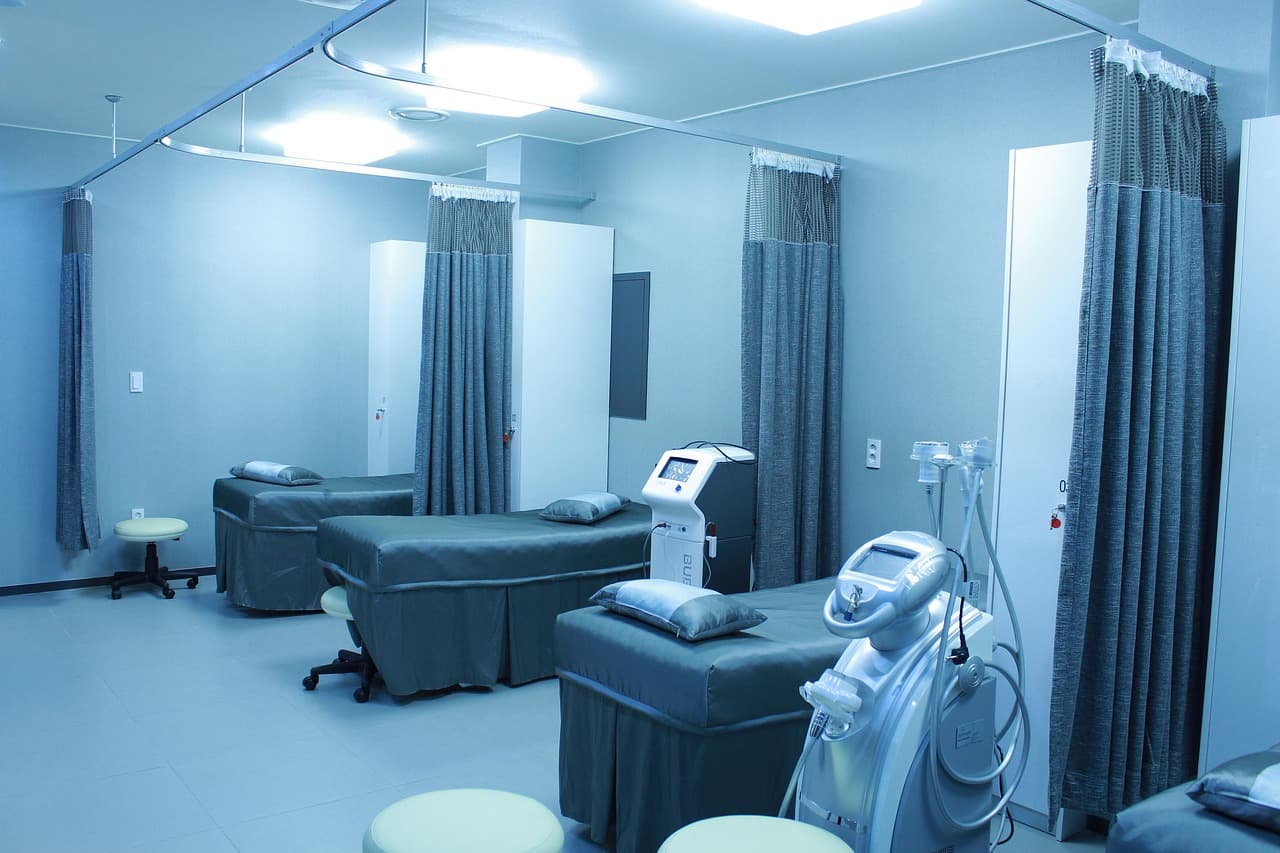
The main difference lies in epidemiological risk level and intensity of patient rotation. A hospital is a non-stop facility where certain areas — operating rooms, intensive care units (ICU), isolation wards — require microbiological cleanliness classes comparable to industrial clean rooms. Each patient change, each surgical procedure initiates terminal or ongoing disinfection, logged in control sheets and verified by epidemiological nurses.
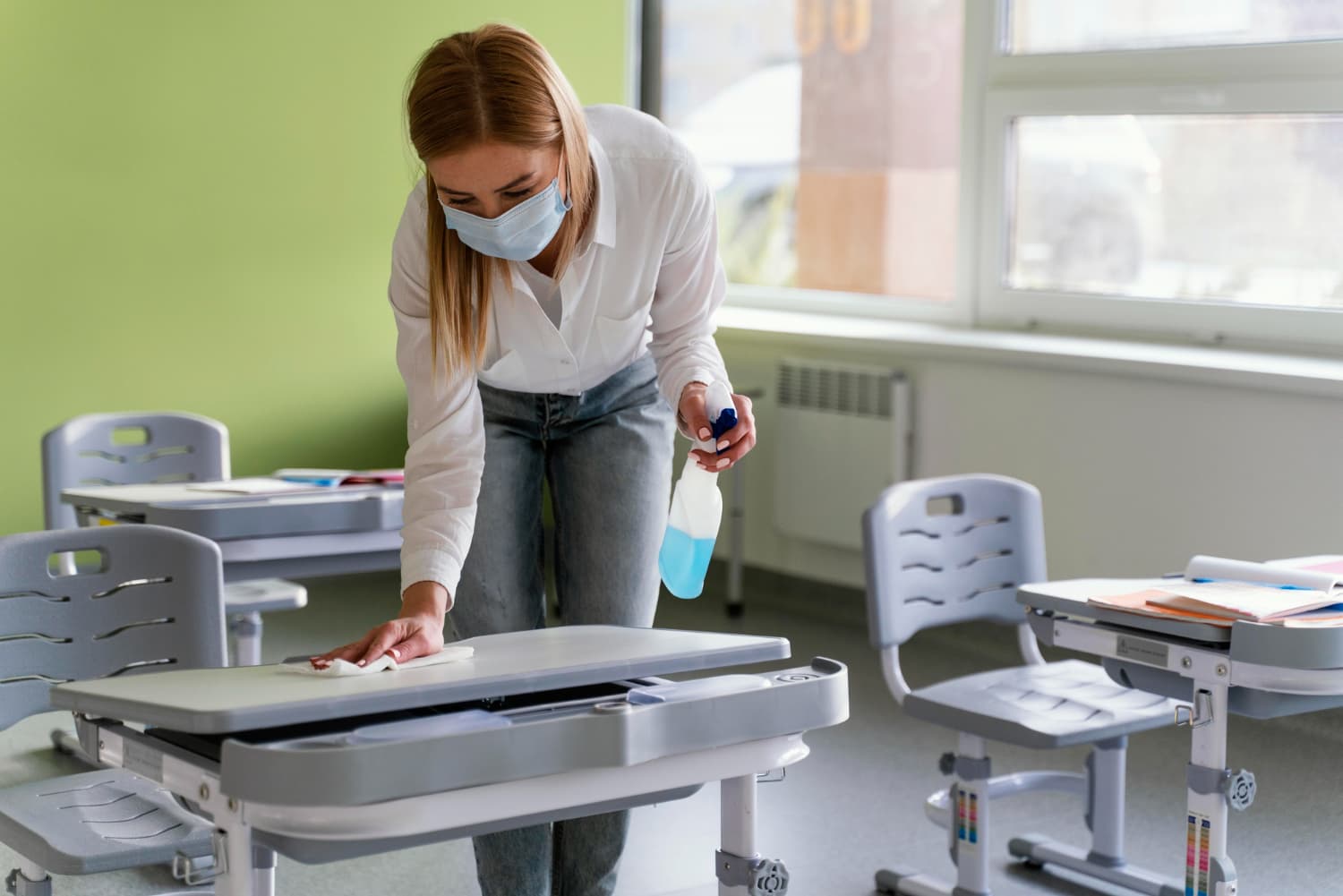
A specialist clinic or primary care facility (POZ) typically has set appointment hours — usually 7:00–19:00 on weekdays — and sanitation occurs after registration closes or during morning hours before opening. Disinfection is scope-based: treatment rooms after each patient block, waiting areas once daily, restrooms several times per shift. Activity logs exist but are collective rather than room-specific.
Another dimension is staff certification. In a hospital, each cleaning team member undergoes carrier screening for golden staphylococcus (Staphylococcus aureus) and coagulase-negative staphylococci, extended occupational safety training covering procedures for Class B (infectious) and Class C (particularly hazardous) medical waste, and asepsis instruction. In a clinic, requirements are lower — occupational safety training, basic HACCP for food service areas (if the facility has staff cafeteria), and knowledge of disinfection procedures for high-touch surfaces.
In Reefa's experience — serving facilities in Cracow and Katowice — time to operational readiness for a hospital averages 4–6 weeks (onboarding procedures, Sanepid audit, staff deployment), whereas for a clinic it's 1–2 weeks.
Hospital Cleaning Protocol
The hospital protocol divides spaces by risk zones:
- Zone I (highest risk) — operating room, ICU, delivery rooms, transplant units, isolation wards. Disinfection after each procedure or patient discharge, floor washing with sodium hypochlorite or hydrogen peroxide solution at minimum 1000 ppm active chlorine, UV-C in unoccupied spaces. Staff wear disposable gowns, nitrile gloves, FFP2 masks.
- Zone II (moderate risk) — general wards, diagnostic labs, rehabilitation areas. Disinfection once per shift (typically twice daily), wet cleaning protocol with dedicated equipment for each ward (preventing cross-contamination).
- Zone III (standard risk) — administration, staff changing rooms, non-medical corridors. Cleaning and disinfection once daily, standards similar to office buildings.
Every action is recorded in control sheets — room number, start/end time, worker signature, ward nurse confirmation. If Sanepid inspects, these sheets serve as compliance evidence.
Additionally, hospitals require separation of clean and dirty flows. Carts with clean mops, cloths, and chemicals travel dedicated routes, never crossing paths with waste carts. Chemical storage areas are locked; each disinfectant bottle has a Material Safety Data Sheet (MSDS) and batch number.
From our 2026 observations, the most common challenge in hospital outsourcing is availability of staff for night and weekend shifts. Therefore, Reefa employs all workers on employment contracts — this model ensures schedule stability and reduces absence risk to <3%, critical in a 24/7 environment.
Clinic Cleaning Protocol
A clinic operates on a daily cycle, so the protocol is linear:
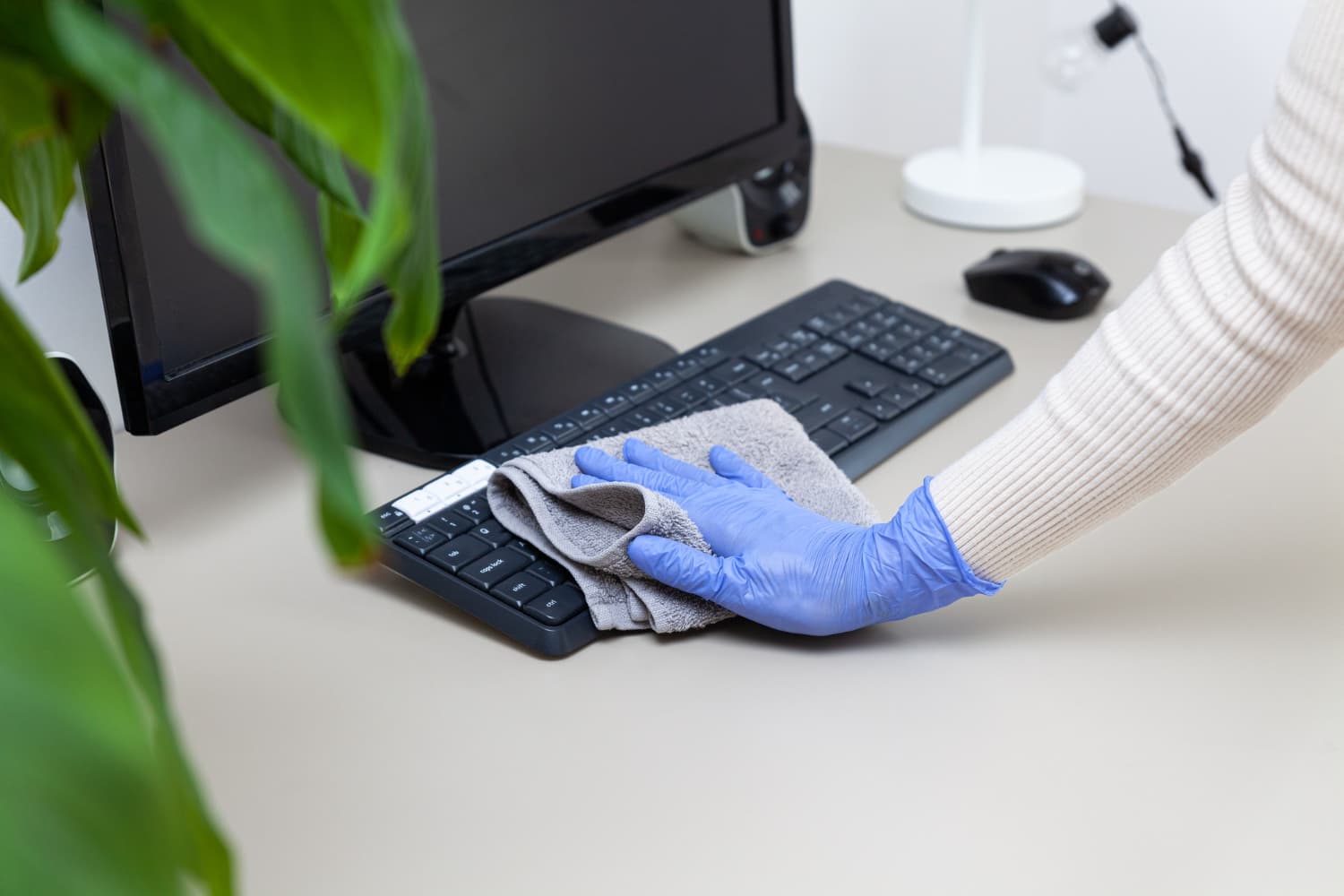
- Morning before opening (6:00–7:00): floor washing in waiting area, reception, corridors; disinfection of reception desks, keyboards, door handles.
- During the day: restroom checks every 2–3 hours (replenishing paper, soap, disinfecting high-touch surfaces), cleaning spills, disposing waste.
- After appointment hours (19:00–21:00): disinfection of doctor's offices, treatment rooms, vacuuming, removing medical waste to sealed container, wet floor washing.
Chemicals are drawn from alcohol groups (70% ethanol for rapid surface disinfection), quaternary ammonium compounds (QAC — single-step cleaning and disinfection), and peroxides for rooms with blood or body fluids. Staff do not require carrier screening, but training covers RODO (patient data protection in paper documents) and procedures for reusable medical equipment if the clinic has dental instruments or endoscopes.
A typical clinic team for 300–500 m² is 2–3 people on day shifts. Reporting is monthly — a collective protocol signed by facility management, without per-room details.
Cost Comparison: Rate Table Net (2026, Cracow/Katowice)
The table below presents average monthly rates per square meter (PLN net) for various space types in hospitals and clinics, based on average contracts executed by Reefa in 2025–2026:
| Space Type | Hospital (zł/m²/month) | Clinic (zł/m²/month) |
|---|---|---|
| Operating room / treatment room | 28–32 | — |
| ICU / isolation ward | 26–30 | — |
| General ward | 20–24 | — |
| Doctor's office | 18–22 | 15–18 |
| Waiting area / reception | 14–18 | 12–16 |
| Corridors | 10–14 | 8–12 |
| Restrooms | 20–24 | 16–20 |
| Administration / back office | 10–12 | 8–10 |
Notes:
- Rates include staff, chemicals (PZH-certified products), mechanical equipment (single-disc machines, HEPA vacuums), liability insurance up to PLN 500,000, and facility coordinator.
- Hospital: 24/7 model, 8–15 staff per shift in an average county hospital (300 beds).
- Clinic: 5-day/week model, 2–4 staff.
- Facilities over 3,000 m² may negotiate rates down 10–15% through economies of scale.
In international context, benchmark for German hospitals (Nordrhein-Westfalen) is EUR 22–28/m²/month, which at 4.30 PLN/EUR equals PLN 95–120/m²/month. However, staff hourly rates there are EUR 18–22 gross, while in Poland they are PLN 28–35 gross, explaining the difference.
Key Requirements for Hospital Cleaning Providers
Outsourcing hospital cleaning requires meeting several baseline conditions:
- Certifications and audits: ISO 9001 (quality management system), positive Sanepid audit, PZH certificates for all chemicals, MSDS card for each product.
- Liability insurance: minimum PLN 500,000 (Reefa carries exactly this amount), covering damage related to hospital-acquired infections if resulting from disinfection protocol breaches.
- Employment model: employment contracts (not freelance or B2B), ensuring continuity and legal accountability. Reefa employs 100% of staff on this model — resulting in 96% client retention and average contract duration of 2.4 years.
- Training and screening: carrier screening (nasal and throat swab), health booklet, occupational safety training every 12 months, instruction on medical waste per the Waste Act (Dz.U. 2013 item 21).
- Storage logistics: dedicated storage on hospital premises or within close proximity, 24/7 access, online inventory, just-in-time replenishment system.
- Emergency response time: <24 h in case of Sanepid inspection or epidemiological incident (blood spill, vomit, resistant pathogen detection).
When choosing a partner, ask for a reference list with facility names, bed counts, and contract duration. Reefa's portfolio includes medical facilities in Cracow with combined area >8,000 m², translating to experience in logistics, compliance, and risk management.
Key Requirements for Clinic Cleaning Providers
Clinics have a lower entry barrier but still require:
- Certifications: ISO 9001 or internal quality system, PZH certificates for products, optionally EU Ecolabel (especially if the facility pursues CSR goals).
- Liability insurance: PLN 100,000–300,000 (in Reefa practice, we apply full PLN 500,000 regardless of facility type).
- Staff: employment contracts, RODO training (medical document protection), instruction on disinfecting reusable medical equipment.
- Schedule flexibility: ability to shift cleaning times if appointments extend or unexpected events occur (e.g., weekend emergency duty in POZ facilities with NHS contracts).
- Facility coordinator: dedicated contact person, available by phone during clinic hours, weekly control visits.
For small clinics (100–200 m²), hourly contracts often make more sense — e.g., 15 hours/week at PLN 35 net/hour, totaling ~PLN 2,100 net/month — than area-based rates. For larger facilities (>500 m²), area rates are more cost-stable.
Documentation and Reporting: Hospital vs. Clinic
In a hospital, each day of crew work generates:
- Activity execution sheet — list of rooms/spaces, times, signatures.
- Chemical consumption report — liters of product X on ward Y, verification of standard compliance (e.g., 50 ml/10 m² for product Z).
- Incident report — spills, equipment defects, material shortages, staff absence.
- Medical waste inventory — mass in kg, waste code (e.g., 18 01 03* – infectious waste), container seal number.
- Monthly internal audit — inspection by epidemiological nurse and facility manager, compliance protocol signature or corrective action items.
In a clinic, reporting is simpler:
- Monthly summary sheet — service completion confirmation, hours worked, additional tasks (if any).
- VAT invoice specifying rate (net) with acceptance protocol attached.
- Incident report — only if an event exceeded standard scope (e.g., medical equipment damage, patient complaint).
Our 2025/2026 observation: hospital directors increasingly demand digital reporting — a mobile app where workers scan room QR codes and log start/stop times, with the system generating an online dashboard for facility management. Reefa implemented this system in 2024; currently, 60% of medical contracts use this solution.
Common Pitfalls in Hospital Cleaning Outsourcing
- Underestimating team size: a 200-bed hospital requires minimum 10–12 staff daily in 3-shift rotation. Cost-cutting by reducing team size leads to disinfection delays after patient discharge and infection risk.
- Lack of contingency procedures: if a worker falls ill on night shift, replacement must arrive in <2 h. This requires a standby pool and duty system — unattainable for single-person firms or small companies.
- Non-compliant chemicals: Sanepid requires products from the EU biocidal list with declared efficacy against Clostridioides difficile, Acinetobacter baumannii, enveloped and non-enveloped viruses. Supermarket-grade cleaners do not meet this requirement.
- Missing refresher training: staff must undergo annual training on new procedures (e.g., medical waste reclassification changes, emerging pathogens).
- Scope conflicts: some hospitals expect cleaning staff to assist with patient transport or handle body fluid cleanup. This exceeds occupational safety scope for sanitation workers — clarify in the SLA (Service Level Agreement).
Through Reefa's 96% retention rate and average 2.4-year contract duration, we avoid these pitfalls via constant facility coordinator oversight (twice-weekly visits to hospitals, weekly to clinics) and back-office systems managing contingency schedules and chemical buffer stock.
Common Pitfalls in Clinic Cleaning Outsourcing
- Overly broad scope in contract: clinics try to include window washing, facade cleaning, plant care. Separate core (daily cleaning) from occasional (windows twice/year).
- Unclear material responsibility: who supplies toilet paper, soap, paper towels — provider or clinic? In Reefa's full service model, we do; some clinics prefer buying independently and paying only for labor + chemicals.
- Vague keys and alarm procedures: after hours, the clinic is locked. Crew must have keys, alarm codes, false-alarm procedures. Lack of clarity = security response and costs.
- Ignoring growth: clinic signs for 300 m² but adds a room or extends hours to 21:00 within a year. Contract should include an adjustment clause — automatic rate recalculation if area changes >10%.
We recommend a 3-month pilot — for both hospitals and clinics — allowing schedule and scope adjustments without penalties. In our contracts, this flexibility in the first quarter is standard, boosting satisfaction.
Full Outsourcing vs. Hybrid Model
Full outsourcing (external company assumes 100% of staff, logistics, chemicals, equipment):
- Hospitals >150 beds where in-house facility management costs (wages, social contributions, vacations, sick leave, turnover) exceed outsourcing costs.
- Facilities inexperienced in managing large cleaning teams.
- Facilities requiring ISO 9001 — external providers already hold it; facilities don't need to build systems from scratch.
Hybrid model (facility employs part of staff "in-house"; external company fills gaps or provides specialized services):
- Public hospitals with established structures and labor unions — full outsourcing may trigger protests.
- Multi-clinic networks with centralized procurement, preferring to buy chemicals wholesale and pay external firms only for labor.
- Facilities with their own cleaning equipment (machines, single-disc units) — external firms need only staff and chemicals.
Our 2026 observations show hybrid models comprise ~25% of medical contracts in Cracow and Katowice, full outsourcing ~75%. The latter's advantage stems from no staff liability for the facility — absences, layoffs, maternity leave become the contractor's problem, not the hospital director's.
Also worth mentioning: facility management models, where providers handle not just cleaning but security, waste management, technical maintenance — economies of scale rise, and area rates may drop 5–10%. Reefa offers comprehensive FM for facilities >5,000 m² in Cracow and Katowice, with on-site facility manager.
How Facility Audit and Certification Works
Before signing, we conduct a baseline audit:
- Site visit — area measurement, risk zone identification, infrastructure assessment (water points, drains, ventilation).
- Current protocol analysis — if the facility had prior cleaning service, we assess what worked and what didn't.
- Medical schedule mapping — OR block times, ambulatory hours, peak patient days.
- SLA proposal — detailed scope, frequency, KPIs: e.g., response time <2 h, medical staff satisfaction >4.5/5.
- Implementation plan — onboarding (4–6 weeks for hospitals, 1–2 for clinics), training, Sanepid audit.
Post-launch, we conduct quarterly control audits: space inspection, activity sheet review, surface microbial sampling (swabs, agar plate culture, CFU/cm² count). Acceptable standard: <5 CFU/cm² for Zone I, <50 CFU/cm² for Zones II–III.
ISO 9001 certification primarily covers procedures, not microbial outcome — but auditors verify procedures are followed and documented. Our experience shows certified providers pass Sanepid inspections with positive results in >95% of cases; in-house cleaning — ~70%.
Frequently Asked Questions
How much does monthly hospital cleaning cost for a 200-bed hospital?
An average county hospital with 200 beds spans ~8,000–10,000 m² (wards, corridors, administration, back office). At average rate of PLN 18 net/m²/month, cost is PLN 144,000–180,000 monthly net, or ~PLN 1.7–2.2 million annually. In full outsourcing, this covers staff (10–15 people in 3-shift rotation), chemicals, equipment, facility coordinator, PLN 500,000 liability insurance, and ongoing training. For comparison, in-house facility management (wages + social contributions + overhead) for the same staff is ~PLN 2.0–2.5 million yearly, with added HR risks (turnover, vacations, sick leave). In Reefa practice, facilities save 10–15% via outsourcing versus in-house, with superior documentation and Sanepid compliance.
Can a clinic use the same disinfectants as a hospital?
Yes — medical-grade chemicals with PZH certification are universal and meet requirements for both hospitals and clinics if they declare efficacy against vegetative bacteria, fungi, viruses, and Clostridioides difficile (spore form). In practice, clinics don't always need highest-strength chlorine (1000 ppm) — 500 ppm suffices for general offices and 200–300 ppm for waiting areas. Overuse raises costs (stronger products cost more) and extends airing time. Reefa selects chemicals by zone — in clinics, we primarily use quaternary ammonium compounds (QAC) and alcohols, reserving peroxides and hypochlorite for high-level disinfection needs (body fluid spill, suspected resistant pathogen). Critical: every product must have Polish-language MSDS and dilution instructions — Sanepid checks these during inspections.
What are the most important KPIs for hospital cleaning outsourcing?
Core performance indicators (KPIs) in hospital context are: (1) Emergency response time — <2 h daytime, <4 h nighttime; (2) Microbial cleanliness index — surface swabs, <5 CFU/cm² in critical zones; **(3) Documentation compliance** — % timely-signed sheets (goal: 100%); **(4) Medical staff satisfaction** — quarterly survey, goal >4.5/5; (5) Cleaning staff turnover rate — goal <10% yearly (low attrition = procedure stability); (6) Incident/complaint count — goal <2 per quarter; **(7) Chemical consumption per m²** — monitoring deviations >10% from baseline (may indicate waste or usage intensity change). In Reefa contracts, monthly KPI dashboards are standard for facility directors — enabling data-driven management and quick correction if any indicator drops below threshold.
Can cleaning staff work across multiple wards simultaneously?
In a hospital, the rule is straightforward: staff can rotate between wards at same or lower epidemiological risk, but never the reverse in the same shift. Example: a Zone III (administration) worker may enter Zone II (general ward) after changing protective gear and hand disinfection, but a Zone I (ICU) worker cannot clean administration the same day without full shower and clothing change — risk of pathogen transfer. In practice, each ward has dedicated staff or micro-team (2–3 people) serving only those spaces for the entire week — minimizing cross-contamination and building accountability. In clinics, requirements are looser: one person may clean reception, waiting area, and offices if glove-changing happens between rooms and separate mops are used for restrooms. Adherence is verified by internal audit and Sanepid inspection.
What documents must a cleaning company provide before starting at a medical facility?
Before signing and starting work, a medical facility — especially hospitals — requires from the provider: (1) Liability insurance policy minimum PLN 500,000, valid throughout the contract term; (2) ISO 9001 certificate or internal quality system; (3) PZH certificates for all disinfectants; (4) Material Safety Data Sheets (MSDS) for products, in Polish; (5) Staff roster with: name, health booklet number, occupational health exam date, last BHP training date; (6) Carrier screening results (nasal/throat swab for Staphylococcus aureus) — for Zone I and II staff; (7) Employment contracts — facility verifies staff are employed, not freelance (compliance with minimum wage and occupational safety laws); (8) OHS and medical waste handling procedures; (9) Work schedule (shift roster); (10) Facility coordinator contact (name, phone, email, backup). After document submission, Sanepid conducts a baseline audit — if positive, contract begins. Reefa prepares a complete document package within 7 business days, accelerating onboarding.
Can a facility hire a cleaning company based outside their city or region?
Formally yes — public procurement law (Pzp) and EU competition rules prohibit territorial discrimination. In practice, local provider presence is critical for service quality: hospitals run 24/7, and incident response (blood spill, equipment failure, staff absence) must occur in <2 h. A firm 200 km away struggles with standby staffing or chemical delivery at night/weekends. Also, Sanepid audits and internal inspections require on-site coordinator presence — if headquarters are distant, travel costs and hotels inflate service price 15–25%. Therefore, hospital tenders (CPV 90911200-8: building cleaning) often include criteria like "headquarters within 60 min drive" or "chemical warehouse within 20 km radius." Reefa — headquartered in Cracow and Katowice with storage facilities — meets this for the Cracow Agglomeration and Silesian region, guaranteeing <24 h emergency response 100% of the time.
Conclusion and Recommendations
Choosing between hospital and clinic service models is not "better vs. worse" but adequacy to epidemiological risk, patient rotation intensity, and operational budget. Hospitals require investment in certified staff, non-stop logistics, medical-grade chemicals, and rigorous reporting — translating to PLN 18–32 net/m²/month. Clinics operate on daytime schedules, scope-based disinfection, dropping rates to PLN 12–20 net/m²/month.
Success in outsourcing hinges on selecting a partner experienced in your facility category, fully insured (minimum PLN 500,000 liability), employing staff on contracts, and providing 24/7 backup systems. Reefa — serving medical facilities in Cracow and Katowice since 2020, including Diamed Medical Center and Otto Bock Polska — offers the complete package: from baseline audit through deployment and training to monthly KPI reports and online dashboard access.
If your facility is planning outsourcing or wishes to audit current provider quality, contact our team — we offer free assessment and customized proposals. Learn more: Medical Facility Cleaning Cracow | Medical Facility Cleaning Katowice.